
Reviewed · CYCLING TOURS
Beijing: Private Biking Tour Along Central Axis of Beijing
Beijing’s central axis is best understood from a bicycle. This long north-south route links imperial gates, palace walls, lakes, old commercial streets, and ordinary hutong homes, letting you see how grand court life and daily city life sit side by side. The ride covers about 20 kilometers in three hours, so it is active rather than leisurely.
I like the mix of major sights and quiet side lanes. You can see Tian’anmen Square, the Forbidden City’s moat and corner turrets, then turn into hutongs that most first-time visitors would miss. I also like the small-group format, with no more than eight people, and guides such as Amber and Jacky who can explain the route in English.
The main drawback is the pace. Twenty kilometers is a lot on a shared bike, and one rider found the bicycles too small. You should also know that entrance tickets, food, and personal costs are not included, and the tour meets at Ciqikou Station rather than collecting you from your hotel.
In This Review
- Key Points Along Beijing’s Old North-South Line
- Why Beijing’s Central Axis Makes Sense by Bicycle
- Starting at Ciqikou Station
- The Imperial View: Tian’anmen Square and Its Gate
- Moats, Corner Turrets, and the Forbidden City’s Formal Entrance
- Lakes, Bridges, and the Old Timekeepers
- Hutongs Where People Still Live
- Historic Streets and the Jing-Hang Canal
- What the Guides Add
- Is $67 a Fair Price?
- Fitness, Comfort, and Practical Limits
- Who Should Book This Ride?
- FAQ
- How long is the Beijing central-axis biking tour?
- Where does the tour meet?
- Is hotel pickup included?
- What does the tour price include?
- Are meals included?
- Are entrance tickets included?
- Is the tour conducted in English?
- How many people are in the group?
- Can I cancel the booking?
Key Points Along Beijing’s Old North-South Line
- The central axis: Follow Beijing’s old imperial spine from the Bell and Drum Towers toward Tian’anmen and the palace district.
- Around 20 kilometers by bike: This is a sightseeing ride with real mileage, not a short cycle between nearby monuments.
- Imperial and everyday Beijing: Pair Tian’anmen, palace gates, moats, and towers with hutongs where local families live.
- A small English-speaking group: The group is limited to eight people, with guides including Amber and Jacky.
- Two different styles of ride: Choose the central-axis route for landmarks or the hutong option for markets, local homes, and a Drum Tower climb.
- Budget-friendly, with extras to plan: At $67 per person, the tour includes the guide, bike, meeting-point pickup, and water, but not attraction tickets or meals.
Why Beijing’s Central Axis Makes Sense by Bicycle
Beijing’s central axis is a 7.8-kilometer historical line through the old city. It begins at the Bell and Drum Towers in the north and runs south through Wanning Bridge, Jingshan Hill, the Imperial Palace, and toward Yongdingmen Gate.
The advertised ride extends beyond that strict line, covering about 20 kilometers as it connects the axis with hutongs, commercial streets, the canal area, and nearby sights. That extra distance is the point. On foot, you would see only a small section in three hours. In a car, you would miss the narrow lanes and have trouble stopping often.
A bicycle gives you a useful middle ground. You can cover ground quickly, but you are still close enough to notice old walls, side streets, shopfronts, bridges, and residential lanes. I would think of this as a broad introduction to old Beijing rather than a slow architectural tour.
The route also gives you a simple way to read the city. Imperial buildings occupy the formal center, while hutongs branch away from it. The grand axis shows how Beijing was designed for emperors. The side lanes show how the city worked for everyone else.
More cycling days around Beijing:
- The Hutong Experience by Bike
★ 5.0 · 163 reviews - Beijing Highlights-Private Beijing Bike Tour
★ 4.5 · 21 reviews - Modern Beijing Discovery by Bike
★ 5.0 · 13 reviews
Starting at Ciqikou Station
The meeting point is Exit D of Ciqikou Station on Line 5. You are expected to make your own way there, and the instructions suggest using Alipay to order a taxi or showing the driver the Chinese address: 磁器口地铁站D出口.
This detail matters. Ciqikou is a meeting point, not a hotel pickup location, so allow time to reach it. The tour includes pickup service from the meeting point, which means the guide meets you there and gets the group organized before the cycling begins.
A phone with the meeting-point information ready will help. If you use a taxi, showing the Chinese wording is more practical than relying on pronunciation. You should also arrive with enough time to locate Exit D, since a large station can make a rushed meeting unpleasant.
The operator provides one shared bike per person and mineral water. Because the route is long for a three-hour outing, check the bike size before setting off. One rider specifically found the bicycles too small, so taller cyclists should raise this issue immediately.
The Imperial View: Tian’anmen Square and Its Gate
Tian’anmen Square is the symbolic heart of modern China. The square itself is broad and formal, while Tian’anmen Gate carries the familiar portrait of Chairman Mao above its entrance.
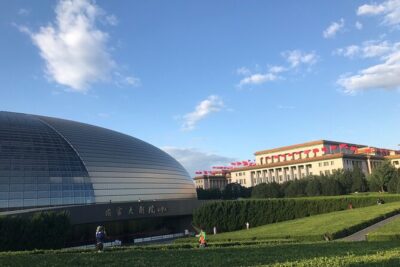
From a bicycle, you see the scale of this part of the city in a different way. The route also passes surrounding public buildings, including the national museum and the parliament building. These are not small, tucked-away sights. They form a powerful official district, and the open space makes Beijing’s political design easy to understand.
Your guide can help place these buildings within the wider central-axis story. The route is not only about taking a photo at the square. It connects the modern state to the older imperial city farther north.
Do not expect a long stop inside every major attraction. Tickets to tourist sights are not included, and the activity is built around cycling past and around important sites rather than providing full interior visits. If you want to spend hours inside the national museum or the Forbidden City, this ride should supplement that plan, not replace it.
Moats, Corner Turrets, and the Forbidden City’s Formal Entrance
The Forbidden City is approached through a grand setting of walls, water, and carefully controlled entrances. The ride includes views of the huge formal entrance, the city moat, and the elegant corner turrets.
The corner turrets are especially rewarding from outside. Their layered roofs and detailed outlines rise above the broad moat, giving you a clear sense of the palace complex as a defended imperial enclosure. You can stop for photographs and hear how the palace fits into the central axis.
This portion is valuable even if you have already visited the Forbidden City interiors. Inside, the attention goes to halls, courtyards, and collections. Outside, the moat and corner towers show the palace as part of Beijing’s larger city plan.
Again, plan your expectations correctly. The tour does not include entry tickets, and the three-hour schedule does not leave room for a full palace visit. If you have only one morning in Beijing, this ride offers a strong exterior view, but you may need a separate booking for the interiors.
A few more Beijing options to compare side by side
- Beijing: Forbidden City Tour(Group/Private)-Tickets Included
★ 4.8 · 7,974 reviews - Beijing: T-Square & Forbidden City Group or Private Tour
★ 4.8 · 4,446 reviews - Beijing:Mutianyu Great Wall Private Trip with English Driver
★ 5.0 · 1,263 reviews - Private Mutianyu Great Wall Trip with English-Speaking Driver
★ 5.0 · 927 reviews
Lakes, Bridges, and the Old Timekeepers
The northern part of the axis brings you toward Beijing’s lakes and the Wanning Bridge area. The water, bridges, and old structures offer a softer contrast to the strict formality around Tian’anmen.
The route also includes the Drum and Bell Towers, once used to announce the time in the old city. These twin towers are more than photogenic landmarks. They explain how Beijing’s daily rhythm was organized before modern clocks and electric signals.
One version of the ride includes climbing the Drum Tower to look across the city where ordinary residents live. The supplied details do not make clear whether this climb is part of every departure, so ask your guide when you meet. Entry tickets are not included, and any climb may depend on the chosen option and the day’s timing.
The lake district is a good reason to choose the central-axis ride if you want a broad city portrait. You get formal monuments, open water, old bridges, and residential lanes in one outing. The setting changes often enough to keep the ride interesting.
Hutongs Where People Still Live
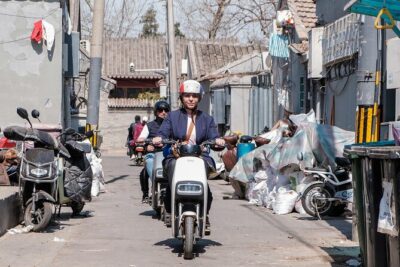
The hutongs are where the ride becomes more personal. These lanes connect with the central route and lead into parts of old Beijing where ordinary families live.
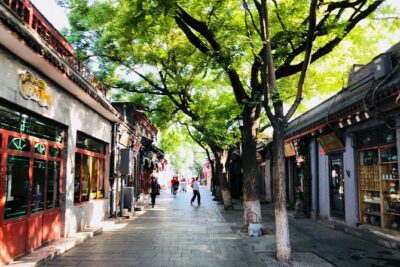
You may pass narrow streets, local shops, and residential entrances rather than polished sightseeing stops. That is the appeal. A guide can point out how the hutongs relate to the major north-south route and help you notice the difference between an imperial boulevard and a neighborhood lane.
The second tour option focuses more heavily on this side of Beijing. It includes old hutongs, local markets, and contact with local families, along with a possible Drum Tower climb. Choose this version if your priority is daily life and neighborhood atmosphere rather than a long list of major monuments.
The wording about meeting local families is broad, so do not assume a formal home visit or scheduled meal. The confirmed inclusions are the English-speaking guide, shared bicycle, meeting-point pickup, and water. Food and personal expenses remain your responsibility.
Historic Streets and the Jing-Hang Canal
The ride also reaches ancient commercial streets and the Jing-Hang Canal, described as the world’s longest man-made canal. Temples and stores line parts of the canal route, giving you another view of Beijing beyond the palace district.
This is a useful stop for understanding movement and trade. The central axis represents official power and imperial order. The canal represents transport, commerce, and the practical business of keeping a large capital supplied.
You may find that these sections feel less monumental than Tian’anmen or the Forbidden City. That is not a weakness. They add texture to the day and show why Beijing developed as a working city, not only as a royal compound.
The route covers a lot, so the exact amount of time at each place can vary. If you want long photo stops at every temple, bridge, tower, and street, three hours will feel tight. If you prefer seeing a wide slice of the city with a guide who keeps you moving, the schedule makes sense.
What the Guides Add
An English-speaking guide is the main reason to choose this over renting a bicycle on your own. The central axis is easy to misunderstand without context, especially when a modern public building, an imperial wall, and a residential hutong appear within the same few blocks.
Amber received especially strong praise for clear communication, good information, and a fun manner. She also accommodated a late arrival caused by another tour, which suggests useful flexibility when the group is delayed. Jacky also led a well-received ride, helping riders reach areas they felt they would not have found without a bike and guide.
The guide’s role is practical as well as historical. You need help with the route, traffic, meeting points, and deciding where to pause. In a small group, it is easier to ask questions or request a brief stop than it would be on a large coach excursion.
Still, guide quality can vary by departure. Amber and Jacky are names connected with this experience, but you may not receive either one. The overall rating is 4.8 from four reviews, which is encouraging, though the sample is small.
Is $67 a Fair Price?
At $67 per person, the tour is priced as a guided small-group experience rather than a simple bike rental. You are paying for three hours with an English-speaking guide, a bike, water, and assistance from the meeting point.
The value is strongest if you want to combine many parts of Beijing in one outing. A self-guided ride may cost less, but you would need to plan the route, handle navigation, and work out how the central axis connects to the hutongs, lakes, towers, and canal area.
The price is less attractive if you want full visits to the Forbidden City, museums, or towers. Tickets are not included, and meals are also extra. Add those costs if you intend to enter attractions during or after the ride.
I see this as good value for an active first look at old Beijing, especially if you have limited time. It is not the right purchase for a traveler seeking a relaxed ride with long indoor visits.
Fitness, Comfort, and Practical Limits
The route is described as about 20 kilometers in three hours. That means you should be comfortable riding for a sustained period, stopping, restarting, and managing city streets and hutong lanes.
No special fitness level is stated, so I would not label it an extreme ride. Still, the distance makes it more demanding than a short sightseeing cycle. Wear comfortable clothing, use sensible footwear, and tell the guide early if the bike does not fit properly.
Wheelchair access is listed, but the activity involves shared bicycles and a long ride. If accessibility is important for you, confirm how the accessible arrangement works before booking. The listing does not explain whether an adapted cycle or another form of transport is supplied.
The group limit of eight is a real advantage. You are less likely to lose the guide at a turn, and the pace can be adjusted more easily than on a large organized ride. The three-hour limit still matters, so the group cannot stop everywhere for long.
Who Should Book This Ride?
I would recommend it to first-time Beijing visitors who want to connect the famous sights with local neighborhoods. It suits people who enjoy learning while moving and who would rather see several districts than spend the whole morning in one palace complex.
It is also a good fit for repeat visitors who have already seen the Forbidden City interior and want a different angle on the old city. The hutong option is the better choice if local markets, family life, and the Drum Tower matter more to you than Tian’anmen and the palace walls.
Families and mixed-age groups should consider the distance and bike fit carefully. The small group helps, but the ride remains 20 kilometers. Taller riders should ask about bicycle sizes before departure, and anyone with mobility concerns should confirm the accessible setup.
Book it if you want a guided overview of Beijing’s old center and are happy to pay separately for any attraction entries. Skip it if you dislike cycling, need a slow pace, or want a full indoor tour of the Forbidden City. For the best match, decide between the imperial central-axis route and the more residential hutong option before you reserve.
FAQ
How long is the Beijing central-axis biking tour?
The tour lasts three hours. The central-axis option covers about 20 kilometers by bicycle.
Where does the tour meet?
The meeting point is Exit D of Ciqikou Station on Line 5. The guide meets you there.
Is hotel pickup included?
Hotel pickup is not listed. Pickup service is provided from the specified meeting point at Ciqikou Station.
What does the tour price include?
The price includes an English-speaking guide, meeting-point pickup service, one shared bike per person, and mineral water.
Are meals included?
No. Meals are not included, and you are responsible for food and personal expenses.
Are entrance tickets included?
No. Tickets for tourist sights are separate. This matters if you want to enter the Forbidden City, Drum Tower, museums, or other attractions.
Is the tour conducted in English?
Yes. The live guide speaks English.
How many people are in the group?
The group is limited to eight participants.
Can I cancel the booking?
You can cancel up to 24 hours in advance for a full refund. The activity also allows you to reserve now and pay later.
Latest additions around Beijing
- Private Hike from Beijing: Go Beyond The Jiankou and Mutianyu Great Wall★ 5.0 · 3 reviews
- Bullet Train Private Tour: Beijing Tiananmen Square, Forbidden City & Great Wall★ 5.0 · 3 reviews
- Private Great Wall Hiking Tour from Simatai West to Jinshanling★ 4.5 · 3 reviews
- Private Transfer for Beijing Airport PEK or PKX★ 5.0 · 3 reviews
- Liyuan Theater Beijing Opera Show Tickets★ 5.0 · 3 reviews
- Private Jinshanling relax photo tour by sunset★ 5.0 · 3 reviews
- Private All-inclusive Jinshanling Great Wall 1-day tour★ 4.5 · 3 reviews
- Beijing: Private Tour to Great Wall & POPLand Labubu Home★ 4.6 · 3 reviews
Cycling Tours, compared.

4-Hour Private Beijing Hutong Bike Tour with Dumpling Lunch
Read our review →
Beijing City Four-hour Bicycle Tour With a Private Guide
Read our review →Beijing Bike Forbidden City Tiananmen Square Group Tour 2 Hours
Read our review →
Browse the lists this tour appears in