
Reviewed · BEIJING
Beijing Royal Dinning Experience with cultural performance
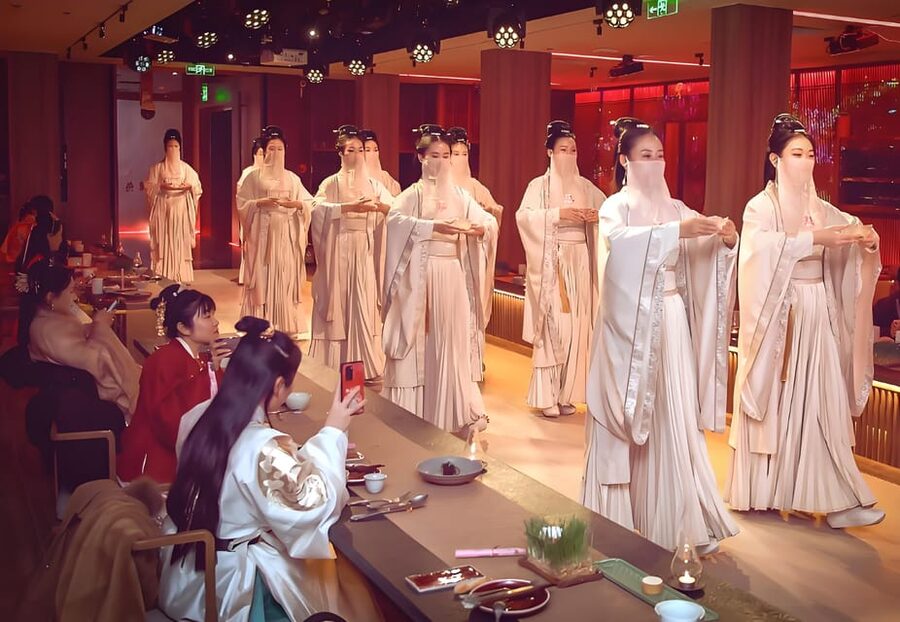
The meal is part theater, part history lesson, and part formal Chinese banquet. In a restored courtyard just 2 kilometers from the Forbidden City, each course arrives alongside a story from China’s imperial past and the Tan family tradition of official cuisine. The setting is the former residence of Tan Zongjun, who placed second in the Qing Dynasty imperial examination.
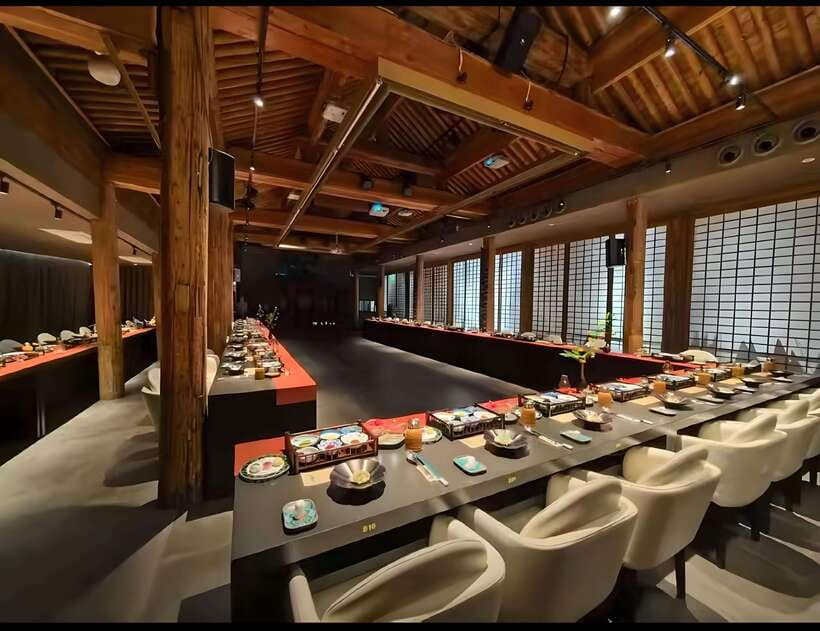
I like the careful link between food and performance, and I like the courtyard itself, which keeps its traditional layout and offers rooftop views toward the White Pagoda Temple and the Temple of Emperors of All Dynasties. The main caution is language: the performance is in Mandarin, and the menu may be hard to understand if you do not speak Chinese.
In This Review
- Key points
- A Royal Meal Near the Forbidden City
- Tan Zongjun and the Origins of Tan Cuisine
- How the Two-Hour Performance Unfolds
- What You Eat: From Appetizers to Abalone
- The Courtyard, Seasonal Views, and Rooftop Photos
- Timing, Arrival, and Finding the Venue
- Is $99 a Fair Price?
- Who Will Enjoy This Experience Most?
- My Booking Advice
- FAQ
- Where does the royal dining experience take place?
- How long does the experience last?
- What time does the lunch performance begin?
- What time does the dinner performance begin?
- How early should I arrive?
- What food is included?
- Is the performance in English?
- Are children required to buy tickets?
- Is the venue wheelchair accessible?
- Can I cancel the booking?
Key points
- Two kilometers from the Forbidden City: This is an easy cultural add-on to a central Beijing sightseeing day.
- A meal told in chronological order: The serving of each course follows the performance, giving the dinner a clear story line.
- Tan’s official cuisine: The venue is linked to Tan Zongjun and the early development of Tan cuisine.
- Sea cucumber and abalone: The main meal includes classic luxury ingredients, along with appetizers, tea, dessert, and wine.
- Traditional courtyard setting: Seasonal courtyard scenery and rooftop views offer good photo opportunities.
- Mandarin-only performance: The drama is visual and carefully staged, but explanations of the dishes may be limited for international diners.
A Royal Meal Near the Forbidden City
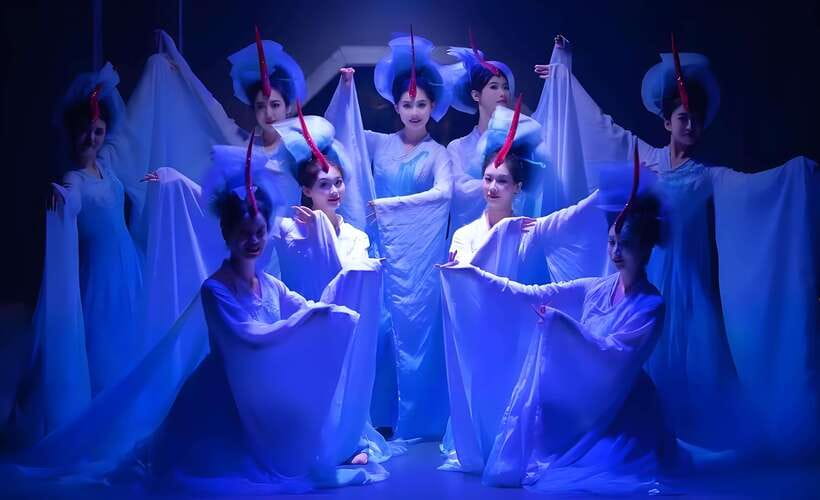
This experience gives you a very different way to spend two hours in central Beijing. Instead of touring another hall or temple, you sit down in a historic courtyard and watch the meal unfold as a classical drama.
The location matters. At only 2 kilometers from the Forbidden City, the dining room fits naturally into a day spent around Tiananmen Square, Jingshan Park, or the imperial palace. You are not being sent out to a distant suburb for a themed dinner. The venue sits in the city center, where old courtyard architecture still makes sense.
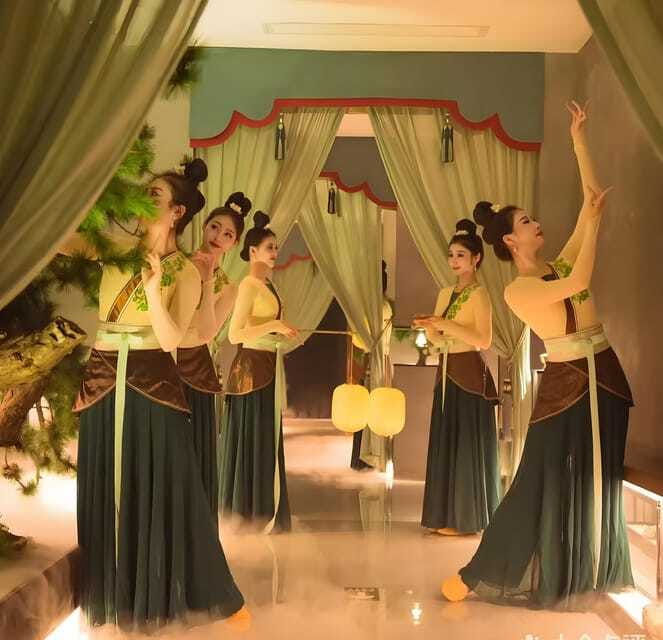
The setting is one of the strongest parts of the experience. The courtyard has retained its traditional form, and the appearance changes with the seasons. You might find spring greenery, summer shade, autumn color, or a quieter winter atmosphere, depending on when you visit.
This is not a casual meal where you order one plate at a time. It is a staged banquet. The food, actors, music, costumes, and timing work together. You should think of it as a cultural evening with dinner included, not simply a restaurant reservation with entertainment on the side.
Visitors building a Beijing itinerary usually shortlist these too:
- From Beijing: Mutianyu Great Wall Tours with Options
★ 4.9 · 9,216 reviews - Beijing: Forbidden City Tour(Group/Private)-Tickets Included
★ 4.8 · 7,974 reviews - Beijing: T-Square & Forbidden City Group or Private Tour
★ 4.8 · 4,446 reviews
Tan Zongjun and the Origins of Tan Cuisine
The venue was originally the residence of Tan Zongjun, who came second in the Qing Dynasty imperial examination. That detail gives the dinner a more specific historical setting than a generic palace-themed show.
The site later became associated with the beginnings of Tan’s cuisine, also known as official cuisine. The term points to food traditions linked with scholar-official households, where presentation, ceremony, and carefully prepared ingredients mattered.
You will not get a long academic lecture about this background. Instead, the story is folded into the performance and the dishes. That approach works well if you prefer learning through a meal and a show rather than through a museum label.
It also explains why the food includes costly ingredients such as sea cucumber and abalone. These are not ordinary quick-dinner choices. They signal the formal banquet style the experience is trying to recreate.
How the Two-Hour Performance Unfolds
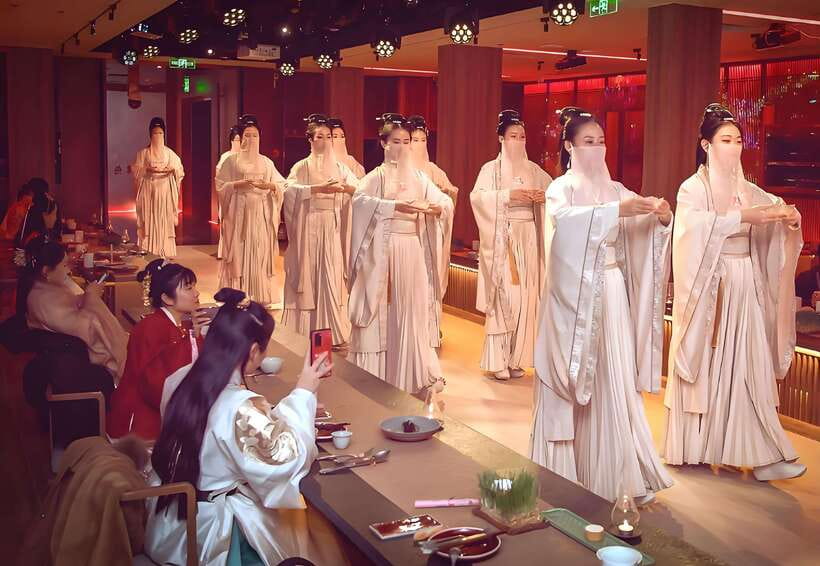
The performance follows a chronological order, with the meal served in step with the story. Each dish has an accompanying dramatic scene or explanation. This gives the evening a natural rhythm: watch, receive a course, taste, then follow the next part of the tale.
That timing is important. The show is not a separate act that interrupts dinner, and dinner is not served while actors perform unrelated scenes. The two parts are designed to support each other.
You can expect appetizers before the main courses, followed by the more elaborate seafood dishes. Tea, dessert, and a meaningful wine are also included. The range gives the meal the feel of a full banquet rather than a tasting of only two or three signature plates.
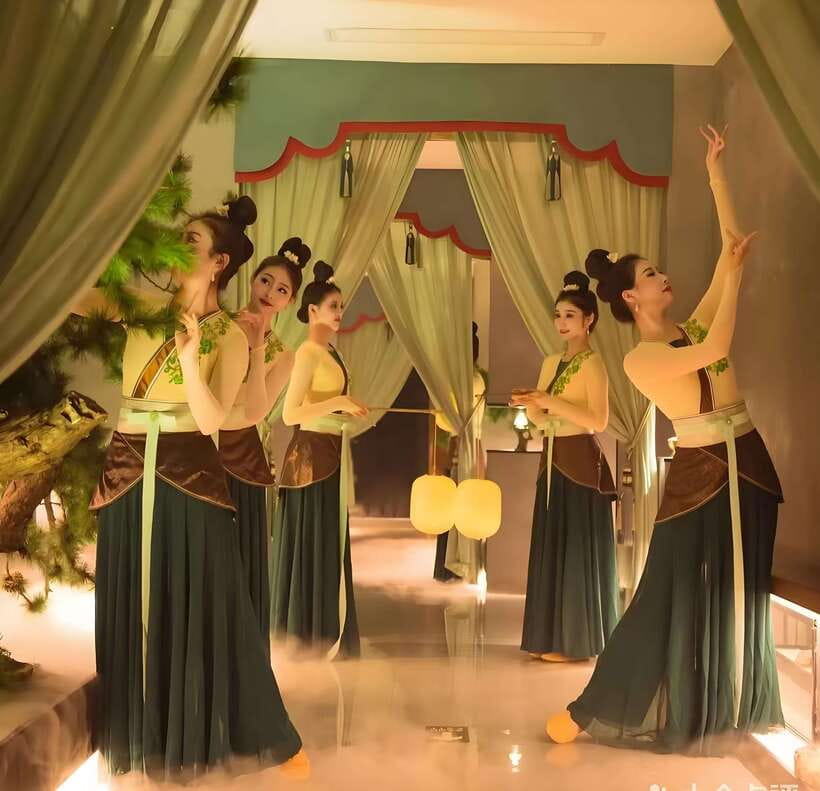
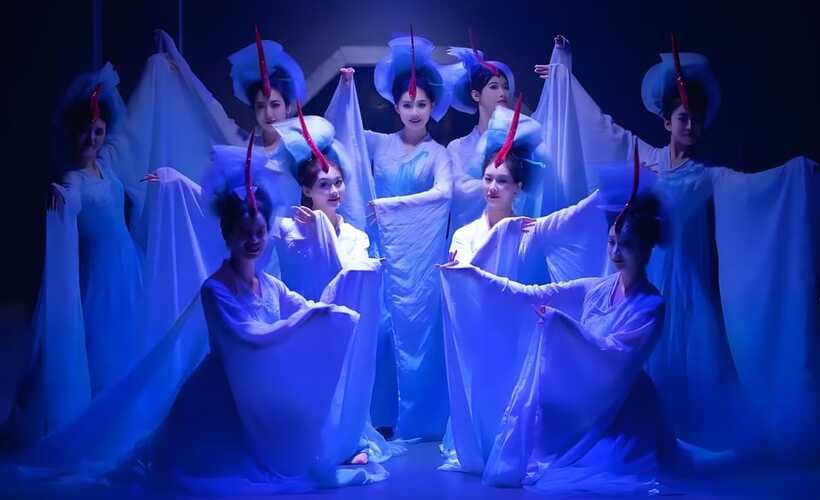
The actors are described as highly committed to their roles, and the classical drama is one of the most praised elements of the experience. Even if you do not understand every word, costumes, gestures, music, and the formal setting help you follow the mood.
Still, you should set your expectations carefully. The performance is in Mandarin, and there is no indication that a full English explanation accompanies each scene or dish. If you want to understand the exact story, ingredients, and historical references, the language barrier may frustrate you.
One useful approach is to treat the show as visual theater. Watch how the serving ceremony, actors, and food fit together. You will gain more from the performance if you do not expect it to operate like an English-language guided tour.
What You Eat: From Appetizers to Abalone
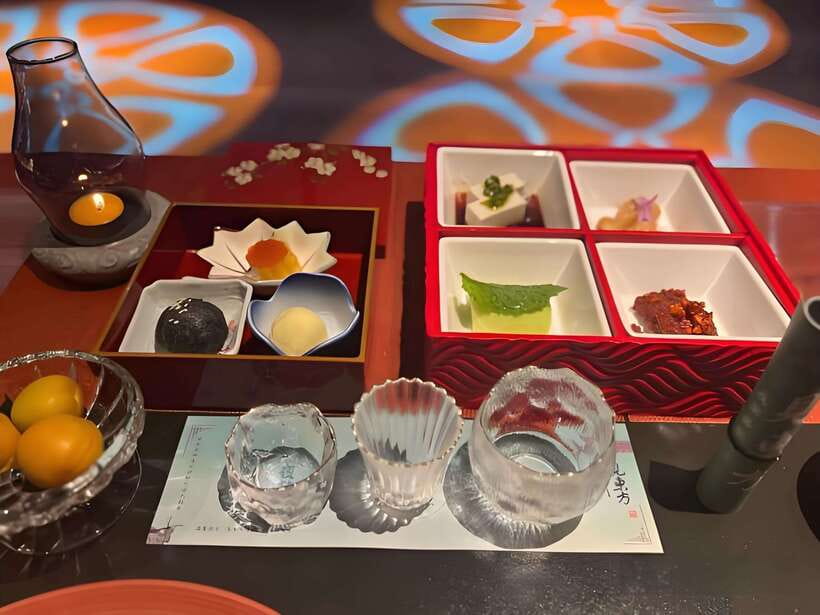
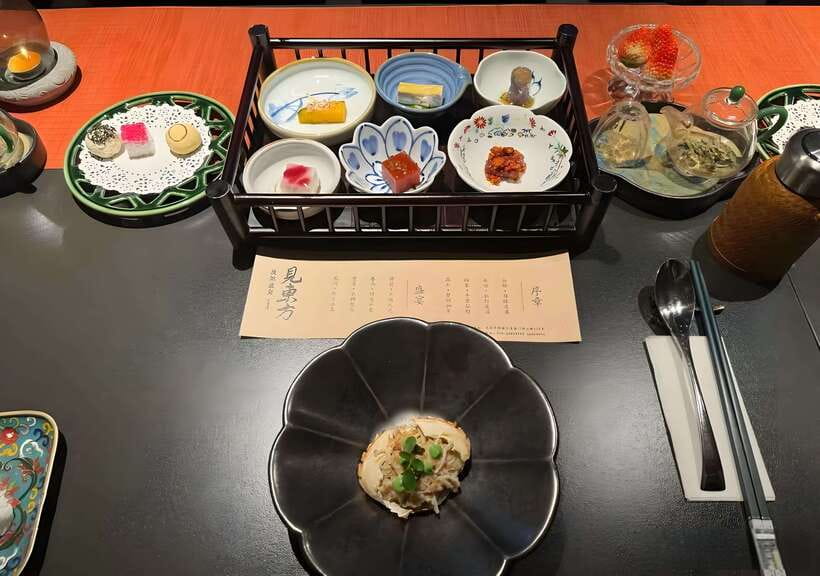
The menu includes a variety of courses rather than one large plate. Appetizers begin the meal, while tea, dessert, and wine fill out the formal sequence.
The main meal centers on sea cucumber and abalone. These ingredients are associated with luxury Chinese cooking, and their presence makes the experience feel closer to a ceremonial banquet than to everyday Beijing food.
The dishes are carefully plated, which matters here because presentation is part of the event. The food arrives as a visual component of the story, not just as fuel between acts.
Taste is more subjective. Some diners find the food good and interesting, while others find it less impressive than the performance. The cooking also leans toward local Chinese flavors and ingredients that may be unfamiliar to Western palates.
That is not necessarily a flaw. If you are curious about formal Chinese cuisine, unfamiliar dishes are part of the point. If you mainly want a guaranteed Western-style meal, this may not be the safest choice.
The biggest practical issue is that you may not know exactly what you are eating as each course arrives. Without clear explanations in your language, the beautiful presentation can leave you guessing. If you have allergies, dietary restrictions, or strong dislikes, confirm what can be accommodated before booking, since the available information does not describe menu substitutions.
Swap the crowds for a different corner of Beijing:
- Beijing: Mutianyu Great Wall Daily Tour with Ticket & Lunch
★ 5.0 · 3,056 reviews - All-Inclusive Tour: Tiananmen Square, Forbidden City, Great Wall
★ 5.0 · 2,873 reviews - MuBus: Mutianyu Great Wall ENG/ESP/RUS Guided Bus Tour
★ 5.0 · 2,361 reviews - 4-Hour Small Group Tour to Forbidden City with Entry Tickets
★ 5.0 · 1,863 reviews
The Courtyard, Seasonal Views, and Rooftop Photos
The courtyard gives the evening its sense of place. Traditional courtyards are central to Beijing’s architectural identity, and this venue keeps that enclosed, formal arrangement rather than replacing it with a modern dining hall.
The scenery changes by season, so the atmosphere will not be identical on every visit. The courtyard can be especially appealing if you want photographs that show old Beijing architecture rather than only food and stage curtains.
The rooftop adds another reason to arrive early. From there, you can see the White Pagoda Temple and the Temple of Emperors of All Dynasties. These views add context to the venue’s location and give you a chance to take photos before or after the meal.
I would not book this primarily as a rooftop sightseeing stop. The views are an extra benefit, not the central program, and the available details do not promise a long rooftop visit. Still, they make the setting more rewarding than an enclosed theater with no connection to the surrounding city.
Timing, Arrival, and Finding the Venue
The lunch performance begins at 12:00 PM. The dinner performance begins at 6:30 PM. You are asked to arrive 30 minutes before the show, which is sensible because the experience is timed around the meal and performance.
Do not plan to arrive at the last second. A late arrival could mean missing the opening story or an early course, and those first moments help establish the format.
Navigation deserves extra care. One booking experience found that map applications showed another location, while entering the supplied address into Didi led to the correct place. Local help was also useful.
For a smooth arrival, compare the address you receive with your map before leaving. If the map pin seems wrong, use the exact address in Didi rather than relying on a general search result. If needed, show the address to a local person and ask for confirmation.
The activity lasts two hours, so allow extra time around it. Lunch can fit into a morning visit to the Forbidden City, while dinner works well after afternoon sightseeing in central Beijing. The event itself is not a hop-on, hop-off attraction, so your timing should include the journey to and from the courtyard.
The experience is wheelchair accessible. That is useful to know, though the available details do not explain the precise layout of every part of the venue or rooftop. If you need particular access arrangements, ask before arrival.
Is $99 a Fair Price?
At $99 per person, this is not a bargain meal. You are paying for more than the food, though. The price covers the cultural performance and the royal-style dining experience in a historic central setting.
The value makes the most sense if you want one polished evening that combines dinner, theater, and architecture. Buying a standard meal and a separate cultural performance could cost a similar amount, while also requiring more planning and transport.
The value is weaker if you judge the booking only by flavor or portion size. Some dishes may feel unfamiliar, and the menu is not presented as a conventional restaurant meal where you choose your favorite items. The performance carries much of the price.
The central location helps. Being close to the Forbidden City means you are not spending a large part of your day reaching the venue. The courtyard setting and rooftop views also add something a standard stage show would not provide.
I would consider the price reasonable for a special occasion, a first introduction to formal Chinese banquet culture, or a traveler who values atmosphere as much as food. It is harder to justify if you want a flexible meal, detailed English interpretation, or a menu designed for Western tastes.
Free cancellation is available up to 24 hours before the experience for a full refund, and you can reserve now and pay later. Those policies make it easier to fit the dinner into a changing Beijing schedule.
Who Will Enjoy This Experience Most?
This dinner suits you if you enjoy cultural performances, formal meals, and old architecture. It is especially useful for someone who wants a planned evening near the Forbidden City without arranging separate tickets, dining, and entertainment.
It also works for photographers and architecture fans. The courtyard changes with the seasons, and the rooftop views toward two notable Beijing landmarks give you more to see than the dining room alone.
Food-focused visitors should approach it with an open mind. The menu is varied and beautifully plated, but the flavors and ingredients may be uncommon if you mainly eat Western food. Sea cucumber and abalone are central to the main meal, so this is not a simple comfort-food dinner.
Families need to check ticket rules carefully. Children under 120 centimeters must buy a child ticket. Children over 120 centimeters must buy an adult ticket.
The experience is less suitable if you need a fully translated performance or a detailed explanation of every course. The drama can still be enjoyable without Mandarin, but the story and food knowledge will be less complete.
My Booking Advice
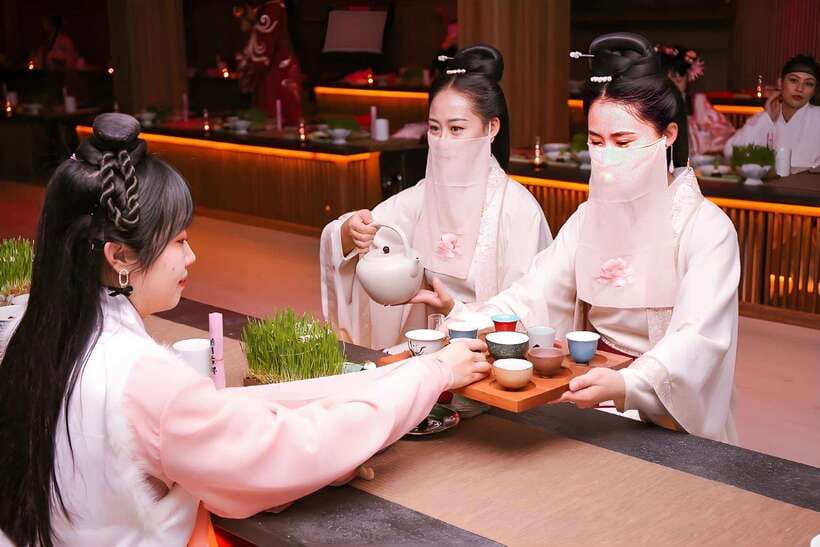
Book this experience for the combination of setting and presentation, not because it promises Beijing’s best meal. The strongest reasons to go are the Qing Dynasty connection, the restored courtyard, the carefully timed performance, and the chance to try formal dishes such as sea cucumber and abalone.
Arrive 30 minutes early. Use the provided address in Didi if your map points somewhere else, and ask a local to confirm the location if needed. Choose lunch at noon or dinner at 6:30 PM, and leave room in your schedule for the full two-hour program.
If Mandarin is not your language, accept that the performance will be partly understood through sight, sound, costumes, and action. If that sounds enjoyable, the language issue may not stop you. If you want historical explanations in English and a clearly described menu, choose a different dining show.
I would book it for a special Beijing evening when you want a polished cultural experience close to the Forbidden City. I would skip it if food quality alone is your main concern or if you need full foreign-language support.
FAQ
Where does the royal dining experience take place?
It takes place in a luxurious courtyard in central Beijing, about 2 kilometers from the Forbidden City.
How long does the experience last?
The dining and cultural performance last two hours.
What time does the lunch performance begin?
The lunch performance begins at 12:00 PM.
What time does the dinner performance begin?
The dinner performance begins at 6:30 PM.
How early should I arrive?
You should arrive 30 minutes before the performance begins.
What food is included?
The meal includes appetizers, tea, dessert, meaningful wine, sea cucumber, and abalone. The dishes are served as part of the performance.
Is the performance in English?
The performance is in Mandarin. The available information does not state that English interpretation is provided.
Are children required to buy tickets?
Children under 120 centimeters must buy a child ticket. Children over 120 centimeters must buy an adult ticket.
Is the venue wheelchair accessible?
Yes, the activity is listed as wheelchair accessible.
Can I cancel the booking?
Yes. You can cancel up to 24 hours in advance for a full refund. You can also reserve now and pay later.
Latest additions around Beijing
- Private Hike from Beijing: Go Beyond The Jiankou and Mutianyu Great Wall★ 5.0 · 3 reviews
- Bullet Train Private Tour: Beijing Tiananmen Square, Forbidden City & Great Wall★ 5.0 · 3 reviews
- Private Great Wall Hiking Tour from Simatai West to Jinshanling★ 4.5 · 3 reviews
- Private Transfer for Beijing Airport PEK or PKX★ 5.0 · 3 reviews
- Liyuan Theater Beijing Opera Show Tickets★ 5.0 · 3 reviews
- Private Jinshanling relax photo tour by sunset★ 5.0 · 3 reviews
- Private All-inclusive Jinshanling Great Wall 1-day tour★ 4.5 · 3 reviews
- Beijing Night Tour with Acrobatics Show & PekingDuck Dinner★ 5.0 · 3 reviews