
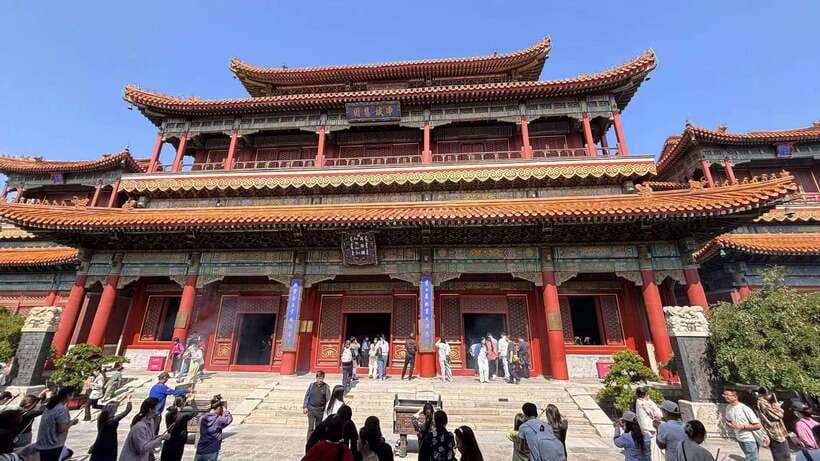
Reviewed · LAMA TEMPLE TOURS
Beijing: Yonghe Lama Temple Entry Ticket
Yonghe Lama Temple is not just another Beijing monument. It is a working Buddhist temple with imperial roots, Tibetan influence, and a sequence of courtyards that rewards a slow walk. For $9, this ticket gives you a simple way into one of the city’s most important religious sites.
I like the easy subway access and the chance to explore at your own pace. I also like that the ticket includes booking service and skips the ticket line. The main catch is practical but important: the QR code in the booking app may not be valid, so you must check your email or WhatsApp for the correct code and bring your passport.
In This Review
- Key points about the Yonghe Lama Temple ticket
- Why Yonghe Lama Temple deserves two hours
- The story behind the imperial residence
- Entering with the QR code and passport
- The easiest route from central Beijing
- What your two-hour visit feels like
- What makes the temple different from a palace visit
- Is the $9 ticket good value?
- Who should book this experience
- Small details that can save your visit
- Should you book Yonghe Lama Temple?
- FAQ
- How much does the Yonghe Lama Temple entry ticket cost?
- How long does the visit take?
- What do I need to enter the temple?
- Is the GetYourGuide QR code valid for entry?
- How do I reach Yonghe Lama Temple by subway?
- Can I reach the temple by bus?
- Is the temple wheelchair accessible?
- Can I cancel the ticket for a refund?
Key points about the Yonghe Lama Temple ticket
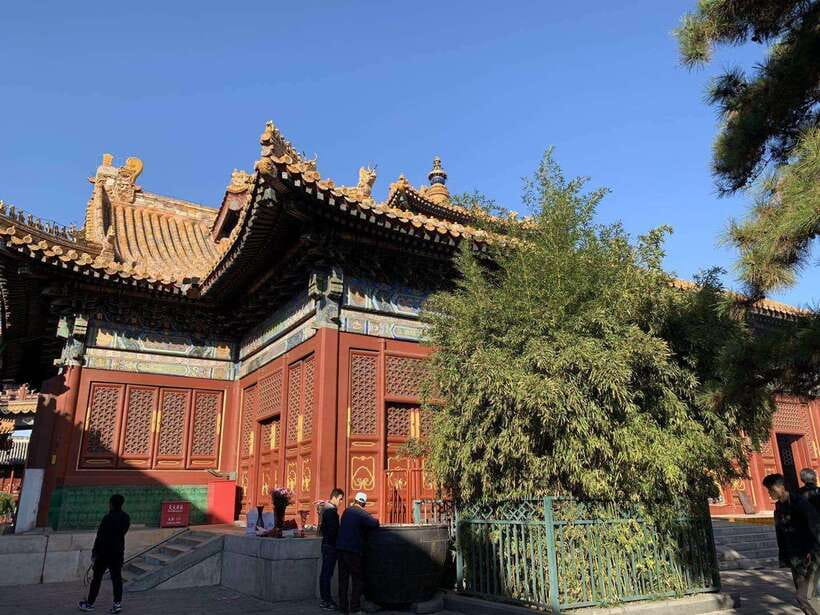
- Imperial beginnings: The complex was built in 1694 for the future Emperor Yongzheng before he took the throne.
- A Buddhist center since 1744: Emperor Qianlong brought 300 Tibetan monks and 200 Chinese students to the palace, changing its role from imperial residence to temple and monastery.
- Easy subway arrival: Yonghegong Station on Lines 2 and 5 is only about a two-minute walk from the entrance.
- Simple entry process: Show the correct QR code and your passport to enter the park.
- Good two-hour visit: The ticket suits a short Beijing sightseeing window, with enough time to take in the courtyards and temple buildings without rushing.
- Important booking warning: Do not rely on the generic GetYourGuide QR code. Check the separate code sent by email or WhatsApp.
Why Yonghe Lama Temple deserves two hours
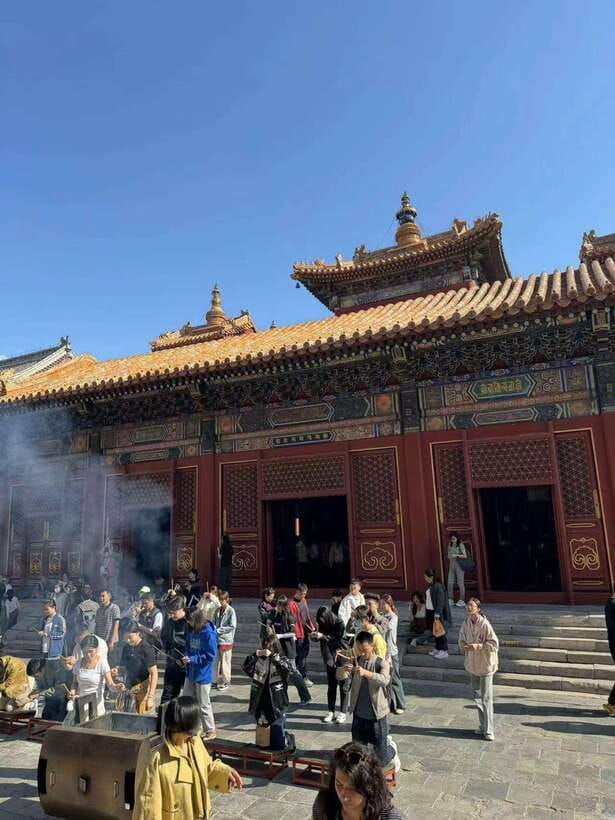
Yonghe Lama Temple, also called Yonghe Lamasery or Lama Temple, is Beijing’s principal and largest Buddhist temple. It is also described as the largest and best-preserved lamasery in present-day China.
That matters because this is not only a grand old building. The site brings together several parts of Chinese history in one place. It began as an imperial residence, became a Buddhist institution, and developed into one of the great centers of Buddhism outside Tibet.
You can feel that change in the layout. The temple complex is arranged as a series of courtyards and halls, so your visit has a natural forward rhythm. You pass from one section to the next, with each space offering a different view of the site’s religious and imperial character.
I would allow the full two hours if you want to read signs, pause in the courtyards, and look carefully at the details. If you are moving quickly between major Beijing sights, you can see the main areas in less time, but this is a place where slowing down improves the visit.
There is no guide included, so you are responsible for making sense of what you see. That can be a drawback if you want a detailed spoken explanation. On the other hand, an independent visit gives you room to set your own pace and avoid being tied to a group.
More Lama Temple visits:
- Temple Heaven, Lama Temple, Summer Palace & Peking Duck Bus Tour
★ 5.0 · 377 reviews - Temple Heaven, Summer Palace, Lama Temple, Hutong Bus Tour
★ 4.7 · 319 reviews - Temple of Heaven, Summer Palace, Lama Temple, Hutong Tours
★ 5.0 · 311 reviews
The story behind the imperial residence
The temple’s first chapter begins in 1694, when it was built as part of Beijing’s city wall for the future Emperor Yongzheng. At that point, it was not yet the major Buddhist site you see today.
Yongzheng did not become emperor until 1722. His connection to the complex gives the temple an unusual starting point. You are not entering a site that began as a monastery. You are entering a former imperial residence that later took on a new religious purpose.
In 1744, Yongzheng’s son, Emperor Qianlong, sent 300 Tibetan monks and 200 Chinese students to live at the palace. From then on, the complex served as a temple and monastery.
That detail helps explain why Yonghe Lama Temple is such a useful stop for understanding Beijing. The site connects the imperial court with Tibetan Buddhism and Chinese Buddhist practice. You do not need to be an expert to appreciate the change in purpose. A short visit can show you how a palace became a center of religious study and worship.
I recommend reading the basic historical information before you arrive, because the ticket provides entry rather than a full historical tour. Even a little background will make the courtyards and halls easier to understand.
Entering with the QR code and passport
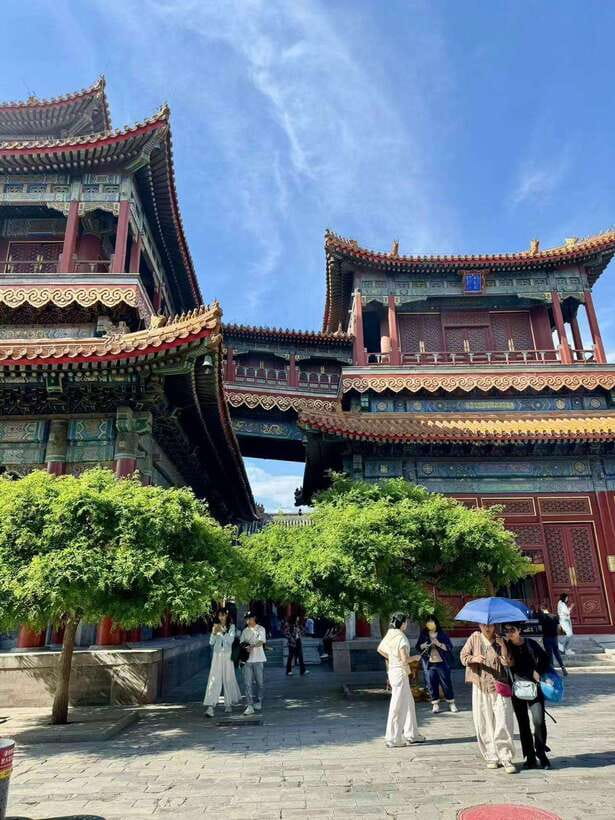
The entry process should be straightforward once you have the right documents. You use the booking QR code and your passport to enter the park.
The key word is right. The GetYourGuide QR code itself is not valid for entry. You need to check your email or WhatsApp for the separate QR code supplied for the visit.
This is the most important practical point in the entire booking. Do not wait until you reach the gate to search through your messages. Open the email or WhatsApp message before leaving your hotel, make sure the code is easy to display, and carry the passport used for the booking.
The ticket includes the Yonghe Lamasery admission and the booking service charge. It also allows you to skip the ticket line, which is useful at a major Beijing sight where time spent sorting out entry can cut into your visit.
The supplied information does not give a meeting point, tour guide name, or group size. That is because this is an entry ticket, not a guided walking tour. You arrive independently, pass through the entrance, and explore the temple on your own.
The attraction is wheelchair accessible. If mobility is a concern, that makes this ticket easier to consider, though the information provided does not describe the exact route or any limits inside the complex.
The easiest route from central Beijing
The simplest way to reach the temple is by subway. Take Line 2 or Line 5 to Yonghegong, also called Yonghe Temple, Station.
Use Exit F. After leaving the station, walk south for a few meters, then turn east. The temple is about a two-minute walk away.
This is one of the ticket’s strongest practical features. You do not need a private transfer or an arranged meeting point. The subway station is close, the route is short, and the attraction fits neatly into a day of independent sightseeing.
Bus routes are also available if the subway is not convenient. You can take buses 13, 116, 117, or 684 to Yonghegong Station. Another group of routes, including 13, 18, 44, 75, 116, 684, Te 2, and Te 12, stops at Yonghegong Qiao Dong Station. Buses 117 and 125 stop at Yonghegong Qiao Bei Station.
For most visitors, I would choose the subway rather than trying to match one of the many bus routes. The station exit and short walk make the arrival easy to plan, especially if you are working around other Beijing sights.
A few more Beijing options to compare side by side
- Beijing: Forbidden City Tour(Group/Private)-Tickets Included
★ 4.8 · 7,974 reviews - Beijing: Mutianyu Great Wall Daily Tour with Ticket & Lunch
★ 5.0 · 3,056 reviews - 4-Hour Small Group Tour to Forbidden City with Entry Tickets
★ 5.0 · 1,863 reviews - Beijing: Tiananmen Square Registration Service(Ticket)
★ 4.5 · 1,704 reviews
What your two-hour visit feels like
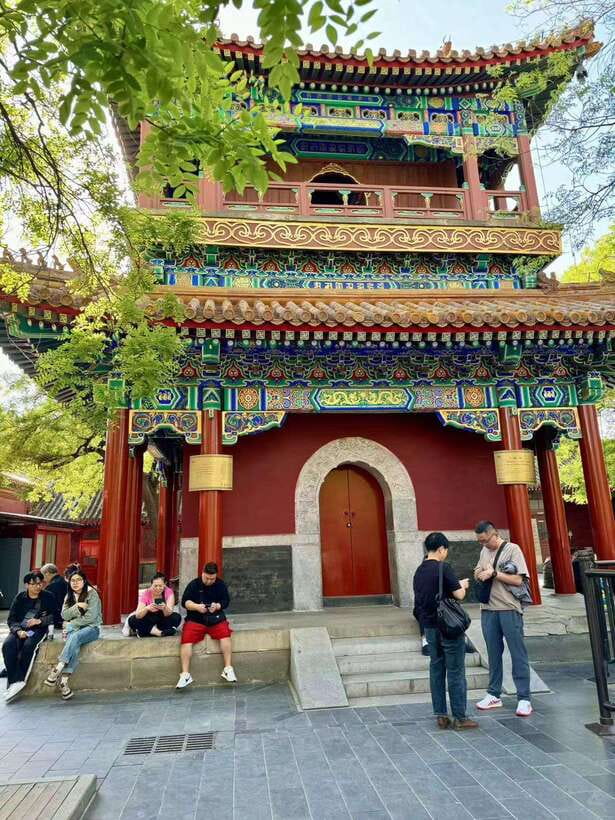
This is a self-guided temple visit, so your itinerary is flexible. You enter the park, move through the temple grounds, and decide how much time to spend in each section.
The complex’s sequence of courtyards gives your visit an obvious shape. Rather than wandering through one open garden, you progress through a series of spaces connected to the temple’s religious and imperial use.
The buildings are the main focus, but the setting also matters. Yonghe Lama Temple is a place of worship, not simply an old palace preserved for display. You should expect a more active religious atmosphere than at a purely historical monument.
That is part of the appeal. I like that the site has a present-day purpose. It gives the architecture a sense of use rather than making it feel like a collection of empty rooms.
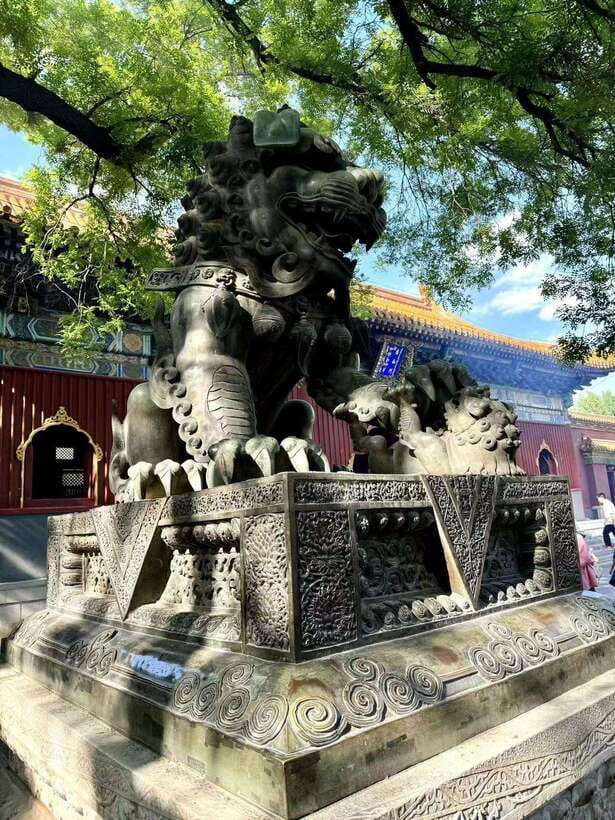
You might find that some areas invite a quick look while others deserve more time. Pause to study the construction, decoration, and layout, then continue when the space feels complete. Without a guide, you will not receive a prepared explanation at each stop, but you also will not be hurried along.
A two-hour duration is a sensible estimate. It is long enough for a considered visit and short enough to fit into a larger Beijing plan. Check the available starting times when booking, since the experience does not have one fixed departure time shown in the supplied information.
What makes the temple different from a palace visit
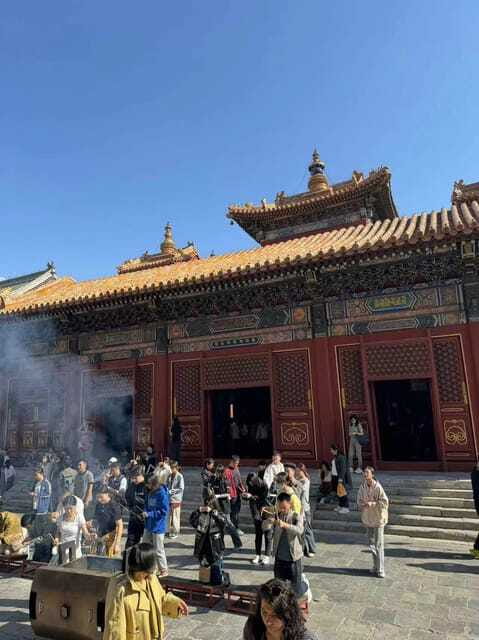
Beijing has no shortage of imperial sites, but Yonghe Lama Temple offers a different angle on the city’s past. Its connection with the Qing emperors is clear, yet its later role as a Buddhist institution is just as important.
The arrival of 300 Tibetan monks and 200 Chinese students in 1744 gave the complex a wider religious role. It became a place where Tibetan and Chinese Buddhist traditions met under imperial support.
That background is especially useful if you have already visited Beijing’s palaces and want something less focused on court ceremony. Here, the story shifts from the emperor’s household to religious teaching, monastic life, and worship.
I would pair this visit with other central Beijing sights only if you have enough time to slow down. It is easy to treat the temple as a quick photo stop because the subway makes it so accessible. You will get more from it if you regard the two hours as a quiet change of pace rather than another item to check off.
The site’s importance also makes it worthwhile for travelers interested in Buddhism, Qing history, architecture, or the relationship between China and Tibet. You do not need a specialist interest, but the visit becomes more rewarding when you have some curiosity about one of those subjects.
Is the $9 ticket good value?
At $9 per person, the ticket is reasonably priced for an important Beijing attraction. The value comes less from added services and more from convenience: admission is arranged, the ticket line can be skipped, and you receive instructions for using the QR code.
You are not paying for a guide, transport, meals, or a private experience. If you want someone to explain the temple’s artwork and history as you walk, you would need a different product. This ticket is best understood as a low-cost entry solution.
The reserve-now-and-pay-later option also helps if your Beijing schedule is still changing. You can reserve a place without paying immediately, then keep the plan flexible. Free cancellation is available up to 24 hours in advance for a full refund.
For a short independent visit, I consider the price fair. The main value is the time saved at the entrance and the ease of booking. If you are comfortable buying admission directly and managing the process yourself, you may prefer to compare other ticket options. If you want a clear reservation with booking support, the $9 price is sensible.
Who should book this experience
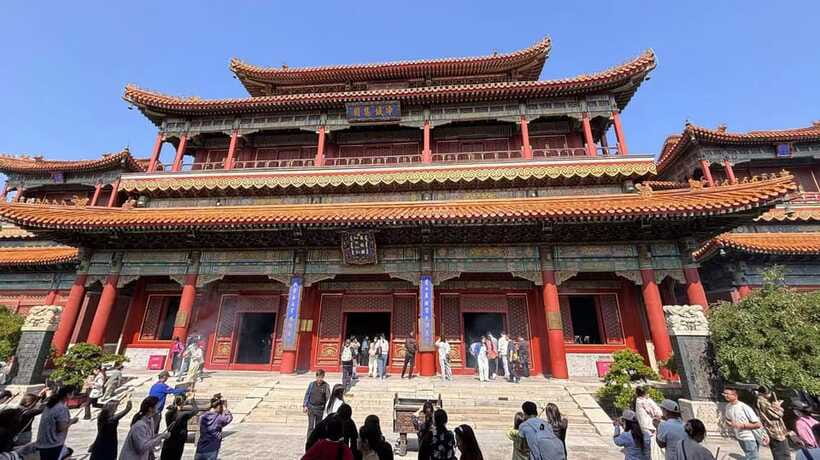
This ticket suits you best if you want to explore independently and already know how you will reach Yonghe Lama Temple. It is especially useful for:
- First-time Beijing visitors who want a major temple without arranging a guide
- People with a two-hour gap in their sightseeing schedule
- Visitors interested in Qing imperial history and Buddhism
- Travelers who prefer subway access and a simple entry process
- Wheelchair users looking for an accessible attraction
- Anyone who wants the option to cancel up to 24 hours ahead
It may be less suitable if you want a full historical explanation, a named guide, or transportation from your hotel. No guide is included, and the available information does not identify a guide or a guided route.
The temple also deserves respectful behavior. It is a religious site, not only a sightseeing attraction. Keep your voice low in active worship areas and follow signs or instructions on site.
Small details that can save your visit
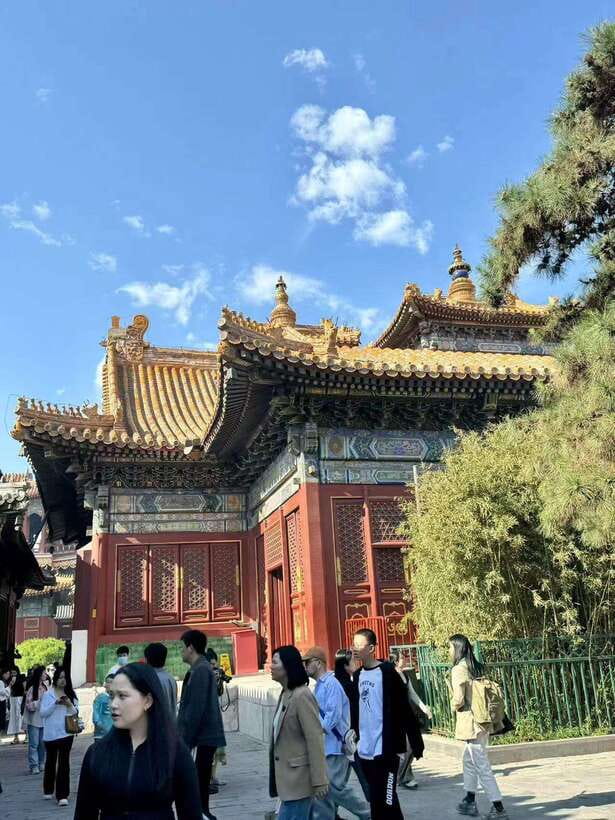
The QR warning deserves repeating. The generic GetYourGuide QR code is not valid, so find the correct code in your email or WhatsApp before you arrive.
Bring your passport. The entry instructions specifically require it along with the QR code, and a phone display alone is not enough.
Plan around the subway station rather than a vague map pin. Line 2 and Line 5 both serve Yonghegong Station, and Exit F is the most useful exit. From there, the walk takes about two minutes.
Give yourself a little extra time before the booked starting time. The entrance is close, but Beijing stations can be large, and finding the correct exit is easier when you are not rushing.
Finally, remember what you are buying. This is a temple entry ticket with booking service, not a complete city tour. Its strength is freedom, low cost, and easy access.
Should you book Yonghe Lama Temple?
Book it if you want a well-priced, independent visit to one of Beijing’s most important Buddhist sites. The combination of $9 admission, nearby subway access, skip-the-line entry, and a flexible two-hour visit makes it an easy addition to a Beijing itinerary.
I would hesitate only if you need a guide to explain every building or if you do not want to manage the QR code and passport requirements yourself. For everyone else, this is a practical way to see a former imperial residence that became a major Buddhist center. Check the correct QR code carefully, take the subway to Exit F, and give the temple enough time to reveal its story.
FAQ
How much does the Yonghe Lama Temple entry ticket cost?
The ticket costs $9 per person.
How long does the visit take?
The stated duration is two hours. You can check available starting times when booking.
What do I need to enter the temple?
You need the correct booking QR code and your passport.
Is the GetYourGuide QR code valid for entry?
No. The GetYourGuide QR code is not valid. Check your email or WhatsApp for the correct QR code.
How do I reach Yonghe Lama Temple by subway?
Take Subway Line 2 or Line 5 to Yonghegong Station. Leave through Exit F, walk south for a few meters, turn east, and you should arrive in about two minutes.
Can I reach the temple by bus?
Yes. Several buses serve the area, including routes 13, 116, 117, and 684 at Yonghegong Station. Other available stops include Yonghegong Qiao Dong and Yonghegong Qiao Bei.
Is the temple wheelchair accessible?
Yes, the activity information states that Yonghe Lamasery is wheelchair accessible.
Can I cancel the ticket for a refund?
Yes. You can cancel up to 24 hours in advance for a full refund. The reserve-now-and-pay-later option lets you book without paying immediately.
Latest additions around Beijing
- Private Hike from Beijing: Go Beyond The Jiankou and Mutianyu Great Wall★ 5.0 · 3 reviews
- Bullet Train Private Tour: Beijing Tiananmen Square, Forbidden City & Great Wall★ 5.0 · 3 reviews
- Private Great Wall Hiking Tour from Simatai West to Jinshanling★ 4.5 · 3 reviews
- Private Transfer for Beijing Airport PEK or PKX★ 5.0 · 3 reviews
- Liyuan Theater Beijing Opera Show Tickets★ 5.0 · 3 reviews
- Private Jinshanling relax photo tour by sunset★ 5.0 · 3 reviews
- Private All-inclusive Jinshanling Great Wall 1-day tour★ 4.5 · 3 reviews
- Beijing Night Tour with Acrobatics Show & PekingDuck Dinner★ 5.0 · 3 reviews
Lama Temple Tours, compared.
Temple Heaven, Lama Temple, Summer Palace & Peking Duck Bus Tour
Read our review →
Temple Heaven, Summer Palace, Lama Temple, Hutong Bus Tour
Read our review →
Temple of Heaven, Summer Palace, Lama Temple, Hutong Tours
Read our review →

Beijing Historical Tour II including Summer Palace, Lama Temple & Panda Garden
Read our review →
Beijing Lama temple ticket; #1 efficacious; limited Discount
Read our review →
Panda House, Temple of Heaven, Lama Temple, Summer Palace & Lunch
Read our review →
Private Day Tour Forbidden City Lama Temple and Temple of Heaven
Read our review →Browse the lists this tour appears in