
Reviewed · TICKETS
Beijing: YuanMingYuan Park (Garden of Gardens) e-Ticket
Yuanmingyuan, Beijing’s Old Summer Palace, is one of those places where beauty and loss share the same path. The former Qing imperial retreat once held grand halls, lakes, bridges, and gardens shaped by both Chinese and European ideas. Today, its ruined marble buildings and broad parkland tell a quieter story.
I like the low $9 price, which gives you a full day to explore without paying for a packaged tour. I also like the freedom to move at your own pace, with an English visual guide to explain what you are seeing. The catch is size: this park is huge, and a basic ticket does not include a live guide, audio guide, boat ride, or help with route planning.
In This Review
- Key points to know before you go
- Why Yuanmingyuan feels different from Beijing’s grand monuments
- The Qing imperial garden before the destruction
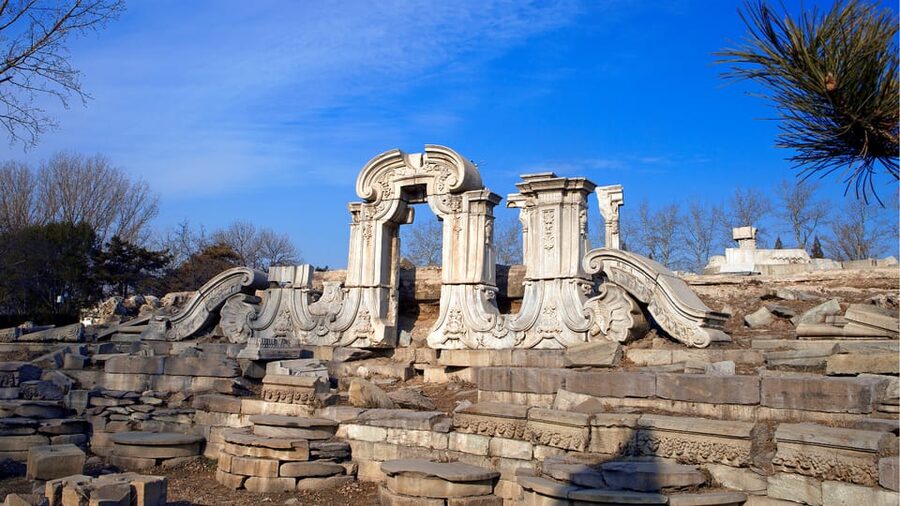
- The Western-style ruins and their quiet drama
- How to spend a full day without getting lost
- What the e-ticket includes for $9
- Understanding the tragedy of 1860
- The practical challenge: scale and route finding
- Boat rides and extra activities
- Who will enjoy this visit most
- Booking, identification, and cancellation
- My verdict on Yuanmingyuan’s value
- Should you book this Yuanmingyuan e-ticket?
- FAQ
- What is Yuanmingyuan Park?
- What happened to Yuanmingyuan in 1860?
- What does the $9 ticket include?
- Is a live tour guide included?
- Is an audio guide included?
- How long can I spend at Yuanmingyuan?
- What should I bring?
- Can I cancel for a refund?
- Can I reserve now and pay later?
- Is a boat ride included?
Key points to know before you go
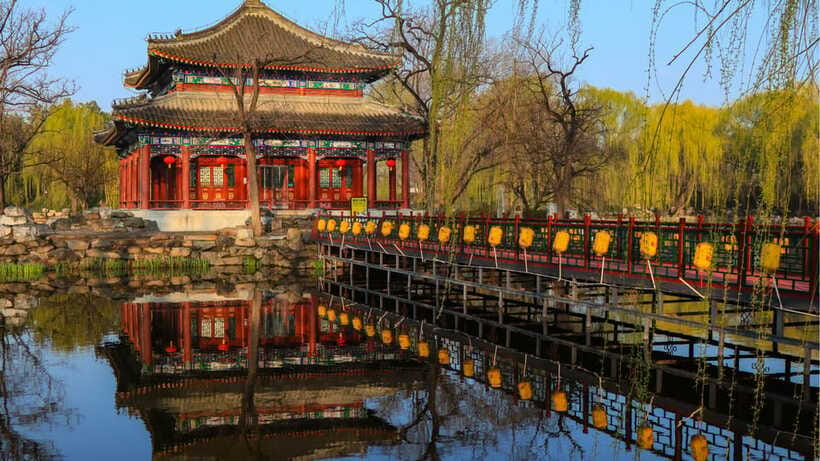
- A Qing imperial garden: Yuanmingyuan was built in the 18th century as a royal retreat and reached a high point in Qing garden design.
- Ruins with a difficult story: Foreign troops looted and burned the palace in 1860 during the Second Opium War.
- A blend of East and West: Chinese garden traditions meet European-style buildings and formal marble ruins.
- Plan for several hours: One visitor spent more than four and a half hours exploring only the basic-ticket areas and still did not see everything.
- Bring official identification: Your passport or ID card is required.
- A self-guided visit: Admission and an English text and visual guide are included, but there is no live guide or audio commentary.
Why Yuanmingyuan feels different from Beijing’s grand monuments
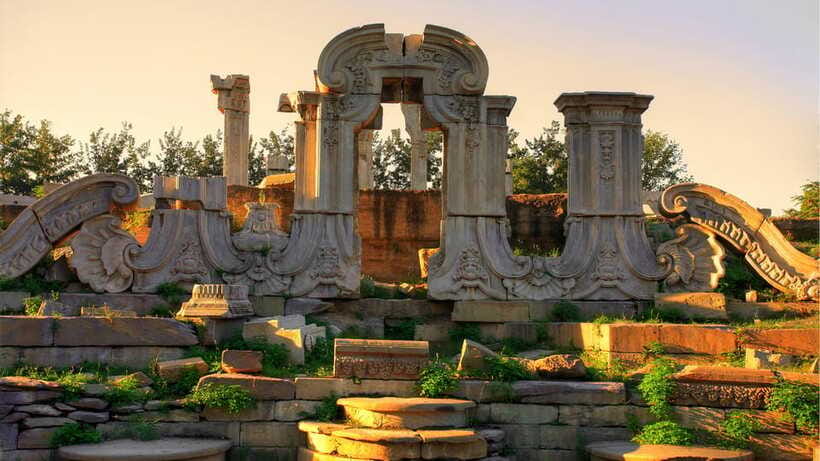
Beijing has famous imperial sites that look polished, ordered, and complete. Yuanmingyuan offers something more unsettled. You walk through open parkland, past ponds and flowers, and then come upon broken stonework that hints at rooms and courtyards that no longer exist.
That contrast gives the visit its power. You are not simply admiring a restored palace. You are trying to picture one that was once vast, elaborate, and filled with art, then damaged beyond repair. The gaps matter as much as the surviving stones.
Yuanmingyuan was built during the Qing Dynasty in the 18th century. It served as a royal retreat, a place where emperors could work, relax, and enjoy carefully planned gardens away from the main ceremonial centers of Beijing. The grounds included pavilions, lakes, bridges, halls, artworks, and garden scenes designed to shift from formal views to intimate corners.
The name Garden of Gardens suits the scale and ambition. The site was not one simple palace compound. It was a large collection of gardens and structures, with water and planting used to connect different areas. That makes it rewarding for a slow visit, but confusing if you arrive without a rough plan.
A few more Beijing options to compare side by side
- Beijing: Forbidden City Tour(Group/Private)-Tickets Included
★ 4.8 · 7,974 reviews - Beijing: Mutianyu Great Wall Daily Tour with Ticket & Lunch
★ 5.0 · 3,056 reviews - 4-Hour Small Group Tour to Forbidden City with Entry Tickets
★ 5.0 · 1,863 reviews
The Qing imperial garden before the destruction
The most useful way to approach Yuanmingyuan is to imagine it as a complete royal world rather than a ruin from the start. The palace complex represented the taste and resources of the Qing court, combining architecture, water, plants, sculpture, and carefully framed views.
Chinese garden design often uses changing scenes rather than one grand view. A path may lead you beside a pond, across a delicate bridge, or toward a pavilion partly hidden by trees. At Yuanmingyuan, that approach was joined by European-inspired buildings, particularly in the area associated with Western-style palaces.
The result was unusual. You see Eastern impressionistic garden design alongside Western architectural forms. Marble halls and formal structures once provided a strong contrast with the softer shapes of ponds, trees, and bridges.
I find this mixture more interesting than a simple collection of palace buildings. It shows how the Qing court absorbed outside ideas while still placing them inside a distinctly Chinese garden setting. The English text and visual guide can help you notice that difference, especially if you are not familiar with Chinese garden planning.
The Western-style ruins and their quiet drama
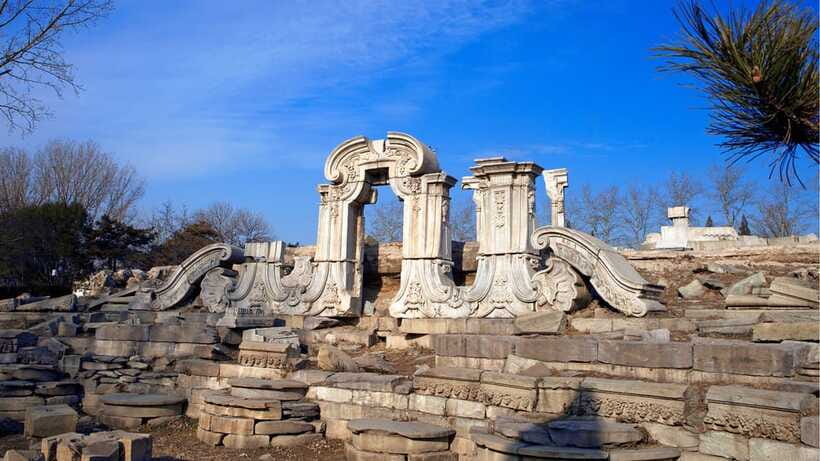
The best-known ruins are connected with the European-style section of the former palace. The surviving stone fragments are not intact rooms waiting to be entered. They are pieces: columns, walls, carved details, and broken structures surrounded by open ground and vegetation.
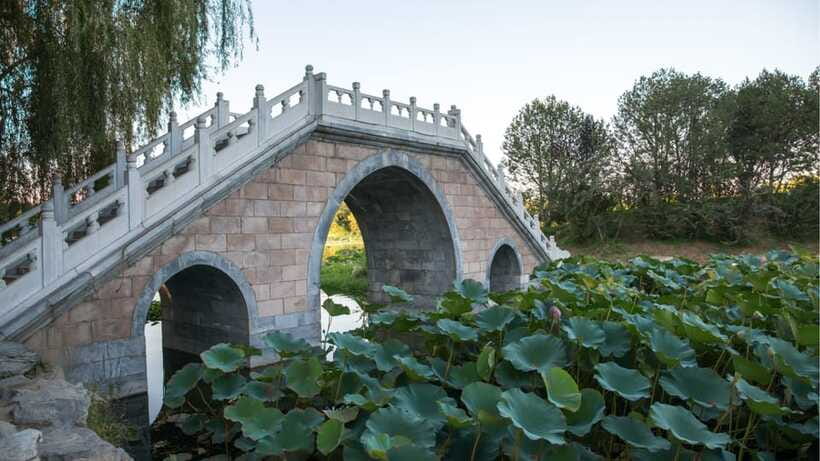
That partial view is the point. You can see enough to understand the ambition of the buildings, but not enough to forget what happened to them. The ruins have a melancholy quality, especially when set against still water, lotus flowers, and calm paths.
Do not expect the site to function like a restored palace museum. Much of the experience comes from looking, imagining, and reading. If you need room after room filled with objects and labels, Yuanmingyuan may feel sparse. If you enjoy architecture, gardens, and historical traces, the lack of completeness can make the visit more thought-provoking.
The park’s water and plant life are another reason to allow plenty of time. One recent visit specifically highlighted the large water lilies. These natural details prevent the outing from becoming a solemn march from one damaged building to another. You get stretches of peaceful scenery between the historical stops.
How to spend a full day without getting lost
The ticket is valid for a one-day visit, and that matters because Yuanmingyuan is too large for a quick look. One visitor needed more than four and a half hours with the basic ticket and still did not have time to see everything.
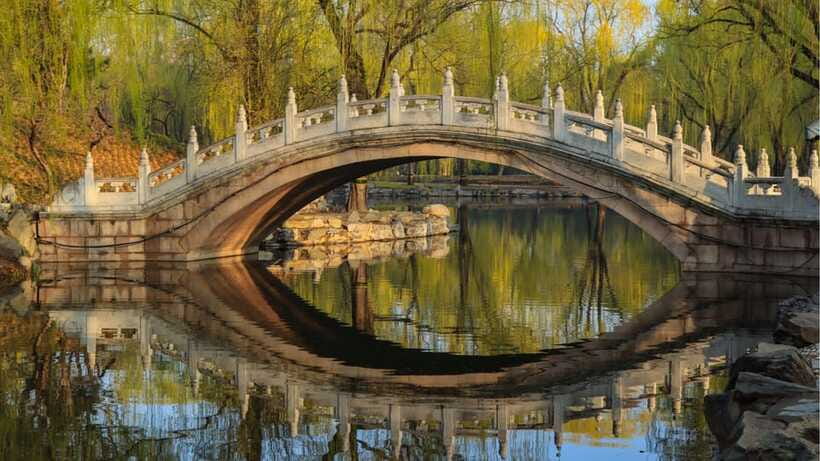
I suggest starting by deciding what matters most to you. If your priority is the ruined Western-style architecture, make that your main target. If you prefer gardens and water, give yourself time for the ponds, bridges, flowers, and quieter sections rather than rushing from ruin to ruin.
Use the English guide before you begin walking. It includes text and images, which can give you a basic sense of the site and help you recognize important areas. Since there is no live guide or audio guide, this preparation is worth doing.
A practical visit might look like this:
- Begin with the main historical context so the ruins have meaning.
- Head toward the most important surviving Western-style structures.
- Pause at the water areas and garden sections rather than treating them as filler.
- Use the guide to identify buildings or areas you might otherwise pass.
- Keep extra time for wandering, because the park is easy to underestimate.
The key is not to chase every corner. A huge park can become tiring if you turn the day into a checklist. Pick a few main areas, then leave room for the unexpected view.
Swap the crowds for a different corner of Beijing:
- From Beijing: Mutianyu Great Wall Tours with Options
★ 4.9 · 9,216 reviews - Beijing: T-Square & Forbidden City Group or Private Tour
★ 4.8 · 4,446 reviews - All-Inclusive Tour: Tiananmen Square, Forbidden City, Great Wall
★ 5.0 · 2,873 reviews - MuBus: Mutianyu Great Wall ENG/ESP/RUS Guided Bus Tour
★ 5.0 · 2,361 reviews
What the e-ticket includes for $9
For $9 per person, you receive admission to Yuanmingyuan and an English textual and visual guide. That is a fair price for a major historic park that can occupy much of your day.
The value depends on how you like to visit. I think it works well for independent sightseers who want a low-cost cultural stop and do not need constant explanation. You can linger beside the water, study the ruins, or change your route without keeping up with a group.
The ticket is less suitable if you want a structured historical lecture. There is no live guide and no audio guide included. The written material provides support, but you remain responsible for understanding the site and finding your way through it.
That is not necessarily a flaw. A live tour could give the destruction of 1860 more detail and make the former palace easier to understand. On the other hand, a group schedule might limit the peaceful, unhurried quality that makes the park special.
The low cost also leaves room in your Beijing budget for other major sights. At this price, Yuanmingyuan can be a smart addition for anyone interested in imperial China, garden design, or the physical traces of conflict.
Understanding the tragedy of 1860
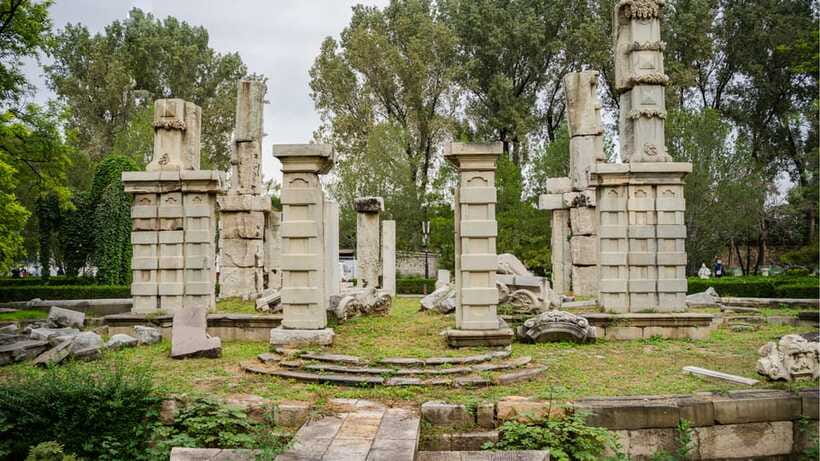
Yuanmingyuan’s beauty cannot be separated from its destruction. During the Second Opium War in 1860, foreign troops looted and burned the palace. The damage destroyed much of the complex and scattered or removed many of its treasures.
That event is central to the meaning of the site. You are not simply looking at old stones. You are seeing the remains of a royal center damaged during a period when China faced intense pressure from foreign powers.
The ruins can make that history feel more immediate than a display case might. A shattered sculpture or broken wall gives you a physical reminder of what was lost. At the same time, the park does not recreate the palace in full, so you must use imagination and the guide to bridge the gap between the surviving remains and the original complex.
I appreciate that the site encourages reflection rather than offering only imperial glamour. You can admire the design of the gardens while also thinking about power, cultural loss, and the long memory of war. This makes Yuanmingyuan a particularly strong choice for history-minded visitors.
Still, be prepared for an incomplete story in visual terms. Many buildings are gone. Some areas may feel like attractive parkland with only occasional historical clues. If you want a concentrated sequence of intact halls, this is not the right place.
The practical challenge: scale and route finding
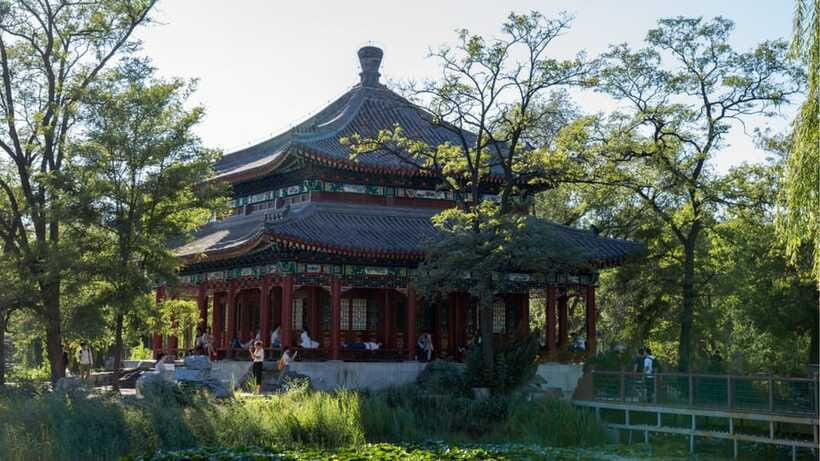
The biggest problem is simple: Yuanmingyuan is very large. It is easy to lose your sense of direction, especially if you want to see the gardens, water, and ruins rather than follow one short path.
You should allow several hours, and a full day is available if you want to explore slowly. Wear comfortable shoes and keep your plan flexible. The supplied information does not promise transportation within the park, so do not assume you can cover everything quickly.
The size is also part of the appeal. You get a better feel for the former imperial retreat when you move through different garden areas instead of viewing one isolated ruin. Just remember that an ambitious route takes time.
A phone with the guide saved before you arrive may be useful, particularly since the product includes a PDF-style English guide rather than an on-site guide. One booking assistant, Panda, helped a visitor by resending e-tickets and checking that the ticket and guide worked. That suggests it is wise to download everything in advance and confirm that you can open the files before setting out.
Boat rides and extra activities
The basic admission does not include every possible activity inside or around the park. A boat ride may require WeChat, and one visitor missed it because there was not enough time to set up WeChat.
The important point is to treat a boat ride as an optional extra, not part of the ticket you are buying. If being on the water is a priority, check the arrangements before your visit and allow time for any required setup.
You can still enjoy Yuanmingyuan without a boat. The ponds, bridges, flowers, and paths are part of the admission experience, and the park’s size gives you plenty to see on foot. But do not arrive expecting all activities to be covered by the $9 e-ticket.
Who will enjoy this visit most
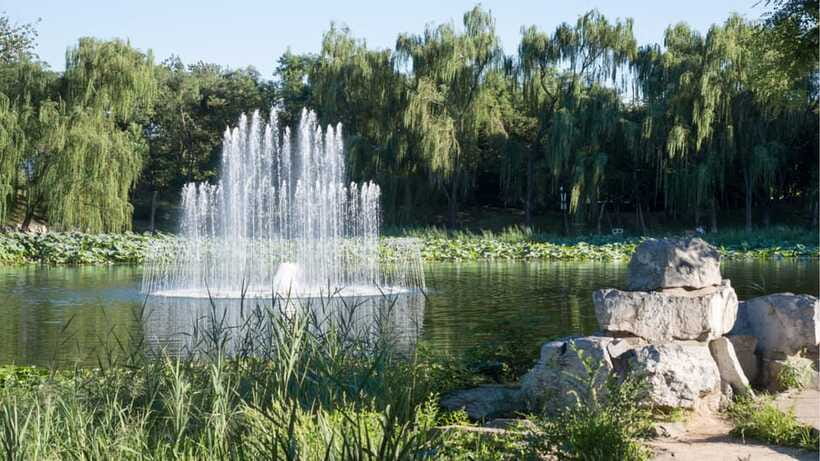
I would choose Yuanmingyuan if you like history that leaves room for interpretation. It suits people who enjoy ruins, gardens, old architecture, and the connection between beautiful places and painful events.
It is also a good choice for repeat visitors to Beijing who want something less predictable than the city’s most polished imperial attractions. The park offers a slower pace and a different kind of visual experience, with water lilies and open garden areas sharing attention with damaged stone buildings.
Families can enjoy the space, but younger children may not find enough immediate explanation or spectacle unless adults help tell the story. The lack of a live guide means you should be ready to explain the basic history yourself.
I would be cautious about booking it for a very short Beijing stop. The park is large, and you may spend as much time orienting yourself as appreciating the ruins. If you have only a few hours in the city, a more compact sight may be easier.
Booking, identification, and cancellation
Bring your passport or ID card. This is not a detail to leave at your hotel, since official identification is listed as required for entry.
The booking offers free cancellation up to 24 hours in advance for a full refund. You can also reserve now and pay later, which is useful if your Beijing schedule is still changing. Check the available starting information when booking, since the activity is listed as lasting one day rather than having one fixed short tour time.
The admission is designed as a skip-the-ticket-line e-ticket. That can save time, but it does not remove the need to understand the site before you arrive. The ticket gets you in. The guide and your own plan determine how much you get from the visit.
My verdict on Yuanmingyuan’s value
I think this is a strong $9 cultural experience, provided you understand what you are buying. You are paying for access to a very large historic park and an English visual guide, not for a fully narrated tour or a restored palace interior.
The most praised parts are the beauty of the grounds, the peaceful water and flowers, the helpful ticket support from Panda, and the sense that the site is underappreciated compared with better-known Beijing attractions. Those points match the main strength of Yuanmingyuan: it rewards time and curiosity.
The main warning is also clear. The park can be confusing, and some people may find there is not enough visible history once they leave the principal ruins. A little preparation makes a major difference.
Should you book this Yuanmingyuan e-ticket?
Book it if you want a flexible, inexpensive day in a former imperial garden and you are comfortable exploring without a guide. Bring your passport or ID card, save the English guide, and plan for at least several hours.
Skip it if you need an intact palace, a tightly organized route, or a live explanation at every stop. For history fans, garden lovers, and anyone interested in the scars left by the Second Opium War, Yuanmingyuan is well worth the modest price.
FAQ
What is Yuanmingyuan Park?
Yuanmingyuan, also called the Old Summer Palace, is a large royal garden built during China’s Qing Dynasty in the 18th century.
What happened to Yuanmingyuan in 1860?
The palace was looted and burned by foreign troops during the Second Opium War, leaving many of its former buildings in ruins.
What does the $9 ticket include?
The ticket includes admission to Yuanmingyuan Park and an English textual and visual guide.
Is a live tour guide included?
No. The e-ticket does not include a live tour guide.
Is an audio guide included?
No. An audio guide is not included. The included support is an English text and image guide.
How long can I spend at Yuanmingyuan?
The activity is listed as lasting one day. You should allow several hours because the park is very large. One visitor spent more than four and a half hours and still did not see everything.
What should I bring?
Bring your passport or ID card, which is required information for the visit.
Can I cancel for a refund?
Yes. You can cancel up to 24 hours in advance for a full refund.
Can I reserve now and pay later?
Yes. The booking option allows you to reserve your place and pay later.
Is a boat ride included?
The basic ticket does not state that a boat ride is included. A boat activity may require WeChat, so check the arrangements if you specifically want to take one.
Latest additions around Beijing
- Private Hike from Beijing: Go Beyond The Jiankou and Mutianyu Great Wall★ 5.0 · 3 reviews
- Bullet Train Private Tour: Beijing Tiananmen Square, Forbidden City & Great Wall★ 5.0 · 3 reviews
- Private Great Wall Hiking Tour from Simatai West to Jinshanling★ 4.5 · 3 reviews
- Private Transfer for Beijing Airport PEK or PKX★ 5.0 · 3 reviews
- Liyuan Theater Beijing Opera Show Tickets★ 5.0 · 3 reviews
- Private Jinshanling relax photo tour by sunset★ 5.0 · 3 reviews
- Private All-inclusive Jinshanling Great Wall 1-day tour★ 4.5 · 3 reviews
- Beijing Night Tour with Acrobatics Show & PekingDuck Dinner★ 5.0 · 3 reviews
Tickets, compared.

Forbidden City Tour(Group/Private)-Tickets Included
Read our review →
Mutianyu Great Wall Daily Tour with Ticket & Lunch
Read our review →
4-Hour Small Group Tour to Forbidden City with Entry Tickets
Read our review →
The Temple of Heaven or Summer Palace Entry Ticket
Read our review →
Beijing Forbidden City Ticket Booking (Optional: guide service)
Read our review →
Mutianyu Gt Wall Trip, Depart 8-10am Bus w/ Tickets
Read our review →
Forbidden City&T-Square Small GroupTours w/ ticket(Eng/Esp Guide)
Read our review →