Reviewed · TICKETS
Confucius Temple and Imperial College Entrance Ticket
Beijing’s Temple of Confucius and Guozijian Museum gives you a quieter look at imperial China’s education system, only a short walk from the Lama Temple. Its stone steles record scholars who passed the Imperial Examination, while the adjoining college shows where the empire trained its officials.
I like the low $8 admission price and the freedom to spend two or three hours reading, walking, and looking closely at the carvings. I also like that you can choose an English-speaking guide instead of paying for one when you simply want an independent museum visit. The main caution is practical: one booking for two people had a QR-code problem at the entrance, so check both codes before you go.
In This Review
- Key points to know before you book
- Why this small Beijing museum deserves your time
- The Temple of Confucius: ceremony, statues, and stone records
- Guozijian Museum and the imperial college
- What the two-site visit feels like in practice
- Is the guided upgrade worth paying for?
- How the $8 price measures up
- Who should book this experience?
- Practical details that can make the visit easier
- My recommendation: buy the ticket or choose the guide?
- FAQ
- Where is the Temple of Confucius and Guozijian Museum?
- What does the ticket include?
- Is a guide included?
- How much does admission cost?
- How long should I allow for the visit?
- When will I receive the tickets?
- Can I visit independently without a guide?
- Is this a private tour?
- What happens if I need to cancel?
Key points to know before you book
- Two important sites in one visit: The ticket covers the Temple of Confucius and the neighboring Guozijian Museum, once the imperial college.
- A short walk from the Lama Temple: This makes the ticket easy to pair with another major Beijing sight.
- Expect a reading-heavy visit: English instructions and exhibits are available, and you can spend about two or three hours here.
- Choose your level of help: An English-speaking guide is included only when you select the guided option.
- Good value at $8 per person: The price suits visitors who want cultural context without committing to a full-day tour.
- Check your QR codes carefully: A reported issue affected one of two codes, though the entrance guard allowed both people in.
Why this small Beijing museum deserves your time
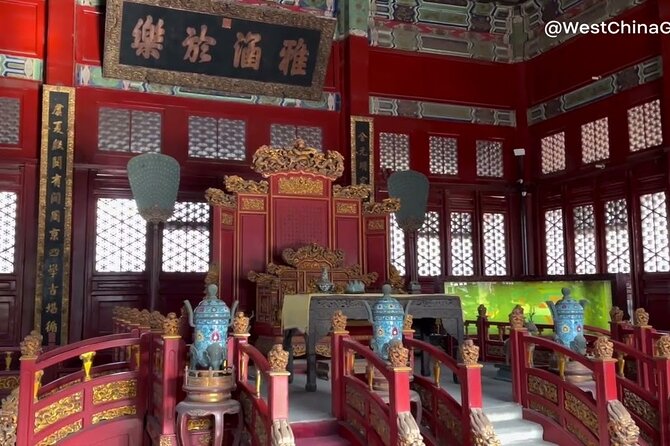
The Temple of Confucius and Guozijian Museum explains a side of Beijing that the grand imperial palaces cannot. Instead of focusing on emperors, court ceremony, or military power, this place shows how the Chinese state selected and trained its officials.
That system mattered for centuries. Under the Yuan, Ming, and Qing dynasties, education and examination success could open the door to government service. The site lets you connect that idea to physical evidence: formal halls, carved stones, statues, and records of successful scholars.
I like this kind of stop because it rewards patience. You are not simply walking through one large ceremonial building. You are moving between related spaces, reading inscriptions, and working out how education fitted into the machinery of imperial government.
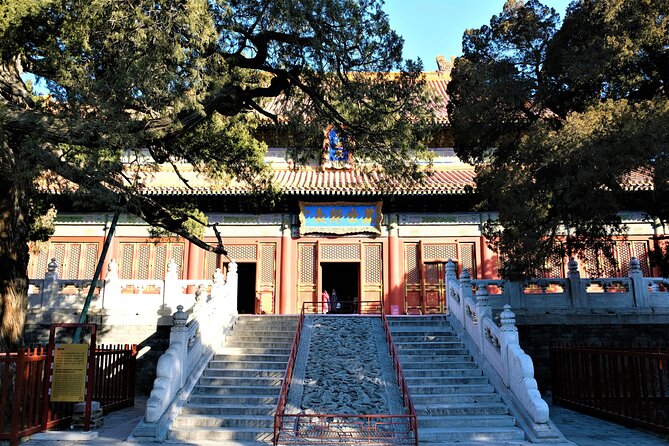
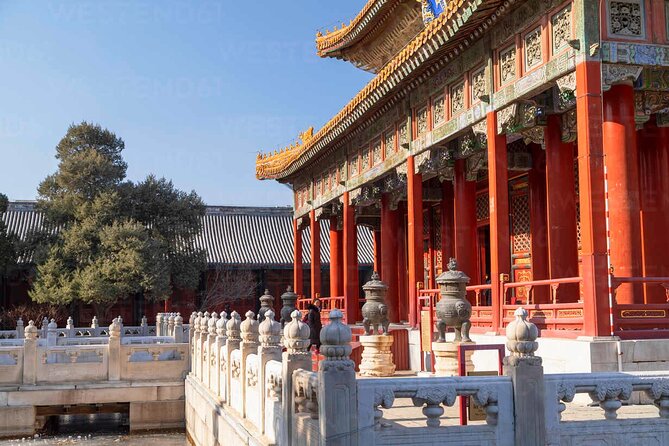
The Temple of Confucius was first built in 1302. Officials used it to honor Confucius and offer sacrifices to him. It is the second-largest Confucian temple in China, after the temple in Confucius’ hometown of Qufu.
The adjoining Guozijian was built in 1306. It served as the imperial college, giving the site a useful two-part character. One side centers on respect for Confucius and formal ritual. The other focuses on higher education and the training of future officials.
A few more Beijing options to compare side by side
- Beijing: Forbidden City Tour(Group/Private)-Tickets Included
★ 4.8 · 7,974 reviews - Beijing: Mutianyu Great Wall Daily Tour with Ticket & Lunch
★ 5.0 · 3,056 reviews - 4-Hour Small Group Tour to Forbidden City with Entry Tickets
★ 5.0 · 1,863 reviews
The Temple of Confucius: ceremony, statues, and stone records
Begin with the temple itself. Its halls and courtyards were designed for solemn acts of respect, not casual entertainment. You will find statues and carvings that help give shape to Confucian teaching, along with architectural details that make the site feel more like a place of study and ritual than a conventional museum.
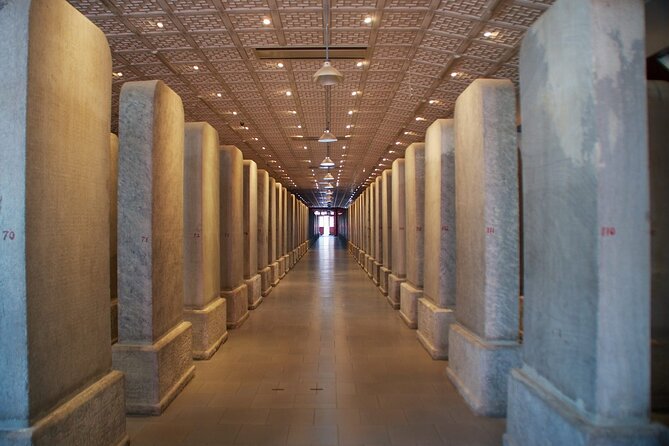
The most unusual feature is the large collection of stone steles. These carved tablets record the names of scholars who passed the Imperial Examination. For you, the stones turn an abstract subject into something personal. Each name represents years of study and a successful step toward official service.
You might not read every inscription, and you do not need to. The value is in seeing how achievement was recorded and displayed. In a society where education could determine status, these stones were a public record of success.
Allow time to move slowly through this section. The temple is not best treated as a quick photo stop. Look at the repeated forms in the carvings, compare the halls, and pause at the steles. The more you know about the examination system, the more meaningful these simple records become.
English instructions and exhibits are available throughout the museum. That makes an independent visit workable, especially if you prefer to read at your own speed. You may still want the guide option if you would like the larger story explained as you go.
The information is useful, but the site has enough layers that a guide could help connect the rituals, the temple’s purpose, and the examinations. With the ticket-only option, you gain privacy and flexibility. With the guided option, you gain interpretation and a person who can point out details you might otherwise pass.
Guozijian Museum and the imperial college
The college next door is what gives this outing its special focus. Guozijian was not simply another temple courtyard. It was the imperial college, linked to the official education system during the Yuan, Ming, and Qing periods.
That distinction matters. The Temple of Confucius shows how Confucius was honored. Guozijian shows how his teachings were connected to education, government, and social advancement.
As you walk through the scholarly halls, think of the site as part school and part state institution. The setting reflects the importance the empire placed on classical learning. Students and officials were judged through a demanding examination system, and the successful names carved into stone at the temple give you a record of that process.
The museum consists of multiple halls, courtyards, stone inscriptions, and exhibits about education in imperial China. You will not be rushing from one headline attraction to another. Instead, the visit works best as a steady progression through related spaces.
This is a good place to spend time with the displays. One booking experience specifically found enough English material to occupy two or three hours. That is a useful guide for planning, though your pace will depend on how closely you read each exhibit.
If you have only a short window in Beijing, you can still see the main areas more quickly. But the $8 ticket becomes especially good value if you are willing to read and examine the details rather than simply walk through.
What the two-site visit feels like in practice
The experience is a self-guided entrance ticket unless you select the English-speaking guide option. That means you decide how long to stay, where to pause, and how much information to take in.
The approximate duration is listed as one day, but the actual visit can be much shorter. Plan on roughly two to three hours if you want time for the halls, steles, inscriptions, and English displays. You can then continue elsewhere in Beijing rather than giving the entire day to this one site.
The location helps. The temple and museum are a short walk from the Lama Temple, making them easy to combine on the same outing. The area is also near public transportation, so you do not need to build your day around a complicated transfer.
I would pair the sites based on your energy. Visit the Lama Temple first if you want a strong contrast between Buddhist worship and Confucian learning. Visit the Confucius Temple first if you prefer to begin with a quieter, more academic setting.
The entrance area is where you need to pay attention. Tickets are sent five days before the travel date, and confirmation is provided at booking. If you book for two or more people, open every QR code before you arrive and make sure each one appears valid.
One booking for two people had one working QR code and one invalid code. The entrance guard understood the problem and allowed both people inside, but that was a fortunate solution rather than something to count on. Keep the provider’s contact number available in case you need help at the gate.
Swap the crowds for a different corner of Beijing:
- From Beijing: Mutianyu Great Wall Tours with Options
★ 4.9 · 9,216 reviews - Beijing: T-Square & Forbidden City Group or Private Tour
★ 4.8 · 4,446 reviews - All-Inclusive Tour: Tiananmen Square, Forbidden City, Great Wall
★ 5.0 · 2,873 reviews - MuBus: Mutianyu Great Wall ENG/ESP/RUS Guided Bus Tour
★ 5.0 · 2,361 reviews
Is the guided upgrade worth paying for?
The answer depends on how you like to visit museums. If you enjoy reading English displays and setting your own pace, the basic ticket should be enough. You can spend two or three hours here without needing a guide to fill the time.
The guided option includes an English-speaking tour guide. No guide’s name is provided in the booking details, so you should not expect to request a particular person. The main benefit is having someone explain how the temple, imperial college, examinations, and Confucian rituals fit together.
I would choose the guide if this is your first serious look at Chinese imperial education or if you want a clear narrative instead of separate displays. I would skip it if you prefer silence, photography, and the chance to linger over one inscription while moving past another.
Because the site contains scholarly material, a good explanation can save you from missing the point. The stones and halls may look repetitive at first. Context helps you see why they were made, who used them, and what success meant in that period.
Still, the ticket-only visit is not a poor substitute. The availability of English instructions makes this one of the more manageable independent cultural stops in Beijing.
How the $8 price measures up
At $8 per person, this is an inexpensive way to spend part of a Beijing day. The ticket covers admission to both the Temple of Confucius and Guozijian Museum, not just one courtyard or a single exhibit.
The value is strongest for people who enjoy museums, architecture, inscriptions, and historical context. You get more from the price if you read the displays and allow a few hours. If you only want a quick photograph, the ticket still remains inexpensive, but you will not be using the site to its full potential.
Group discounts are available, which may help if you are booking for a family or larger party. Since this is a private activity, only your own group participates when you choose the guided format. The basic entrance ticket gives you independence rather than a shared tour setting.
There is no need to pay for a full-day program if this is the only place you want to see. The ticket works well as a small, focused cultural addition to a day around the Lama Temple and nearby historic sights.
The main value question is not the entrance price. It is whether this subject interests you. If imperial examinations, Confucian thought, and the training of officials sound dry, you may prefer a more visual Beijing attraction. If you like seeing how a society organized education and government, this site offers a useful change of pace.
Who should book this experience?
I would recommend it to readers who want something quieter and more thoughtful than Beijing’s biggest palace compounds. It suits people who enjoy signs, stone inscriptions, formal architecture, and the background systems that shaped Chinese history.
It is also a good choice for a mixed-interest group. One person can read closely while another takes a shorter walk through the courtyards. The site is flexible because you are not tied to a long shared itinerary when you book the ticket-only option.
Families with older children may find the Imperial Examination material useful, especially if the children are interested in school, tests, or how government worked in earlier centuries. Younger children may find the repeated halls and inscriptions less engaging, since the appeal is mainly cultural and educational.
The guided choice makes sense for first-time visitors who want the site explained in English. Independent visitors should have enough information to manage on their own, but they will need to pay attention and read.
This is not the right pick if you want dramatic views, a fast-moving tour, or a major imperial palace. It is a focused museum visit, and its pleasures are quiet ones.
Practical details that can make the visit easier
Book at least several days ahead if possible. The activity is often booked about 15 days before the visit, and tickets are sent five days before the travel date. Keep the ticket message easy to open on your phone.
Check both QR codes if you are booking for two people. Do not assume that one successful code means every code in the booking is ready. If something looks wrong, use the contact number supplied with the booking before you reach the entrance.
Public transportation is nearby, and the Lama Temple is within a short walk. That makes the site simple to add to an existing Beijing plan. You can visit both places in one outing without treating this ticket as a separate full-day commitment.
Most people can participate, and the activity is private when you select the private tour option. The free cancellation rule allows a full refund if you cancel at least 24 hours before the start time. Changes or cancellations inside that final 24-hour period are not accepted for a refund, with cut-off times based on local Beijing time.
My recommendation: buy the ticket or choose the guide?
Buy the basic ticket if you want a low-cost, flexible visit and you are comfortable reading English displays. The two connected sites offer enough material for two or three hours, and the short walk from the Lama Temple makes the location especially convenient.
Choose the English-speaking guide if you want the meaning behind the halls and steles explained as you go. You will pay for interpretation rather than simply admission, so the upgrade is most useful when you care about context.
I would book this experience for a traveler who wants to understand how education shaped imperial China, not just photograph another old building. At $8, the ticket is easy to justify, but remember to check every QR code before arrival. That small bit of preparation can keep a simple museum visit from becoming an unnecessary entrance-hall problem.
FAQ
Where is the Temple of Confucius and Guozijian Museum?
It is in Beijing, a short walk from the Lama Temple and near public transportation.
What does the ticket include?
The ticket includes the entrance fee to the Temple of Confucius and Guozijian Museum.
Is a guide included?
An English-speaking tour guide is included only if you select the related guided option. The basic entrance ticket is not presented as a guided tour.
How much does admission cost?
The listed price is $8 per person. Group discounts are available.
How long should I allow for the visit?
The experience is listed as approximately one day, but the museum can be visited in about two to three hours if you read the English displays and explore the halls and steles.
When will I receive the tickets?
The tickets are sent five days before the travel date. Confirmation is received at the time of booking.
Can I visit independently without a guide?
Yes. English instructions and exhibits are available throughout the site, so you can explore at your own pace.
Is this a private tour?
The private tour or activity option is for your group only. A guide is included only when the related option is selected.
What happens if I need to cancel?
You can receive a full refund if you cancel at least 24 hours before the experience start time. Cancellations or changes made less than 24 hours before the start time are not accepted for a refund.
Latest additions around Beijing
- Bullet Train Private Tour: Beijing Tiananmen Square, Forbidden City & Great Wall★ 5.0 · 3 reviews
- Private Hike from Beijing: Go Beyond The Jiankou and Mutianyu Great Wall★ 5.0 · 3 reviews
- Private Great Wall Hiking Tour from Simatai West to Jinshanling★ 4.5 · 3 reviews
- Private Transfer for Beijing Airport PEK or PKX★ 5.0 · 3 reviews
- Liyuan Theater Beijing Opera Show Tickets★ 5.0 · 3 reviews
- Private Jinshanling relax photo tour by sunset★ 5.0 · 3 reviews
- Private All-inclusive Jinshanling Great Wall 1-day tour★ 4.5 · 3 reviews
- Beijing Night Tour with Acrobatics Show & PekingDuck Dinner★ 5.0 · 3 reviews
Tickets, compared.
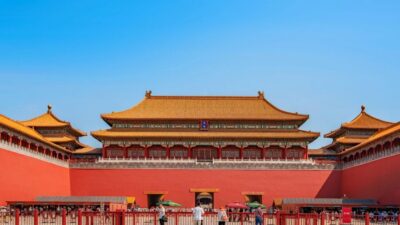
Forbidden City Tour(Group/Private)-Tickets Included
Read our review →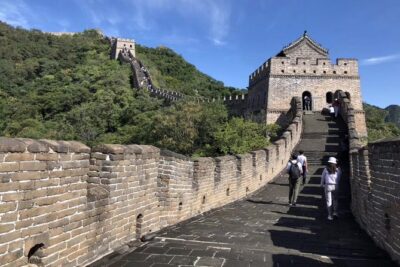
Mutianyu Great Wall Daily Tour with Ticket & Lunch
Read our review →
4-Hour Small Group Tour to Forbidden City with Entry Tickets
Read our review →
The Temple of Heaven or Summer Palace Entry Ticket
Read our review →
Beijing Forbidden City Ticket Booking (Optional: guide service)
Read our review →
Mutianyu Gt Wall Trip, Depart 8-10am Bus w/ Tickets
Read our review →
Forbidden City&T-Square Small GroupTours w/ ticket(Eng/Esp Guide)
Read our review →