
Reviewed · MING TOMBS TOURS
Ming Tombs Admission Ticket
The most striking thing about the Ming Tombs is their scale. Thirteen Ming emperors were buried near Tianshou Mountain, yet the ticket covers selected sites spread across a large area. I like the Sacred Way’s stone carvings and Changling’s grand imperial buildings, but you need a clear transport plan because walking between all the tombs is not practical.
I also like that the ticket includes access to Dingling’s underground palace, a rare chance to see an imperial burial chamber below ground. The main drawback is that this is an admission ticket, not a guided tour. You must handle the route yourself, and the ticket instructions need close attention.
In This Review
- Key points to know before you go
- Why the Ming Tombs are worth a day
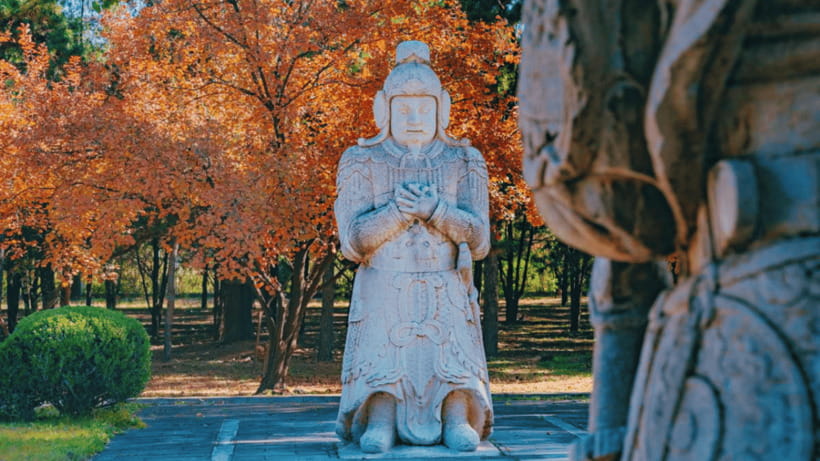
- Start with the Sacred Way and its stone guardians
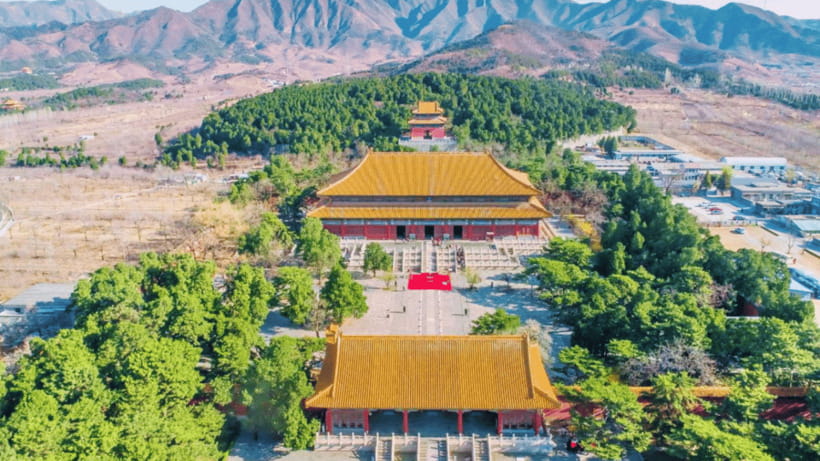
- Changling shows the Ming court at its grandest
- Dingling takes you below ground
- Zhaoling adds a restored imperial compound
- The royal setting is part of the attraction
- Transport is the main practical challenge
- What the $19 ticket really covers
- Booking rules require care
- Who will enjoy this most
- Is the Ming Tombs ticket a good choice?
- FAQ
- Where are the Ming Tombs located?
- How many emperors are buried at the Ming Tombs?
- What sites can the ticket include?
- Is a guide included?
- Is transport between the tombs included?
- Which tomb has an underground palace open to the public?
- What is special about Changling?
- Do I need my passport?
- Is the ticket valid on any date?
- Can I cancel for a full refund?
Key points to know before you go
- The Sacred Way begins the visit with stone animals, officials, and guardians carved in lifelike detail.
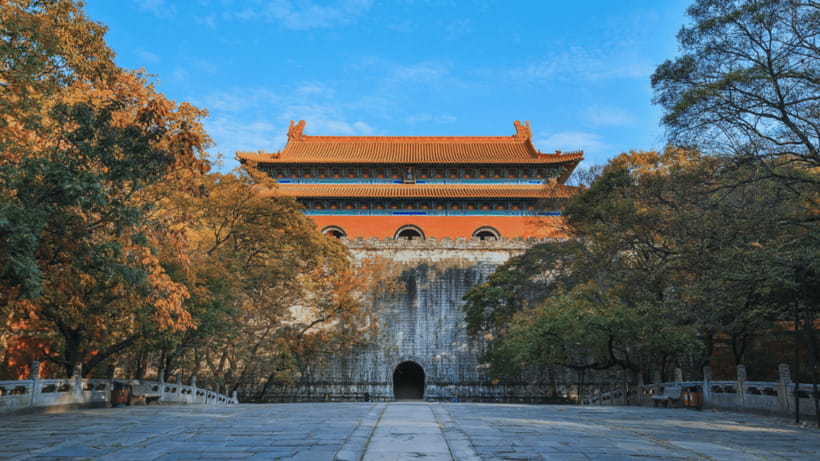
- Changling is the largest and most impressive tomb complex included here.
- Dingling is the only Ming Tomb with an underground palace open to the public.
- Zhaoling has been restored and gives you another look at imperial mausoleum design.
- The tombs are widely separated, so budget for an electric cart or private driver.
- You need your passport details for booking and your passport at the site.
Why the Ming Tombs are worth a day
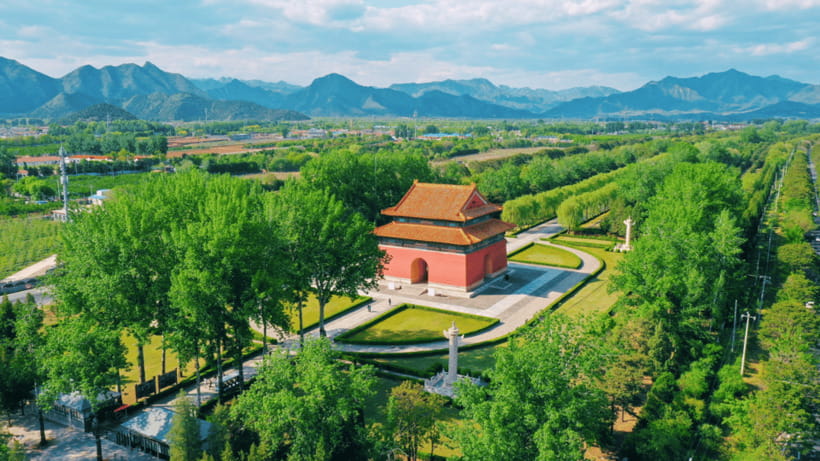
The Ming Tombs are about 50 kilometers north of central Beijing, at the southern foot of Tianshou Mountain in Changping District. This is not a single building with a few rooms to inspect. It is a broad imperial burial area, planned for the long afterlife of 13 emperors from the Ming Dynasty, which ruled China from 1368 to 1644.
That scale changes the experience. You are not simply stepping into a museum. You are moving through ceremonial roads, gates, halls, wooded surroundings, and separate mausoleum compounds. The setting helps explain how the Ming court connected royal power with architecture, ritual, and burial.
At $19 per person, the admission is reasonably priced if you want to see several sites in one day. It is less useful if you arrive without time to move between them. The ticket gives you entry, not a complete sightseeing service, so the value depends heavily on how well you organize transport.
The attraction is best for adults interested in Chinese imperial history, architecture, sculpture, and archaeology. The activity is listed as unsuitable for children under 18, so families with younger children should check the conditions carefully before booking.
More Ming Tombs add-ons:
- Great Wall of China at Badaling and Ming Tombs Day Tour from Beijing
★ 4.5 · 731 reviews - Beijing: Mutianyu Great Wall and Ming Tombs Private Tour
★ 5.0 · 114 reviews - Private Beijing Day Trip: Mutianyu Great Wall and Ming Tombs
★ 5.0 · 114 reviews
Start with the Sacred Way and its stone guardians
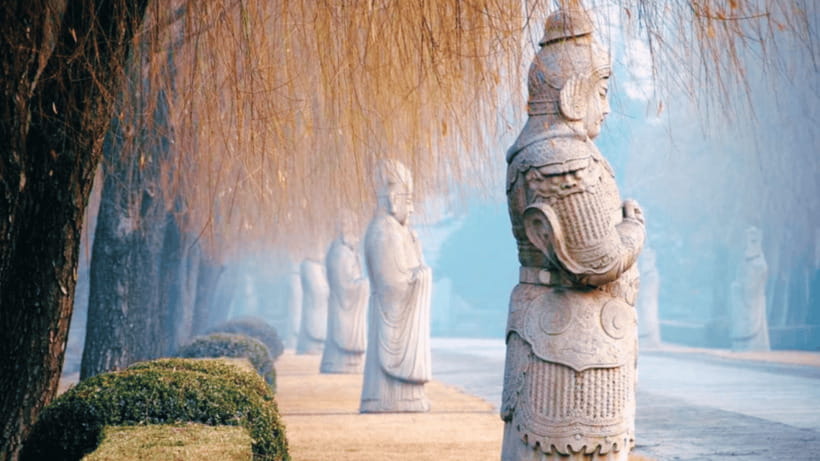
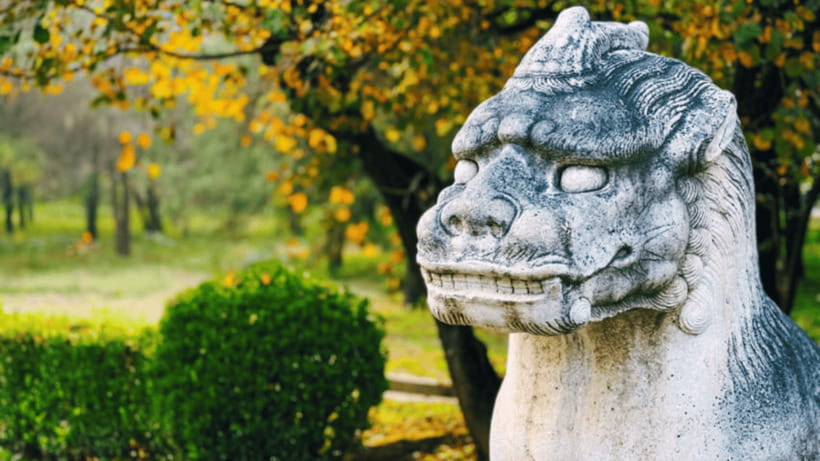
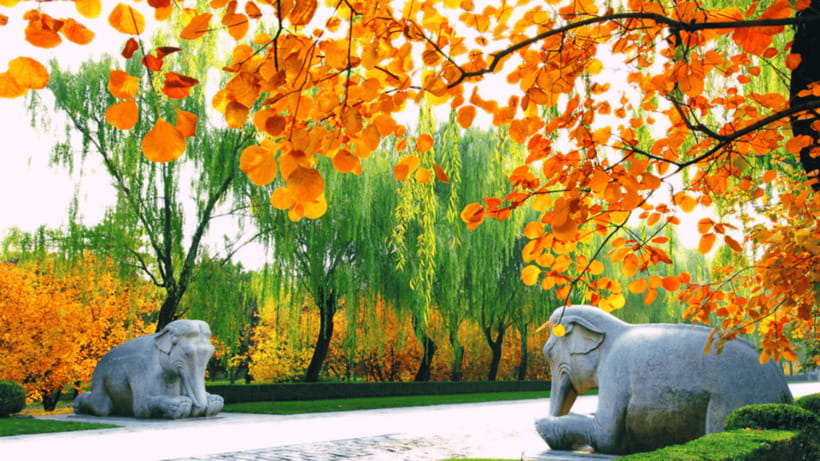
The Sacred Way is the natural opening point for understanding the Ming Tombs. This ceremonial path connects the tomb area and is lined with stone figures. You will see carved animals and human figures, including guardians and officials, placed along the route.
The statues are not just decoration. Their position gives the path a formal, processional feel. As you walk between them, you can see how the imperial burial grounds were designed to guide movement and set a solemn tone. The carvings also let you focus on the craft at close range. Look for the treatment of faces, robes, animal bodies, and small details in the stone.
I would allow enough time here to walk rather than rush straight to the tomb buildings. The Sacred Way offers some of the clearest views of ancient Chinese stone carving in this experience. It is also a good place to appreciate the relationship between the monuments and the mountain setting.
The practical issue is location. The Sacred Way is not a short decorative walkway immediately beside every tomb. The sites are spread out, and you will need transport to continue. An electric cart costs extra, and a private driver can also be arranged locally, according to the available experience details. Do not assume you can comfortably cover the full route on foot.
Changling shows the Ming court at its grandest
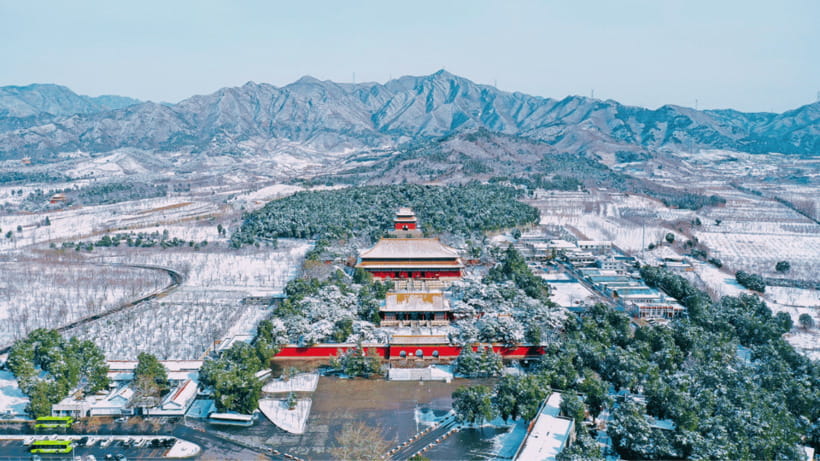
Changling is the tomb of Emperor Yongle, also known as Zhu Di. It is described as the largest and most impressive of the Ming Tombs, making it the key stop if you have limited time.
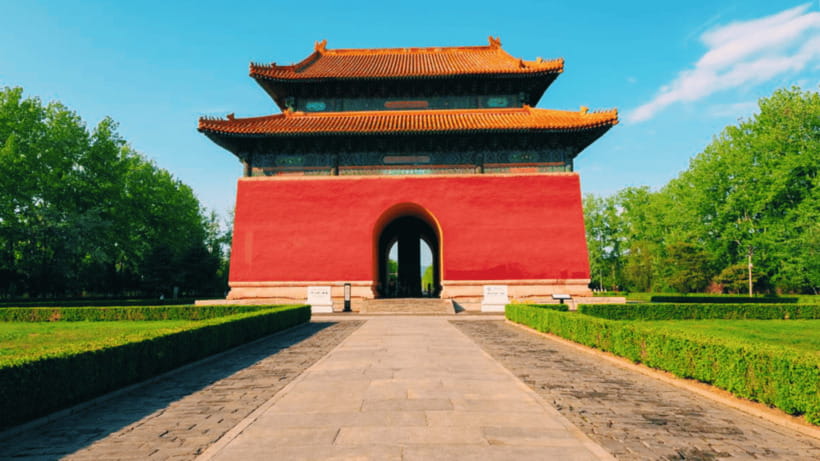
The architecture gives you a strong sense of imperial ceremony. The main attraction is the Hall of Eminent Favor, noted for its double-eaved roof and precious golden nanmu pillars. The hall is the only surviving structure of its kind at the Ming Tombs, which makes it especially valuable for anyone interested in historic construction.
Look upward at the layered roofline, then turn your attention to the wooden columns and the proportions of the hall. The building is impressive because of its materials and scale, but also because it shows how a tomb complex could function as a place of ritual and official memory.
Changling is likely to appeal most to architecture enthusiasts. It gives you the grand, formal side of the site, while Dingling offers a more archaeological and underground experience. If you are choosing between the two, Changling provides the stronger above-ground setting, while Dingling has the more unusual interior.
Dingling takes you below ground
Dingling is the mausoleum of Emperor Wanli. It is the only underground palace at the Ming Tombs that is open to the public, so this stop adds something you cannot get from the surface architecture alone.
The underground palace allows you to see how the tomb was arranged below the ceremonial buildings. You can examine the chambers and imagine the practical work involved in creating a royal burial complex beneath the earth. The visit also gives you a different view of Ming craftsmanship, since the focus shifts from rooflines and courtyards to stonework, passageways, and burial architecture.
The underground setting may not suit everyone. You should expect stairs or changes in level unless site conditions provide an accessible alternative. The overall experience is listed as wheelchair accessible, but the information does not specify how every part of the underground palace is handled. If access is important to you, confirm the route before booking.
Dingling is also a place where context matters. Without a guide, labels and exhibits must do the teaching. Read what is available, take your time, and compare the underground chambers with Changling’s grand hall. Together, the two stops show both the public and hidden sides of imperial burial.
A few more Beijing options to compare side by side
- Beijing: Forbidden City Tour(Group/Private)-Tickets Included
★ 4.8 · 7,974 reviews - Beijing: Mutianyu Great Wall Daily Tour with Ticket & Lunch
★ 5.0 · 3,056 reviews - 4-Hour Small Group Tour to Forbidden City with Entry Tickets
★ 5.0 · 1,863 reviews - Beijing: Tiananmen Square Registration Service(Ticket)
★ 4.5 · 1,704 reviews
Zhaoling adds a restored imperial compound
Zhaoling is the tomb of Emperor Muzong. Its restoration has brought back much of the appearance and dignity of a Ming imperial mausoleum.
This stop is useful because it gives you another example of the standard used for an emperor’s final resting place. You can compare its layout, gates, halls, and surrounding space with Changling and Dingling. The differences may be subtle at first, but they become easier to spot after you have seen more than one complex.
Zhaoling can also help break up the day. Changling is the grandest, Dingling is the most unusual, and Zhaoling provides a quieter look at a restored mausoleum. Since the ticket may include different combinations depending on the option selected, check your exact inclusions before you set out.
The royal setting is part of the attraction
The tombs sit among mountain scenery and open grounds rather than in the center of Beijing. That setting matters. The surrounding natural area helps you understand why this location was selected for imperial burials, while the distance from the city gives the visit a different pace from Beijing’s crowded central monuments.
You will see ancient relics, formal buildings, carved figures, and exhibition material. The combination is more rewarding than any one hall alone. At each stop, try to notice how the buildings, roads, statues, and mountain setting work together.
The site is especially good for travelers who like to look closely. You can spend time comparing roof designs, stone figures, pillar materials, restored structures, and underground rooms. If you prefer a fast checklist of famous sights, the separated compounds may feel slow and inconvenient.
Transport is the main practical challenge
The biggest issue is not the admission process. It is getting from one section to the next.
The Sacred Way and the three major tombs are far enough apart that you should not plan to walk between them. Electric carts are available for an additional fee, and you may also find a private driver locally. One useful route is to have a driver take you from the statue-lined path to Changling, Dingling, and Zhaoling, then continue toward the metro for the return to Beijing.
That kind of arrangement can save a great deal of time. It also lets you see all the included sites without spending your energy on road connections. The downside is that the driver is not included in the $19 ticket, and the exact cost of local transport is not provided.
If you are booking independently, confirm the meeting point and the correct entrance before the day of your visit. A serious arrival problem has occurred when a visitor went to the address provided, was told the ticket was not valid there, and then learned that the correct site was about 10 kilometers away. The lesson is simple: verify the exact entrance and ticket location before leaving Beijing.
What the $19 ticket really covers
The price is good for admission to several major historic sites, especially if your chosen option includes Dingling, Changling, Zhaoling, and the Sacred Way. You are paying for access to the tombs, historical areas, ancient architecture, and cultural exhibits.
You are not paying for a guide, meals, souvenirs, or electric cart service. That distinction is important. A guided tour could make the symbolism and history easier to follow, but this product does not include one. You will need to read the displays or arrange separate help if you want detailed interpretation.
For me, the ticket offers solid value for a full day of sightseeing, provided you already have transport sorted. If you must spend extra time and money solving the route on the spot, the low admission price becomes less meaningful. Think of it as an entry pass to a large historic area, not as a packaged excursion.
Booking rules require care
Your full name, exactly as it appears on your passport, and your passport number are required to complete the booking. If those details are not sent in time, the booking can be canceled and a fee may apply.
Bring the same passport on the day of the visit. The ticket is valid only on the booked date, and the date and time must be selected carefully. Advance booking is recommended during busy periods.
There is an important conflict in the supplied terms. The activity information says you can cancel up to 24 hours in advance for a full refund, but it also says tickets are non-refundable once sold. I would not rely on the refund promise without confirming which rule applies to your specific ticket. Ask before payment if your plans may change.
The entry process itself can be quick when the QR code is accepted. The QR code may arrive the day before the visit, so check your messages and phone access before setting out. Still, do not let a fast QR entry make you careless about the address.
Who will enjoy this most
I would choose this experience if you want a full day focused on Ming imperial architecture and you are comfortable managing your own route. It suits adults who enjoy historic buildings, stone sculpture, archaeological spaces, and quiet time examining details.
It is also a good choice for photographers and architecture fans. The Sacred Way offers strong sculptural interest, Changling provides the most imposing hall, Dingling gives you the underground palace, and Zhaoling adds a restored compound for comparison.
I would hesitate if you want a guided explanation at every stop, dislike arranging local transport, or have only a short window in Beijing. The 50-kilometer journey north and the distance between the tombs make this more demanding than a single central attraction.
The activity is marked wheelchair accessible, but the available details do not explain access at every structure or underground section. Anyone with mobility concerns should confirm the exact accessible route in advance.
Is the Ming Tombs ticket a good choice?
Book it if you want to see more than one imperial mausoleum and can arrange transport between the sites. For $19, the combination of the Sacred Way, Changling, Dingling, and Zhaoling offers a strong look at Ming burial architecture, sculpture, and royal craftsmanship.
Choose carefully if you need a guide, are traveling with children under 18, or cannot handle a full day across a spread-out site. Most important, verify the entrance address, send your passport details on time, and confirm the cancellation terms before paying.
FAQ
Where are the Ming Tombs located?
The Ming Tombs are at the southern foot of Tianshou Mountain in Changping District, about 50 kilometers north of Beijing.
How many emperors are buried at the Ming Tombs?
Thirteen Ming Dynasty emperors are buried in the area.
What sites can the ticket include?
Depending on the selected option, the ticket can include Dingling, Changling, Zhaoling, and the Sacred Way.
Is a guide included?
No. Guided tours are not included.
Is transport between the tombs included?
No. Electric cart use costs extra, and transport between the widely separated tombs is not included in the admission price.
Which tomb has an underground palace open to the public?
Dingling, the mausoleum of Emperor Wanli, has the only underground palace at the Ming Tombs open to the public.
What is special about Changling?
Changling is the tomb of Emperor Yongle, or Zhu Di. It is the largest and most impressive tomb in the area and contains the Hall of Eminent Favor, with a double-eaved roof and golden nanmu pillars.
Do I need my passport?
Yes. You must provide your full passport name and passport number for booking, and you should bring your passport to the site.
Is the ticket valid on any date?
No. The ticket is valid only on the date booked.
Can I cancel for a full refund?
The activity information says cancellation is possible up to 24 hours in advance for a full refund, but it also says tickets are non-refundable once sold. Confirm the rule for your exact booking before payment.
Latest additions around Beijing
- Private Hike from Beijing: Go Beyond The Jiankou and Mutianyu Great Wall★ 5.0 · 3 reviews
- Bullet Train Private Tour: Beijing Tiananmen Square, Forbidden City & Great Wall★ 5.0 · 3 reviews
- Private Great Wall Hiking Tour from Simatai West to Jinshanling★ 4.5 · 3 reviews
- Private Transfer for Beijing Airport PEK or PKX★ 5.0 · 3 reviews
- Liyuan Theater Beijing Opera Show Tickets★ 5.0 · 3 reviews
- Private Jinshanling relax photo tour by sunset★ 5.0 · 3 reviews
- Private All-inclusive Jinshanling Great Wall 1-day tour★ 4.5 · 3 reviews
- Beijing Night Tour with Acrobatics Show & PekingDuck Dinner★ 5.0 · 3 reviews
Ming Tombs Tours, compared.
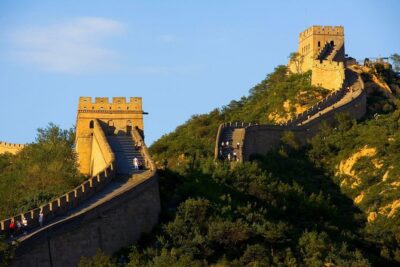
Great Wall of China at Badaling and Ming Tombs Day Tour from Beijing
Read our review →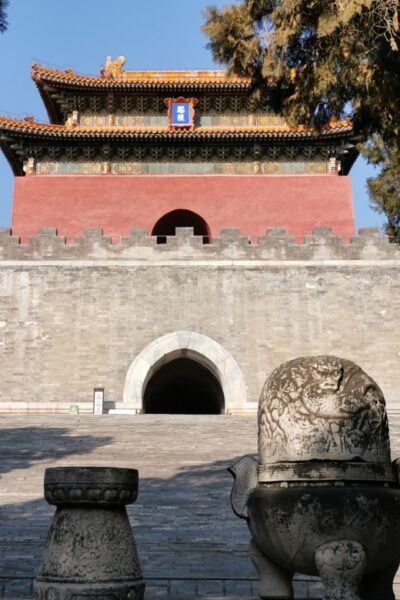
Mutianyu Great Wall and Ming Tombs Private Tour
Read our review →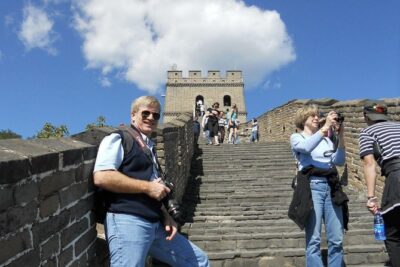
Private Beijing Day Trip: Mutianyu Great Wall and Ming Tombs
Read our review →Mutianyu Great Wall and Ming Tombs Private Tour
Read our review →
Mutianyu + Ming Tombs or Summer Palace Private Day Tour
Read our review →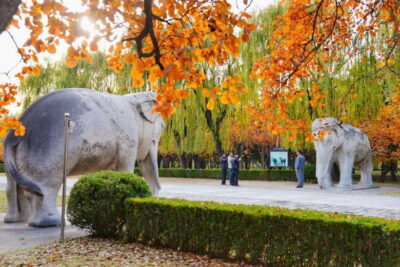
Juyongguan Great Wall, Sacred Way & Ming Tombs Trip
Read our review →
Private Tour: Ming Tombs and Great Wall at Mutianyu from Beijing
Read our review →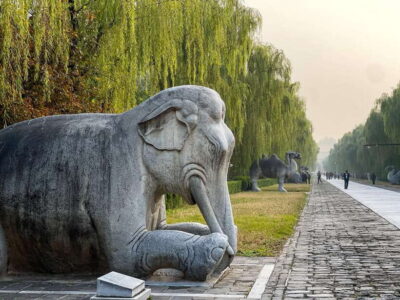
Great Wall and Ming Tomb All-inclusive Private Tour
Read our review →Browse the lists this tour appears in