
Reviewed · MING TOMBS TOURS
Ming Tombs Private Tour: Sacred Road, Dingling and Changling
The most striking thing here is the quiet scale of the Ming Tombs. This UNESCO-listed imperial burial complex sits well outside central Beijing, where stone animals line a ceremonial road and royal tombs spread across a wooded setting. You get a far calmer history lesson than at the Forbidden City, with time to look closely and take photographs.
I like the private car and front-door pickup, which remove the usual Beijing transport puzzle. I also like the pairing of Dingling and Changling: one lets you descend into an excavated underground palace, while the other shows the grand timber architecture built for an emperor. The main drawback is that six hours goes quickly, and Dingling’s stairs, courtyards, and long walks can feel rushed if your guide tries to cover too much.
In This Review
- Key points
- Why the Ming Tombs make a good Beijing half-day
- Hotel pickup makes the distant site manageable
- Sacred Road begins the imperial story
- Dingling takes you below the ground
- Changling shows imperial architecture at full size
- A private guide can change the quality of the visit
- Watch for optional shopping stops
- The Olympic photo stop adds a modern finish
- Timing, cost, and who will enjoy it most
- Should you book this Ming Tombs tour?
- FAQ
- How long does the Ming Tombs private tour last?
- What sights are included?
- Is hotel pickup included?
- Is the tour private?
- Is the guide English-speaking?
- Is the entrance fee included?
- What should I bring to the tour?
Key points
- Sacred Road’s 32 pairs of stone figures represent imperial power, protection, and ceremony.
- Dingling is the only fully excavated Ming Tomb, with three stone chambers 27 meters underground.
- Changling’s Ling’en Hall contains enormous nanmu pillars and is the best place to see the complex’s grand wooden design.
- Private transport from hotels inside Beijing’s fourth ring road saves time on a distant day trip.
- Guide quality matters, and past departures have featured strong English-speaking guides such as Lily, Sherry, and Mr. Zhang.
- Optional shopping stops may be offered, but you can decline them. One past booking also reported confusion over ticket payment, so confirm the included costs at the start.
Why the Ming Tombs make a good Beijing half-day
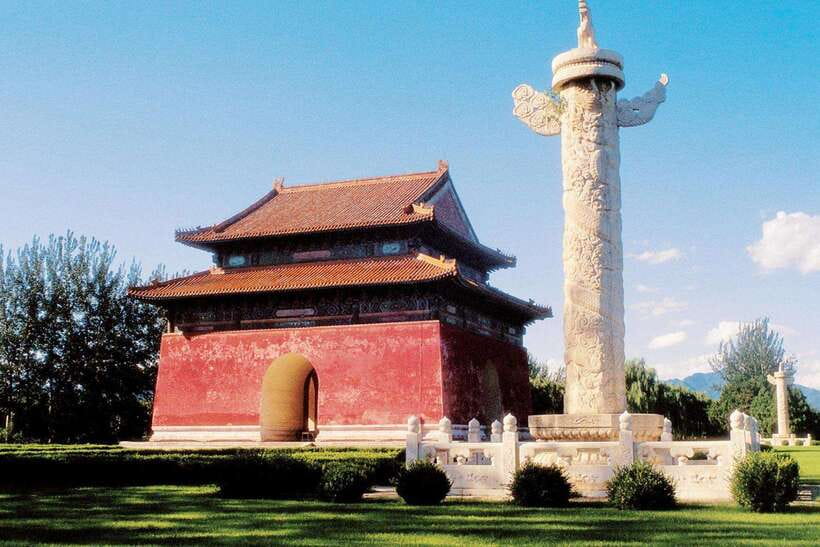
Beijing’s famous imperial sights can leave you elbowing through crowds while trying to hear a guide. The Ming Tombs offer a different pace. The complex contains the mausoleums of 13 Ming emperors, built in a broad valley chosen according to traditional feng shui principles.
You are not simply looking at old buildings. The placement of the tombs, the approach road, the hills, the trees, and the direction of the ceremonial route all relate to ideas about protection and harmony. A good guide gives those details meaning instead of leaving you to see only roofs, walls, and statues.
This private tour costs $135 per person. That is not a bargain-basement outing, but the price includes a private vehicle, an English-speaking guide, hotel pickup and drop-off within Beijing’s fourth ring road, entrance fees, and bottled water. For two or more people, the cost can make sense because you are paying for a dedicated car and guide rather than joining a large bus group.
The value depends heavily on what you want. If you only need a ride to the tombs and a quick look around, the price may feel high. If you want the historical meaning explained, prefer your own pace, and do not want to manage a long journey outside central Beijing, the package is easier to justify.
More Ming Tombs add-ons:
- Great Wall of China at Badaling and Ming Tombs Day Tour from Beijing
★ 4.5 · 731 reviews - Beijing: Mutianyu Great Wall and Ming Tombs Private Tour
★ 5.0 · 114 reviews - Private Beijing Day Trip: Mutianyu Great Wall and Ming Tombs
★ 5.0 · 114 reviews
Hotel pickup makes the distant site manageable
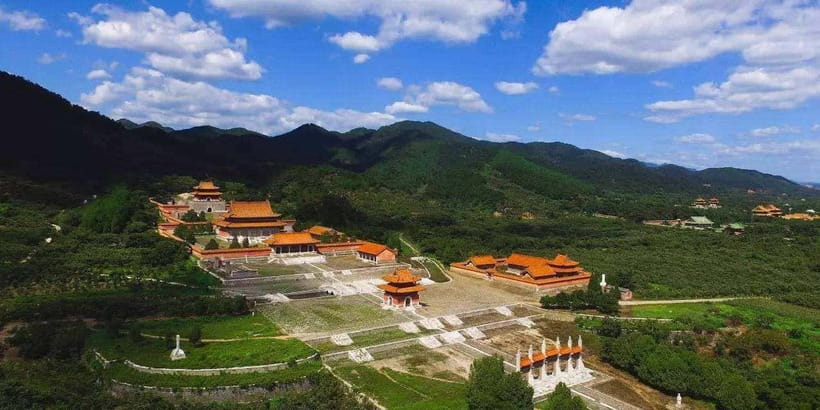
Your guide meets you in your hotel lobby with a sign bearing your name, then you travel by private vehicle toward northern Beijing. Pickup is included for hotels within the fourth ring road. If you stay farther out, confirm the arrangement before booking rather than assuming the same service applies.
The tombs are far enough from central Beijing that transport matters. One past departure described the drive as relaxed and comfortable, with a clean car and a careful driver. Drivers have included people using English names such as Mr. King, Fu, and Li, while guides have included Lily, Sherry, and Mr. Zhang. Staff can vary by departure, so treat those names as examples rather than a guarantee.
The drive also gives you a break between stops. You are not spending the whole day on foot, and bottled water is provided. Food is not included, so eat before leaving or ask your guide about the day’s practical arrangements.
Traffic controls the exact rhythm. The advertised duration is six hours, which includes driving, sightseeing, and the return to Beijing. That is enough for the main sites, but not enough for a slow visit to every corner of the entire mausoleum complex.
Sacred Road begins the imperial story
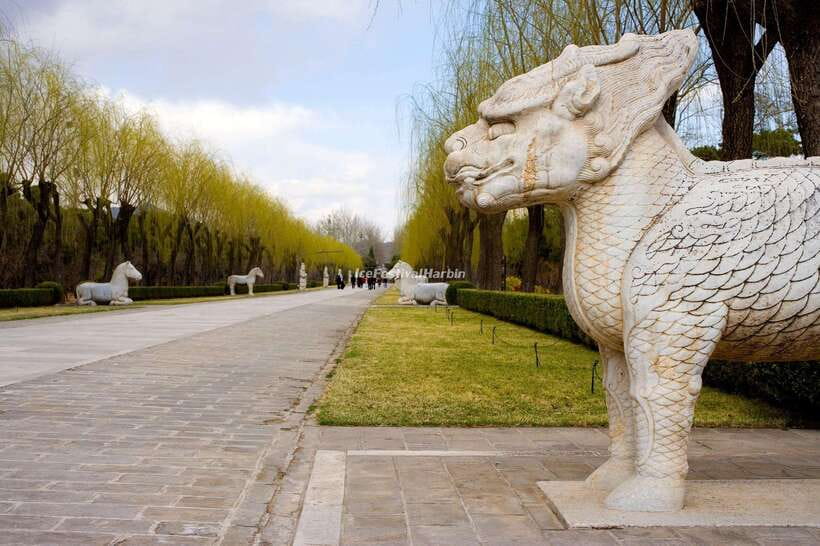
The Sacred Road is the right opening stop because it explains how the tomb complex was approached. The avenue was first built for Emperor Zhu Di’s Changling Tomb and later became the shared route toward all 13 mausoleums.
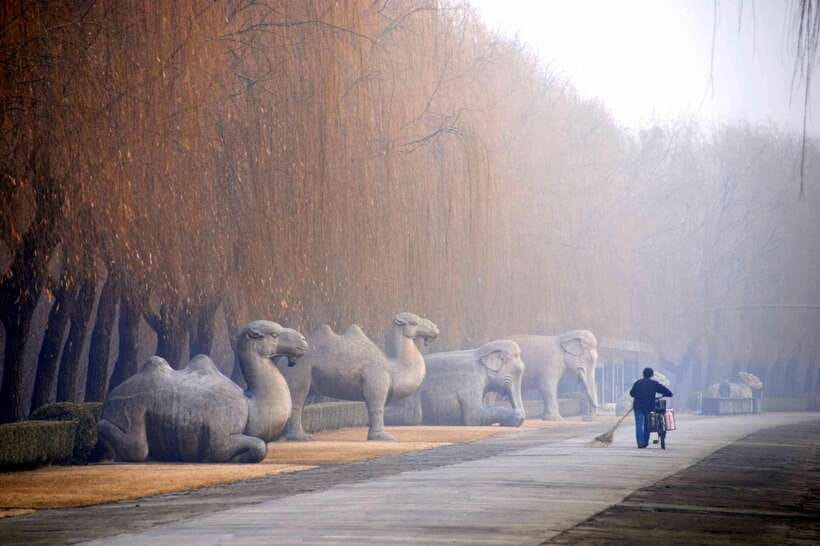
The most memorable feature is the sculpture. Along the route are 32 pairs of stone figures, including lions, elephants, horses, civil officials, and military officials. These are not random decorations. Their positions and forms reflect the ceremonial power of the emperor and the roles thought necessary to guard and serve him in the next world.
Your guide can point out the symbolic meaning behind the figures, which is where this stop gains its value. Without that context, you may simply see a long line of weathered stone animals. With explanation, the road becomes a formal entrance into the imperial burial world.
The route extends for 7.3 kilometers, but the tour does not mean you walk every meter of it. The visit is designed as a stop for viewing, photography, and explanation. That is good news if you want the main visual experience without turning the morning into a strenuous hike.
The quieter setting is another advantage. Compared with the Forbidden City or other central Beijing sights, the Sacred Road can feel more open and restful. Bring your passport, which is required for the tour, and wear shoes suited to uneven outdoor walking.
Dingling takes you below the ground
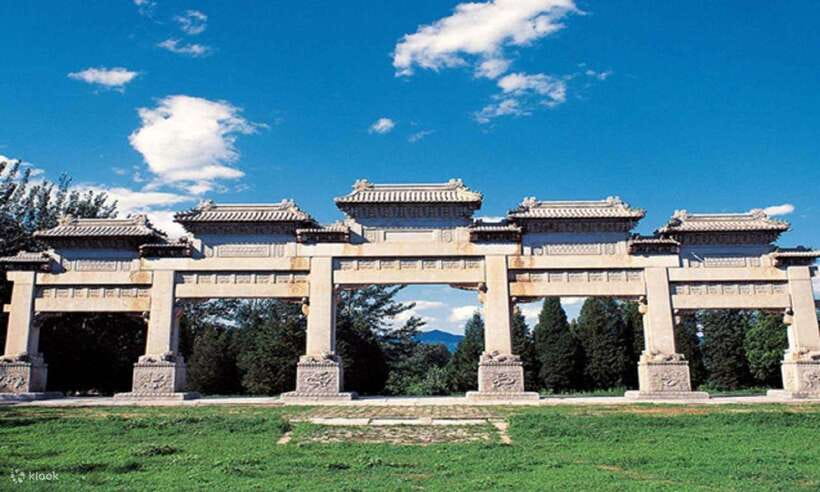
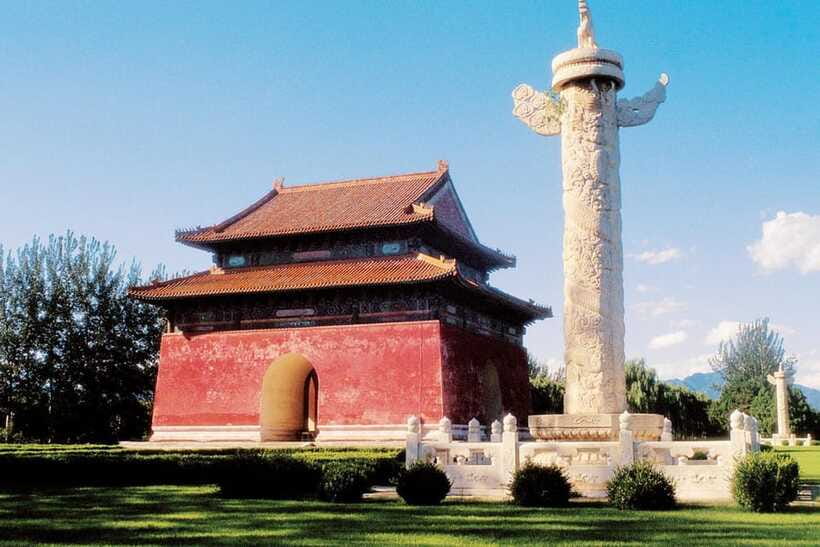
Dingling is the most unusual stop because its underground palace has been fully excavated. It was built for Emperor Zhu Yijun, the Wanli Emperor, and his two empresses.
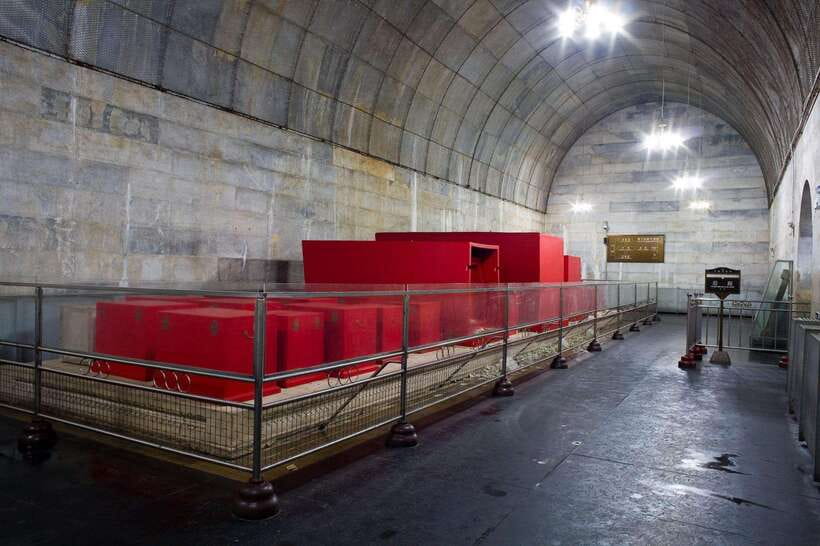
You first see the above-ground courtyards and halls before descending around 27 meters underground. The palace has three connected chambers carved from solid stone. This change in level gives the visit a clear sense of discovery, but it also creates the tour’s most obvious physical challenge. If stairs are difficult for you, ask about the route and pace before setting out.
Inside, you see the stone burial chambers and the sarcophagi associated with the emperor and empresses. The rooms are spare and heavy, with none of the bright ceremonial polish found in Beijing’s imperial palaces. That contrast is useful. You begin to understand that these were working burial spaces, built for ritual and eternal rest rather than daily court life.
The on-site museum displays objects found during the excavation, including gold and silver vessels, jade carvings, silk fabrics, and imperial robes. These items help connect the dark stone chambers with the material wealth of the Ming court.
Dingling also offers a lesson in archaeology. Excavating an imperial tomb revealed valuable objects, but it also raised lasting questions about preservation and the handling of royal burials. Your guide can explain how the tomb was opened and what was found. Mr. Zhang, who has led past departures, was praised for explaining both the excavation and the larger historical setting in clear detail.
This is the stop where guide quality matters most. Displays alone cannot explain who was buried there, why the tomb was built, or how its contents fit into Ming customs. A strong guide turns the underground rooms from a quick photo stop into the intellectual center of the tour.
A few more Beijing options to compare side by side
- Beijing: Forbidden City Tour(Group/Private)-Tickets Included
★ 4.8 · 7,974 reviews - Beijing: T-Square & Forbidden City Group or Private Tour
★ 4.8 · 4,446 reviews - Beijing:Mutianyu Great Wall Private Trip with English Driver
★ 5.0 · 1,263 reviews - Private Mutianyu Great Wall Trip with English-Speaking Driver
★ 5.0 · 927 reviews
Changling shows imperial architecture at full size
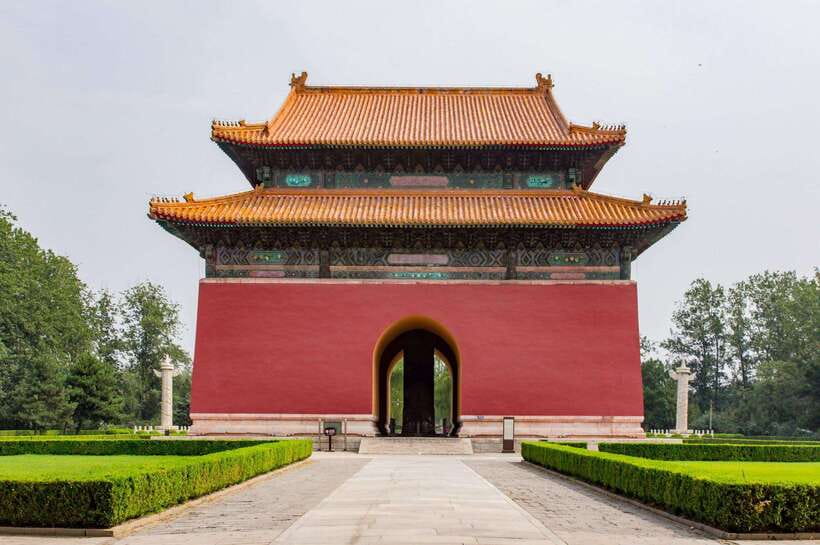
Changling is the largest and best-preserved tomb in the complex. It was built for Emperor Zhu Di, the third Ming emperor and the ruler connected with major building projects in Beijing, including the Forbidden City and the Ming Tombs.
The chief attraction is Ling’en Hall, the main wooden hall used for imperial sacrificial ceremonies. Its massive nanmu pillars are the visual highlight. Nanmu was prized for its strength and durability, and the large columns give the interior a sense of scale that photographs do not fully convey.
Look upward as you enter. The beams and roof structure show how Ming builders handled weight, space, and ceremony without modern steel framing. The hall is not merely large for the sake of size. Its open interior was designed to make imperial rituals feel formal and powerful.
Changling’s courtyards are quieter than the grand squares of central Beijing. Ancient cypresses add shade and age, while the buildings provide a more complete sense of how an imperial mausoleum was organized. This is also where the tour’s connection to the Forbidden City becomes easiest to see. The architectural language is related, but the setting is more solemn and less crowded.
Your guide will place Zhu Di’s tomb within his wider rule, including his expansion of the Ming Empire and support for cultural exchange. This context helps you see why Changling was not just a grave. It was part of a carefully planned statement about authority, succession, and the emperor’s place in the state.
A private guide can change the quality of the visit
The tour’s strongest feature is not simply having a guide. It is having a private guide who can adjust the pace to your group.
Past departures have included Lily, who was praised for clear explanations of Chinese history and the excavation; Sherry, who provided background on the tombs; and Mr. Zhang, whose enthusiasm made the historical details easier to follow. Those individual guides are not guaranteed, but the pattern shows what you should want from the experience: explanation tied to what you are looking at, not a string of dates recited while you walk.
You can pause longer at the stone animals, ask why Dingling was excavated, or spend more time inside Ling’en Hall. In a private group, you do not need to worry about losing a large party or holding up strangers.
That said, the private format does not automatically guarantee a polished day. One past departure described a guide who arrived disorganized, asked the group what the itinerary was, and gave rushed explanations. The same account raised confusion about ticket reimbursement and payment after the tour. This appears to be an isolated problem among otherwise strong reports, but it is useful advice: at pickup, confirm the order of stops, what is included, and that entrance tickets are already covered.
Watch for optional shopping stops
Some guides may offer a visit to a jade workshop or a tea tasting after the tombs. These are shopping-oriented stops, and prices may be aimed at visitors rather than local shoppers.
You can accept or decline them. They are not described as required parts of the tour, and one past booking specifically noted that the stops happened only after the customer agreed. If you want every available minute for the tombs, say so clearly at the start.
This is one reason a private tour can work in your favor. You can tell the guide that your priority is Sacred Road, Dingling, and Changling, then decide on any additional stop based on your energy and interest.
The Olympic photo stop adds a modern finish
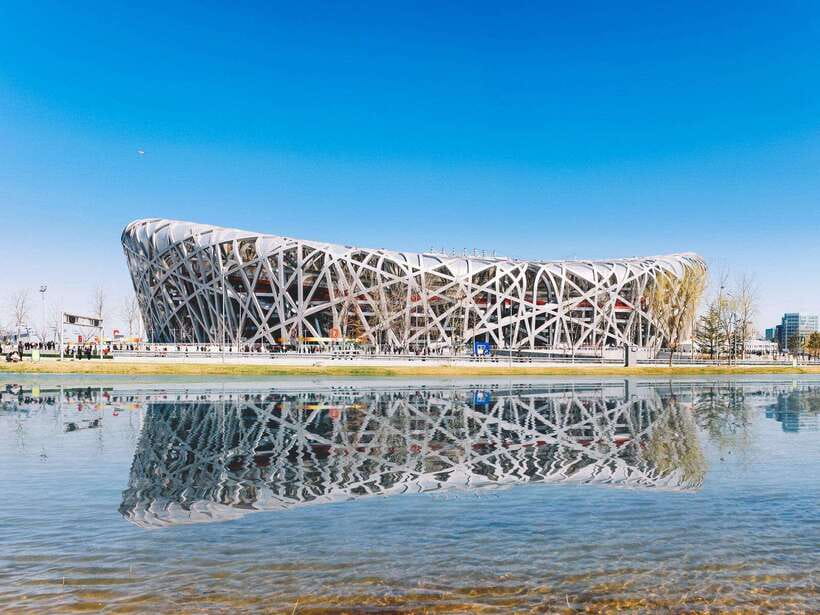
If traffic allows, the return drive may pass Beijing’s Olympic venues, including the Bird’s Nest and Water Cube. The planned stop at the Niaochao Water Cube ticket office is brief, about five minutes, and functions as a photo opportunity rather than a full stadium visit.
I like the contrast. The day begins with imperial ceremony and ends with the architecture of modern Beijing. But keep your expectations in check. You are not touring the Olympic buildings, and traffic may prevent the stop altogether. It is a pleasant extra, not a reason to book the tour.
Timing, cost, and who will enjoy it most
Six hours is a sensible length for seeing these three main areas without giving up an entire day. You get the essential tomb experience, but you will not have unlimited time for wandering or extended museum visits.
The tour suits you best if:
- You are staying within Beijing’s fourth ring road and want hotel pickup.
- You prefer a private car to arranging transport to a distant site.
- You want English explanations of Ming architecture, burial customs, and excavation.
- You are interested in both underground archaeology and grand wooden buildings.
- You value flexible pacing more than the lowest possible price.
- You have only half a day available for the tombs.
It may not suit you if you want a slow, highly detailed study of every mausoleum. It is also less appealing if you are trying to keep costs very low or if underground stairs and outdoor walking are concerns.
The best preparation is simple. Bring your passport, since passport number, full name, and nationality are required when booking. Wear comfortable shoes, carry any personal food you need, and tell the guide early if you want to skip shopping stops.
The activity offers free cancellation up to 24 hours before departure and reserve-now, pay-later booking. Starting times depend on availability, so check the schedule that fits your Beijing plans.
Should you book this Ming Tombs tour?
Book it if you want the Ming Tombs explained rather than merely photographed. The private transport is practical, Dingling gives you access to an unusual underground palace, and Changling supplies the grand architectural payoff.
I would book with two cautions. First, six hours requires a fairly focused pace. Second, confirm the day’s plan and ticket arrangements when your guide arrives, especially if you are offered extra shopping stops.
For most people who want a manageable introduction to the tomb complex, $135 per person is a reasonable price for private transport, entry, and a dedicated English-speaking guide. If your priority is value through independence, take public transport or arrange a cheaper ride. If your priority is understanding what you are seeing, this tour earns its keep.
FAQ
How long does the Ming Tombs private tour last?
The tour lasts six hours, including hotel pickup, visits to Sacred Road, Dingling, and Changling, the possible Olympic photo stop, and the return to Beijing.
What sights are included?
The main visits are Sacred Road, Dingling Tomb, and Changling Tomb. If traffic allows, there may also be a brief photo stop near the Bird’s Nest and Water Cube.
Is hotel pickup included?
Yes. Hotel pickup and drop-off are included for hotels within Beijing’s fourth ring road. The guide meets you in the hotel lobby with a sign showing your name.
Is the tour private?
Yes. It is a private group experience with a private vehicle, so the pace can be adjusted to your group.
Is the guide English-speaking?
Yes. The tour includes a live English-speaking guide. Guides on past departures have included Lily, Sherry, and Mr. Zhang, though the assigned guide can vary.
Is the entrance fee included?
Yes. The entrance fee is included in the tour price. Food is not included.
What should I bring to the tour?
Bring your passport. You must provide the passport number, full name, and nationality of everyone in your group when booking. Comfortable shoes are also a practical choice for the outdoor paths, courtyards, and underground palace visit.
Latest additions around Beijing
- Private Hike from Beijing: Go Beyond The Jiankou and Mutianyu Great Wall★ 5.0 · 3 reviews
- Bullet Train Private Tour: Beijing Tiananmen Square, Forbidden City & Great Wall★ 5.0 · 3 reviews
- Private Great Wall Hiking Tour from Simatai West to Jinshanling★ 4.5 · 3 reviews
- Private Transfer for Beijing Airport PEK or PKX★ 5.0 · 3 reviews
- Liyuan Theater Beijing Opera Show Tickets★ 5.0 · 3 reviews
- Private Jinshanling relax photo tour by sunset★ 5.0 · 3 reviews
- Private All-inclusive Jinshanling Great Wall 1-day tour★ 4.5 · 3 reviews
- Beijing Night Tour with Acrobatics Show & PekingDuck Dinner★ 5.0 · 3 reviews
Ming Tombs Tours, compared.
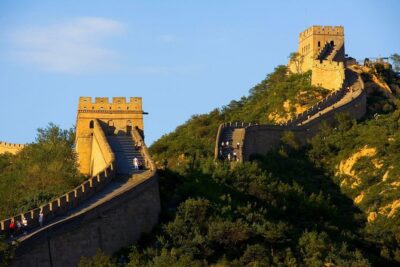
Great Wall of China at Badaling and Ming Tombs Day Tour from Beijing
Read our review →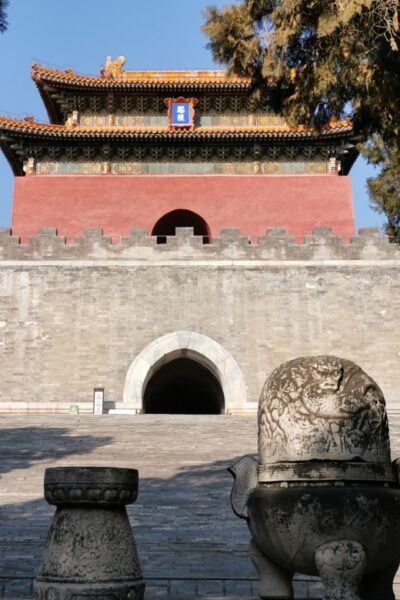
Mutianyu Great Wall and Ming Tombs Private Tour
Read our review →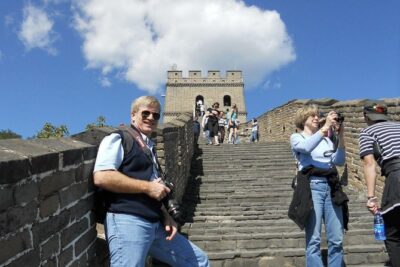
Private Beijing Day Trip: Mutianyu Great Wall and Ming Tombs
Read our review →Mutianyu Great Wall and Ming Tombs Private Tour
Read our review →
Mutianyu + Ming Tombs or Summer Palace Private Day Tour
Read our review →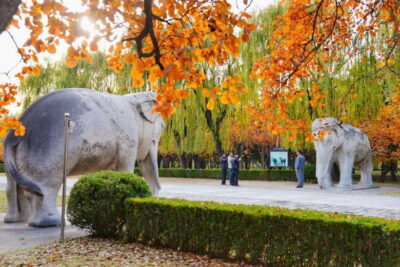
Juyongguan Great Wall, Sacred Way & Ming Tombs Trip
Read our review →
Private Tour: Ming Tombs and Great Wall at Mutianyu from Beijing
Read our review →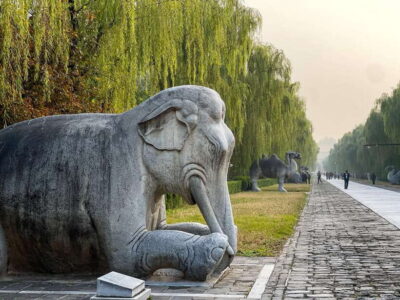
Great Wall and Ming Tomb All-inclusive Private Tour
Read our review →Browse the lists this tour appears in