
Reviewed · HUTONG TOURS
Beijing City Walk: Explore Hutongs Life and Old Beijing
Beijing’s old neighborhoods make the most sense on foot, and this small-group city walk gives you a useful introduction in about two and a half hours. You may move from Qianmen and Dashilan to quieter hutongs, or follow the Drum Tower route toward Nanluoguxiang and Houhai, with a guide explaining the details that are easy to miss alone.
I like the way the tour mixes famous sights with ordinary local life, including small shops, traditional snacks, calligraphy, and even Peking Opera clothing on some outings. I also like the personal touch from guides such as Kevin, Yang, Eevee, and Summer Wang, who bring different strengths to the walk. The main thing to check is your exact route, since the listed stops describe more than one version of the experience.
In This Review
- Key points to know before you book
- Why a hutong walk is a smart first look at Beijing
- Qianmen, Dashilan, and Sanlihe Hutong
- Nanluoguxiang and the old northern city
- The Bell and Drum Towers at the end of the walk
- What the guides add to the experience
- Food, calligraphy, and small cultural encounters
- Is two and a half hours enough?
- When to go, and what to wear
- What the $15 price really offers
- Who should book this Beijing city walk?
- Should you book it?
- FAQ
- How long does the Beijing City Walk take?
- What places can the tour visit?
- Is the tour available during the day and at night?
- Is admission to the Bell and Drum Towers included?
- Does the tour provide an English-speaking guide?
- What happens if the weather is poor?
Key points to know before you book
- Qianmen and Dashilan provide a lively starting point: You see one of Beijing’s best-known historic commercial areas before reaching quieter Sanlihe Hutong.
- The Drum and Bell Towers anchor the evening route: You pause in the square to hear how these grand buildings once helped set the city’s daily rhythm.
- Hutong life is the real focus: Small stores, food stalls, neighborhood streets, and local customs matter as much as the major monuments.
- Several guides receive strong praise: Kevin, Yang, Eevee, and Summer Wang are specifically noted for clear explanations, friendly help, and a good balance of facts and fun.
- The price is unusually low: At $15 per person, this is an inexpensive way to get orientation and local context, though admission to the Bell and Drum Towers is not included.
- Weather and footwear matter: The experience requires good weather, and winter walks can be cold. Wear warm clothes and comfortable shoes.
Why a hutong walk is a smart first look at Beijing
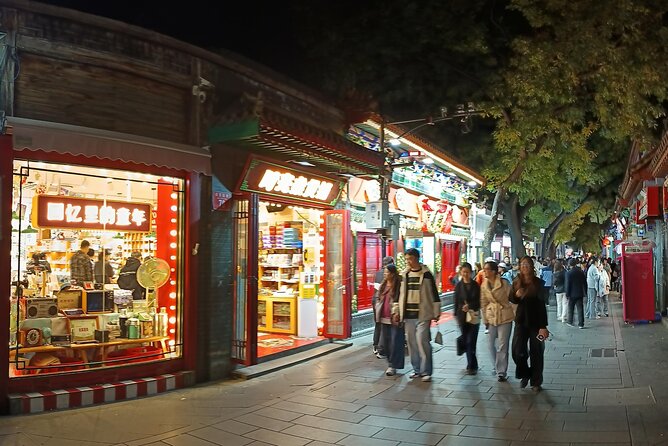
Beijing can feel enormous at street level. Wide avenues, heavy traffic, grand gates, and vast palace grounds can make it hard to understand how people lived in the old capital. Hutongs give you a different scale. You walk through narrower lanes, pass small businesses, and see how historic residential areas connect with modern city life.
That is the strength of this experience. It does not treat Beijing as a string of monuments. It uses the walk between them to explain the city. A guide can point out a lane, shopfront, tower, or neighborhood custom and give it meaning in a way a self-guided stroll often cannot.
I especially like this format for a first or second day in Beijing. You get a sense of direction, hear stories about the older city, and see places you might otherwise pass without noticing. The walking time is long enough to feel substantial but short enough to fit around a larger sightseeing plan.
The group is limited to 15 people, which should make it easier to hear the guide and stay together in busy streets. For groups larger than 10, a guided-tour headset is included. That is useful around Qianmen and other crowded areas, where standing close to the guide may not always be practical.
More hutong wanders:
- Beijing Hutong Walking Food and Beer Tour at Hidden Restaurants
★ 5.0 · 1,132 reviews - Temple Heaven, Summer Palace, Lama Temple, Hutong Bus Tour
★ 4.7 · 319 reviews - Temple of Heaven, Summer Palace, Lama Temple, Hutong Tours
★ 5.0 · 311 reviews
Qianmen, Dashilan, and Sanlihe Hutong
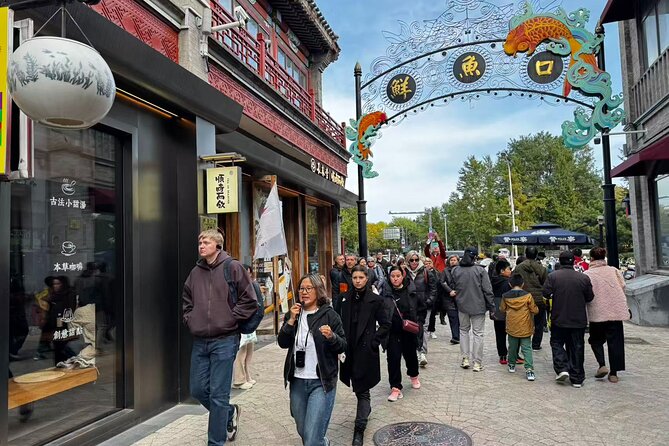
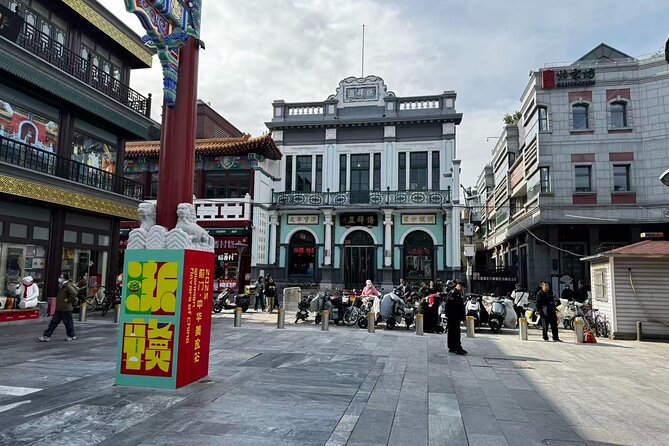
One version of the walk begins at Qianmen Walking Street. This is a sensible meeting point because it gives you an immediate contrast between grand, familiar Beijing and the more personal neighborhoods that follow.
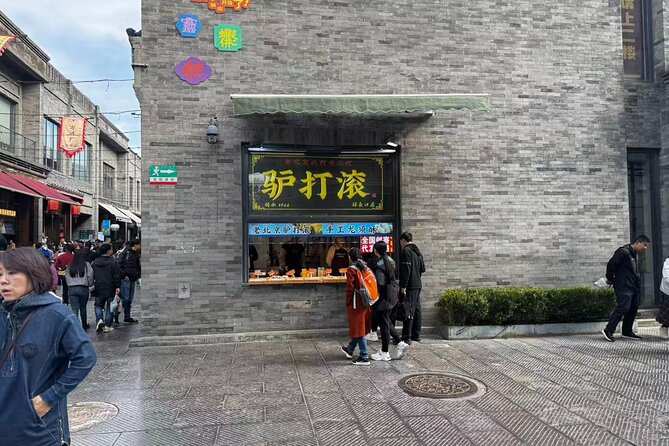
Qianmen is known for its historic commercial character. The street is more polished and public-facing than a residential hutong, but it helps explain how trade and movement shaped old Beijing. You can expect a route with busy storefronts, traditional-style businesses, food stops, and plenty of activity.
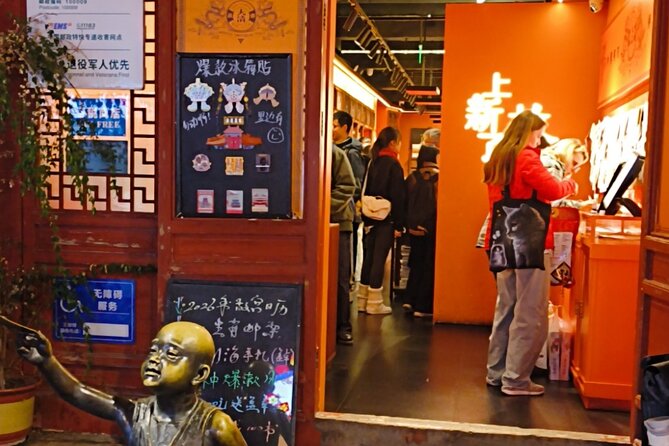
From there, the walk enters Dashilan, an old commercial street with a stronger neighborhood feel. This is a good place to look beyond the main road. Traditional pastries, drinks, small foods, souvenirs, and compact local shops can tell you more about daily life than a formal display behind glass.
A guide adds value here by explaining what you are seeing and helping you decide which details deserve attention. You may learn about local customs, older trades, or the way commercial streets fit into Beijing’s past. The information is most useful when you are curious and willing to pause rather than simply march from one photo stop to the next.
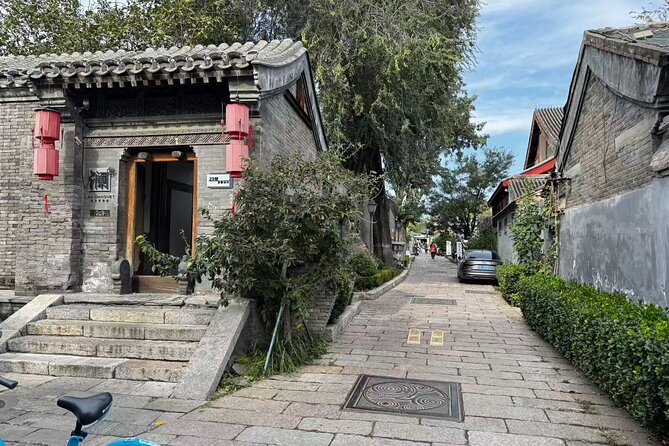
The route then reaches Sanlihe Hutong, where the mood becomes calmer. This change is one of the best parts of the walk. Qianmen and Dashilan show Beijing as a public center, while Sanlihe gives you a look at the lanes where everyday life takes place.
Hutongs are not museum pieces. You may see neighborhood shops, residents going about their routines, and small details that do not appear on a standard sightseeing route. That also means you should act respectfully. Keep your voice down near homes, ask before taking close photographs of people, and remember that these lanes are lived-in places.
The drawback is that the route can feel less predictable than a conventional attraction. A hutong is interesting because it is real and lived in, not because every corner has a sign or a dramatic monument. If you need constant headline sights, the quieter sections may feel slow. I think they are where the tour earns its keep, but your expectations matter.
Nanluoguxiang and the old northern city
Another version of the walk focuses on Nanluoguxiang and the older northern part of Beijing. This route is linked with the Drum Tower, hutong lanes, and the canalside Houhai area. It is described as a night tour, so the atmosphere changes with the light and the activity along the route.
Nanluoguxiang is one of the city’s best-known hutong areas. It combines old lanes with shops, snacks, drinks, and places aimed at visitors. That makes it easy to explore, but it can also make the main street feel less residential than the quieter lanes nearby.
The guide is most useful here when helping you look past the obvious shopping strip. You might learn how the neighborhood developed, how hutongs were arranged, and how old streets now function alongside modern businesses. The point is not simply to walk down Nanluoguxiang, but to understand the area around it.
Several guides are praised for making this route both informative and relaxed. Kevin is noted for explaining the area clearly and introducing local food and snacks. Yang is associated with a well-balanced outing that can include history, calligraphy, food, Peking Opera outfits, local shops, and a shoe museum. Those extras may depend on the guide and route, so I would not treat every one of them as guaranteed, but they show the kind of informal cultural stops that can appear.
The walk continues toward the Drum Tower and the surrounding hutongs. This section gives you a better sense of how old Beijing was organized. Instead of viewing the city only through palaces and temples, you begin to see the connections between public buildings, residential lanes, shops, and water.
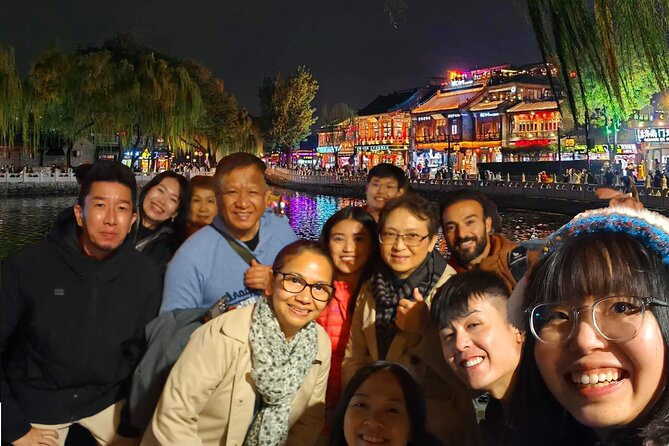
The route ends around Houhai, a canalside area with a different evening feel. The water and night lighting provide a pleasant finish, though the area can be busier and more commercial than the narrow hutongs. If you want a quiet, untouched old neighborhood, this is not the whole story. If you want a practical introduction to Beijing’s old city with food and evening atmosphere added, it works well.
The Bell and Drum Towers at the end of the walk
The Bell and Drum Towers are the most monumental part of the experience. The tour pauses in the square for about 30 minutes, giving you time to admire the buildings and hear how they once helped govern time in the old city.
That role is worth understanding. Before modern clocks and electronic announcements, large public towers helped organize the day. Their sound carried through the city, linking official timekeeping with daily routines.
The towers also give the walk a strong visual finish. After the close lanes of the hutongs, the open square and tall historic buildings provide room to step back and take in the scale of old Beijing.
Admission to the Bell and Drum Towers is not included. The tour includes time in the square, but you should not assume that entry inside the buildings is part of the $15 price. If seeing the interiors is important to you, ask about the current admission arrangement before you go.
This is a small but important value detail. The base price is low, yet the additional ticket cost means your final spend may be higher if you choose to enter. Even without going inside, the stop remains worthwhile for the setting and the explanation of the towers’ former role.
More walking tours in Beijing:
- Private Beijing Walking Tour of the Forbidden City with 7 Options
★ 5.0 · 675 reviews - Forbidden City Private Walking Tour with Optional Sights
★ 5.0 · 400 reviews - Beijing Private Hutong Food Walking Tour
★ 5.0 · 299 reviews - Beijing: Hutong Culinary Walking Tour with 15+ Tastings
★ 5.0 · 162 reviews
What the guides add to the experience
A good hutong walk depends heavily on the guide. Streets and towers are easy to find. The hard part is understanding why they matter and knowing where to slow down.
The strongest guide names associated with this experience are Kevin, Yang, Eevee, and Summer Wang. Kevin is praised for clear explanations of the area, local food suggestions, and a helpful manner. Eevee is noted for being friendly and for helping with a taxi after the walk. Yang is associated with a broad mix of history, food, calligraphy, clothing, shops, and museum-style stops.
Summer Wang receives particular praise for bringing Beijing’s past and local life together, with a route that balances well-known sights and less obvious places. These comments suggest that the guide can shape the outing as much as the route itself.
You should still remember that guide-led experiences are personal. One guide may focus more on history, another on food and neighborhood customs, and another on practical help. That variety can be a strength, but it also means you should keep your exact departure and route details handy.
English is provided, and the headset is supplied when the group exceeds 10 people. With a maximum of 15, the setup is more intimate than a large coach excursion. You can ask questions more easily, and the guide can usually respond to the group’s pace.
Food, calligraphy, and small cultural encounters
This walk is not presented as a dedicated food tour, but food is part of its appeal. You may encounter traditional pastries, snacks, drinks, and small local food shops along the route. A guide can explain what you are looking at and point out choices that are difficult to judge from a menu alone.
I like this kind of food stop because it keeps the experience connected to the street. You are not only hearing about old Beijing. You are seeing how food, shopping, and neighborhood routines continue to shape the area.
Some outings also include the chance to try calligraphy or put on Peking Opera clothing. A shoe museum has also been part of one guide’s route. These are memorable touches, particularly if you want more than architecture and dates.
Do not book this expecting a fixed workshop schedule. The details can vary with the guide and the route. Think of these activities as possible cultural moments rather than guaranteed inclusions.
Is two and a half hours enough?
The advertised duration is about 2 hours and 30 minutes, though the overview also describes the experience as a 2 to 3 hour walk. That is enough time to see a meaningful slice of old Beijing, not enough to cover every historic quarter.
The listed stop times suggest roughly one hour at the first main area, one hour around Nanluoguxiang, and 30 minutes at the Bell and Drum Towers. Since the description appears to combine different route versions, you should confirm which path applies to your chosen morning, afternoon, or night departure.
That point matters. Qianmen, Dashilan, and Sanlihe offer one kind of experience. Nanluoguxiang, the Drum Tower, and Houhai offer another. You may not see every named area on one single outing.
The short length is useful if you have limited time or want to leave room for a palace, temple, or evening meal. It is also a good choice if you are unsure how much walking you want to do in Beijing. The tradeoff is that the guide may keep a steady pace, and there may not be time for long shopping stops or extended photography.
Wear comfortable shoes. The route is entirely focused on walking, and the enjoyment depends on being willing to move through streets and lanes rather than simply stand at one attraction.
When to go, and what to wear
Morning, afternoon, and night options are available. Morning can suit you if you want a calm start and more time afterward for another sight. Afternoon may fit neatly between major daytime visits and dinner. The night route is the natural choice if you want illuminated towers, evening food, and the atmosphere around Houhai.
Weather is a real consideration because the experience requires good conditions. If poor weather causes cancellation, you are offered a different date or a full refund.
Winter can be cold, especially during an evening walk. Bring warm clothing rather than relying on the activity’s modest length to keep you comfortable. In any season, comfortable shoes are more important than dressy footwear.
The route is near public transportation, which makes it practical to reach without arranging a private vehicle. The experience is listed as suitable for most people, though the details provided do not promise a completely step-free route. If mobility is a concern, ask the provider about the specific path before booking.
What the $15 price really offers
At $15 per person, this is excellent value if you want orientation, stories, and a local point of view. You receive an English-speaking guide, a planned walking route, and the chance to see several old Beijing districts without paying for a long formal attraction visit.
The value comes from interpretation rather than admission tickets. A self-guided walk through Qianmen or Nanluoguxiang costs nothing, but you may miss the meaning behind the lanes, towers, shops, and old timekeeping system. The guide turns a pleasant walk into a more useful introduction.
The price does not include tips, and entry to the Bell and Drum Towers is not included. Those are modest but important additions to your budget. If you are comparing this with a private tour, the group limit of 15 keeps the price low, but you will have less control over the pace and route.
The experience is also backed by a strong overall rating and full recommendation from the supplied booking information. I would treat that as a sign that the basic format works well, while still paying attention to the route variation and extra admissions.
Free cancellation is available up to 24 hours before the start time for a full refund. Changes or cancellations inside that window are not accepted for a refund.
Who should book this Beijing city walk?
I would recommend it to you if you want a first look at Beijing beyond the major imperial sights. It suits curious walkers, solo visitors who want local context, couples, and families with older children who can manage a 2.5-hour walk.
It is especially useful if you like food stalls, neighborhood streets, small shops, and stories about how a city functions. The guides can add warmth and practical help, and the low price makes the outing an easy addition to a larger Beijing schedule.
I would be more cautious if you want a private experience, a guaranteed list of every stop, or long interior visits at the towers. The route descriptions overlap, and some extras such as calligraphy, Peking Opera clothing, and the shoe museum may depend on the guide.
Should you book it?
Book this walk if you want a low-cost, human-scale introduction to old Beijing rather than another coach ride between monuments. The combination of hutongs, Qianmen or Nanluoguxiang, food stops, and the Bell and Drum Towers gives you a useful view of the city’s public and private sides.
Before paying, confirm the departure time and exact route. If you are visiting in winter, choose warm clothes, and remember that tower admission is extra. With those points clear, the $15 price makes this one of the easier ways to add local streets and everyday Beijing to your sightseeing plan.
FAQ
How long does the Beijing City Walk take?
The walk lasts approximately 2 hours and 30 minutes. The experience is also described as taking about 2 to 3 hours.
What places can the tour visit?
The listed areas include Qianmen Walking Street, Dashilan commercial street, Sanlihe Hutong, Nanluoguxiang, the Drum and Bell Towers, and the canalside Houhai area. The exact route may vary by departure option.
Is the tour available during the day and at night?
Yes. Morning, afternoon, and night departure options are available.
Is admission to the Bell and Drum Towers included?
No. Admission to the Bell and Drum Towers is not included in the tour price. The walk includes a stop in the square to view the buildings and hear their stories.
Does the tour provide an English-speaking guide?
Yes. An English-speaking guide is included. A guided-tour headset is provided when the group has more than 10 people.
What happens if the weather is poor?
The experience requires good weather. If it is canceled because of poor weather, you can choose a different date or receive a full refund. You can also cancel at least 24 hours before the start time for a full refund.
Latest additions around Beijing
- Bullet Train Private Tour: Beijing Tiananmen Square, Forbidden City & Great Wall★ 5.0 · 3 reviews
- Private Hike from Beijing: Go Beyond The Jiankou and Mutianyu Great Wall★ 5.0 · 3 reviews
- Private Great Wall Hiking Tour from Simatai West to Jinshanling★ 4.5 · 3 reviews
- Private Transfer for Beijing Airport PEK or PKX★ 5.0 · 3 reviews
- Liyuan Theater Beijing Opera Show Tickets★ 5.0 · 3 reviews
- Private Jinshanling relax photo tour by sunset★ 5.0 · 3 reviews
- Private All-inclusive Jinshanling Great Wall 1-day tour★ 4.5 · 3 reviews
- Beijing Night Tour with Acrobatics Show & PekingDuck Dinner★ 5.0 · 3 reviews
Hutong Tours, compared.

Beijing Hutong Walking Food and Beer Tour at Hidden Restaurants
Read our review →
Temple Heaven, Summer Palace, Lama Temple, Hutong Bus Tour
Read our review →
Temple of Heaven, Summer Palace, Lama Temple, Hutong Tours
Read our review →



Browse the lists this tour appears in