
Reviewed · MUSEUMS
Beijing Half Day: National Museum of China In-depth Tour with Subway Transfer
The best reason to book this tour is simple: the National Museum of China is enormous, and a guide helps you spend your limited time on the objects that matter most. In roughly four hours, you move from prehistoric pottery and jade dragons to grand bronze vessels, Buddhist sculpture, and later Chinese culture.
I like the private format, since you can ask questions and adjust the pace. I also like the hotel pickup and ticket booking, especially because museum tickets can be difficult to secure on your own. The main consideration is the price, $114 per person, and the fact that four hours only gives you a carefully chosen sample of a museum that could occupy several days.
In This Review
- Key points to know before booking
- Why the National Museum works best with a guide
- Meeting your guide at the hotel
- Ancient China, from painted pottery to imperial bronze
- Why the bronze vessels and jade deserve your attention
- The Ancient Buddha Statue exhibition
- Other displays and the limits of four hours
- Crowds, pace, and the value of a private group
- The guides: what kind of help you can expect
- Is $114 per person good value?
- Who should book this museum tour?
- Practical booking details
- Should you book the National Museum tour?
- FAQ
- How long does the National Museum tour last?
- What time does hotel pickup take place?
- Is transportation included?
- Is the National Museum admission ticket included?
- Is this a private tour?
- Can I cancel for a full refund?
Key points to know before booking
- Ancient China is the main event: See the Jade Dragon, Simuwu Ding, Siyang Fangzun, Sanxingdui objects, and relics spanning prehistoric times to 1911.
- A private guide keeps the visit focused: Mike, Cathy, William, Diana, Herbie, and Michael are among the guides associated with this experience.
- The museum can be crowded: Guides such as Mike know how to work around busy rooms and keep the visit moving.
- Hotel pickup is included: The guide meets you at 8:30 a.m. or 1 p.m. and arranges the journey to the museum.
- You get more than bronze and pottery: The route can include Buddhist sculpture, jade, food culture, and other selected displays.
- The tour solves a real ticket problem: The museum’s booking system can be hard to use, and securing a place may require flexibility with dates.
Why the National Museum works best with a guide
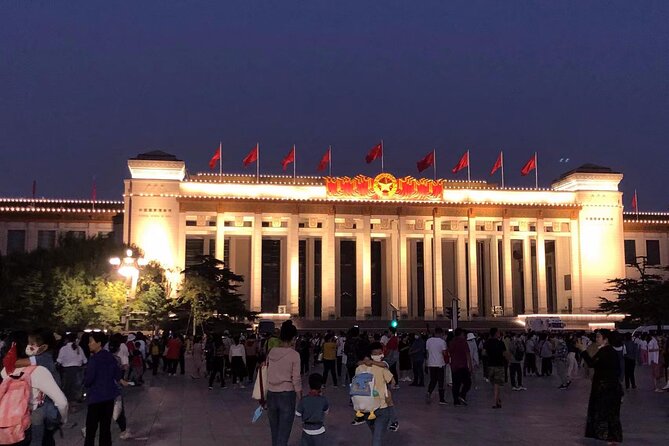
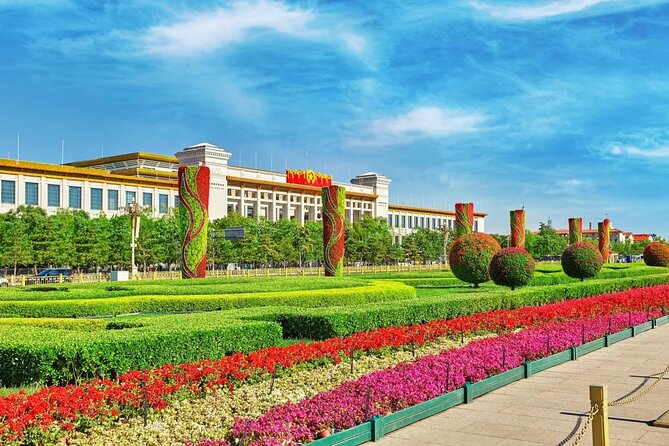
Beijing has many major sights, but this museum asks more of you than simply walking through grand halls and taking photographs. Its collection includes more than 1.4 million relics, with almost 6,000 classified as first-class cultural relics. You do not need to see everything. You need help deciding what deserves your attention.
That is where the guide earns the fee. Instead of reading every label, you can follow a story of Chinese civilization through selected objects. The tour moves from early tools and painted pottery to ritual bronze, jade, religious sculpture, and objects connected with later Chinese life.
I especially like this approach for a first visit. You get a usable framework for the museum, then you can return on your own if you want more time with a particular gallery. Without that framework, the museum’s scale can feel tiring rather than rewarding.
The private setup also matters. Only your group takes part, so you can ask why a vessel was made, how a Buddhist image changed across periods, or what makes one piece more important than another. The guides speak English, and the strongest feedback centers on clear explanations, patience, humor, and an ability to answer questions about both ancient and modern China.
A few more Beijing options to compare side by side
- Beijing:Mutianyu Great Wall Private Trip with English Driver
★ 5.0 · 1,263 reviews - Private Mutianyu Great Wall Trip with English-Speaking Driver
★ 5.0 · 927 reviews - Private Mutianyu Great Wall Trip With English-Speaking Driver
★ 5.0 · 899 reviews
Meeting your guide at the hotel
The day begins in your hotel lobby at either 8:30 a.m. or 1 p.m. Your guide handles the meeting and takes you toward the National Museum. The information for this experience lists a single-way taxi transfer as included, while the itinerary says you may travel by subway or taxi.
That distinction is worth clarifying before you go. The title refers to subway transfer, but the included service specifically names one-way taxi transport. Ask at booking which option applies to your reservation and where the return journey ends. The supplied details clearly include hotel pickup and a single-way transfer to the museum, but they do not promise a ride back.
This arrangement is useful in Beijing, where traffic, museum entry procedures, and changing booking rules can eat into a short morning or afternoon. You do not have to find the entrance alone or work out the first part of the journey after breakfast.
The morning and afternoon departure choices also give you flexibility. The 8:30 a.m. start leaves the rest of the day open. The 1 p.m. start may suit you better if you have spent the morning at another sight or prefer a slower beginning.
Ancient China, from painted pottery to imperial bronze
The first major section focuses on Ancient China. This is the heart of the tour and the place where the guide’s explanations have the most value.
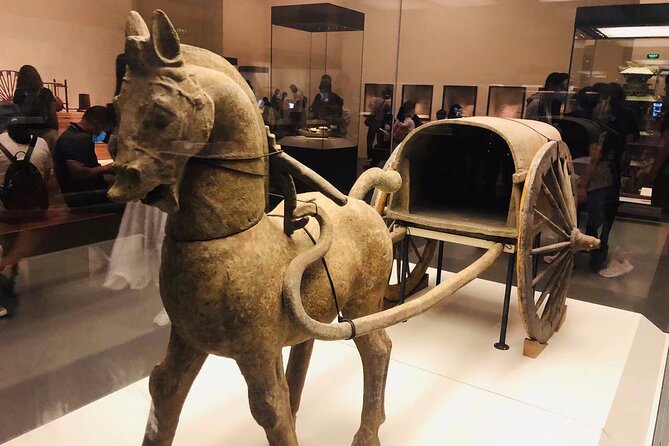
You begin with prehistoric material, including painted pottery jars whose patterns and purpose still raise questions. The displays then move toward jade, including the famous Jade Dragon, an object often described as China’s first dragon. Seeing it alongside other early objects helps you understand how symbols and craft traditions developed over long stretches of time.
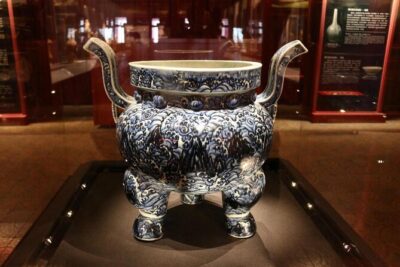
A particularly memorable object is the Simuwu Ding, a huge ritual bronze vessel unearthed in Henan Province in 1939. Its size and solemn form make it hard to miss, but the useful part is learning why bronze vessels mattered. They were not just household containers. They were tied to ceremony, rank, power, and the political order of early China.
The Siyang Fangzun offers a different kind of appeal. Its four corners feature sheep heads with curling horns, giving the vessel a lively shape despite its heavy bronze construction. A guide can point out the balance between practical casting skill, religious meaning, and visual design.
You also see objects connected with the Sanxingdui site civilization. These pieces add an important note to the usual story of early China, showing a distinctive culture with its own striking forms and artistic language. They help you see that ancient China was not one uniform culture moving along a single path.
The displays cover an immense period, from roughly two million years ago through the 1911 Revolution. No four-hour tour can treat every era equally, so expect the guide to choose highlights rather than lead you through every case. That is a strength for most first-time visitors, though specialists may want to arrange extra time for independent viewing.
Why the bronze vessels and jade deserve your attention
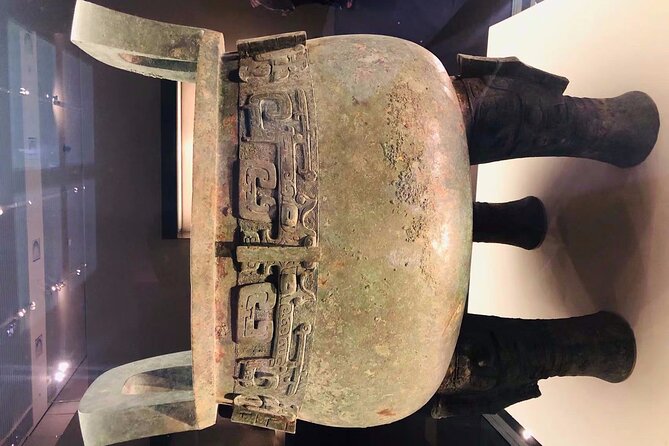
The Ancient China galleries can be visually overwhelming. Bronze objects may look similar at first, and a case of jade pieces can seem quiet beside a huge ceremonial vessel. The guide helps you notice the details that separate one object from another.
With bronze, look at the shape, surface decoration, animal forms, and signs of ritual use. The Simuwu Ding and Siyang Fangzun are not merely old national treasures. They show how technical skill and belief worked together in early Chinese society.
Jade also rewards a slower look. Its color, polish, and symbolic role changed across time, and the tour may include a collection of Chinese jade after the main Ancient China section. Cathy, one of the named guides, is specifically associated with adding useful context to the jade displays.
I like this balance between famous objects and quieter material. You get the pieces you may already have seen in books, but you also gain a way to read the less famous objects around them.
More museums and exhibitions in Beijing:
- Beijing: Tianmen Square, Forbidden City & Royal Museum Tours
★ 4.6 · 1,288 reviews - Beijing:Jingshan Park (Palace Museum Garden) Ticket
★ 4.5 · 185 reviews - Beijing’s Forbidden City with Special Viewing of Treasure Gallery and the Great Wall Ruins at Badaling
★ 4.5 · 24 reviews - China National Museum Ticket Pre-booking and Tiananmen Square
★ 3.5 · 23 reviews
The Ancient Buddha Statue exhibition
The second portion of the visit shifts from early ritual culture to Buddhist art. This change of subject gives the tour a welcome pause after the dense Ancient China galleries.
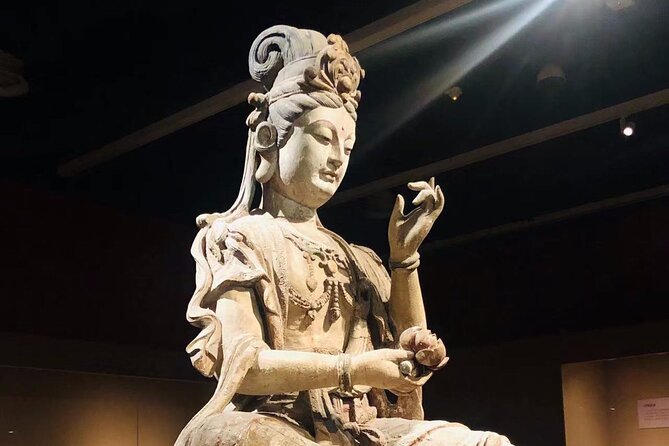
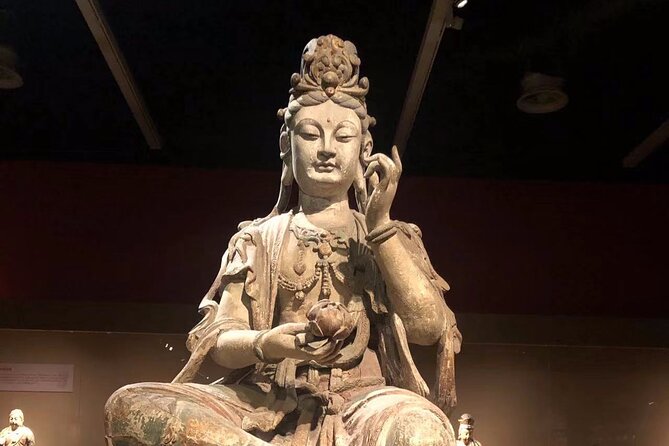
You see Buddha statues from different periods, along with religious figures whose expressions, clothing, gestures, and proportions change over time. The guide can help you compare these details rather than treating every statue as simply another image of the Buddha.
The standout piece described for this room is a painted wooden statue of Guanyin from the Song Dynasty. Its calm expression and gentle smile are the main reasons it receives special attention. The comparison to the Mona Lisa points to its emotional pull, but you should also look at the wood, paint, posture, and restrained expression.
This section is a good fit if you enjoy art but do not have much background in Buddhist iconography. The guide can give you enough context to understand what you are seeing without turning the visit into a lecture packed with names and dates.
The drawback is time. The Ancient China section alone can absorb two hours, and the Buddhist room is allotted about one hour. If you stop often for photographs or ask many questions, the guide may need to shorten the final portion.
Other displays and the limits of four hours
The planned route can include selected displays such as food culture, jade, and other museum rooms. The exact mix depends on your interests, the day’s conditions, and how much time you spend in the main galleries.
That flexibility is one of the private tour’s better features. If you care most about archaeology, you can keep the focus on Ancient China. If you prefer sculpture, art, or daily life, tell the guide early. Cathy, Mike, William, Diana, Herbie, and Michael are all named in connection with this experience, and the feedback about them repeatedly emphasizes their willingness to answer questions and adapt the visit.
Still, do not expect a full tour of the museum. The building contains many exhibitions and permanent collections, and the experience is designed around highlights. The museum itself is worth more than a single short visit, but this tour gives you a practical first orientation.
One other point deserves attention: the National Museum visit is not guaranteed in every circumstance. On one occasion, a guide led a tour at the Capital Museum when the National Museum was not possible. If the National Museum is the main reason you are booking, confirm the final venue and date before setting your plans around it.
Crowds, pace, and the value of a private group
The museum can be extremely crowded. That changes the experience more than you might expect. A famous object may have a knot of people around it, while another room is easier to enter from a different direction.
A guide such as Mike can help you work around the crowds and avoid wasting half the tour waiting for a clear view. This is not a magic solution, and a busy day will still feel busy, but local experience helps.
The private group format also keeps the pace sensible. You are not waiting for strangers to finish taking photographs or listening to questions that do not interest you. You can pause at the Simuwu Ding, move quickly through a less important case, or ask for more explanation in the Buddhist gallery.
The four-hour length is a good compromise for most people. It is long enough to build a story but short enough to leave room for lunch, another sight, or a rest. If you have children, older family members, or limited energy, the focused route may be easier than an unplanned full-day museum visit.
The guides: what kind of help you can expect
The strongest feature of this experience is the guide service. Mike is repeatedly described as clear in English, good at explaining Chinese history, and pleasant company. Cathy is praised for her strong English, humor, energy, and ability to explain culture in simple terms.
William is associated with a museum visit that also included conversation about modern China, not only ancient objects. Diana is described as friendly, clear, and helpful at bringing the exhibits to life. Herbie is noted for being particularly friendly and helpful, while Michael is described as easygoing and well informed.
The important point is not choosing one name with certainty, since the guide assigned to your booking may vary. The point is that the experience depends heavily on who leads it. You should tell the operator if you have a special interest in archaeology, religion, art, or food culture so the guide can shape the route around you.
A guide also helps with the small practical moments. One guide arranged a taxi back to the hotel and checked that the return went safely, but the included details only guarantee hotel pickup and a single-way taxi transfer. Treat any return assistance as something to confirm, not as a promised part of every booking.
Is $114 per person good value?
At $114 per person, this is not a bargain museum entry. The value comes from combining a private guide, English commentary, hotel pickup, museum ticket booking, and transport to the museum.
If you are confident using Chinese booking systems and can secure tickets yourself, you may prefer an independent visit. But the museum booking process can be difficult, with tickets opening only seven days ahead and demand making the desired date hard to obtain. In that situation, the tour’s booking help has real value.
The private format also changes the calculation. You are not paying only for admission. You are paying to save planning time, understand major objects quickly, and avoid wandering through an enormous building without a plan.
I would consider the price reasonable for a first visit if the museum is a priority and your time in Beijing is limited. I would be less enthusiastic if you want a quiet, leisurely museum day, since the tour’s four-hour limit and crowded conditions may feel restrictive.
The experience has a 4.9 rating from 70 reviews, with 99 percent recommending it. Those numbers support the idea that guide quality is the central benefit, but they do not change the basic tradeoff: you pay more for direction and convenience, not for access to every gallery.
Who should book this museum tour?
I would recommend it to first-time visitors who want Chinese history explained in plain English. It also suits couples, families, and small private groups who prefer to ask their own questions rather than join a large scheduled party.
It is especially useful if you have only half a day, if museum tickets are proving difficult to arrange, or if you want to understand the famous objects instead of simply photographing them. People who like bronze, jade, archaeology, Buddhist art, and cultural history will get the most from it.
You may prefer to visit independently if you already know the museum well, speak Chinese, or want to spend hours in a single specialist collection. The same is true if $114 per person feels high for a short outing.
Practical booking details
Confirmation is provided when you book. Most people can take part, and the activity is private for your group.
Free cancellation is available if you cancel at least 24 hours before the local start time. Changes or cancellations made within 24 hours are not accepted for a refund. Gratuities are not included, and a tip is recommended if the guide provides the patient, flexible service this tour is designed to offer.
Before booking, confirm three points: the exact museum venue, the assigned pickup time, and whether your transfer will be by subway or taxi. The supplied details include both transport descriptions, so this small check can prevent confusion on the day.
Should you book the National Museum tour?
Book it if you want the National Museum’s major stories without losing hours to ticket problems, crowds, and guesswork. The Ancient China galleries, especially the Jade Dragon, Simuwu Ding, Siyang Fangzun, and Sanxingdui objects, give you a strong introduction to China’s long past. The Buddhist sculpture room then adds a more artistic and personal side to the visit.
The best reason to choose this experience is the guide. Mike, Cathy, William, Diana, Herbie, and Michael are associated with clear English, useful explanations, humor, and patience. Just remember that a four-hour private visit is a highlights tour, not a complete study of the museum.
If you accept that limit and confirm the transport and venue details, this is a practical way to make a huge Beijing museum manageable.
FAQ
How long does the National Museum tour last?
The experience lasts about four hours. The Ancient China exhibition is allocated about two hours, and the Ancient Buddha Statue exhibition about one hour, leaving some time for travel and additional selected displays.
What time does hotel pickup take place?
Pickup is offered at 8:30 a.m. or 1 p.m. Your guide meets you in the hotel lobby.
Is transportation included?
Hotel pickup and a single-way taxi transfer are included. The itinerary also says the guide may take you by subway or taxi, so confirm the transport method for your booking.
Is the National Museum admission ticket included?
Yes. National Museum ticket booking and admission are included in the experience.
Is this a private tour?
Yes. Only your group participates in the activity.
Can I cancel for a full refund?
Yes, if you cancel at least 24 hours before the experience start time. Cancellations or changes made less than 24 hours before the local start time are not accepted for a refund.
Latest additions around Beijing
- Private Hike from Beijing: Go Beyond The Jiankou and Mutianyu Great Wall★ 5.0 · 3 reviews
- Bullet Train Private Tour: Beijing Tiananmen Square, Forbidden City & Great Wall★ 5.0 · 3 reviews
- Private Great Wall Hiking Tour from Simatai West to Jinshanling★ 4.5 · 3 reviews
- Private Transfer for Beijing Airport PEK or PKX★ 5.0 · 3 reviews
- Liyuan Theater Beijing Opera Show Tickets★ 5.0 · 3 reviews
- Private Jinshanling relax photo tour by sunset★ 5.0 · 3 reviews
- Private All-inclusive Jinshanling Great Wall 1-day tour★ 4.5 · 3 reviews
- Beijing: Private Tour to Great Wall & POPLand Labubu Home★ 4.6 · 3 reviews
Museums, compared.
Tianmen Square, Forbidden City & Royal Museum Tours
Read our review →
Beijing’s Forbidden City with Special Viewing of Treasure Gallery and the Great Wall Ruins at Badaling
Read our review →
Lama Temple, Confucius Temple and Guozijian Museum
Read our review →
China National Museum Ticket Pre-booking and Tiananmen Square
Read our review →
4-Hour Private Tour: Lama Temple, Confucius Temple, Guozijian Museum with Dim Sum
Read our review →
JingShan park (palace museum garden) entry ticket
Read our review →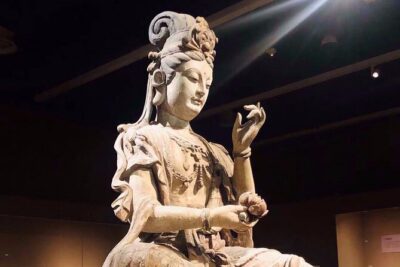
Beijing Private Tour: National Museum of China, Sacred Road and Ming Tombs
Read our review →Browse the lists this tour appears in