
Reviewed · LAMA TEMPLE TOURS
Beijing Lama Temple Entrance Ticket with Optional Guided Service
Beijing’s Lama Temple is not just an old palace dressed up for tourists. It is a working Tibetan Buddhist temple, where worshippers burn incense and pray beneath ornate Qing-era halls. The tour gives you a simple way to arrange entry, with an optional private English guide to explain the symbols, rituals, and famous sandalwood Maitreya statue.
I like the low listed price of $7 and the chance to avoid buying a ticket at the entrance during busy periods. I also like the guide option, especially if you want more than a quick look at colorful buildings. Guides including Mina, Mike, Kevin, and Jack have been praised for clear English and useful explanations.
The main caution is practical: the ticket process has caused serious trouble for some customers. Your QR code is expected about five days before the visit, and several people had to buy another ticket at the temple after failing to receive or download it. Check your email early, save the code offline, and contact the operator before setting out if anything is missing.
In This Review
- Key points before you book
- A royal palace transformed into a living temple
- What the one-stop itinerary actually covers
- The entrance ticket and the QR-code question
- What you see inside Yonghe Temple
- Why the guided option can be worth the extra cost
- Crowds, timing, and the best use of your day
- Weather closures and cancellation protection
- Who should choose this experience?
- Should you book the Lama Temple ticket?
- FAQ
- Where is the Lama Temple?
- What does the experience include?
- How much does the ticket cost?
- When will I receive the QR code?
- Is this a group tour?
- Can I visit without a guide?
- Is the temple still used for worship?
- What is the most notable object inside?
- Can I cancel for a full refund?
Key points before you book
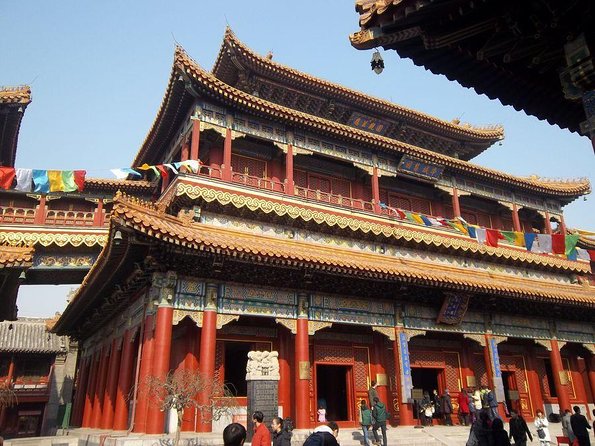
- Former Qing royal palace: Yonghe Temple began as a royal residence before Qianlong converted it into a Tibetan Buddhist temple.
- Working place of worship: Incense, prayer, and active religious practice are part of the visit, not a staged performance.
- Optional English guide: Choose the guided option for explanations of the buildings, Tibetan Buddhist details, and the 18-meter Maitreya Buddha.
- QR code timing matters: The entry code should arrive roughly five days before your date, not immediately with the booking.
- Private group format: Only your own party takes part in the activity, rather than joining a large shared group.
- Nearby sights: The temple is close to the Confucius Temple and Chengxian Street, making a useful half-day pairing.
A royal palace transformed into a living temple
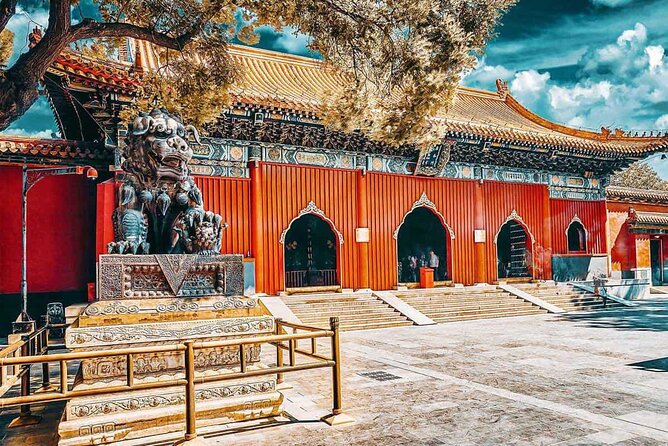
Yonghe Temple, commonly called the Lama Temple, sits in northeastern Beijing. Its Chinese name, Yonghegong, means Palace of Peace and Harmony, a fitting name for a place that moved from imperial residence to major center of Tibetan Buddhism.
That change gives the site its special character. You pass through a sequence of formal halls and courtyards, but the setting is still used for prayer. You may see visitors receiving incense, bowing, or moving quietly from one hall to the next. The religious purpose is clear, and you should treat the space with the same care you would show any active place of worship.
The temple became influential after Qianlong, the Qing emperor who ruled from 1735 to 1796, converted the former palace into a Tibetan Buddhist temple. Today it functions both as a museum of Tibetan Buddhism and as a place where people come to pray.
I find that combination more rewarding than a palace that is empty except for information panels. You are looking at architecture, art, and imperial history, but you are also seeing a place with a present-day purpose.
More Lama Temple visits:
- Temple Heaven, Lama Temple, Summer Palace & Peking Duck Bus Tour
★ 5.0 · 377 reviews - Temple Heaven, Summer Palace, Lama Temple, Hutong Bus Tour
★ 4.7 · 319 reviews - Temple of Heaven, Summer Palace, Lama Temple, Hutong Tours
★ 5.0 · 311 reviews
What the one-stop itinerary actually covers
The scheduled stop is Lama Temple itself. There is no complicated route through several distant attractions, no long coach journey, and no full-day program packed with filler. You arrange your entry, reach the temple, and spend your time exploring its halls and courtyards.
That simplicity is useful in Beijing. The temple is near public transportation, so you can fit it into a larger day without surrendering hours to transfers. It also sits near the Confucius Temple and popular Chengxian Street, giving you a natural nearby pairing if you want to continue walking after your temple visit.
The experience is described as lasting one day, approximately, but that does not mean you receive a full day of guided sightseeing. Your actual time inside depends on the temple’s opening conditions and, if you hire a guide, the schedule arranged for your group. One customer specifically wished the earlier closing time had been made clearer.
Plan with a little slack. Do not put the temple at the very end of a tightly timed Beijing day, especially if your visit date is during a period when the site may close early.
The entrance ticket and the QR-code question
The advertised price is $7 per person, with group discounts listed as a feature. That can be fair value when the temple is busy and you want the convenience of arranging admission before you arrive.
The value is less obvious on a quiet day. One person noted that admission at the temple was 25 yuan and that there was no line at the time. In that situation, an advance ticket may cost more than simply buying admission locally. The point of paying ahead is mainly convenience and possible time savings, not a guaranteed bargain.
The most important detail is the delivery schedule. The ticket code is expected to be sent by email about five days before your travel date. A booking confirmation is not necessarily the same thing as an entrance QR code, so check carefully for the actual ticket file.
I would handle it this way:
- Check your email and spam folder several days before the visit.
- Download the QR code to your phone.
- Keep a screenshot or offline copy.
- Confirm that the code is readable before leaving your hotel.
- Call or email the operator if the code has not arrived.
Several customers reported receiving a code that worked perfectly. Others received a confirmation or a file they could not download and had to pay again at the temple. The provider says it sends codes by email and supplies contact details for assistance. Since communication through WhatsApp may not be reliable in China, do not wait until you are standing at the entrance to solve the problem.
This is the one part of the booking that deserves real caution. The site itself is worth visiting, but a prepaid ticket only helps if the entry code is in your hand and usable.
What you see inside Yonghe Temple
The temple’s appeal comes from the steady progression through its buildings. You move from one formal space to the next, with each hall offering another view of Qing architecture, Buddhist imagery, and ritual activity.
The structures are connected by courtyards and traditional decorative details. The experience is not about one single viewpoint. It is about noticing how the temple’s layout guides you forward, with religious objects and statues becoming the focus inside each hall.
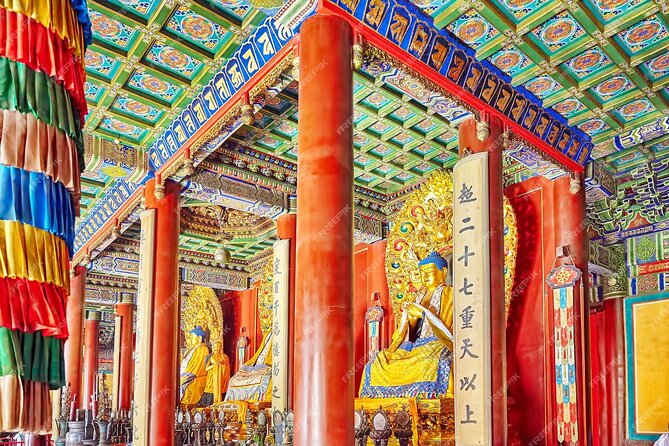
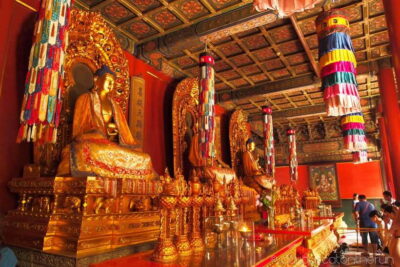
The final hall contains the famous sandalwood Maitreya Buddha, described as about 18 meters high. This is the detail I would make sure not to miss. The statue is carved from a single enormous piece of sandalwood, and its scale is striking even if you have visited other major Buddhist sites in Asia.
You may also receive incense at the entrance. Several people found the incense ritual an especially memorable part of the visit. If you accept the sticks, watch what others do and follow the temple’s instructions rather than treating the ritual as a photo opportunity. Keep your voice low and avoid blocking people who are praying.
The temple can be crowded, but the mood is generally orderly. A queue may move quickly, and busy conditions do not necessarily mean pushing or disorder. Still, the ticket line and the temple interior are separate matters. A prepaid code may help you avoid the ticket-purchase queue, but it does not promise an empty site.
A few more Beijing options to compare side by side
- Beijing: Forbidden City Tour(Group/Private)-Tickets Included
★ 4.8 · 7,974 reviews - Beijing: Mutianyu Great Wall Daily Tour with Ticket & Lunch
★ 5.0 · 3,056 reviews - 4-Hour Small Group Tour to Forbidden City with Entry Tickets
★ 5.0 · 1,863 reviews - Beijing: Tiananmen Square Registration Service(Ticket)
★ 4.5 · 1,704 reviews
Why the guided option can be worth the extra cost
The basic ticket works well if you enjoy looking around at your own pace and are comfortable doing some reading or research beforehand. The buildings are attractive enough to reward a short independent visit.
The guide becomes more valuable when you want to understand what you are seeing. The temple contains Buddhist figures, imperial references, and Tibetan religious details that are not always obvious from the architecture alone. An English-speaking guide can explain why the palace changed function, how the halls are used, and what makes the Maitreya statue important.
Mina has been praised for explaining the history and use of each building, along with religious details and small points about the sandalwood statue. Mike has been described as offering strong explanations of Tibetan Buddhism and the temple. Kevin has been noted for helpful explanations, while Jack has been praised for clear English and thorough commentary.
Because this is a private activity, your group is the only group taking part in your booked tour. That does not necessarily mean you will have the temple to yourself. It means the guiding arrangement is for your party rather than a large shared group.
The guide option is best for a first visit, for anyone curious about Tibetan Buddhism, or for people who want context without preparing in advance. If you mainly want incense, courtyards, and a look at the great Buddha, the ticket-only choice may be enough.
Crowds, timing, and the best use of your day
The promise of beating the crowds should be read as advance ticket convenience, not a private after-hours visit. The temple remains a popular Beijing sight, and the interior can be busy.
Some visits have a fast-moving queue. At other times, buying admission locally may be easy. Peak season and busy periods are when prebooking has the clearest advantage. If you are visiting during a quiet stretch, compare the $7 price with the 25 yuan local admission cited in the available information.
Arrive with enough time to deal with the entrance process. If your guide is included, allow time to meet the guide and check that your ticket is ready. If the temple is closing early, a late arrival could leave you with a rushed visit.
The area also works well as part of a compact cultural outing. After Yonghe Temple, you can consider the nearby Confucius Temple and Chengxian Street. The supplied information does not provide a combined ticket or guided itinerary for those places, so treat them as separate stops rather than included parts of this experience.
Weather closures and cancellation protection
Weather can affect the plan. The temple and other attractions in Beijing have closed during severe weather, and some customers learned about cancellations only after arriving. The provider later stated that full refunds were available through the booking platform for the affected closures.
The stated cancellation policy allows a full refund if you cancel at least 24 hours before the experience start time. Cancellations made less than 24 hours in advance are not refunded, and late changes are not accepted. Cutoff times use local Beijing time.
If bad weather threatens your date, check your email and the booking platform before heading to the temple. If the attraction closes, keep any messages and submit a refund request through the platform rather than relying only on informal messaging.
Who should choose this experience?
I would recommend the ticket option to someone building a Beijing sightseeing day around public transportation and wanting a simple entry arrangement. It suits first-time visitors who prefer to organize admission before arrival, particularly during high-demand periods.
The guided option suits you if Buddhist imagery is unfamiliar, if you want the temple’s royal-to-religious story explained, or if you like asking questions as you go. The private format is also useful for families or small groups who do not want to follow a large shared party.
I would be more cautious if you are booking only because the price appears cheaper than local admission. The local price cited in the available information is 25 yuan, and on a quiet day there may be no line. The advance purchase earns its keep through planning and possible queue savings, not always through cost.
I would also avoid booking until you can monitor your email. The strongest positive experiences involved QR codes arriving on time and working at the entrance. The worst experiences involved missing, unusable, or unclear codes and a second payment at the temple.
Should you book the Lama Temple ticket?
Book it if you value advance planning, are visiting during a busy period, or want an English guide to explain the halls and Tibetan Buddhist details. The temple itself is one of Beijing’s most worthwhile religious and cultural sights, and the incense ritual plus the huge sandalwood Maitreya Buddha give the visit real character.
Choose the guide if you want interpretation from people such as Mina, Mike, Kevin, or Jack, subject to guide availability. Choose ticket-only if you prefer a short, independent visit and are willing to compare the prepaid cost with local admission.
My practical verdict is simple: the site deserves your time, but the ticket service requires careful follow-up. Wait for the QR code, save it offline, and confirm it before you travel to the temple. Done correctly, this is an easy way to add a memorable working temple to a Beijing day. If the code does not arrive, contact the operator before you go, not after you reach the gate.
FAQ
Where is the Lama Temple?
The Lama Temple, also called Yonghe Temple or Yonghegong, is in the northeast of Beijing and is near public transportation.
What does the experience include?
It includes entrance to Lama Temple. An English-speaking guide is included only when you select the guided option.
How much does the ticket cost?
The listed price is $7 per person. Group discounts are also listed. One customer reported paying 25 yuan for admission directly at the temple, so local prices and advance prices may differ.
When will I receive the QR code?
The ticket information says QR codes are sent about five days before the travel date. Check your email, including the spam folder, and download the code before visiting.
Is this a group tour?
It is described as a private activity, meaning only your own group participates. The guided option is not described as a large shared tour.
Can I visit without a guide?
Yes. You can book the entrance ticket without selecting the English-speaking guided service.
Is the temple still used for worship?
Yes. Yonghe Temple is both a museum of Tibetan Buddhism and a functioning temple where people pray.
What is the most notable object inside?
The final hall contains a large sandalwood Maitreya Buddha statue described as about 18 meters high.
Can I cancel for a full refund?
You can cancel for a full refund at least 24 hours before the experience start time. Cancellations or changes made less than 24 hours before the start time are not accepted for a refund.
Latest additions around Beijing
- Private Hike from Beijing: Go Beyond The Jiankou and Mutianyu Great Wall★ 5.0 · 3 reviews
- Bullet Train Private Tour: Beijing Tiananmen Square, Forbidden City & Great Wall★ 5.0 · 3 reviews
- Private Great Wall Hiking Tour from Simatai West to Jinshanling★ 4.5 · 3 reviews
- Private Transfer for Beijing Airport PEK or PKX★ 5.0 · 3 reviews
- Private All-inclusive Jinshanling Great Wall 1-day tour★ 4.5 · 3 reviews
- Liyuan Theater Beijing Opera Show Tickets★ 5.0 · 3 reviews
- Private Jinshanling relax photo tour by sunset★ 5.0 · 3 reviews
- Beijing Night Tour with Acrobatics Show & PekingDuck Dinner★ 5.0 · 3 reviews
Lama Temple Tours, compared.
Temple Heaven, Lama Temple, Summer Palace & Peking Duck Bus Tour
Read our review →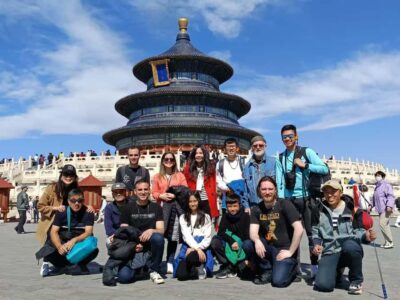
Temple Heaven, Summer Palace, Lama Temple, Hutong Bus Tour
Read our review →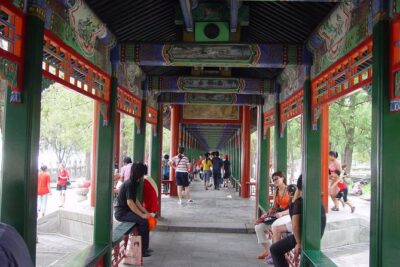
Temple of Heaven, Summer Palace, Lama Temple, Hutong Tours
Read our review →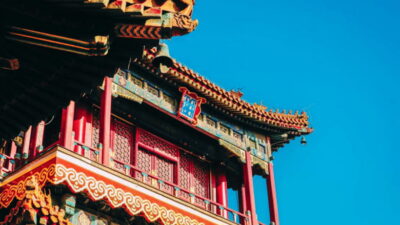

Beijing Historical Tour II including Summer Palace, Lama Temple & Panda Garden
Read our review →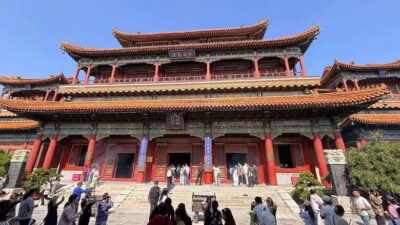
Beijing Lama temple ticket; #1 efficacious; limited Discount
Read our review →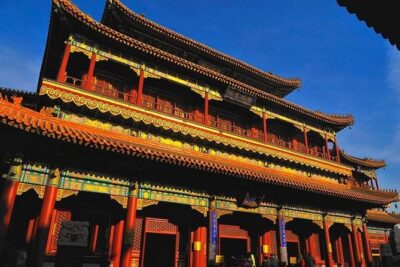
Panda House, Temple of Heaven, Lama Temple, Summer Palace & Lunch
Read our review →Browse the lists this tour appears in