
Reviewed · TRAIN EXPERIENCES
Datong Yungang Grottoes and Hanging Monastery 1-day from Beijing by Train
Datong gives you two extraordinary sights in one long day: 5th-century Buddhist cave art at the Yungang Grottoes and a temple fixed to a cliff at the Hanging Monastery. The bullet train makes the trip practical, covering the Beijing to Datong route in about two hours each way.
I like the private format, since your group has a dedicated guide and can get clear explanations rather than trailing behind a large crowd. I also like the English commentary, especially at Yungang, where the meaning of the carvings is easy to miss without context from a guide such as Star.
The catch is the schedule. This is a full 12-hour day, and the Hanging Monastery can become crowded from March through October. If the wait to enter passes 1.5 hours, the recommended choice is to view it from below rather than lose much of the day.
In This Review
- Key points to know before booking
- Why Datong is worth the long day from Beijing
- Inside the Yungang Grottoes
- The cliffside Hanging Monastery
- What the private guide adds to the day
- Shanxi food in the middle of a packed day
- Is $399 a fair price?
- Who will enjoy this Datong day trip?
- Booking and cancellation details
- Should you book it?
- FAQ
- How long is the Datong day trip from Beijing?
- How long does the bullet train take between Beijing and Datong?
- Is this a private tour?
- Is an English-speaking guide provided?
- Are admission tickets included?
- Do I need to reserve the Hanging Monastery in advance?
Key points to know before booking
- Two-hour bullet train each way: The fast, quiet train is what makes Datong possible as a day trip from Beijing.
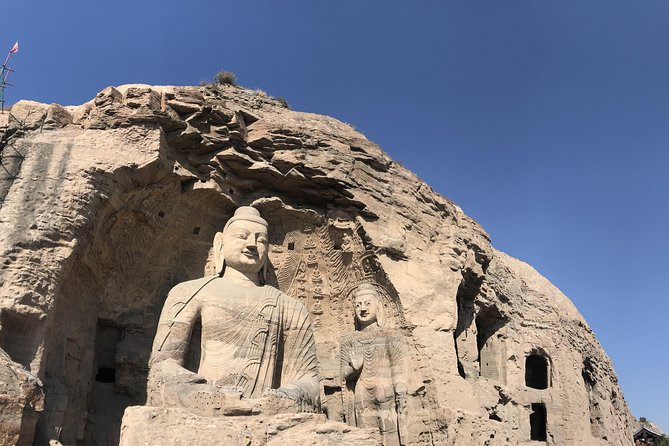
- Yungang’s 252 grottoes: You see part of a huge site containing more than 51,000 Buddhist statues and statuettes.
- The 1,500-year-old Hanging Monastery: This cliffside complex brings Buddhism, Taoism, and Confucianism together in one unusual building.
- Private sightseeing: Only your group takes part, with a dedicated team and an English-speaking Datong guide.
- Crowd control matters: From March through October, advance reservations are required for entry to the Hanging Monastery and can be hard to secure.
- Shanxi food at lunch: The day gives you a chance to try local food that is different from what you usually find in Beijing.
Why Datong is worth the long day from Beijing
Beijing has enough sights to fill a week, so a day trip needs to offer something genuinely different. Datong does. Instead of another imperial courtyard or city museum, you get major Buddhist art carved into rock and a small temple clinging to a near-vertical cliff.
The train ride is the practical reason this works. At roughly two hours in each direction, the journey is long but manageable for a single day. A road trip would make the outing harder to judge, while the bullet train gives you a quiet, predictable ride and leaves more time for the sites themselves.
You should still expect an early start and a late return. The listed operating window runs from 7:00 AM to 11:30 PM, and the entire outing takes about 12 hours. That makes this a good use of a spare Beijing day, but a poor choice if you want a relaxed morning or an evening back in the city.
The private setup also matters. You are not simply buying transport and entry tickets. Your group has a guide in Datong, and the day is organized around fitting two major sights into one tight schedule. The guide’s time management is especially useful here, since train times, site distances, admission arrangements, and crowd levels all affect how much you see.
A few more Beijing options to compare side by side
- Beijing to Xi’an See Terracotta Warriors with Bullet Train Round Trip Transfer
★ 5.0 · 238 reviews - Beijing to Datong See YunGang Cave, Hanging Temple (Bullet Train)
★ 5.0 · 39 reviews - Beijing: Xi’an Terracotta Tour by Train-All Tickets Included
★ 5.0 · 27 reviews
Inside the Yungang Grottoes
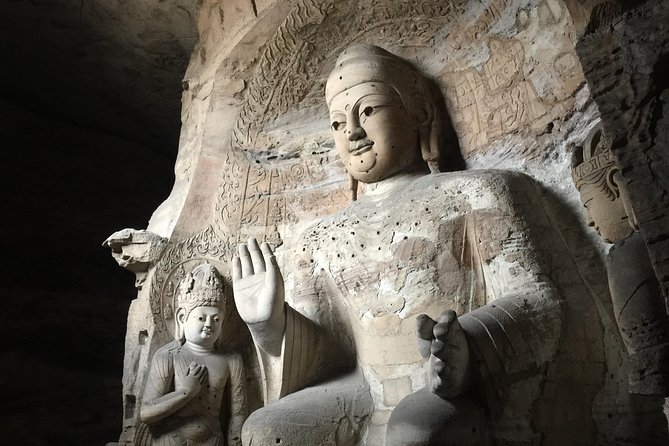
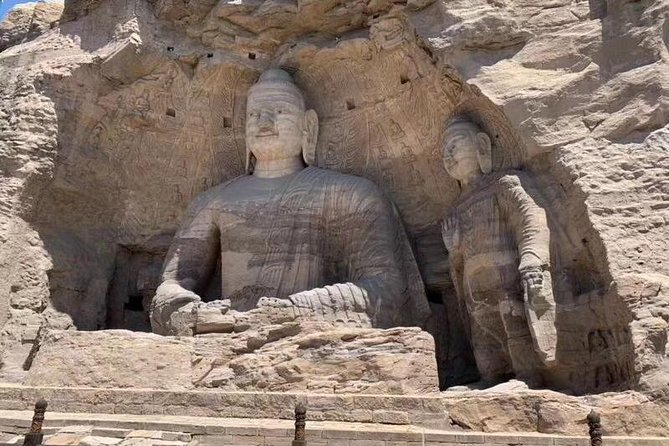
The Yungang Grottoes are the day’s great cultural stop. Created between 460 and 525 AD during the Northern Wei Dynasty, they contain 252 grottoes and more than 51,000 statues and smaller figures. The scale alone is impressive, but the real value is in the changes you can see from cave to cave.
This is not a single statue in a single hall. It is a wide series of rock-cut spaces, with Buddhist figures carved into the cliffs and cave walls. The site is recognized as one of China’s three major ancient sculptural locations and became a UNESCO World Heritage Site in 2001.
You have about two hours here, with admission included. That is enough for a purposeful visit, but not enough to examine every cave in detail. I would treat the stop as a guided introduction to the main artistic and religious ideas rather than an exhaustive study of the entire complex.
The date matters. These carvings come from the 5th and 6th centuries, when Buddhism was taking firm root in China under imperial support. The art also shows contact between Buddhist traditions from south and central Asia and Chinese cultural forms. A good English explanation helps you notice that this is not just a collection of old stone figures. It is evidence of religious exchange and changing artistic practice.
This is where the guide earns the fare. At a site of this size, it is easy to take a few photographs and move on without understanding what you are seeing. An English-speaking guide can point out the importance of the grotto groups, explain the Northern Wei setting, and give the sculptures a clear place in the story of Chinese culture.
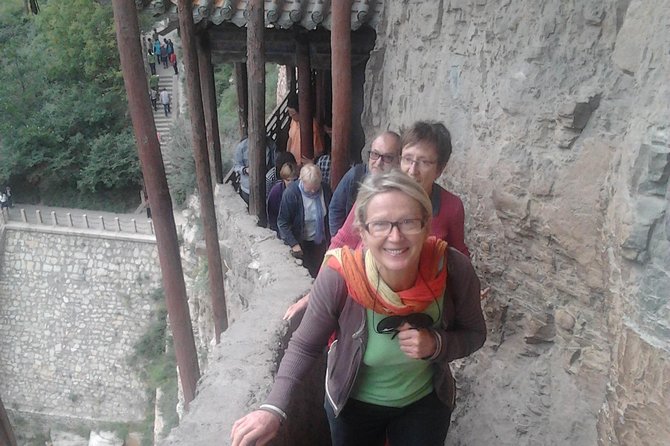
The setting has a practical drawback. You will be on your feet and moving through a substantial historic site, so comfortable shoes are sensible. The tour information does not specify the exact walking route or which caves are visited, so you should not expect a fixed list of every major carving before departure.
The cliffside Hanging Monastery
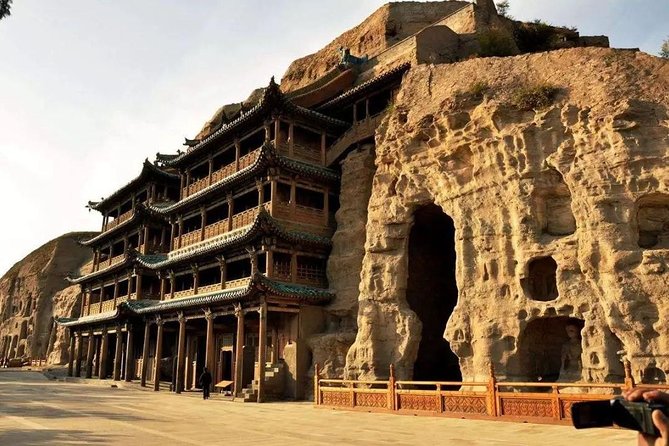
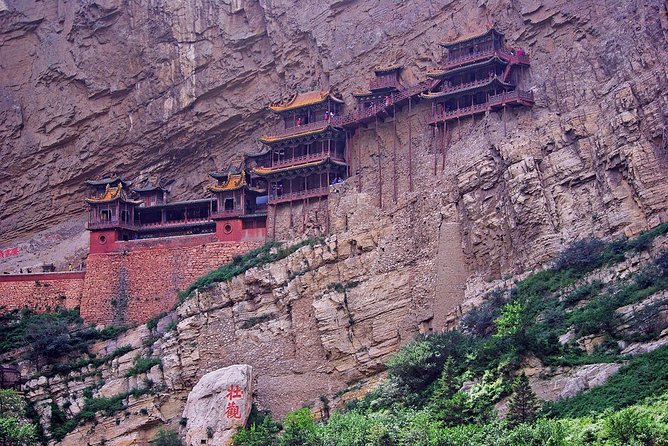
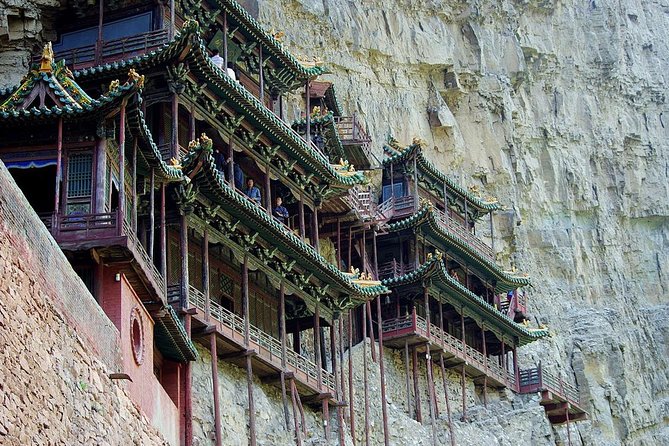
The Hanging Monastery, also called Xuankong Temple, is a very different experience. Instead of a broad archaeological site, you see a compact temple built into a sheer precipice near Datong. It is around 1,500 years old and is famous for combining Buddhism, Taoism, and Confucianism in one complex.
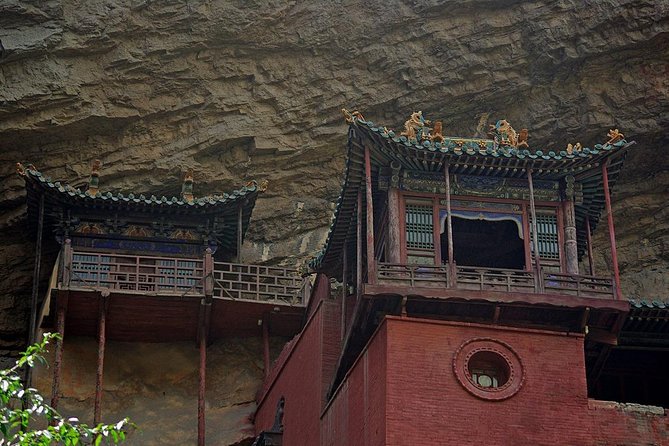
The building appears to cling to the rock face, supported by wooden beams set into the cliff. The surrounding rock also shelters the temple from much of the weather. That unusual construction is the reason this stop feels so memorable even before you learn anything about its religious role.
The visit is scheduled for about one hour, and admission is included. That sounds generous until you account for the seasonal crowd problem. From March through October, visitor numbers are high, and reservations must be made at least one week ahead. Those reservations are described as highly competitive, so confirmation of this part of the visit depends on availability.
This is the most important practical warning in the whole trip. If waiting to enter takes more than 1.5 hours, the sensible plan is to view the temple from below. You would miss the close look at the interior passages, but you would preserve the rest of the day and avoid turning one sight into a long queue.
Viewing from below is not a worthless fallback. The temple’s position on the cliff is the main visual fact, and the full structure is easier to appreciate from a distance. Still, if entering the complex is a top priority for you, March through October carries a real risk of disappointment. Ask about the reservation status when your booking is confirmed.
The combination of Buddhism, Taoism, and Confucianism is another reason to pay attention to the guide. The building is small, unusual, and easy to reduce to a quick photo stop. Clear commentary gives the temple more meaning and explains why it is important beyond its dramatic construction.
What the private guide adds to the day
The guide in Datong is described as fluent in English and experienced with the timing of this route. Star is one guide associated with the experience, and the feedback about the trip places strong emphasis on his professional manner and clear knowledge of local history.
That skill matters more on this itinerary than it would on a simple transfer. Yungang requires cultural explanation, while the Hanging Monastery requires practical decisions about queues and entry. You want someone who can keep the day moving without rushing every stop.
The private format means only your group participates. You get a dedicated team rather than a shared coach group, and the guide can focus on your questions. Group discounts are offered, so the price may make more sense when several people book together.
Do not confuse private with leisurely. The itinerary still has a fixed train schedule and two major attractions far from Beijing. A private guide improves the use of your time, but it cannot remove the distance or guarantee that a crowded temple will be available for immediate entry.
The English commentary is one of the strongest reasons to choose this arrangement instead of trying to organize the same day independently. The train itself is simple enough, but coordinating Datong transport, admission, the two sites, and a return train requires more effort. The guide reduces that planning burden and gives you historical context along the way.
Swap the crowds for a different corner of Beijing:
- From Beijing: Mutianyu Great Wall Tours with Options
★ 4.9 · 9,216 reviews - Beijing: Forbidden City Tour(Group/Private)-Tickets Included
★ 4.8 · 7,974 reviews - Beijing: T-Square & Forbidden City Group or Private Tour
★ 4.8 · 4,446 reviews - Beijing: Mutianyu Great Wall Daily Tour with Ticket & Lunch
★ 5.0 · 3,056 reviews
Shanxi food in the middle of a packed day
The outing includes a chance to try Shanxi-style food, which gives the day a local flavor beyond the two headline sights. Shanxi cooking is not the same as the food you typically encounter in Beijing, and this is one of the smaller details that makes the trip feel connected to the region.
The available information does not name the restaurant, menu, or dishes, so you should not book this expecting a particular meal. Think of it as a useful regional pause between major sightseeing stops. It also saves you from spending valuable time trying to arrange lunch on your own.
Because this is a long day, lunch is also part of the rhythm. You will move from the train to the guide, then to Yungang and the Hanging Monastery, with little spare time. A local meal gives you a break without turning the schedule into a series of unrelated stops.
Is $399 a fair price?
At $399 per person, this is not a budget day trip. The value depends on how much you care about seeing Datong without arranging every piece yourself.
The price includes the private tour format, pickup, admission tickets, and the bullet train based on the tour description. It also covers the services of a local English-speaking guide and the planning needed to connect two distant sights in one day. For a solo visitor, the cost is high. For a small group, the private arrangement and possible group discount can make the calculation more favorable.
You are also paying for convenience and time management. A cheaper independent trip might be possible, but you would need to handle train tickets, local transport, entry arrangements, and the risk of missing the return connection. You would also lose the benefit of a guide explaining the Buddhist carvings and the unusual religious mix at the Hanging Monastery.
I would not call this the best value for someone who is mainly interested in ticking off a photo stop. The fare makes more sense if you place a high value on expert explanation, private transport arrangements, and a full day focused on major cultural sites.
The booking pattern suggests that people often reserve this experience well ahead of time, with an average booking lead of 88 days. That is not a rule, but it is a useful sign for your planning. Confirmation is sent within 48 hours, subject to availability, and the Hanging Monastery has its own advance reservation pressure during the busy months.
Who will enjoy this Datong day trip?
I would choose this for a first visit to northern China when you have one spare day in Beijing and want something outside the capital. It suits you particularly well if Buddhist art, architecture, and local history matter more than a slow café day.
It is also a good fit if you prefer a private guide. You can ask questions, stay with your own group, and rely on someone familiar with the route rather than piecing together the day yourself.
You should think twice if you dislike early starts, long travel days, or crowded attractions. The bullet train is comfortable according to the available feedback, but the route still takes about four hours of round-trip train time, before adding local transfers and sightseeing.
The tour is also less suited to anyone who needs a very flexible schedule. The return train limits your choices, and the decision to view the Hanging Monastery from below may be necessary during the peak season.
Booking and cancellation details
Pickup is offered, and the meeting information lists access near public transportation. The experience is open to most people, though the supplied details do not provide a specific accessibility description for the grottoes or cliffside temple.
You receive confirmation within 48 hours, subject to availability. Free cancellation is available until 24 hours before the start time. Cancellations or changes made inside that 24-hour window are not accepted for a refund.
Should you book it?
Book this trip if you have an extra Beijing day and want two genuinely distinctive sights rather than another city attraction. Yungang is the cultural centerpiece, while the Hanging Monastery provides the day’s most unusual architectural view.
The strongest reasons to book are the fast train, private format, local guide, included admission, and English explanations. Star’s praised guiding and time management are especially relevant because the schedule is demanding and the sights need context.
Before paying, confirm the train arrangements and ask about the Hanging Monastery reservation if you are visiting from March through October. If you can accept the possibility of viewing that temple from below, this is a well-planned way to reach Datong. If entering the temple is essential, choose your dates carefully and allow for the possibility that availability will decide the final shape of the day.
FAQ
How long is the Datong day trip from Beijing?
The experience lasts about 12 hours, including the bullet train journey and visits to both attractions.
How long does the bullet train take between Beijing and Datong?
The bullet train takes about two hours each way.
Is this a private tour?
Yes. Only your group participates, and a dedicated team organizes the experience.
Is an English-speaking guide provided?
Yes. The Datong guide is fluent in English. Star is one guide associated with this experience.
Are admission tickets included?
Yes. Admission to the Yungang Grottoes and the Hanging Monastery is included.
Do I need to reserve the Hanging Monastery in advance?
From March through October, advance reservations of at least one week are required and can be highly competitive. If the on-site wait exceeds 1.5 hours, the recommended option is to view the temple from below.
Latest additions around Beijing
- Private Hike from Beijing: Go Beyond The Jiankou and Mutianyu Great Wall★ 5.0 · 3 reviews
- Bullet Train Private Tour: Beijing Tiananmen Square, Forbidden City & Great Wall★ 5.0 · 3 reviews
- Private Great Wall Hiking Tour from Simatai West to Jinshanling★ 4.5 · 3 reviews
- Private Transfer for Beijing Airport PEK or PKX★ 5.0 · 3 reviews
- Liyuan Theater Beijing Opera Show Tickets★ 5.0 · 3 reviews
- Private Jinshanling relax photo tour by sunset★ 5.0 · 3 reviews
- Private All-inclusive Jinshanling Great Wall 1-day tour★ 4.5 · 3 reviews
- Beijing Night Tour with Acrobatics Show & PekingDuck Dinner★ 5.0 · 3 reviews
Train Experiences, compared.

Beijing to Xi’an See Terracotta Warriors with Bullet Train Round Trip Transfer
Read our review →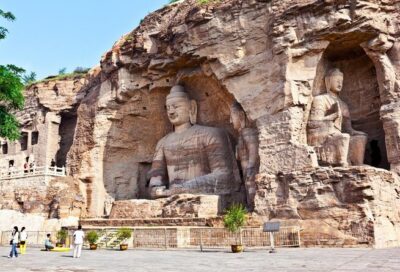
Beijing to Datong See YunGang Cave, Hanging Temple (Bullet Train)
Read our review →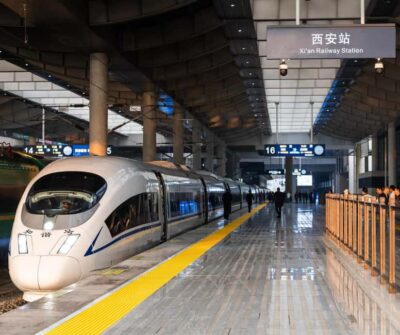
Xi’an Terracotta Tour by Train-All Tickets Included
Read our review →
Private Day Trip to Tianjin from Beijing by Bullet Train
Read our review →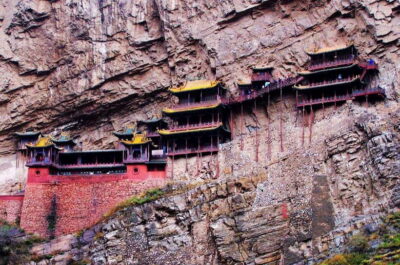
Bullet Train Tour to Hanging Temple&Yungang Grottoes
Read our review →
Private Day Trip: Discover Tianjin by Bullet Train from Beijing
Read our review →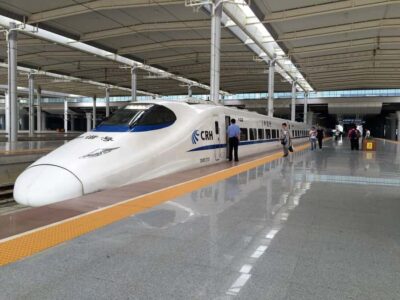
Beijing to Xi’an Terracotta Tour by Roundtrip Bullet Train
Read our review →
Beijing to Shanghai Bullet Train Ticket with South Railway Station Transfer
Read our review →Browse the lists this tour appears in