
Reviewed · HISTORICAL TOURS
Beijing: Bell and Drum Towers Entry Ticket—Historic Landmark
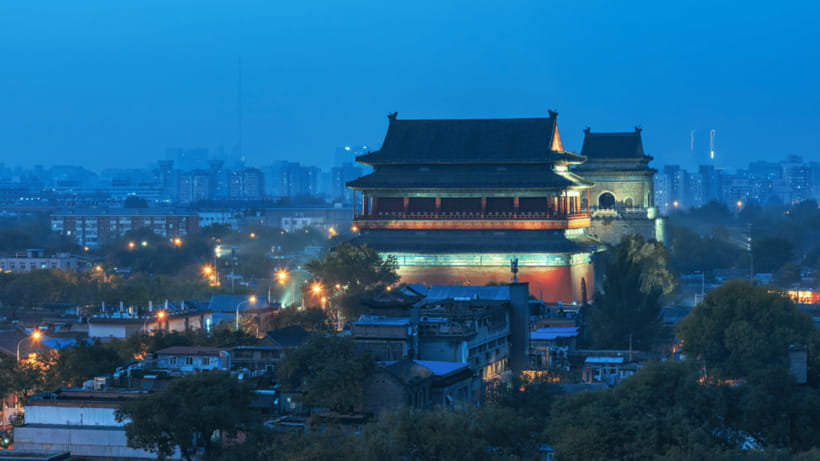
Beijing’s Bell and Drum Towers were the city’s ancient clock. At dusk, the drums marked the end of the day; at dawn, the bell called the city to life. I like the chance to see both towers with one ticket, and I like that the experience leaves you time to look closely rather than hurry behind a guide.
The five-minute drum performance is the main reason to plan your visit around the schedule. I also appreciate the English PDF guidebook, which gives a self-guided visit more context. The catch is simple: this is an attraction ticket, not a guided tour, and the performance time can change.
In This Review
- Key things to know before you go
- Why Beijing’s old clock still matters
- Starting with the Drum Tower
- The Bell Tower and its 63-ton centerpiece
- What the English PDF guidebook adds
- Planning the four-hour visit
- Is $13 good value?
- The best reasons to book
- Where the experience may disappoint
- How it fits into a Beijing day
- Bell Tower or Drum Tower first?
- Practical tips for a smoother visit
- Should you book the Bell and Drum Towers ticket?
- FAQ
- What does the ticket include?
- Is a live tour guide included?
- Can I see a drum performance?
- How long does the visit take?
- What is special about the Bell Tower?
- How many drums are in the Drum Tower?
- What should I bring?
- Can I cancel the booking?
Key things to know before you go
- The 63-ton Yongle bell: See the Ming Dynasty bell known as the King of Ancient Bells.
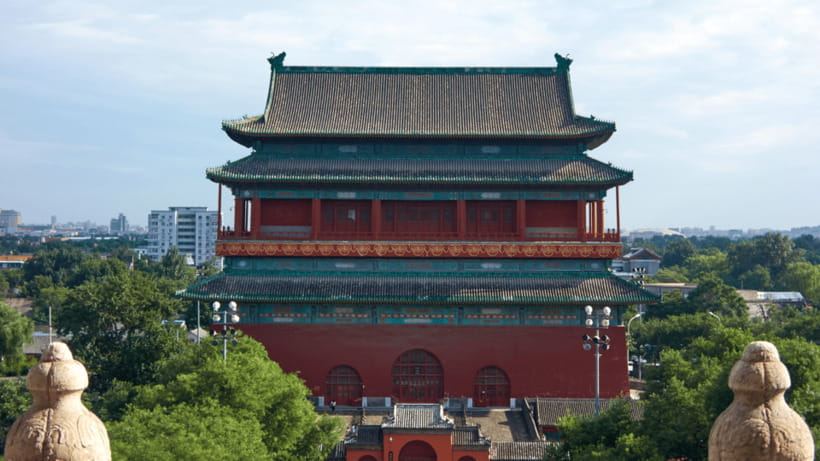
- Twenty-five historic drums: The Drum Tower displays the large drum collection once used to mark time.
- A possible live performance: Climb the Drum Tower for a chance to see a short drumming display.
- Two towers, one historic system: The Bell and Drum Towers explain how imperial Beijing kept its daily rhythm.
- A self-guided format: Your ticket includes an English PDF guidebook, but no live guide or audio guide.
- Central Beijing location: The towers sit at the northern end of the city’s central axis and fit neatly into a culture-focused day.
Why Beijing’s old clock still matters
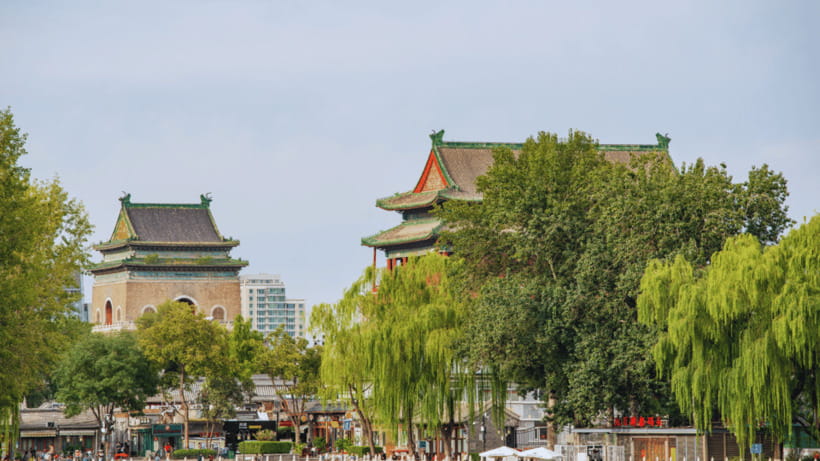
It is easy to look at an old tower and see only a grand roof and a flight of stairs. Here, the purpose of the buildings makes the visit more interesting. These were working timekeepers for the imperial city, not simply ceremonial monuments.
The towers were first built in the Yuan Dynasty. Their north-south arrangement reflects a clear urban plan, with the Bell Tower and Drum Tower working as a pair. The system was direct and physical: drums at dusk, a bell in the morning, and the sound carrying across the city.
That detail gives you a useful way to read the site. You are not just inspecting old timber, stone, and rooflines. You are seeing the machinery of daily life in Ming and Qing Beijing, when the hour was announced from a central tower instead of checked on a phone.
The entire protected area covers 12,597 square meters. You will not need four hours to rush from room to room, but the generous duration gives you space to climb, pause, photograph, read, and wait for the performance if the schedule works in your favor.
More imperial history days in Beijing:
- Beijing Historical Tour II including Summer Palace, Lama Temple & Panda Garden
★ 4.0 · 187 reviews - Beijing Historical Tour I – Forbidden City, Tiananmen Square & Temple of Heaven
★ 4.0 · 120 reviews - Beijing Historic City Guided Walking Tour + Calligraphy Creation
★ 5.0 · 59 reviews
Starting with the Drum Tower
Most people will find the Drum Tower the more active part of the visit. The tower holds 25 drums, and the scale of the room helps you understand why these instruments could serve a whole city.
The display is not just about individual drums. It shows how imperial craftsmanship, sound, and public timekeeping came together. The drums are the visual stars of the complex, with their size and arrangement making the old system feel practical rather than abstract.
Climbing to the top is part of the appeal, but you should expect stairs and take your time. Once above ground level, you get a better sense of the tower’s design and its position at the northern end of Beijing’s central axis.
The live drumming is the most praised element of the experience. It lasts about five minutes, so it is short rather than a full concert. That is actually useful in a busy Beijing schedule: you can fit it into your day without giving up half a morning.
The exact performance time may vary with the onsite schedule. I would check the timing soon after entering and then decide how to use the rest of your visit. If the display matters to you, do not assume that arriving at any random moment will guarantee it.
The Bell Tower and its 63-ton centerpiece

The Bell Tower provides a quieter counterpoint. Its main attraction is the Ming Dynasty bell from the Yongle era, weighing 63 tons. It is known as the King of Ancient Bells, a title that makes more sense once you see the sheer scale of the object.
The bell is valuable for more than its size. It connects the building to the Yongle period and to the way sound was used to organize the imperial capital. The Drum Tower communicates through a room full of instruments; the Bell Tower focuses your attention on one remarkable object.
Take time to look at the bell from different angles. A quick photograph does not tell you much about its scale, while standing near it helps you grasp the physical effort behind its construction. The tower also gives the visit a useful rhythm: energetic drums first, then a more measured look at the bell.
The two buildings are best understood together. If you visit only one, you miss half of the old timekeeping system. The combined ticket is therefore more useful than a single-site admission, especially for anyone interested in architecture, city planning, or Chinese traditions.
What the English PDF guidebook adds

This is a self-guided experience. Your ticket includes an English PDF guidebook, but it does not include a live guide or an audio guide.
That difference matters. If you prefer a person explaining every detail and answering questions, this will feel limited. If you like to move at your own speed, the format works well. You can spend longer with the 63-ton bell, move quickly through a less familiar display, or stop for photos without holding up a group.
The guidebook should help connect the objects to the larger story of Beijing’s imperial timekeeping. Use it before or during the visit rather than saving it for later. A small amount of context makes the two towers easier to understand, particularly if you are not already familiar with the Yuan, Ming, and Qing periods.
Communication from the booking provider has been reported as easy, including contact through WhatsApp. That can be helpful if you need clarification before arriving, though the attraction itself remains self-guided once you enter.
A few more Beijing options to compare side by side
- Beijing: Forbidden City Tour(Group/Private)-Tickets Included
★ 4.8 · 7,974 reviews - Beijing: Mutianyu Great Wall Daily Tour with Ticket & Lunch
★ 5.0 · 3,056 reviews - 4-Hour Small Group Tour to Forbidden City with Entry Tickets
★ 5.0 · 1,863 reviews - Beijing: Tiananmen Square Registration Service(Ticket)
★ 4.5 · 1,704 reviews
Planning the four-hour visit

The stated duration is four hours, but think of that as the time available rather than a fixed guided itinerary. You have entry to both towers and can set your own pace.
A practical visit might work like this:
- Begin at the Drum Tower and inspect the 25 drums.
- Ask or check onsite for the performance time.
- Climb to the top and take in the tower’s structure and views.
- Watch the short drumming display if the schedule matches your visit.
- Continue to the Bell Tower for the 63-ton Yongle-era bell.
- Use the English PDF guidebook to review the history and architectural details.
- Allow extra time for photographs and a second look at whichever tower interests you most.
This plan keeps the performance in view without making the entire visit depend on it. If the timing does not fit, the towers still offer enough to make a worthwhile stop, particularly if this is your first look at Beijing’s old city axis.
The ticket also offers skip-the-ticket-line access. That can save some waiting and makes the experience easier to fit into a day of sightseeing. You should still bring your passport or ID card, which is listed as required.
Is $13 good value?
At $13 per person, this is a reasonably priced cultural stop, especially because the ticket covers both towers. You are paying for access to a substantial historic complex, the large bell and drum collections, and the possibility of a live performance.
The value is strongest for you if you already plan to spend time in central Beijing and want something more focused than a broad city tour. The towers give you a clear subject: how the imperial capital measured and announced time.
The value is weaker if you expect a full guided lesson, a long performance, or a large number of separate attractions. There is no live guide, no audio guide, and no transport included. You are buying access and background material, not a packaged tour with constant commentary.
I would also avoid judging the price by the four-hour label alone. The buildings themselves may take less time to see, but the longer window lets you wait for the drumming, read at your own pace, and fit the visit around other plans. In Beijing, that flexibility has real value.
The best reasons to book

I would recommend this experience to history lovers who want a manageable introduction to imperial Beijing. It is also a good fit for photographers, since the towers offer strong architectural subjects and the drums provide memorable visual detail.
Culture-focused visitors should appreciate the connection between the buildings and city life. The towers show a tradition in action, using sound to organize the day for people across the capital.
The experience also suits independent visitors. You do not need to follow a group or keep up with a guide. The PDF guidebook gives you a starting point, while the four-hour window lets you decide how much detail you want.
Families and mixed-interest groups may find the Drum Tower especially appealing because the drums make the history easy to grasp. The Bell Tower may interest adults or older children who enjoy large historic objects and architectural detail. Still, the stairs and self-guided format mean you should consider your group’s comfort and attention span.
Where the experience may disappoint
The main limitation is the lack of personal explanation. A live guide could explain how the time signals worked, point out details in the architecture, and answer questions about the bell and drums. Here, you need to use the PDF and your own attention.
The performance is another possible weak point if you treat it as guaranteed. The display is highly praised, but the schedule can vary. It lasts only five minutes, so missing it does not ruin the visit, but it may leave you feeling that the ticket promised more activity than you received.
There is also a difference between seeing an ancient timekeeping complex and seeing a busy entertainment program. The towers are historic landmarks first. Much of the visit involves looking, reading, climbing, and imagining how the buildings once functioned.
A few people may also find communication harder as a foreign visitor. The booking provider has offered helpful WhatsApp communication, but onsite interaction can still be less straightforward than on a guided English-language tour. Bring your identification and have the ticket details ready.
How it fits into a Beijing day
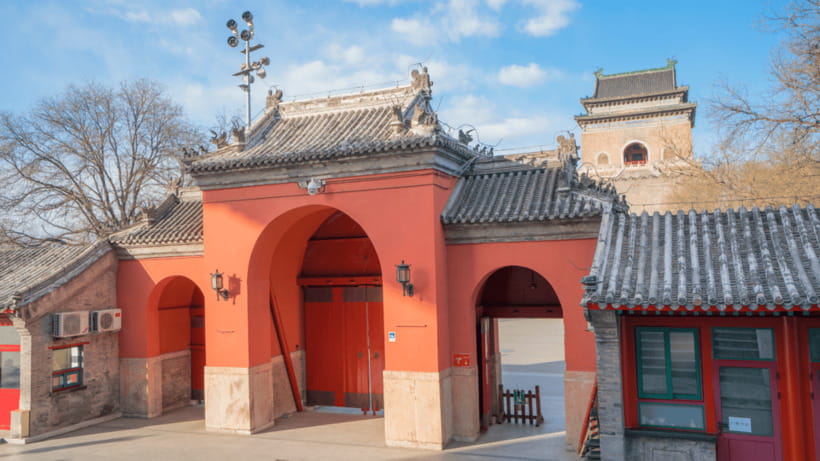
The towers are at the northern end of Beijing’s central axis, making them a natural choice for a day centered on historic city planning and imperial culture. Their location gives the visit a sense of place: you are not viewing an isolated relic, but part of the old structure of the capital.
You can use the towers as a main cultural stop or as a shorter visit between other plans. The skip-the-line feature helps with timing, and the flexible four-hour window means you do not have to commit to a tightly fixed tour schedule.
I would place the visit earlier in your planning rather than treating it as an afterthought. Check the drumming schedule when you arrive, then work your other activities around that if the performance is important to you.
The towers are also a good choice when you want a break from Beijing’s largest palace and museum sites. Their scale is significant, but the subject is focused. You leave with a clear understanding of one part of how the old city worked.
Bell Tower or Drum Tower first?
If you want movement and a stronger visual start, begin with the Drum Tower. The 25 drums, the climb, and the possible performance make it the livelier half of the pair.
If you prefer a single major object and a quieter setting, give the Bell Tower more time. The 63-ton bell is the essential sight there, and its size gives you a striking example of imperial technical skill.
You should not skip either one. The ticket includes both, and the paired layout is part of the meaning. The morning bell and evening drum were not separate traditions competing for attention. They were two halves of one citywide system.
Practical tips for a smoother visit
Check the performance schedule early. The five-minute display is short, and the time can vary, so do not wait until the end of your visit to ask about it.
Bring your passport or ID card. This is a small detail, but it is specifically required and easy to overlook during a busy day.
Download or open the English PDF guidebook before you enter if possible. You will get more from the displays if the information is ready when you need it.
Wear shoes suitable for stairs and standing. The Drum Tower visit includes a climb, and you will enjoy the buildings more if you are not rushing through it.
Allow time for both towers. The Drum Tower tends to attract attention because of the performance, but the Bell Tower’s 63-ton bell is the landmark that gives the complex its full weight, quite literally.
Should you book the Bell and Drum Towers ticket?
Book it if you want an affordable, independent look at Beijing’s old timekeeping system and you are happy to guide yourself with a PDF. The combination of two towers, the giant Yongle bell, 25 drums, and a possible live performance gives the visit more substance than a quick photo stop.
Skip it if you need a live English-speaking guide, guaranteed entertainment, or transport included. The experience works best when you bring curiosity and a little flexibility, especially around the drumming schedule.
For most culture and history lovers already exploring central Beijing, I think the $13 ticket is a sensible choice. Plan around the performance, bring your ID, and give both towers enough time to tell their shared story.
FAQ
What does the ticket include?
It includes entry to both the Bell Tower and Drum Tower, along with an English PDF guidebook.
Is a live tour guide included?
No. The ticket does not include a live tour guide or an audio guide.
Can I see a drum performance?
You may be able to see a short drum performance at the top of the Drum Tower. The display lasts about five minutes, but the exact time can change according to the onsite schedule.
How long does the visit take?
The stated duration is four hours. You can use that time flexibly to visit both towers, read the guidebook, take photographs, and wait for the performance.
What is special about the Bell Tower?
The Bell Tower contains a Ming Dynasty Yongle-era bell weighing 63 tons. It is known as the King of Ancient Bells.
How many drums are in the Drum Tower?
The Drum Tower housed 25 drums, which were used as part of Beijing’s traditional timekeeping system.
What should I bring?
Bring your passport or ID card.
Can I cancel the booking?
You can cancel up to 24 hours in advance for a full refund. A reserve-now-and-pay-later option is also available.
Latest additions around Beijing
- Private Hike from Beijing: Go Beyond The Jiankou and Mutianyu Great Wall★ 5.0 · 3 reviews
- Bullet Train Private Tour: Beijing Tiananmen Square, Forbidden City & Great Wall★ 5.0 · 3 reviews
- Private Great Wall Hiking Tour from Simatai West to Jinshanling★ 4.5 · 3 reviews
- Private Transfer for Beijing Airport PEK or PKX★ 5.0 · 3 reviews
- Liyuan Theater Beijing Opera Show Tickets★ 5.0 · 3 reviews
- Private Jinshanling relax photo tour by sunset★ 5.0 · 3 reviews
- Private All-inclusive Jinshanling Great Wall 1-day tour★ 4.5 · 3 reviews
- Beijing Night Tour with Acrobatics Show & PekingDuck Dinner★ 5.0 · 3 reviews
Historical Tours, compared.

Beijing Historical Tour II including Summer Palace, Lama Temple & Panda Garden
Read our review →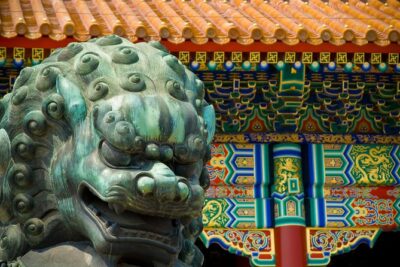
Beijing Historical Tour I – Forbidden City, Tiananmen Square & Temple of Heaven
Read our review →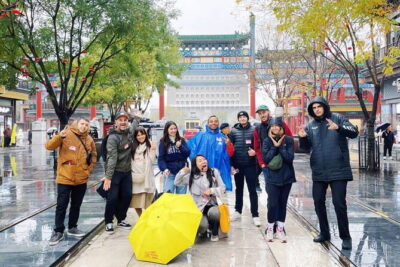
Beijing Historic City Guided Walking Tour + Calligraphy Creation
Read our review →
Beijing Culture: Tea Ceremony, Heritage Instrument & Calligraphy
Read our review →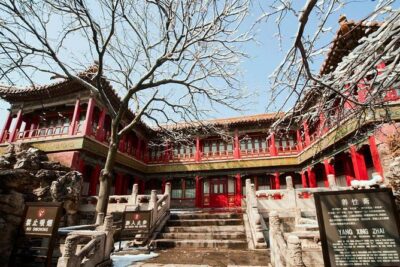
2-Hour Beijing Private Forbidden City Tour: History & Highlights
Read our review →
Tiananmen Square Entry Reservation – Iconic Landmark
Read our review →
Forbidden City&Hutong Private Tour w/Historic Site Add-ons
Read our review →
Beijing Hutong Walking Tour History, Architecture and Local Life
Read our review →Browse the lists this tour appears in