
Reviewed · HUTONG TOURS
Beijing Hutong Walking Tour History, Architecture and Local Life
Beijing’s old lanes tell the city’s story better than a bus window ever could. This three-hour walk takes you from Xisi Subway Station through hutongs, temples, courtyards, and pagodas, then finishes beside the modern Financial Street district. Guides Lori and Dee bring local context, practical answers, and useful lunch suggestions.
I like the small maximum of 10 people, which makes it easier to ask questions, and I like the mix of places: a Chinese-style church, working temple, Yuan Dynasty pagoda, old lane, and imperial shrine. The main consideration is pace. You cover six stops in about three hours, so some visits are brief, and the route is entirely on foot.
In This Review
- Key points at a glance
- Why this route works for first-time Beijing visitors
- Xishiku Church and Beijing’s Chinese Catholic story
- Guangji Temple and the details of Buddhist architecture
- Zhengyang Shuju and the Wansong Brick Pagoda
- Zhuanta Lane, one of the oldest hutongs
- Lidai Diwang Miao and the imperial view of ancestor worship
- The White Stupa from a nearby café balcony
- From old Beijing to modern Financial Street
- What the $49 price gives you
- Who should book this walk
- Booking, weather, and cancellation basics
- Should you book the Beijing hutong walk?
- FAQ
- Where does the Beijing hutong walking tour start?
- Where does the tour end?
- How long does the experience last?
- How many people can join the tour?
- Is transportation included?
- What is included in the price?
- Can I cancel for a full refund?
Key points at a glance
- A sharp contrast in one walk: Begin among old Beijing lanes and end near the city’s modern financial center.
- Six varied stops: See Xishiku Church, Guangji Temple, Wansong Brick Pagoda, Zhuanta Lane, Lidai Diwang Miao, and the White Stupa.
- Small-group format: The group is capped at 10 people, keeping the walk more personal.
- Useful local advice: Your guide provides restaurant suggestions, travel tips, bottled water, and a traditional Beijing drink.
- Good architectural range: Look for siheyuan courtyards, temple buildings, palace-style structures, stupas, and pagoda forms.
- Simple subway access: The walk begins near Xisi and ends at Exit C of Fuchengmen Station on Line 2.
Why this route works for first-time Beijing visitors
I like this tour because it gives you a working picture of Beijing rather than showing only headline sights. The route links major religious buildings with ordinary residential lanes, so you can compare formal architecture with the smaller details of daily life.
The tour begins at Xisi Subway Station in Xicheng District. That location is useful if you are still getting your bearings, since the subway gives you a clear way to reach the start. From there, the walk heads through older parts of central Beijing before ending at Fuchengmen, close to the Financial Street area.
That change of setting is part of the lesson. Beijing is not simply an ancient capital preserved behind walls. Old lanes, active religious sites, historic courtyards, and modern office districts sit close together. In a short distance, you can see how the city has changed while some street patterns and buildings remain.
The guide also provides a traditional Beijing drink and bottled water. The drink is a small touch, but it makes the outing feel connected to local habits rather than just a sequence of photo stops. You also receive restaurant recommendations and general travel advice, which can be especially handy early in a Beijing stay.
More hutong wanders:
- Beijing Hutong Walking Food and Beer Tour at Hidden Restaurants
★ 5.0 · 1,132 reviews - Temple Heaven, Summer Palace, Lama Temple, Hutong Bus Tour
★ 4.7 · 319 reviews - Temple of Heaven, Summer Palace, Lama Temple, Hutong Tours
★ 5.0 · 311 reviews
Xishiku Church and Beijing’s Chinese Catholic story
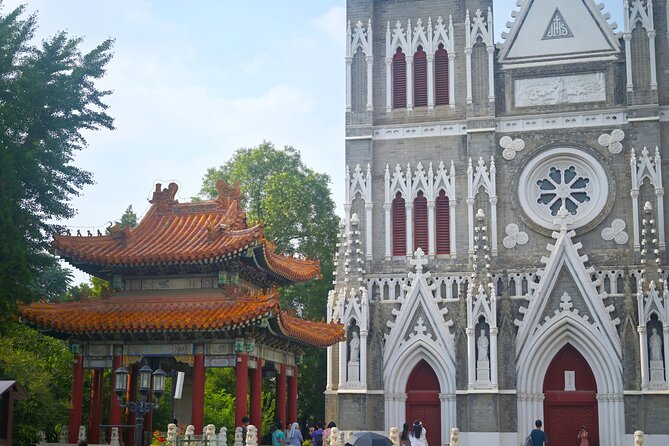
The first stop is Xishiku Church, described as Beijing’s earliest church. You have about 10 minutes here, with admission included at no extra charge.
The appeal is its Chinese character. This is not presented simply as a European building placed in Beijing. The guide explains the story behind the church and points out the ways its setting and appearance connect with the city around it.
Ten minutes is enough for an introduction, a look at the exterior or accessible areas, and a few questions. It is not enough for a long architectural study or a quiet religious visit. I would treat this as a scene-setting stop: it shows that Beijing’s religious past includes more than Buddhist and imperial sites.
Because the visit comes first, it also gives the guide a chance to explain how foreign religious influence reached the capital and how local design traditions shaped what you see. The specific story is more useful than a bare photograph, so stay close and listen during this short stop.
Guangji Temple and the details of Buddhist architecture
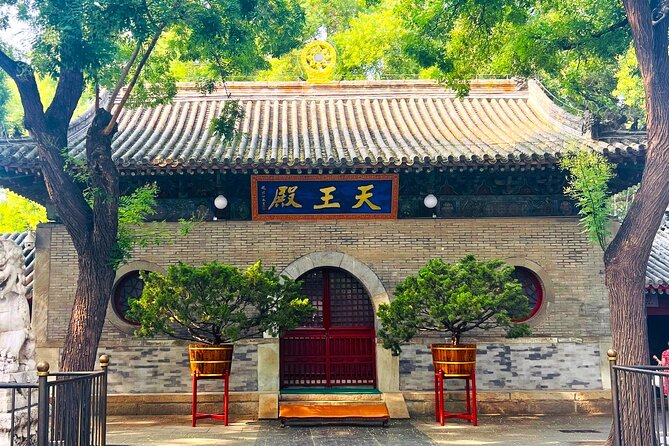
Next comes Guangji Temple, where you spend about 20 minutes. This stop focuses on traditional Chinese temple design and ancient finger paintings.
The temple gives the route a different mood from Xishiku Church. Here, your attention shifts toward Buddhist architecture, decorative details, and the way a religious complex is organized. Rather than rushing past a single landmark, you get a short explanation of what makes the buildings traditionally Chinese.
The finger paintings add an unusual detail. They are the sort of feature easy to miss if you walk through without a guide. I would ask about their age, meaning, and location within the temple if time allows, since the supplied schedule leaves only a modest window here.
Admission is free, but temple access can depend on local conditions. The route description presents this as a regular stop, while a later site, Lidai Diwang Miao, is specifically marked as available only if open. Either way, temple etiquette matters. Keep your voice low, avoid blocking worshippers, and follow any posted rules.
Zhengyang Shuju and the Wansong Brick Pagoda
At Zhengyang Shuju, the focus shifts to the Wansong Brick Pagoda, an old structure from the Yuan Dynasty. You also see a collection of old Beijing images inside a siheyuan, or traditional courtyard home. Allow about 20 minutes.
This is one of the most useful architectural stops because it brings together a surviving historic structure and the courtyard form that shaped traditional Beijing housing. A siheyuan is organized around an inner courtyard, with rooms arranged along its sides. The arrangement says a great deal about family life, privacy, rank, and movement through the home.
The Wansong Brick Pagoda adds another layer. Its age connects the present street to Beijing’s time under the Yuan Dynasty, when the city had a major role in the region. The image collection helps bridge the gap between old buildings and more recent everyday life.
I particularly like the combination here. A monument can feel remote when you only hear a date, but old photographs give you a sense of streets, people, and buildings across time. The stop is still short, so expect an introduction rather than a full museum visit.
More imperial history days in Beijing:
- Beijing Historical Tour II including Summer Palace, Lama Temple & Panda Garden
★ 4.0 · 187 reviews - Beijing Historical Tour I – Forbidden City, Tiananmen Square & Temple of Heaven
★ 4.0 · 120 reviews - Beijing Historic City Guided Walking Tour + Calligraphy Creation
★ 5.0 · 59 reviews - Beijing Culture: Tea Ceremony, Heritage Instrument & Calligraphy
★ 5.0 · 57 reviews
Zhuanta Lane, one of the oldest hutongs
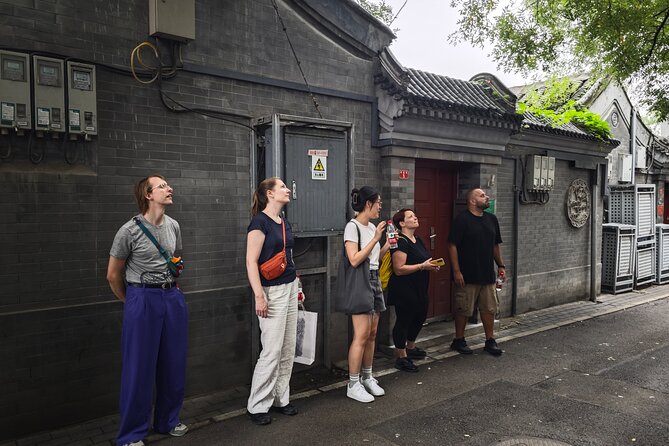
Zhuanta Lane is the heart of the walk for anyone interested in ordinary Beijing life. The route takes about 15 minutes through one of the city’s oldest hutongs, with the guide explaining the lane’s layout and the meaning of doors.
This is where the tour becomes less about individual monuments and more about how people live around them. Look at the width of the lane, the entrances to homes, and the relationship between private courtyards and public space. The doors are not just decoration. Their form and position can reveal something about the building and the people who once lived there.
You should keep your expectations realistic. A hutong is a living neighborhood, not a staged historical display. You may see ordinary activity rather than a polished attraction, and that is exactly why the stop matters. At the same time, 15 minutes passes quickly. If you want a long, unhurried wander through hutongs, this tour may feel brisk.
The guide’s explanation can make a big difference here. Lori has led this walk with attention to hutong layout and door significance, while Dee has been especially helpful with questions and local suggestions. Ask questions as you go, since the small group makes conversation easier.
Lidai Diwang Miao and the imperial view of ancestor worship
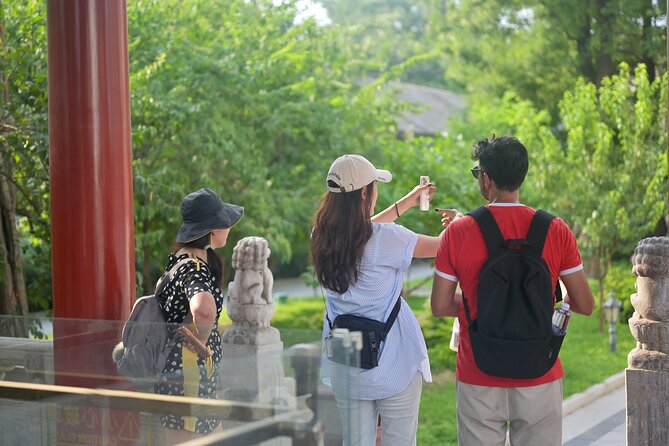
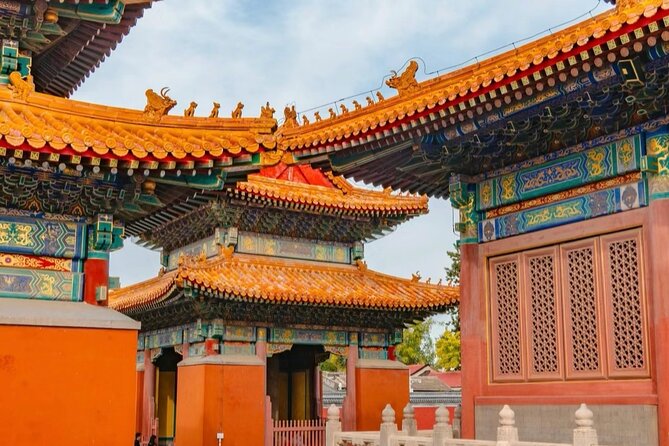
The Temple of Previous Dynasties, also called Lidai Diwang Miao, gives the route its most formal architectural setting. You have about 20 minutes here, if the temple is open.
The site helps explain how Chinese rulers and officials honored earlier emperors and ancestors. Its grand palatial structures contrast with the intimate scale of the hutong courtyards. That contrast is valuable: Beijing’s architecture was shaped both by ordinary household compounds and by institutions built to express authority and ceremony.
The stop is marked as conditional, so do not build your entire day around seeing the interior. If it is closed, you may still receive context from the guide, but the exact visit will depend on access at the time of your walk.
Twenty minutes should give you enough time to understand the site’s purpose and notice the major building forms. It is not a substitute for a long palace tour. Instead, it works as a compact explanation of ancestor worship, imperial memory, and the visual language of official buildings.
The White Stupa from a nearby café balcony
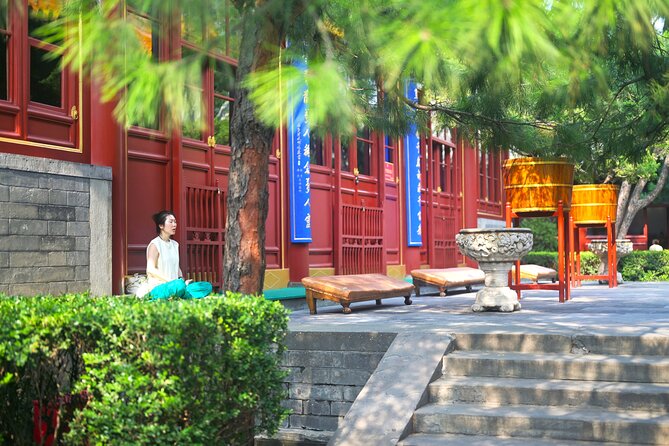
The final major sight is the White Stupa Temple, also known as Miaoying or Baita Si. The guide shows you the exterior design from a nearby café balcony and explains different types of Chinese pagodas. The stop lasts about 15 minutes.
This viewpoint is practical. You get a clear look at the stupa without spending the time required for a full interior visit. The guide can point out the structure’s form and compare it with other pagoda styles, giving you a better visual vocabulary for buildings you may see elsewhere in China.
The café setting also offers a short pause near the end of the walk. Since the tour includes a traditional Beijing drink, this part of the route may connect naturally with the refreshment element, though the exact timing and drink location are not specified.
The limitation is clear: you are viewing the White Stupa from outside rather than taking a full tour of the temple grounds. If the stupa is a top priority, check the available access separately. If you want a broad introduction to Chinese religious architecture, this short stop fits the tour well.
From old Beijing to modern Financial Street
The walk ends at Fuchengmen Station, Exit C, on Subway Line 2, near Financial Street. This is not just a convenient endpoint. It completes the route’s main idea.
You begin near historic lanes and religious buildings, then finish beside one of Beijing’s modern business districts. The change helps you see the capital as a city of layers rather than a collection of isolated monuments. It also leaves you in a useful position for continuing by subway.
There is no private transportation included. That is not a problem for this experience, because the point is to walk between the sites. Still, you should be comfortable spending three hours on city streets and moving between stops at a steady pace.
The stated duration includes travel time between locations. That means the total sightseeing time is less than three full hours. The six stops are spread across the walk, but several last only 10 to 20 minutes. Wear comfortable shoes and leave room in your schedule for the route to run a little differently on the day.
What the $49 price gives you
At $49 per person, this is not the cheapest way to stroll through Beijing. You are paying for a guide who connects several different places, explains architectural details, answers questions, provides bottled water and a traditional drink, and offers food and travel suggestions.
The value is strongest if you are new to Beijing or want help understanding what you see. A hutong can look like a narrow lane until someone explains its courtyard pattern and door styles. A temple can seem like a series of attractive roofs until you understand its religious purpose and design.
The price is less compelling if you only want independent walking time or if you already know Beijing’s hutongs and historic architecture well. You could visit public areas on your own for less, but you would lose the route’s comparisons and the practical advice.
The group cap of 10 improves the value. You are not paying for a private tour, but the group is small enough for direct questions. The two available guide names associated with this experience, Lori and Dee, suggest a personal guiding style, with Dee particularly focused on answering questions and recommending places for lunch.
Who should book this walk
I would recommend it to a first-time visitor who wants cultural orientation without committing to a full-day excursion. The route introduces religion, architecture, local housing, imperial tradition, and modern Beijing in one compact outing.
It also suits anyone who enjoys asking questions. The experience has more value when you discuss door styles, temple customs, or restaurant ideas instead of simply following the guide from stop to stop.
Families and most people who can manage a normal city walk should be able to participate, and service animals are allowed. Still, the tour is not presented as a slow, fully accessible route with detailed mobility information. If you have specific walking needs, confirm them before booking.
I would be less likely to choose it if my main goal were extensive time inside one temple, a long food tasting, or a relaxed photography walk. The schedule is varied and efficient, but it is also fairly full.
Booking, weather, and cancellation basics
You receive confirmation at booking, and the experience uses a mobile ticket. It is booked an average of 17 days ahead, so planning early is sensible if your Beijing schedule is fixed.
You can cancel for a full refund up to 24 hours before the start time. Changes or cancellations inside that window are not accepted for a refund. The tour also needs suitable weather and a minimum number of participants. If the operator cancels for either reason, you are offered another date or experience, or a full refund.
Should you book the Beijing hutong walk?
Book this tour if you want a short, guided introduction to old Beijing with more substance than a simple lane stroll. The best parts are the variety of buildings, the explanation of hutong doors and siheyuan courtyards, the small group, and the route’s ending near modern Financial Street.
Skip it if you want long visits at each site or prefer to explore at your own pace. For $49, the experience makes the most sense early in your stay, when local advice, restaurant suggestions, and a clear sense of Beijing’s old neighborhoods can shape the rest of your trip.
FAQ
Where does the Beijing hutong walking tour start?
The tour starts at Xisi Subway Station in Xicheng District, Beijing.
Where does the tour end?
The walk ends at Exit C of Fuchengmen Station on Line 2, near Financial Street in Xicheng District.
How long does the experience last?
The tour lasts approximately three hours, including the time spent moving between locations.
How many people can join the tour?
The experience has a maximum group size of 10 people.
Is transportation included?
Private transportation is not included. The experience is a walking tour, and the route uses public city streets between the stops.
What is included in the price?
The price includes all fees and taxes, bottled water, and a complimentary traditional Beijing drink.
Can I cancel for a full refund?
Yes. You can cancel at least 24 hours before the experience start time for a full refund. Poor weather or failure to meet the minimum number of participants can also lead to an alternative date or a full refund if the operator cancels.
More Walking Tours in Beijing
- Private Beijing Walking Tour of the Forbidden City with 7 Options
★ 5.0 · 675 reviews - Forbidden City Private Walking Tour with Optional Sights
★ 5.0 · 400 reviews - Beijing Private Hutong Food Walking Tour
★ 5.0 · 299 reviews - Beijing: Hutong Culinary Walking Tour with 15+ Tastings
★ 5.0 · 162 reviews
Latest additions around Beijing
- Private Hike from Beijing: Go Beyond The Jiankou and Mutianyu Great Wall★ 5.0 · 3 reviews
- Bullet Train Private Tour: Beijing Tiananmen Square, Forbidden City & Great Wall★ 5.0 · 3 reviews
- Private Great Wall Hiking Tour from Simatai West to Jinshanling★ 4.5 · 3 reviews
- Private Transfer for Beijing Airport PEK or PKX★ 5.0 · 3 reviews
- Liyuan Theater Beijing Opera Show Tickets★ 5.0 · 3 reviews
- Private Jinshanling relax photo tour by sunset★ 5.0 · 3 reviews
- Private All-inclusive Jinshanling Great Wall 1-day tour★ 4.5 · 3 reviews
- Beijing: Private Tour to Great Wall & POPLand Labubu Home★ 4.6 · 3 reviews
Hutong Tours, compared.

Beijing Hutong Walking Food and Beer Tour at Hidden Restaurants
Read our review →
Temple Heaven, Summer Palace, Lama Temple, Hutong Bus Tour
Read our review →
Temple of Heaven, Summer Palace, Lama Temple, Hutong Tours
Read our review →


Beijing City Walk: Explore Hutongs Life and Old Beijing
Read our review →Browse the lists this tour appears in