
Reviewed · CALLIGRAPHY & INK ART CLASSES
Beijing Historic City Guided Walking Tour + Calligraphy Creation
Beijing’s best stories often unfold away from its grand gates and palace courtyards. This walk leads you from the 1807 Huguang Guild Hall through old hutong lanes, art-lined Liulichang, and the busy streets around Qianmen, giving you a look at how ordinary city life fits beside imperial landmarks. I like the small-booking format and the way the route links several very different neighborhoods. I also like the mix of history, food, shops, and local life, rather than one long lecture about emperors.
The main thing to understand is the price. The $5 charge is only a reservation fee. The tour runs on tips, with a suggested payment of 160 to 200 RMB, or about $20 to $25, for the guide. I would also check the group size before booking, since the booking information limits each booking to six people, while the general activity details allow up to 50 people and one review describes a very large group.
In This Review
- Key points to know before you book
- Why this route shows a more useful side of Beijing
- Huguang Guild Hall sets the tone at 10 a.m.
- The hutongs provide the heart of the walk
- Liulichang brings calligraphy and traditional arts into view
- Yangmeizhu Byway shows Beijing’s newer creative side
- Dashilan Street adds shops, food, and commercial history
- Qianmen ends the walk near the city’s biggest sights
- What the $5 price really means
- Who will get the most from this walk
- Timing, meeting details, and practical planning
- My verdict: a good street-level introduction, with two checks
- FAQ
- How long does the Beijing walking tour last?
- What time does the tour begin?
- Where does the tour meet?
- Where does the tour finish?
- Does the tour enter Tiananmen Square?
- Is the $5 fee the complete tour price?
- How many people can join?
- Is the tour available in English?
- Can I cancel for a full refund?
Key points to know before you book
- Start at an 1807 opera hall: Huguang Guild Hall gives the walk an atmospheric beginning, with its old performance setting and links to Hubei and Hunan.
- One hour in the hutongs: The longest stop focuses on traditional lanes, courtyard residences, and everyday Beijing life.
- A walk through changing Beijing: Liulichang and Yangmeizhu Byway show old shops, calligraphy, art studios, cafes, and newer creative businesses side by side.
- Street food may be part of the fun: The route includes local food culture, and the tasting details described by the operator can include street snacks and drinks.
- The finish is near Tiananmen Square: You end at Zhengyangmen by Qianmen, but the walk does not enter Tiananmen Square.
- The advertised price is not the full cost: Plan for the voluntary but clearly suggested 160 to 200 RMB tip in addition to the booking fee.
Why this route shows a more useful side of Beijing
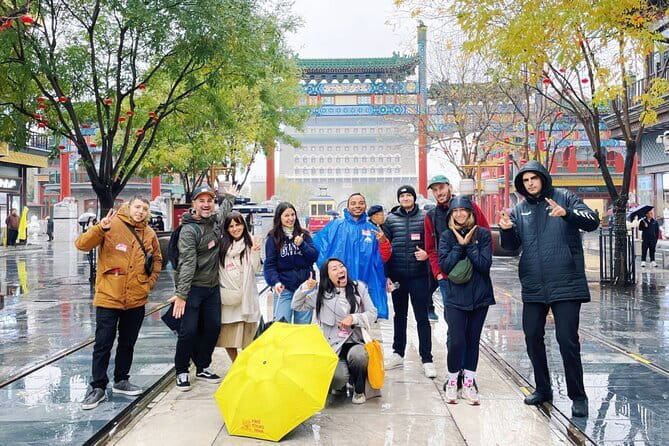
I like this tour because it gives you a city lesson through streets, shops, and neighborhoods instead of relying only on famous monuments. In three and a half hours, you move from a historic guild hall to hutongs, old commercial streets, an arts district, and one of Beijing’s major modern pedestrian areas.
That variety matters. Beijing can feel enormous, and a first visit often becomes a checklist of palace walls, squares, and temple roofs. This route gives you a better sense of how the city works at street level. You see traces of older trade networks, residential lanes, traditional arts, food stalls, and restored shopping streets in one compact walk.
The guides are English-speaking locals. The strongest feedback names Hao and Kris, with specific praise for Hao’s explanations, patience, and ability to keep a group moving in cold weather. Kris is described as organized and clear, with a good balance of history, local stories, food, and drinks. Guide quality can vary from date to date, but the tour clearly depends on a personable guide who can turn a walk into a conversation.
You should come ready to walk for most of the morning. The stops are short except for the one-hour hutong visit, so the pace appears designed to keep you moving rather than parking you at one site for a long time. Wear shoes that can handle uneven city surfaces, and bring weather protection. The tour requires good weather and may be rescheduled or refunded if conditions are poor.
More calligraphy and ink art classes:
- Beijing Calligraphy Class
★ 4.9 · 112 reviews - Chinese Calligraphy Class for Small Group
★ 5.0 · 104 reviews - Beijing Wangfujing Calligraphy Class by Forbidden City
★ 5.0 · 58 reviews
Huguang Guild Hall sets the tone at 10 a.m.
The meeting point is Huguang Guild Hall, at 3 Hu Fang Lu in Xicheng District. This is more than a convenient street corner. Built in 1807, the hall once served merchants and officials from Hubei and Hunan provinces. Its old opera stage gives the opening stop a clear cultural focus.
You spend about 20 minutes here. Admission is included, so there is no separate ticket to arrange. I would pay attention to the guide’s explanation of why guild halls mattered. They were tied to regional connections, business, social networks, and public life in the capital.
The short visit also helps you get your bearings. Instead of beginning in the middle of a crowded shopping zone, you start with a place that connects Beijing to other parts of China. Do not expect a full museum visit in 20 minutes. Think of it as an introduction and a setting for the broader story.
The hutongs provide the heart of the walk
The hutong section lasts about one hour, making it the longest part of the route. These narrow lanes are where the tour moves away from formal landmarks and toward Beijing’s residential past and present.
You can expect traditional courtyard homes, older alleys, and a closer look at how neighborhoods were arranged. The tour description also points to marketplaces and street food vendors, so the guide may use the lanes to explain daily routines, local habits, and changes in the city.
This is the part I would value most if you want more than a quick photograph of Beijing. The hutongs help explain the scale of ordinary urban life. You are not just looking at an old wall. You are seeing how homes, lanes, shops, and food businesses fit together.
There is one important expectation to set. This is not a substitute for Tiananmen Square or the Forbidden City. One person who expected major landmarks instead found the hutong focus surprising, but still worthwhile. If you want a grand-monument tour, this route may feel too local. If you want context and a look at older neighborhoods, the change of plan is likely a benefit.
Liulichang brings calligraphy and traditional arts into view
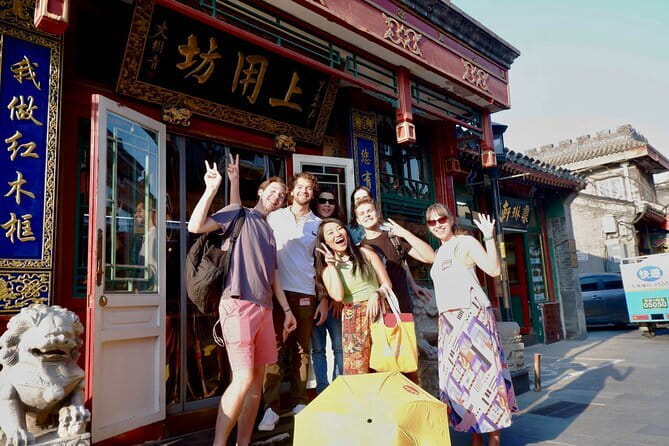
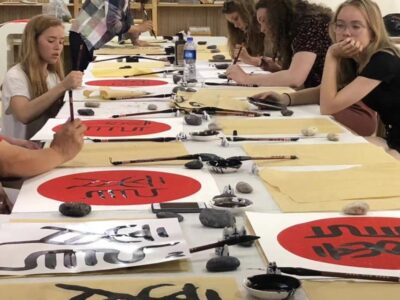
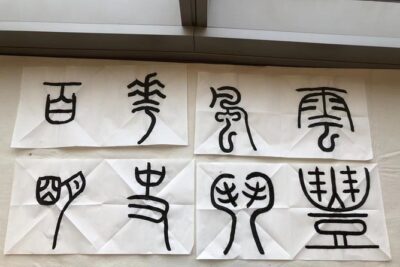
The walk continues to Liulichang Street for about 40 minutes. This area is known for antique shops, calligraphy, traditional paintings, and cultural businesses. It is a natural place to connect the city’s old scholarly and artistic traditions with the calligraphy creation named in the tour title.
The supplied details do not explain exactly where or when the calligraphy activity takes place, or whether materials are included. I would confirm those points before booking if creating a piece is a major reason for choosing this tour. Still, Liulichang gives the activity a fitting setting, since the street is associated with brushes, writing, painting, and traditional arts.
The stop should also appeal to shoppers who want to browse without committing to a purchase. You can look at the displays and hear how calligraphy and art fit into Chinese culture. Keep in mind that an old cultural street can also have commercial energy. The value here comes from the guide’s interpretation, not simply from walking past shopfronts.
More imperial history days in Beijing:
- Beijing Historical Tour II including Summer Palace, Lama Temple & Panda Garden
★ 4.0 · 187 reviews - Beijing Historical Tour I – Forbidden City, Tiananmen Square & Temple of Heaven
★ 4.0 · 120 reviews - Beijing Culture: Tea Ceremony, Heritage Instrument & Calligraphy
★ 5.0 · 57 reviews - 2-Hour Beijing Private Forbidden City Tour: History & Highlights
★ 5.0 · 28 reviews
Yangmeizhu Byway shows Beijing’s newer creative side
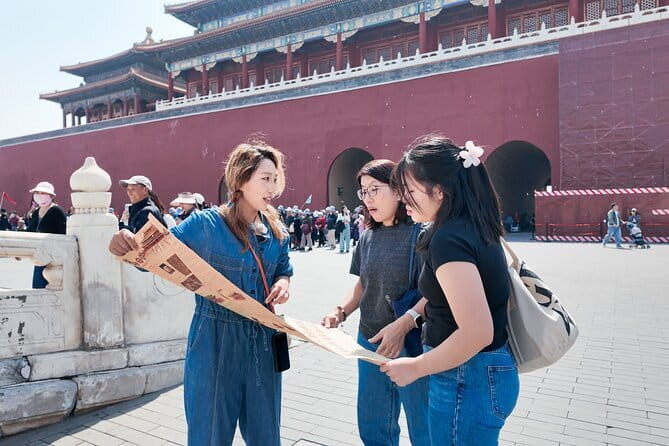
Yangmeizhu Byway takes about 20 minutes. The street brings a different mood to the route, with boutique shops, art studios, and cafes set among older buildings and lanes.
I like this contrast. The tour does not present Beijing as a city frozen in the past. It shows how older districts are being reused by artists, small businesses, and modern cafes. That connects directly to the tour’s wider theme of urban planning and the pressures facing Beijing as it changes.
Twenty minutes is enough for an introduction, not a long browsing session. If you see a shop or cafe you want to explore, you may have to return later. The benefit is the route’s quick shift in character. After the residential hutongs and traditional arts of Liulichang, Yangmeizhu shows a newer version of old Beijing.
Dashilan Street adds shops, food, and commercial history
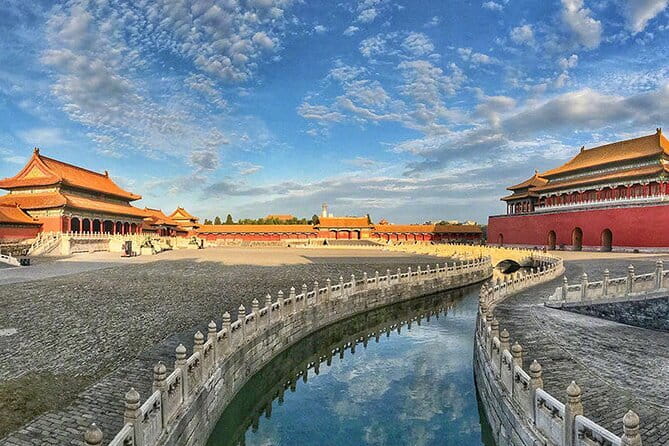
Dashilan takes another 20 minutes. It is one of Beijing’s oldest commercial areas and is now a busy pedestrian street with familiar shops, boutiques, and local food.
This is a good place to connect the city’s past with its present shopping culture. The guide can explain how commercial streets shaped Beijing and why this area still draws people for food and browsing. Street snacks may be part of the outing. The most specific feedback describes food and drink tasting along the walk, but the exact items are not guaranteed, so bring some cash if you want to buy something independently.
Dashilan may feel crowded and commercial compared with the hutongs. That is not necessarily a flaw. It gives you a look at the public side of the city after the quieter residential lanes. Just remember that 20 minutes is a short stop. You will get an introduction rather than a full food crawl.
Qianmen ends the walk near the city’s biggest sights
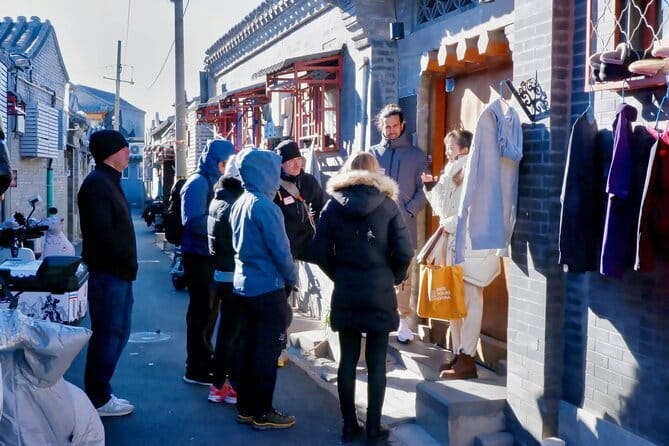
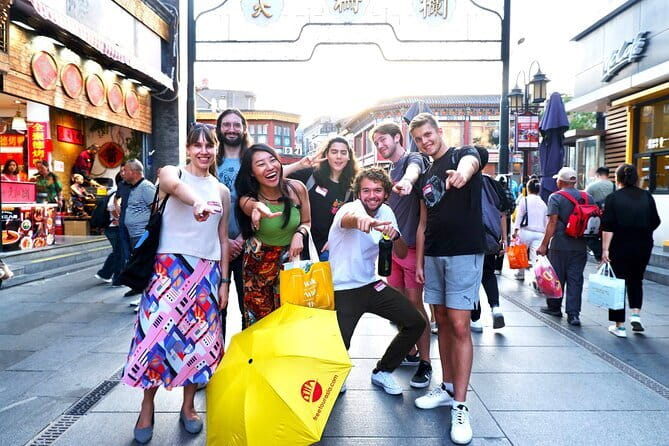
The final stop is Qianmen Walking Street, also known as the area around Zhengyangmen. You spend about 20 minutes here, finishing near Qianmen Metro Station on Lines 2 and 8.
Qianmen is a practical ending point. It is south of Tiananmen Square and close to several major sights, restaurants, and transport links. The street combines restored older architecture with shopping and food, so it continues the tour’s main idea: Beijing’s past is still being used, sold, renovated, and debated.
The tour ends in front of Tiananmen Square, but it does not enter the square. This detail matters. If you want to visit Tiananmen Square afterward, you must make your own reservation at least one day ahead. Same-day reservations are not available, so do not assume the walking tour gives you access.
Ending here also lets you continue your day on your own. You can take the metro, remain in the Qianmen area, or head toward other central sights. Since the route already finishes near a major transport station, you do not need to return to the starting point.
What the $5 price really means
At first glance, $5 sounds almost too cheap for a three-and-a-half-hour guided walk. It is cheap because it is not the full tour price. The fee reserves your place, and the tour uses a tips-based model.
The suggested tip is 160 to 200 RMB, roughly $20 to $25 or the equivalent in euros. I would treat that amount as part of your planned budget, not as an optional surprise at the end. The wording calls it voluntary, but the clear suggestion means you should be comfortable with the total cost before booking.
At the suggested tip level, the value is reasonable if you receive a well-paced walk with strong explanations, local stories, and food or drink samples. You are paying for the guide’s time and interpretation, not entrance tickets to a long list of major monuments. Since the stops are mostly free, the guide is the main product.
The small booking limit can improve the experience, especially in narrow hutong lanes. However, the information also states a maximum of 50 participants, and one comment describes a large group. I would ask the operator how many people are expected on your date. A group of six feels very different from a group of 30, particularly when listening in busy streets.
Who will get the most from this walk
I would choose this tour if you want a first look at Beijing beyond the standard imperial sights. It suits you if you enjoy walking, local neighborhoods, food stops, shopping streets, and stories about how a city changes.
It is also useful early in a Beijing visit. The route introduces several central areas and ends at a place with easy metro connections. You can use what you learn to decide where to return later, especially the hutongs, Liulichang, or Qianmen.
The tour may suit families and older visitors who can manage a three-and-a-half-hour urban walk, since the pace includes several short stops. The activity information says most people can participate, but it does not provide detailed accessibility information. If you need step-free access or have mobility concerns, ask the operator before booking.
I would not make this your only Beijing sightseeing activity if grand landmarks are your priority. You do not enter Tiananmen Square, and the route does not list the Forbidden City or other major imperial sites. It is best viewed as a street-level companion to those attractions.
Timing, meeting details, and practical planning
The walk starts at 10 a.m. at Huguang Guild Hall and ends at Zhengyangmen near Qianmen Metro Station. A mobile ticket is provided, and confirmation arrives at booking. The meeting point and final stop are near public transportation.
Plan to arrive early enough to find the guild hall without rushing. The route is shared, and the guide needs to gather the group before setting off. Since the walk moves through busy central streets, keep your phone charged and make sure you can receive booking messages.
The cancellation policy allows a full refund if you cancel at least 24 hours before the start time. Changes or cancellations inside that window are not accepted for a refund. If the minimum number is not reached, or bad weather forces cancellation, you are offered another date or experience, or a full refund.
My verdict: a good street-level introduction, with two checks
I would book this walk if you want Beijing explained through neighborhoods rather than only through monumental buildings. The route has a smart mix of old residential lanes, traditional arts, food culture, restored shopping streets, and newer creative businesses. The strongest guide feedback points to clear storytelling, patience, good organization, and a pace that keeps the morning moving.
Before paying, I would confirm two things: the expected group size and the exact calligraphy activity. I would also budget the suggested 160 to 200 RMB tip from the start. With those points clear, this is a strong-value introduction to central Beijing, especially for a first visit or a short stay.
FAQ
How long does the Beijing walking tour last?
The tour lasts approximately 3 hours and 30 minutes.
What time does the tour begin?
The tour starts at 10 a.m.
Where does the tour meet?
The meeting point is Huguang Guild Hall, 3 Hu Fang Lu, Xicheng District, Beijing, postal code 100052.
Where does the tour finish?
The walk ends at Zhengyangmen near Qianmen Walking Street and Qianmen Metro Station.
Does the tour enter Tiananmen Square?
No. The tour ends in front of Tiananmen Square but does not enter it. You must arrange your own reservation at least one day ahead if you want to visit the square.
Is the $5 fee the complete tour price?
No. The $5 payment reserves your place. The tour operates on tips, with a suggested tip of 160 to 200 RMB, about $20 to $25.
How many people can join?
Each booking is limited to six people. The general activity information lists a maximum of 50 participants, so you should confirm the expected group size for your date.
Is the tour available in English?
Yes. The experience includes a local English-speaking tour guide.
Can I cancel for a full refund?
Yes, if you cancel at least 24 hours before the experience start time. Poor weather or failure to meet the minimum number of participants can also lead to another date or a full refund.
More Walking Tours in Beijing
- Beijing Hutong Walking Food and Beer Tour at Hidden Restaurants
★ 5.0 · 1,132 reviews - Private Beijing Walking Tour of the Forbidden City with 7 Options
★ 5.0 · 675 reviews - Forbidden City Private Walking Tour with Optional Sights
★ 5.0 · 400 reviews - Beijing Private Hutong Food Walking Tour
★ 5.0 · 299 reviews
Latest additions around Beijing
- Private Hike from Beijing: Go Beyond The Jiankou and Mutianyu Great Wall★ 5.0 · 3 reviews
- Bullet Train Private Tour: Beijing Tiananmen Square, Forbidden City & Great Wall★ 5.0 · 3 reviews
- Private Great Wall Hiking Tour from Simatai West to Jinshanling★ 4.5 · 3 reviews
- Private Transfer for Beijing Airport PEK or PKX★ 5.0 · 3 reviews
- Liyuan Theater Beijing Opera Show Tickets★ 5.0 · 3 reviews
- Private Jinshanling relax photo tour by sunset★ 5.0 · 3 reviews
- Private All-inclusive Jinshanling Great Wall 1-day tour★ 4.5 · 3 reviews
- Beijing Night Tour with Acrobatics Show & PekingDuck Dinner★ 5.0 · 3 reviews
Calligraphy & Ink Art Classes, compared.
Beijing Wangfujing Calligraphy Class by Forbidden City
Read our review →
Beijing Culture: Tea Ceremony, Heritage Instrument & Calligraphy
Read our review →
Beijing Wangfujing Calligraphy Class Nearby Forbidden City
Read our review →
Discover Old Beijing: Hutong Walking Tour & Calligraphy
Read our review →
4-Hour Private Tour of Calligraphy Class, Hutong and Dumplings
Read our review →Browse the lists this tour appears in