
Reviewed · HUTONG TOURS
Discover Old Beijing: Hutong Walking Tour & Calligraphy
The best part of this Beijing walk is the contrast between grand public spaces and the small lanes where daily life carries on. You move from Huguang Guild Theatre and Qianmen’s broad commercial streets into old hutongs, a working courtyard, and a local calligraphy studio. It gives you a useful first look at how Beijing has changed from imperial capital to modern power center.
I like the courtyard visit, because it takes you beyond the usual sightseeing route, and I like the calligraphy session, which gives you something personal to make rather than another quick photograph. Guides such as Shery and Carrie have been praised for explaining Beijing’s past, present, and future plans for the hutongs.
The main consideration is value. At $25 per person, this is fairly priced if you want a guided half-day walk with snacks and activities, but one recent booking described it as a tip-based free walking tour sold through a booking platform. Confirm how gratuities are handled before you go, so the final cost feels clear.
In This Review
- Key points to know before you book
- Why this walk works as a first look at Beijing
- Starting at Huguang Guild Theatre
- Walking into Beijing’s hutongs
- The courtyard and calligraphy surprise
- Yangmeizhu Byway and the birthplace of Chinese cinema
- Dashilar and the old commercial streets
- Qianmen Street and Zhengyang Gate
- What the $25 price really buys you
- Who will enjoy this Beijing walk most
- Should you book the hutong and calligraphy tour?
- FAQ
- How long does the tour last?
- What language is the tour conducted in?
- Where does the tour meet?
- How do I find the meeting group?
- Is Tiananmen Square included?
- Is food included?
- Do I get to keep the calligraphy artwork?
- Can I cancel for a refund?
Key points to know before you book
- A 3.5-hour walk through old Beijing: Cover Huguang Guild Theatre, hutongs, Dashilar, Qianmen Street, and Tiananmen Square from outside.
- A real courtyard and calligraphy stop: You visit a traditional-style hutong courtyard and make artwork to take home.
- Strong local storytelling: Guides including Shery and Carrie explain how Beijing’s old neighborhoods have changed.
- Street food is part of the outing: Snacks and drinks are included during breaks along the route.
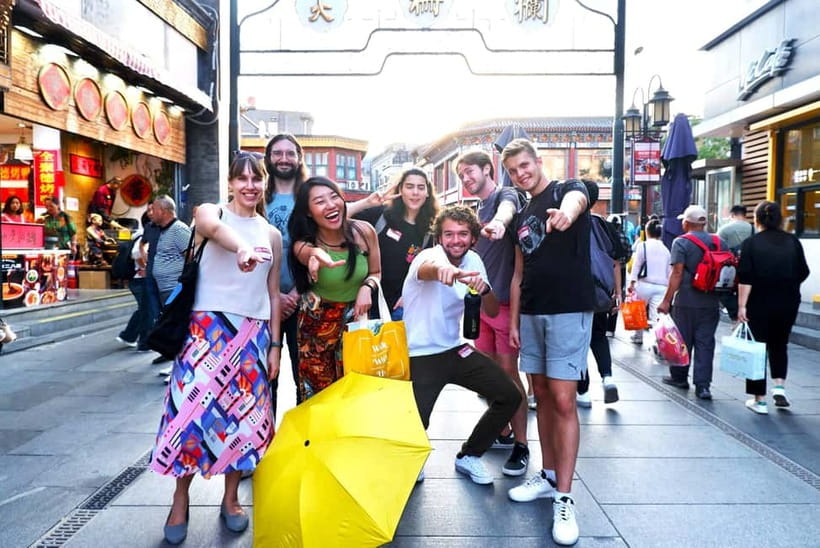
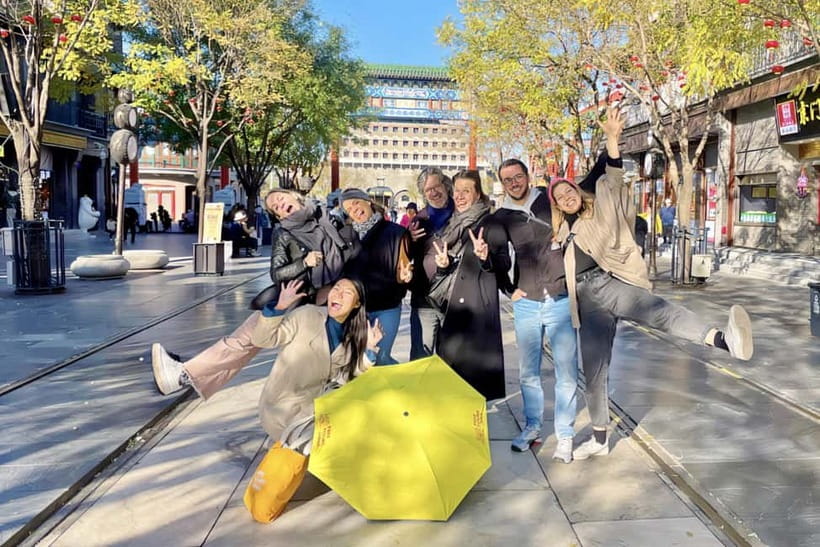
- The meeting point takes care: Find the yellow umbrella near Hufangqiao Metro Station Exit D, not a Google Maps pin.
- Best for curious walkers: Expect several hours on foot, city traffic, historic lanes, and a social group atmosphere.
Why this walk works as a first look at Beijing
Beijing can feel enormous at first. The roads are wide, the metro stations are large, and the major sights are spread across a huge city. This tour gives you a compact route through southern and central Beijing, with an English-speaking guide to connect the places instead of leaving you to read signs and guess at the story.
The route is especially useful if you want more than a photo stop at Tiananmen Square. You see the city through its neighborhoods: old lanes, former commercial streets, local shops, traditional buildings, and public landmarks. The guide also discusses urban development problems, including what happens when historic hutongs meet new construction and changing city plans.
I would not treat this as a substitute for a full Forbidden City visit or a dedicated architectural tour. Tiananmen Square is viewed from outside, and the tour is built around walking and conversation rather than long interior visits. Its strength is the connection between famous sights and ordinary streets.
The social side may also suit you. The organizers describe the walk as a way to meet fellow visitors, and the format naturally encourages conversation during the stops and snack breaks. If you prefer moving alone at your own pace, a group walk may feel less flexible.
More hutong wanders:
- Beijing Hutong Walking Food and Beer Tour at Hidden Restaurants
★ 5.0 · 1,132 reviews - Temple Heaven, Summer Palace, Lama Temple, Hutong Bus Tour
★ 4.7 · 319 reviews - Temple of Heaven, Summer Palace, Lama Temple, Hutong Tours
★ 5.0 · 311 reviews
Starting at Huguang Guild Theatre
The meeting point is at the green space near the intersection of Hufang Road and Luomashi Avenue, beside Huguang Guild Opera Theatre. The easiest approach is Hufangqiao Metro Station on Line 7, Exit D, marked as the southwest exit. After leaving the station, walk toward the main road, turn right, and continue about 60 meters east.
Look for the yellow umbrella. This detail matters. Beijing’s metro stations can be massive, and the directions warn you not to rely on Google Maps, which does not work reliably in China. Arrive five to ten minutes early. The guide waits up to 20 minutes while giving the opening explanation, but the tour cannot be held for late arrivals.
Huguang Guild Opera Theatre is the first scheduled stop, with about 30 minutes for a guided visit. A guild hall is tied to the old networks of people from the same region who gathered, worked, and supported one another in the capital. Here, the setting helps introduce Beijing as more than a collection of imperial monuments.
The theatre also gives the walk a cultural beginning. Instead of starting on a generic shopping street, you begin with performance, regional identity, and the social life of old Beijing. The exact amount of interior access can depend on conditions, so think of this as a guided cultural stop rather than a full theatre performance.
Walking into Beijing’s hutongs
The hutongs are the heart of the route. These narrow lanes grew around courtyard homes and formed the everyday structure of old Beijing. They are not simply old scenery. They are residential streets, and the most interesting moments may come from noticing how people still use them.
You spend about 30 minutes walking through the hutongs with the guide. This is where local stories are meant to carry the tour. The description promises stories from people who have lived through the changes in old neighborhoods, and the guides discuss the past, present, and future of hutong planning.
That subject gives the walk some weight. Beijing’s old lanes face pressure from redevelopment, changing housing needs, and the demands of a modern capital. You may hear how preservation and daily convenience do not always point in the same direction. A short walk cannot explain every policy issue, but it can help you look at the lanes with more care.
Do not expect every alley to look perfectly preserved. That would miss the point. The appeal is seeing an urban neighborhood in transition, with old forms and modern life close together. Wear shoes with good soles, since the route includes several hours on foot and some surfaces may be uneven.
The courtyard and calligraphy surprise
The special courtyard stop lasts about 20 minutes. It is described as an authentic hutong courtyard, which gives you a chance to see the type of shared residential setting that shaped old Beijing life. This is one of the most useful stops for anyone who wants to understand why hutongs matter beyond their appearance.
The stop is short, so I would expect an introduction rather than a long private-house tour. Still, a courtyard visit can make the earlier lane walk easier to understand. You see how the narrow street relates to the home, and how communal space fits into the older neighborhood pattern.
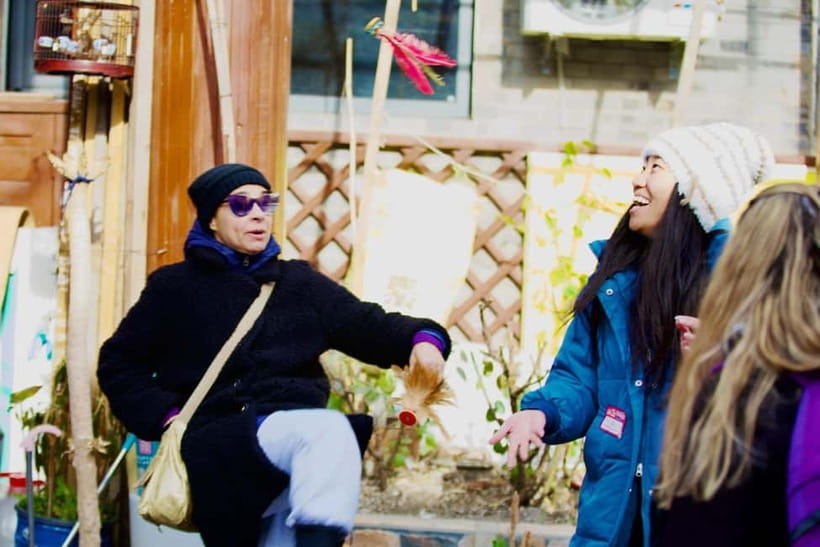
The calligraphy visit adds a hands-on break. You create your own Chinese calligraphy artwork at a local studio and take it home at no extra charge. That is a better souvenir than another mass-produced trinket because you have a direct connection to the activity.
You should not expect a formal art course in 20 minutes. The value is in trying the brush, learning a little about the character or technique presented, and leaving with something you made. If you are nervous about producing a perfect result, relax. The point is participation, not professional handwriting.
More calligraphy and ink art classes:
- Beijing Calligraphy Class
★ 4.9 · 112 reviews - Chinese Calligraphy Class for Small Group
★ 5.0 · 104 reviews - Beijing Historic City Guided Walking Tour + Calligraphy Creation
★ 5.0 · 59 reviews - Beijing Wangfujing Calligraphy Class by Forbidden City
★ 5.0 · 58 reviews
Yangmeizhu Byway and the birthplace of Chinese cinema
The route continues along Yangmeizhu Byway for about 30 minutes. This street is known for its old Beijing character, local businesses, and changing mix of cultural and commercial uses. It offers a useful transition between the quieter hutongs and the more active shopping districts ahead.
The guide may point out photo spots, architectural details, and signs of neighborhood change. This is the kind of stretch where a local storyteller adds the most value. Without context, you might see a narrow street and a row of shops. With context, you can better understand why the street matters and how it fits into Beijing’s urban story.
A 20-minute stop at Daguanlou Cinema brings in the history of Chinese film. The tour presents it as the birthplace of Chinese cinema, giving you a link between old Beijing entertainment and modern Chinese culture. It is a concise stop, so expect an explanation and exterior or local-area viewing rather than a long cinema program.
The cinema section helps break up the architectural focus. Beijing is not only palaces, gates, and political buildings. It is also a city of theatres, food streets, small businesses, and popular culture. That wider view makes the route feel more grounded.
Dashilar and the old commercial streets
Dashilar, also written as Dashilan, is one of the liveliest sections of the walk. You spend about 30 minutes in the residential district, then continue toward Qianmen Street. This part shows how historic commercial areas now serve shoppers, diners, residents, and sightseers at the same time.
You also pass an antique shopping street. The tour can help you understand the difference between looking at an old object and buying one. If you shop, keep your expectations sensible and ask questions about age, origin, and price. The walk is not presented as an antique-buying service, so the main value here is the street atmosphere and local context.
A snack break is included along the way, with local street food and drinks. The exact food is not specified, so you should not book this expecting a particular dish. Consider it a chance to sample something small while continuing through the neighborhood.
This is also one of the places where the route may feel busiest and most commercial. If you want only quiet residential lanes, Dashilar could be a change of pace. I see that as a benefit for most first-time visitors, since it shows how old districts function when they are also major shopping and sightseeing areas.
The tour also calls out Beijing’s narrowest hutong. That is a quick but memorable detail, especially for photographers and anyone interested in how tightly the old city was built. The lane itself may be brief, but it gives scale to the larger hutong discussion.
Qianmen Street and Zhengyang Gate
The final major section is Qianmen Pedestrian Street, with about 40 minutes for a guided walk. Qianmen is one of Beijing’s best-known central commercial areas, and its broad route feels very different from the lanes earlier in the day.
This contrast is exactly why the itinerary works. You begin with a theatre, move through residential hutongs and a courtyard, pass older shopping streets, and finish in a grand public district. The route shows several versions of Beijing in a single morning or afternoon.
Near Qianmen, you see Zhengyang Gate and its Arrow Tower. These structures help explain the old city’s defensive and ceremonial layout. They are not just isolated photo subjects. Their position links the former city walls, major avenues, and the approach toward the political center.
The walk ends with a view of Tiananmen Square from outside. This is an important distinction. You do not enter the square as part of the stated tour, and you should plan a separate visit if you want more time there or need to follow its entry rules.
For a first orientation, the outside view is still useful. The guide can place the square, gate, and surrounding central district within Beijing’s political geography. You finish with a sense of how the intimate hutongs connect to the formal center of the capital.
What the $25 price really buys you
At $25 per person, the tour sits in a reasonable range for a 3.5-hour guided city walk, especially with snacks, drinks, a welcome gift, a China survival guide, and the calligraphy artwork included. You are paying for a route that would be difficult to reproduce efficiently on your own in one half-day.
The strongest value comes from the guide. A map can lead you to Qianmen, Dashilar, and Yangmeizhu Byway, but it cannot easily explain how residents experienced hutong change or why a courtyard matters. The positive comments about guides such as Shery and Carrie focus on clear explanations and strong coverage of Beijing’s past, present, and future planning.
There is one price concern you should consider carefully. A recent booking described the outing as effectively a free walking tour based on tips, and felt the booking platform price was high for that arrangement. That does not erase the value of the route or the guide, but it does make the payment structure worth checking before you reserve.
If the $25 is the full tour price and gratuity is optional, I think the package is fair for a small activity that combines sightseeing, food, and a workshop. If you are asked to pay the full amount and then expected to tip as though the tour were free, the value becomes less clear.
The free cancellation up to 24 hours before the start and reserve-now, pay-later option reduce some booking risk. Check the available start time for your date, since the tour lasts 3.5 hours and the exact schedule is not fixed in the information provided.
Who will enjoy this Beijing walk most
I would choose this tour if you want a friendly introduction to Beijing before tackling larger sights on your own. It suits first-time visitors who enjoy walking, asking questions, trying a small creative activity, and seeing how local neighborhoods fit into a major capital.
It is also a good choice for solo visitors who want to meet other people. The group format and snack breaks give you natural moments to talk, and the organizers make meeting new companions part of the experience.
Families with older children may like the calligraphy and food stops, though the total walking time matters. Younger children who tire easily may find the three-and-a-half-hour route demanding. The provided information does not state a minimum age or accessibility details, so ask before booking if those points affect your plans.
I would be less likely to recommend it if you want a quiet, private tour or a detailed visit inside Beijing’s major monuments. You also need to accept that commercial streets, city traffic, and a group pace are part of the day.
Bring comfortable shoes, water, and a way to follow the written meeting directions. A phone with Google Maps alone is not enough for finding the starting point in China. The yellow umbrella is the practical landmark to remember.
Should you book the hutong and calligraphy tour?
Book it if you want local stories, neighborhood walking, and a hands-on souvenir in one affordable half-day. The combination of hutongs, a courtyard, calligraphy, street snacks, Dashilar, Qianmen, and an outside view of Tiananmen Square gives you a broad introduction without requiring a full day.
Before paying, confirm whether the $25 is the complete cost or whether the format relies on additional tips. If that arrangement is clear and acceptable to you, the tour offers good value through its guide-led context and varied route.
I would choose it early in a Beijing visit, when you still need a sense of the city’s layout and culture. It will not cover every major sight, but it can help you understand what you see afterward, from an imperial gate to a narrow residential lane.
FAQ
How long does the tour last?
The tour lasts 3.5 hours.
What language is the tour conducted in?
The tour is conducted in English by a live local English-speaking guide.
Where does the tour meet?
The meeting point is the green space near Hufangqiao Metro Station on Line 7, Exit D, the southwest exit. It is near the intersection of Hufang Road and Luomashi Avenue, beside Huguang Guild Opera Theatre.
How do I find the meeting group?
After leaving Exit D, head toward the main road, turn right, and walk about 60 meters east. Look for the yellow umbrella at the green space.
Is Tiananmen Square included?
The route includes a view of Tiananmen Square from outside. The information does not state that the tour enters the square.
Is food included?
Yes. Snack breaks with local street food and drinks are included.
Do I get to keep the calligraphy artwork?
Yes. You create Chinese calligraphy artwork during the visit and take it home at no extra charge.
Can I cancel for a refund?
You can cancel up to 24 hours in advance for a full refund. You can also reserve now and pay later to keep your plans flexible.
More Walking Tours in Beijing
- Private Beijing Walking Tour of the Forbidden City with 7 Options
★ 5.0 · 675 reviews - Forbidden City Private Walking Tour with Optional Sights
★ 5.0 · 400 reviews - Beijing Private Hutong Food Walking Tour
★ 5.0 · 299 reviews - Beijing: Hutong Culinary Walking Tour with 15+ Tastings
★ 5.0 · 162 reviews
Latest additions around Beijing
- Private Hike from Beijing: Go Beyond The Jiankou and Mutianyu Great Wall★ 5.0 · 3 reviews
- Bullet Train Private Tour: Beijing Tiananmen Square, Forbidden City & Great Wall★ 5.0 · 3 reviews
- Private Great Wall Hiking Tour from Simatai West to Jinshanling★ 4.5 · 3 reviews
- Private Transfer for Beijing Airport PEK or PKX★ 5.0 · 3 reviews
- Liyuan Theater Beijing Opera Show Tickets★ 5.0 · 3 reviews
- Private Jinshanling relax photo tour by sunset★ 5.0 · 3 reviews
- Private All-inclusive Jinshanling Great Wall 1-day tour★ 4.5 · 3 reviews
- Beijing: Private Tour to Great Wall & POPLand Labubu Home★ 4.6 · 3 reviews
Hutong Tours, compared.

Beijing Hutong Walking Food and Beer Tour at Hidden Restaurants
Read our review →
Temple Heaven, Summer Palace, Lama Temple, Hutong Bus Tour
Read our review →
Temple of Heaven, Summer Palace, Lama Temple, Hutong Tours
Read our review →


Beijing City Walk: Explore Hutongs Life and Old Beijing
Read our review →Browse the lists this tour appears in