
Reviewed · FORBIDDEN CITY TOURS
Beijing Wangfujing Calligraphy Class by Forbidden City
Chinese calligraphy turns a short lesson into a window on Chinese thought. At this Wangfujing class, you learn how ink, brush pressure, rhythm, and empty space work together, then put those ideas on rice paper yourself. I like the personal guidance from an English-speaking art teacher and the chance to practice a character such as fu, meaning happiness or good fortune.
I also like the setting: the class is held in an air-conditioned bookstore, with tea available, so it offers a calm break from central Beijing. The main thing to watch is the duration choice. The basic price is listed at $20 per person, but the activity offers 30-minute, 1-hour, 90-minute, and 2-hour versions, so check exactly which session you are booking.
In This Review
- Key things to know before booking
- Why a brush lesson fits a Beijing sightseeing day
- Arriving at No. 8 Wangfujing Dongjie
- What happens during the calligraphy class
- Choosing between 30 minutes, 1 hour, 90 minutes, and 2 hours
- The tools make the lesson feel real
- Why the class works for children and adults
- The teacher and the pace of instruction
- Is $20 a good value?
- Timing, booking, and cancellation
- Who should book this Wangfujing experience?
- Should you book it?
- FAQ
- Where does the calligraphy class meet?
- Where does the activity finish?
- How long does the class last?
- What is included in the class?
- Do I need to bring my own brushes or paper?
- Is the teacher English-speaking?
- Can children participate?
- How many people can join the class?
- Can I cancel for a full refund?
Key things to know before booking
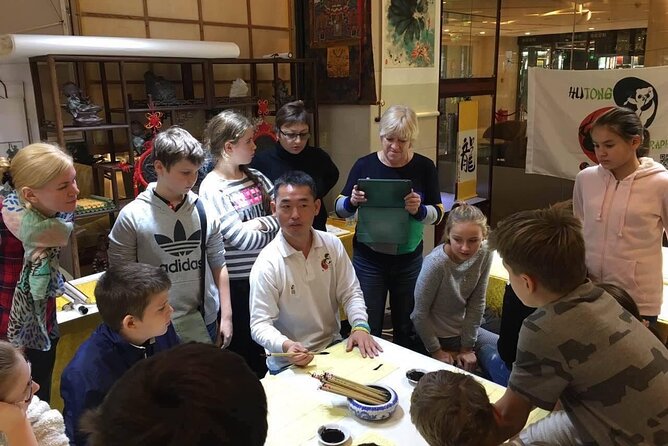
- Practice, not just a demonstration: You handle the brush, ink, and rice paper yourself.
- Richard may teach your class: He is praised for clear instruction and a friendly approach.
- A central Wangfujing meeting point: Begin and end at the Hilton Beijing Wangfujing, at No. 8 Wangfujing Dongjie.
- Tea and air conditioning: The bookstore setting makes this a useful rest stop in the middle of sightseeing.
- Good for families: Children can take part, and one family used the lesson to learn the character for happiness.
- Several lesson lengths: Choose from 30 minutes, 1 hour, 90 minutes, or 2 hours when booking.
Why a brush lesson fits a Beijing sightseeing day
Beijing can fill a day with major sights, long walks, and crowded historic compounds. A calligraphy class gives you a different way to connect with the city. Instead of only looking at Chinese characters on signs, you learn how one is built stroke by stroke.
That change matters. Chinese calligraphy is not simply handwriting in a decorative style. The brush leaves marks that show speed, pressure, direction, and control. Your teacher explains this through practice rather than a long museum-style talk, so you can feel the difference between a heavy stroke and a light one.
I like this kind of activity because you do not need any previous art skill. The class is designed for beginners, and the focus is on learning the basic principles and enjoying the process. You can ask questions as you work, which is especially useful if you are curious about why a character has a certain shape or why the brush must be held in a particular way.
The lesson also has a clear cultural purpose. You learn about seal carvings, brushes, rice paper, ink, and inkstones, along with the role calligraphy has played in Chinese culture. That gives the activity more weight than a simple craft session, but it remains practical and hands-on.
More Forbidden City entries and walks:
- Beijing: Forbidden City Tour(Group/Private)-Tickets Included
★ 4.8 · 7,974 reviews - Beijing: T-Square & Forbidden City Group or Private Tour
★ 4.8 · 4,446 reviews - All-Inclusive Tour: Tiananmen Square, Forbidden City, Great Wall
★ 5.0 · 2,873 reviews
Arriving at No. 8 Wangfujing Dongjie
The meeting point is the Hilton Beijing Wangfujing at No. 8 Wangfujing Dongjie, in central Beijing. The class ends at the same place, so you do not need to arrange a separate return transfer or find your way to another part of the city afterward.
That simple start and finish work well in a sightseeing plan. Wangfujing is already a major area for shopping, food, and central Beijing attractions. You can place the class between visits rather than giving up a whole half-day to transportation.
The available details identify the venue as a bookstore. That is a useful distinction. You are not being taken to a large performance hall or a formal art academy. The bookstore setting gives the lesson a more relaxed feel, and tea and air conditioning make it a welcome pause during hot or tiring days.
You should still allow time to locate the exact meeting point inside or around the hotel area. The listed starting address is clear, but the available information does not specify a hotel lobby desk, bookstore entrance, or room number. Bring your booking confirmation and mobile ticket so you can show the details if needed.
What happens during the calligraphy class
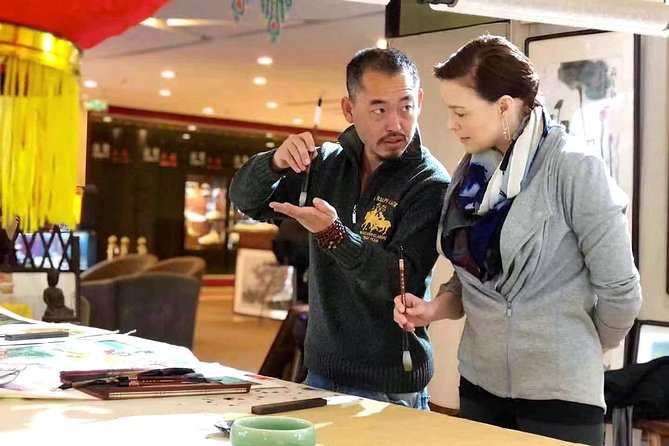
The class begins with an introduction to the art and its place in Chinese culture. Your English-speaking teacher then explains the working tools, including the brush, ink, rice paper, and inkstone. You also learn about seal carving, an important part of the visual language connected with traditional calligraphy.
The most useful part comes when the brush reaches the paper. You practice basic ink strokes and learn how small changes in pressure affect the mark. A teacher can correct your hand position and stroke movement as you go, something that is difficult to pick up from a book or a quick demonstration.
The lesson is built around questions and guided practice. If you want to know how to write a particular character, ask. If you are unsure why your line looks too thick or uneven, the teacher can point out what to change. This personal help is one reason the class works better than a casual attempt at copying characters on your own.
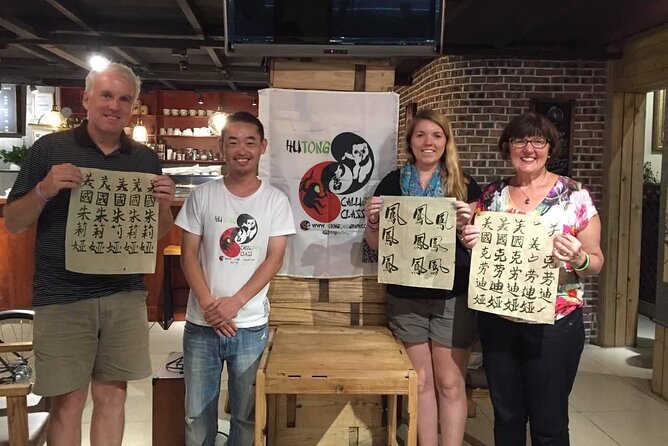
A frequently used example is fu, the Chinese character associated with happiness, good fortune, and blessing. Learning one meaningful character gives the class a clear goal. You are not just filling pages with random marks. You are working toward a symbol that connects the physical act of writing with a familiar cultural idea.
Some sessions may also let you transfer your finished characters onto a decorative board. The supplied information specifically describes a family painting characters on a board after gaining confidence with practice. Ask your teacher at the start what the selected duration includes, since the final activity may depend on the format you choose.
Choosing between 30 minutes, 1 hour, 90 minutes, and 2 hours
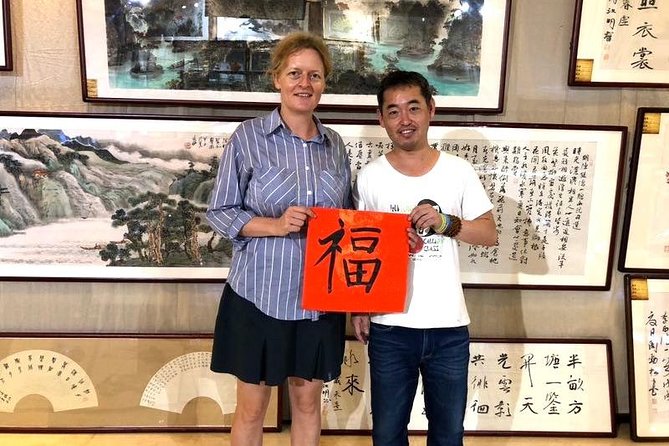
The class is sold in several time lengths, and this is the most important booking detail. The general tour information describes the experience as about one hour, while the included options list 30-minute, 1-hour, 90-minute, and 2-hour classes. Select the length you want when you book rather than assuming the $20 price applies to every version.
A 30-minute class suits a tight schedule or a child who may lose focus quickly. You should expect an introduction, basic instruction, and a short period of practice. It can give you a pleasant first taste, but it will leave less time for repeated strokes or a finished piece.
The 1-hour version is the natural choice for most people. It gives you enough time to hear the cultural background, learn the tools, practice characters, and ask questions without turning the activity into a major commitment. If you are fitting calligraphy around the Forbidden City or Wangfujing sightseeing, this length is the easiest to manage.
A 90-minute session gives you more room to improve. You can repeat a character several times, compare your early and later attempts, and spend longer on details such as stroke order or brush control. It makes sense for adults who want more instruction or families with children who enjoy making several attempts.
The 2-hour class is best for someone who already has a strong interest in Chinese art or wants a slower, more complete workshop. It may be more time than a casual visitor needs, especially if calligraphy is one of several activities in a busy Beijing day. Confirm the exact content and price of this longer option before paying.
More calligraphy and ink art classes:
- Beijing Calligraphy Class
★ 4.9 · 112 reviews - Chinese Calligraphy Class for Small Group
★ 5.0 · 104 reviews - Beijing Historic City Guided Walking Tour + Calligraphy Creation
★ 5.0 · 59 reviews - Beijing Culture: Tea Ceremony, Heritage Instrument & Calligraphy
★ 5.0 · 57 reviews
The tools make the lesson feel real
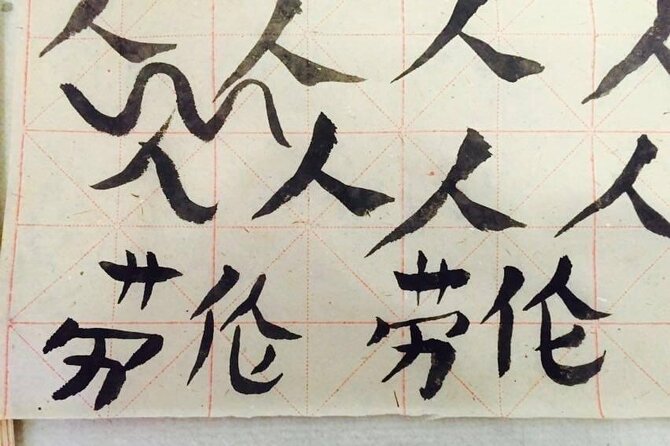
The activity supplies the calligraphy equipment, so you do not need to bring brushes, ink, paper, or an inkstone. That makes the experience easy for a short visit to Beijing and removes the need to buy unfamiliar materials before you know what you like.
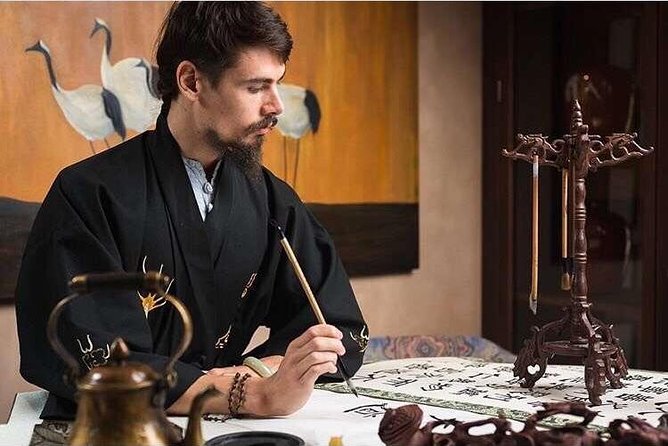
Each tool has a role. The brush controls the width and character of the line. Rice paper responds quickly to ink and leaves little room for correction. The inkstone connects the liquid ink to the older craft tradition. Seal carving adds another layer, showing how names and marks can become part of the finished artwork.
I find the materials valuable because they make the cultural explanation concrete. You are not only hearing that calligraphy depends on rhythm and energy. You see the ink spread, feel the brush bend, and learn why steady movement matters.
Do not expect every attempt to look polished. That is part of the point. Calligraphy rewards patience, and a beginner’s page will show the learning process. The teacher’s role is to help you understand how to improve, not to make you produce gallery-quality work in one short sitting.
Why the class works for children and adults
This is one of the better Beijing activities for a mixed-age family. A child can learn a character, use real art materials, and leave with a personal result rather than simply listening to a guide. An adult can focus on the cultural meaning and the technique behind each stroke.
One family chose the class in place of other major sightseeing stops, and their child helped make the decision. The afternoon worked because the lesson offered both learning and play. That is a useful clue for parents: calligraphy can hold a child’s attention when the child has a clear task, such as writing fu or creating a decorative piece.
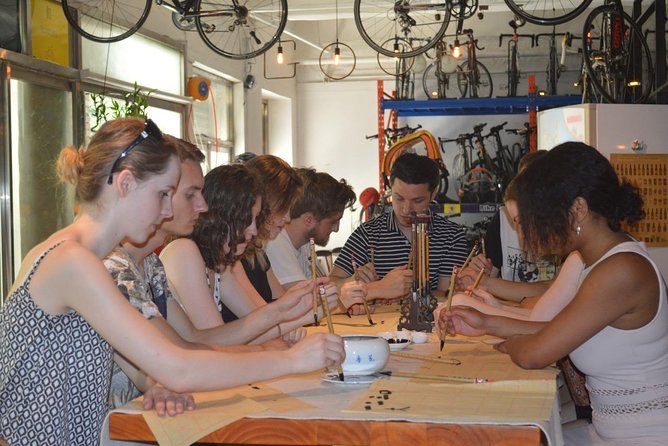
The class also suits couples, solo visitors, and small groups. The maximum group size is 15 people, which is not a private lesson, but it is small enough for a teacher to offer guidance. The exact amount of personal attention can vary with the number of people and the chosen duration.
The strongest fit is someone who enjoys trying a local craft without needing to become an expert. If you want a fast photo opportunity and no instruction, this may feel too slow. If you enjoy learning by doing, the brush and paper give you plenty to work with.
The teacher and the pace of instruction
The experience includes an excellent English-speaking calligraphy teacher. Richard is the named teacher associated with several positive comments about the class, and he is described as able to show beginners how to write Mandarin characters in a clear, approachable way.
A shared class means the lesson has a group rhythm. You will listen to an explanation, practice, and ask questions while others work. The maximum of 15 people keeps the session manageable, but you should not expect the uninterrupted attention of a private tutor.
I would use the first few minutes to tell the teacher what you want from the session. Say if you are a complete beginner, if you want to learn a specific character, or if you hope to create something suitable for display. That helps the instructor spend the limited class time where it matters most.
The activity is designed for most people to participate, and no prior calligraphy background is required in the provided details. The class is also specifically presented as suitable for adults and children. If anyone in your party has a particular physical or accessibility need, ask the provider before booking, since the published information does not give detailed accessibility notes.
Is $20 a good value?
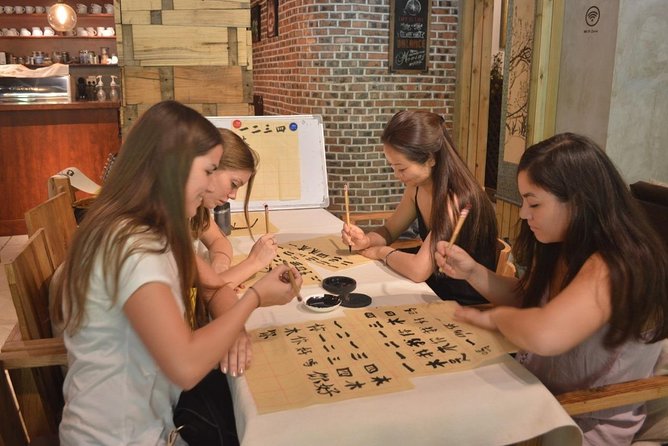
At $20 per person, the class is reasonably priced for a central Beijing cultural activity, particularly because the brushes, ink, paper, and other supplies are included. You are paying for instruction and participation, not just admission to a room.
The value depends heavily on the duration you select. If $20 covers the one-hour class, it is an appealing choice for a hands-on lesson in Wangfujing. If the longer options cost more, compare the added time with your interest level and schedule. A longer session is useful only if you want more practice, not simply more time sitting at a table.
The included materials also matter for families. Buying supplies separately for several people could cost more and would not give you the same immediate guidance. You can try the craft, learn whether it suits you, and avoid carrying extra art equipment through China.
Gratuities are not included, and they are recommended. Other expenses not specifically listed are also excluded. Tea is available at the venue, but the provided details do not say whether it is included in the price, so ask if that point matters to your budget.
Timing, booking, and cancellation
The class is available with a mobile ticket, and confirmation arrives at the time of booking. The activity is often reserved about 13 days ahead, so I would not leave it until the last minute if your Beijing dates are fixed.
Free cancellation is available up to 24 hours before the local start time. Cancel earlier than that cutoff for a full refund. Cancellations or changes made less than 24 hours before the start are not accepted for a refund, so check the local Beijing time carefully if you are booking from another time zone.
Because the class begins and ends at the same Wangfujing meeting point, it is easy to pair with nearby plans. Just protect the full session length, plus a little time to arrive. A late start could reduce the practice time you paid for.
Who should book this Wangfujing experience?
I would choose this class for a family that wants a quieter afternoon, a couple looking for a cultural activity, or a solo visitor who prefers participation to sightseeing from behind a rope. It is also a smart option for anyone who has already spent hours in museums and wants to use their hands.
The lesson is especially appealing if you are curious about Chinese characters, traditional art, or the meaning behind everyday symbols. Learning fu gives you a small but memorable connection to Chinese culture, and the finished work may become a more personal souvenir than a shop purchase.
I would be more cautious if your schedule is extremely tight or if you dislike structured instruction. The class is not a general Wangfujing walking tour, and the available details do not promise a visit inside the Forbidden City. Its value comes from the lesson itself.
Should you book it?
Book this class if you want a low-cost, central, beginner-friendly cultural activity with real materials and an English-speaking teacher. The air-conditioned bookstore setting, tea, family appeal, and chance to practice a meaningful character make it a welcome change from Beijing’s larger sights.
Before paying, confirm the lesson length and price for your chosen option. Pick one hour for a balanced introduction, 90 minutes or two hours if you want serious practice, and 30 minutes only if your schedule is tight. With that detail settled, this is an easy way to bring home more than a photograph from Wangfujing.
FAQ
Where does the calligraphy class meet?
The meeting point is the Hilton Beijing Wangfujing, No. 8 Wangfujing Dongjie, Dongcheng District, Beijing, postal code 100006.
Where does the activity finish?
The class ends back at the same meeting point where it begins.
How long does the class last?
You can choose a 30-minute, 1-hour, 90-minute, or 2-hour class when booking. The general activity description is approximately one hour.
What is included in the class?
The class includes an English-speaking calligraphy teacher and the calligraphy supplies used during the lesson.
Do I need to bring my own brushes or paper?
No. The necessary calligraphy supplies are provided for use during the class.
Is the teacher English-speaking?
Yes. The experience includes an English-speaking calligraphy teacher. Richard is identified as one of the teachers associated with the activity.
Can children participate?
Yes. The class is presented as suitable for both adults and children, and most participants can take part.
How many people can join the class?
The activity has a maximum group size of 15 people.
Can I cancel for a full refund?
Yes. You can cancel at least 24 hours before the local start time for a full refund. Cancellations or changes made less than 24 hours before the start time are not refundable.
More Workshops in Beijing
- Beijing: Dumpling Making Workshop with Meal and Tea
★ 4.7 · 69 reviews - Online Cooking Class Beijing Dumplings and Cuisine by Sunflowerli Renowned Chef
★ 5.0 · 65 reviews - Beijing Wangfujing Calligraphy Class Nearby Forbidden City
★ 5.0 · 56 reviews - Chinese Kungfu class in old temple beside Forbidden Ci
★ 4.8 · 53 reviews
Latest additions around Beijing
- Private Hike from Beijing: Go Beyond The Jiankou and Mutianyu Great Wall★ 5.0 · 3 reviews
- Bullet Train Private Tour: Beijing Tiananmen Square, Forbidden City & Great Wall★ 5.0 · 3 reviews
- Private Great Wall Hiking Tour from Simatai West to Jinshanling★ 4.5 · 3 reviews
- Private Transfer for Beijing Airport PEK or PKX★ 5.0 · 3 reviews
- Liyuan Theater Beijing Opera Show Tickets★ 5.0 · 3 reviews
- Private Jinshanling relax photo tour by sunset★ 5.0 · 3 reviews
- Private All-inclusive Jinshanling Great Wall 1-day tour★ 4.5 · 3 reviews
- Beijing Night Tour with Acrobatics Show & PekingDuck Dinner★ 5.0 · 3 reviews
Forbidden City Tours, compared.

Forbidden City Tour(Group/Private)-Tickets Included
Read our review →
T-Square & Forbidden City Group or Private Tour
Read our review →
All-Inclusive Tour: Tiananmen Square, Forbidden City, Great Wall
Read our review →
4-Hour Small Group Tour to Forbidden City with Entry Tickets
Read our review →
Beijing Full Day Tours: Tiananmen Sq, Forbidden City, Great Wall
Read our review →
Tianmen Square, Forbidden City & Royal Museum Tours
Read our review →
Beijing Forbidden City Ticket Booking (Optional: guide service)
Read our review →
Forbidden City and Tian’anmen Square Waking Tour
Read our review →Browse the lists this tour appears in