
Reviewed · CALLIGRAPHY & INK ART CLASSES
Beijing Calligraphy Class
Chinese calligraphy turns a few quiet brush strokes into a window on Chinese culture. In central Beijing, you’ll learn how to hold the brush, control ink on rice paper, and build characters with balance and rhythm. Richard is often the named teacher, though David and Li also lead sessions.
I like two things here: the class is affordable at $20, and it gives you something personal to take home rather than another quick photo stop. Tea, snacks, patient coaching, and meaningful characters such as fu can make the hour feel special. The main drawback is time: the 30-minute option is a quick introduction, so I’d choose the full hour if your schedule allows.
In This Review
- Key points at a glance
- Why Chinese calligraphy makes a good Beijing activity
- Meeting your teacher near Wangfujing
- The first lesson: brush, ink, and Chinese character forms
- From basic strokes to a finished character
- Why the one-hour option is worth choosing
- A quiet activity for adults, children, and families
- Tea, conversation, and the value of slowing down
- Is $20 good value in central Beijing?
- Practical timing and booking advice
- Who should book this calligraphy class?
- Should you book it?
- FAQ
- Where does the Beijing Calligraphy Class meet?
- How do I reach the meeting point by subway?
- How long does the class last?
- Is the class taught in English?
- Are calligraphy supplies included?
- Can I cancel or pay later?
Key points at a glance
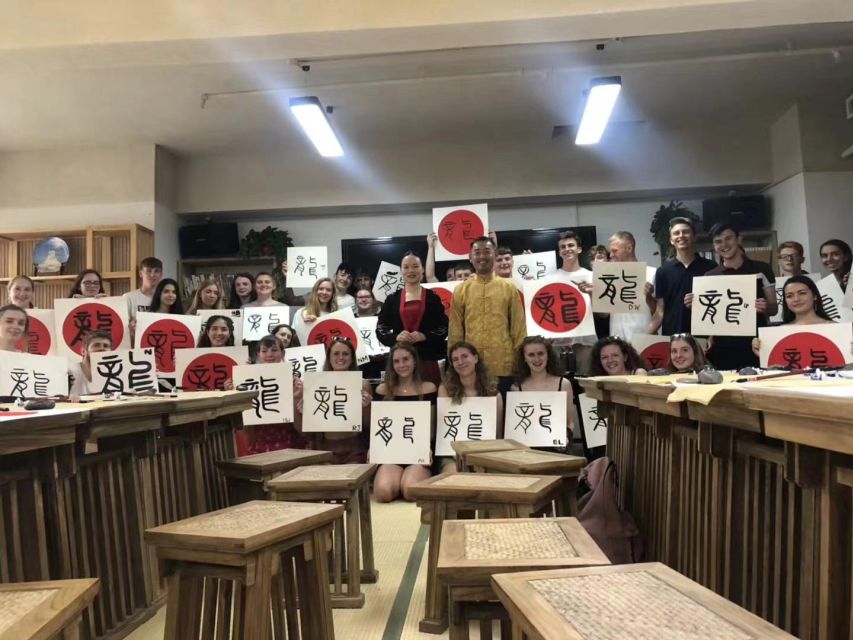
- A calm break in Wangfujing: Meet at Sun World Dynasty Hotel, then walk to the teaching space for a quieter cultural activity away from Beijing’s busy streets.
- Traditional tools included: Use brushes, ink, ink stones, and rice paper without buying supplies beforehand.
- English instruction: Your teacher explains brush technique, character meaning, and the place of calligraphy in Chinese culture.
- Choose 30 minutes or one hour: The shorter class suits a tight itinerary, while the longer session allows practice, corrections, and a finished piece.
- Good for families: Children can take part, and an 11-year-old student especially enjoyed the repeated brush exercises and final artwork.
- A $20 cultural experience: The price is modest for a private or small teaching session with materials included, though transport and personal purchases cost extra.
Why Chinese calligraphy makes a good Beijing activity
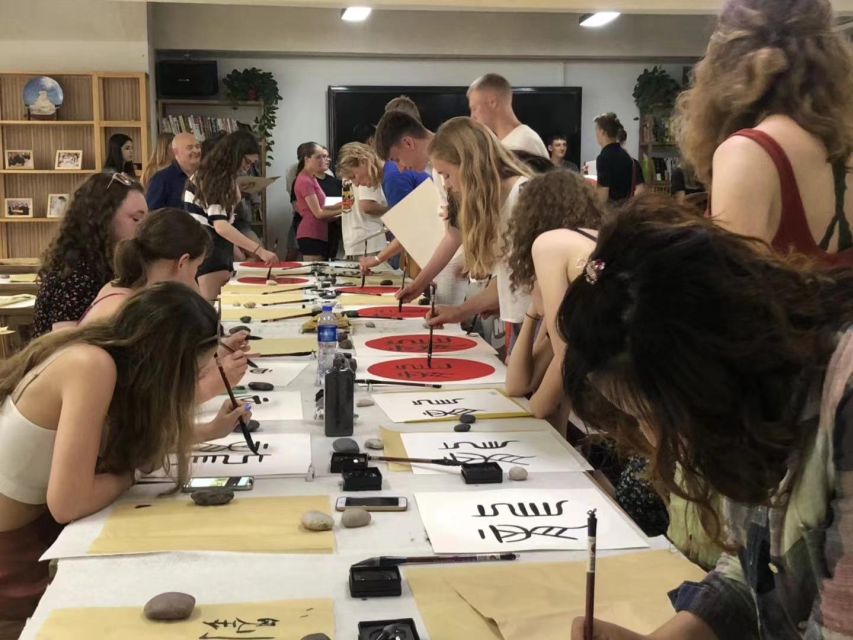
Beijing can fill your days with palaces, temples, walls, and packed sightseeing routes. Calligraphy offers a different pace. You sit down, slow your hand, and pay attention to one stroke at a time.
That change matters. You are not simply watching an art demonstration. You are trying the basic movements yourself, making mistakes, adjusting your grip, and seeing how a few simple marks become a Chinese character. The activity gives you a small, practical connection to a tradition that can otherwise feel distant behind glass or museum labels.
The class also explains why calligraphy carries more weight in China than ordinary handwriting. The shape of a character, the order of its strokes, and the pressure of the brush all matter. Balance and rhythm are part of the work, and the meaning of a character adds another layer.
I especially like the way this connects the physical and cultural sides of the activity. You learn a technique, but you also hear why certain characters are used for good fortune, harmony, or other positive wishes. Your final sheet can carry a meaning that makes sense to you, not just an attractive design.
More calligraphy and ink art classes:
- Chinese Calligraphy Class for Small Group
★ 5.0 · 104 reviews - Beijing Historic City Guided Walking Tour + Calligraphy Creation
★ 5.0 · 59 reviews - Beijing Wangfujing Calligraphy Class by Forbidden City
★ 5.0 · 58 reviews
Meeting your teacher near Wangfujing
The meeting point is the lobby of Sun World Dynasty Hotel at No. 50 Wangfujing Avenue, in Dongcheng District. This is a useful central location, especially if you are staying around Wangfujing.
The closest subway stop is Dengshikou Station on Line 5. Use Exit A, walk left for about two minutes, then turn left at the first traffic light and continue west for roughly five minutes. The full walk takes about eight minutes, covering approximately 660 meters.
You can also take a taxi or walk from a hotel in the Wangfujing area. Taxi and subway fares are not included, so factor that into your budget. The directions are clear, but I would still allow a little extra time for finding the correct hotel lobby in a busy central district.
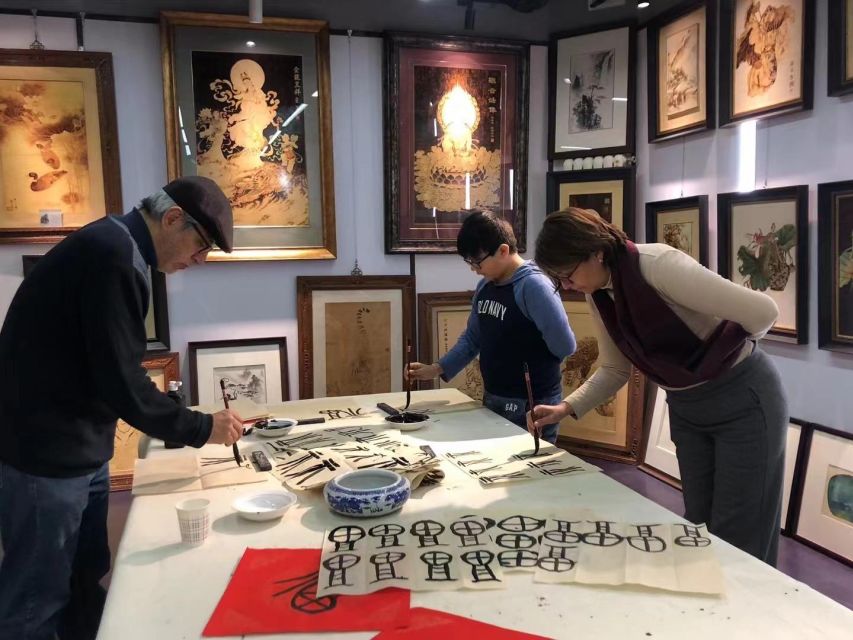
Your teacher meets you there and guides you to the class location. One family was taken across the street to a bookstore where the materials were already prepared. That detail gives you a useful idea of the setting: this is not necessarily a large formal academy. It may take place in a modest cultural or bookstore setting arranged for the lesson.
If you are unsure where to go, contact the provider before setting out. The meeting point is fixed, but the teaching space described in the available information may be nearby rather than inside the hotel itself.
The first lesson: brush, ink, and Chinese character forms
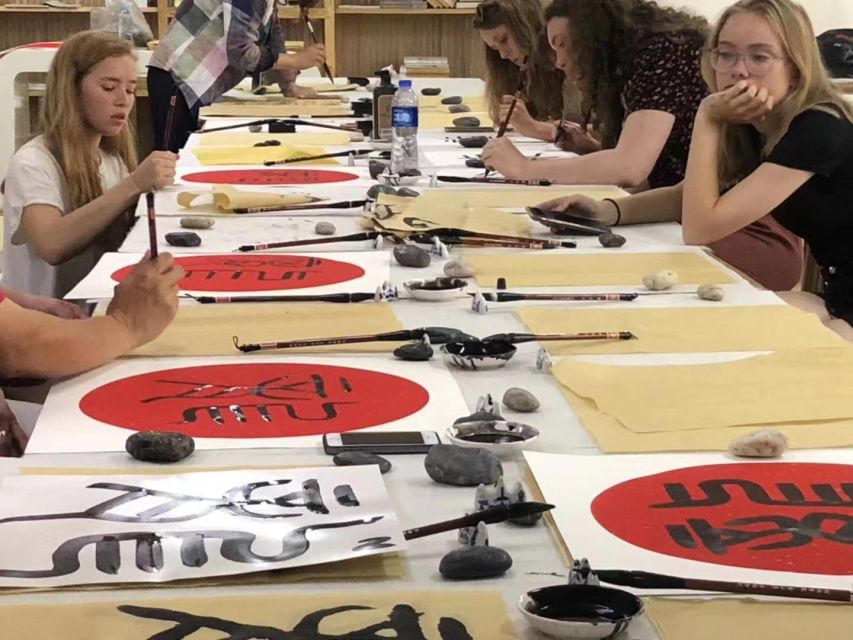
The session begins with an introduction to calligraphy and its role in Chinese culture. Your teacher then explains the main tools: brush, ink, ink stone, and rice paper.
The brush is the part that surprises most beginners. It does not behave like a pencil or felt-tip pen. The pressure changes the width of the line, while the angle and speed affect its shape. Your teacher shows you how to hold it and may start with simple exercises to prepare your hand.
That preparation is important. One family described practicing basic brush strokes before creating a final wall decoration. The repeated movements may seem simple, but they help you understand pressure and control before you attempt a complete character.
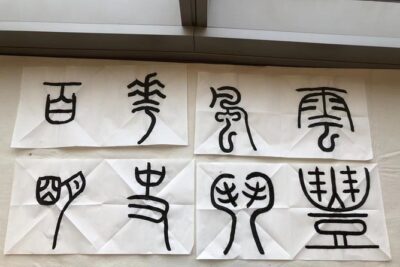
You will also learn about several calligraphy styles, including regular script, running script, cursive script, and seal script. You should not expect to master all four in one short class. Instead, the overview helps you see how Chinese writing can range from carefully structured characters to loose, flowing forms.
For a first visit, regular script is likely the easiest style to understand because the strokes are more distinct. Running and cursive forms show how the brush can move with greater speed and freedom. The purpose is not to produce museum-quality work. It is to give you a feel for the choices behind the marks.
From basic strokes to a finished character
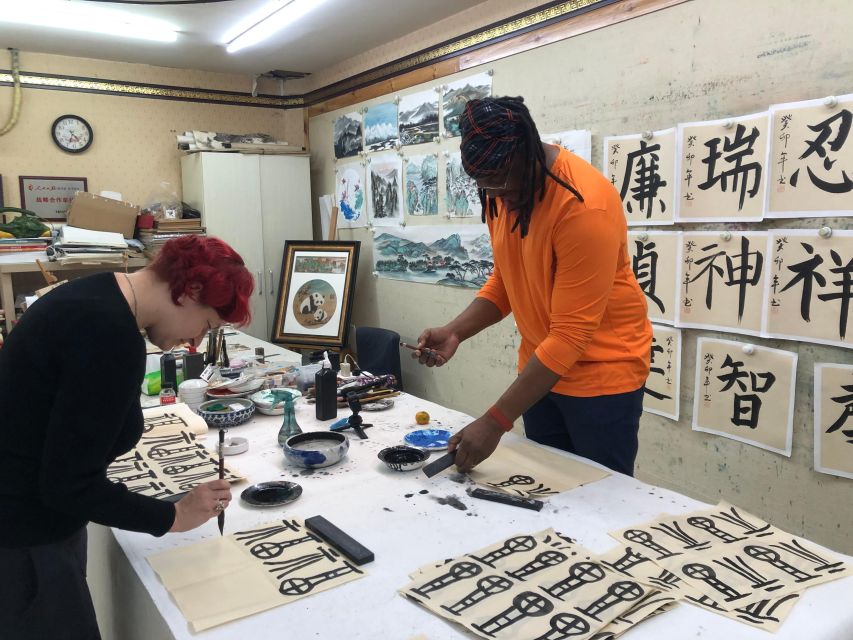
After the introduction, you move from single strokes to characters and short compositions. Your teacher demonstrates the order and shape of each stroke, then watches as you try it.
This is where the teacher makes the biggest difference. Calligraphy can look easy when someone experienced handles the brush. Once you try it, you quickly discover that a small change in pressure can make the character too heavy, too thin, or poorly balanced.
The strongest part of the class is the individual correction. Richard is repeatedly praised for patience and clear explanations, while David and Li are also described as warm and helpful. You can expect guidance on brush grip, hand movement, spacing, and the overall shape of the character.
The lesson also gives you time to improve rather than rushing straight to a final sheet. One student described making a first attempt, receiving adjustments, and then producing a better final piece. That process is more valuable than simply copying a character once.
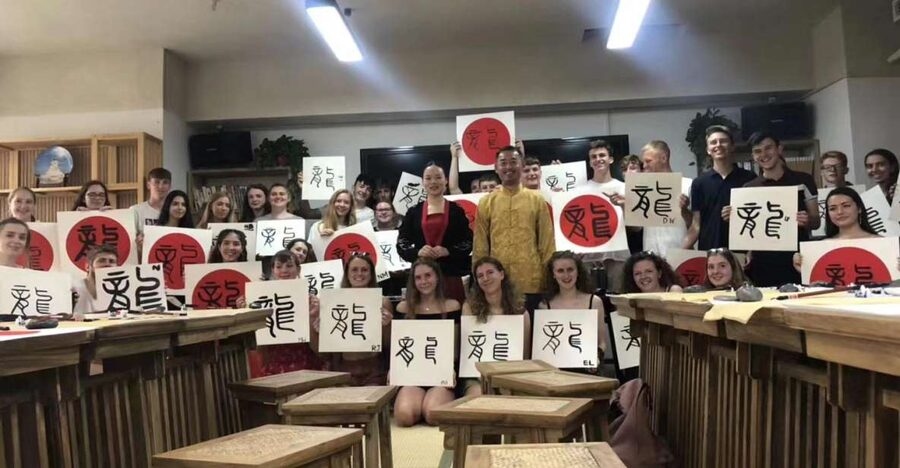
Depending on the session, you may work on fu, a character associated with good fortune, or another meaningful phrase or character. One family created a wall decoration using fu and also learned the saying One World One Heart. The exact character may vary, so if you have a particular wish or name in mind, ask the teacher what can be covered during your lesson.
A few more Beijing options to compare side by side
- Beijing: Dumpling Making Workshop with Meal and Tea
★ 4.7 · 69 reviews - Online Cooking Class Beijing Dumplings and Cuisine by Sunflowerli Renowned Chef
★ 5.0 · 65 reviews - Beijing Wangfujing Calligraphy Class Nearby Forbidden City
★ 5.0 · 56 reviews - Chinese Kungfu class in old temple beside Forbidden Ci
★ 4.8 · 53 reviews
Why the one-hour option is worth choosing
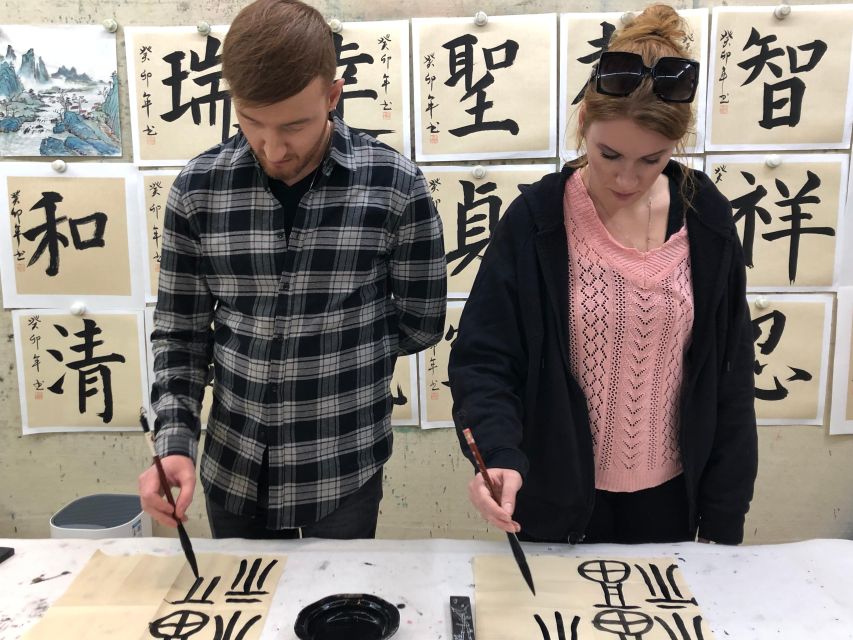
The 30-minute class costs the same basic activity price but gives you less room for practice. It can work well if you have a short gap between sights, if you are traveling with a child who may lose interest, or if you simply want a taste of the craft.
I would choose the one-hour option for most adults. The extra time lets you hear the cultural introduction, practice the brush, correct early mistakes, and complete a more presentable final work. A visitor who had booked a shorter session noted that at least 45 minutes to an hour makes the experience more worthwhile.
The longer format also reduces pressure. You can concentrate on the movement instead of worrying that the class is ending just as you begin to understand the brush. The repeated strokes are part of the appeal, and several people found the practice peaceful and meditative.
Still, this is a beginner class, not professional training. You will learn the foundations, produce a keepsake, and gain a clearer sense of the art. You will not leave ready to write complex cursive compositions. That is a fair trade for a one-hour introduction at this price.
A quiet activity for adults, children, and families
Calligraphy works well for mixed-age groups because everyone starts with the same basic challenge. Adults can focus on the calm rhythm of the strokes, while children get a hands-on activity with a visible result.
An 11-year-old particularly enjoyed the class, and another family said the repeated movements felt relaxing. That makes this a useful choice for parents who want a cultural activity that is not another museum visit.
Children may need help keeping the brush steady and following instructions. The teacher’s patience is important here, and the available comments repeatedly describe the instruction as kind and encouraging. Still, remember that the class requires a little quiet concentration. A child who wants fast action may prefer the shorter option.
Couples and solo visitors can enjoy it for the same reason. You have time to talk with the teacher, ask about character meanings, and work at your own pace. Some sessions may be private or feel nearly private, though the exact group size is not stated and can vary.
Tea, conversation, and the value of slowing down
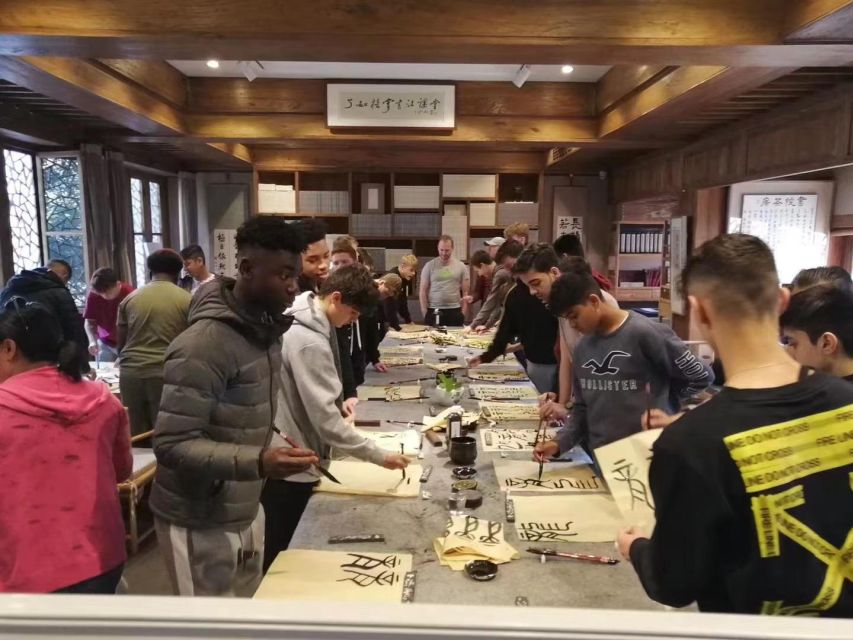
Tea and small snacks have been part of some sessions, adding a hospitable touch to the lesson. They are not listed as a guaranteed inclusion, so treat them as a possible extra rather than a promise.
The more reliable benefit is the pause itself. You sit at a table, handle traditional materials, and repeat movements that demand attention. The class can feel like a short reset between Beijing’s larger attractions.
I would not book this only for a souvenir. The paper you make is a nice bonus, but the better memory is the process: learning why a character is shaped a certain way, trying to copy it, and seeing the result improve under your teacher’s guidance.
That said, confirm what you will take home before beginning. Supplies for use during the class are included, and several participants received finished artwork or small gifts such as pencils. The exact take-home items are not specified as a standard inclusion, so they may depend on the session.
Is $20 good value in central Beijing?
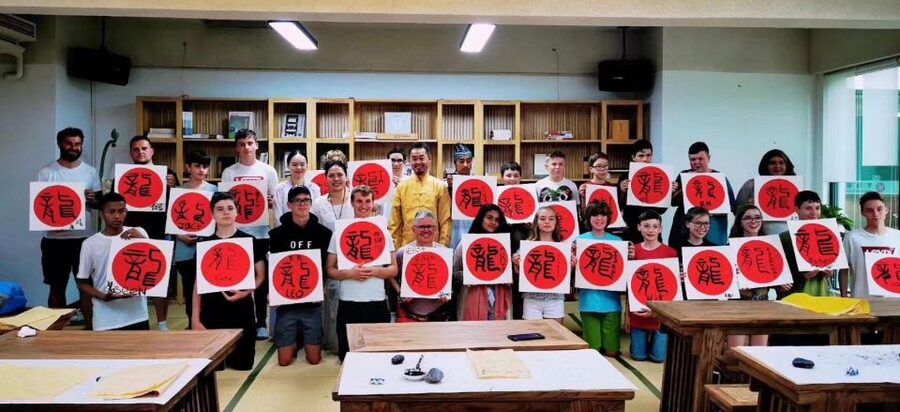
At $20 per person, this is a low-cost way to add a cultural activity to a Beijing itinerary. The teacher, class materials, and either the 30-minute or one-hour lesson are included. You do not need to buy a brush, ink, rice paper, or ink stone just to participate.
The value is strongest when you choose the one-hour class. You get more personal instruction and a better chance to complete a work you will actually want to keep. The price is also reasonable for families, since the activity gives children something active to do without requiring a full day or a large admission fee.
Remember the limits. You pay separately for the subway, taxi, and any personal shopping. The price also does not turn the class into a long workshop. If you want advanced brush training or a detailed study of Chinese writing, you need a longer course.
For a short cultural stop in central Beijing, though, the cost is easy to justify. It adds substance to a day near Wangfujing and gives you a personal object tied to your time in China.
Practical timing and booking advice
The class runs for either 30 minutes or one hour, with starting times based on availability. I would avoid squeezing the one-hour option between two fixed bookings. Allow time to reach the hotel, find the lobby, meet the teacher, and walk to the teaching space.
The activity is conducted in English. That makes it suitable for visitors who want explanations rather than silent copying. You can ask about the meaning of your character, the tools, and the different writing styles as you work.
Free cancellation is available up to 24 hours before the activity for a full refund. You can also reserve and pay later, which helps if your Beijing schedule is still shifting.
Wear something you do not mind bringing near ink, even though no special clothing requirement is given. Keep your belongings organized around the worktable, and ask the teacher before taking photographs of the finished piece if you want a record of the process.
Who should book this calligraphy class?
I would recommend it to first-time visitors who want a small, authentic cultural experience rather than another major sightseeing stop. It suits adults, families, couples, solo visitors, and anyone who enjoys crafts or quiet activities.
It is particularly useful on a busy Beijing trip because it takes only 30 minutes to an hour and meets in the Wangfujing area. You can pair it with shopping, dinner, or nearby sightseeing without giving up half a day.
You may want to skip it if you dislike careful repetition, have no interest in making art, or want an advanced technical course. The class is designed for beginners, and the focus is on basic strokes, cultural meaning, and enjoyment.
Should you book it?
Book it if you want to slow down, learn a few Chinese characters, and take home a handmade reminder of Beijing. I would spend the extra time and choose the one-hour class, especially for adults and families who want more than a quick demonstration.
The $20 price, central meeting point, English instruction, included materials, and patient teaching make this a sensible addition to a Beijing itinerary. Just allow for your own transport costs, confirm the meeting details, and remember that the final artwork and refreshments may vary.
FAQ
Where does the Beijing Calligraphy Class meet?
The meeting point is the lobby of Sun World Dynasty Hotel at No. 50 Wangfujing Avenue, Dongcheng District, Beijing.
How do I reach the meeting point by subway?
Take Line 5 to Dengshikou Station and use Exit A. Walk left for about two minutes, turn left at the first traffic light, and continue west for about five minutes. The walk takes roughly eight minutes in total.
How long does the class last?
You can choose a 30-minute class or a one-hour class when booking. Starting times depend on availability.
Is the class taught in English?
Yes. The instructor language is English.
Are calligraphy supplies included?
Yes. Brushes, ink, ink stones, rice paper, and other calligraphy supplies needed for the class are provided for use during the session.
Can I cancel or pay later?
You can cancel up to 24 hours in advance for a full refund. The activity also offers reserve now and pay later booking.
Latest additions around Beijing
- Bullet Train Private Tour: Beijing Tiananmen Square, Forbidden City & Great Wall★ 5.0 · 3 reviews
- Private Hike from Beijing: Go Beyond The Jiankou and Mutianyu Great Wall★ 5.0 · 3 reviews
- Private Great Wall Hiking Tour from Simatai West to Jinshanling★ 4.5 · 3 reviews
- Private Transfer for Beijing Airport PEK or PKX★ 5.0 · 3 reviews
- Liyuan Theater Beijing Opera Show Tickets★ 5.0 · 3 reviews
- Private Jinshanling relax photo tour by sunset★ 5.0 · 3 reviews
- Private All-inclusive Jinshanling Great Wall 1-day tour★ 4.5 · 3 reviews
- Beijing Night Tour with Acrobatics Show & PekingDuck Dinner★ 5.0 · 3 reviews
Calligraphy & Ink Art Classes, compared.
Beijing Historic City Guided Walking Tour + Calligraphy Creation
Read our review →
Beijing Wangfujing Calligraphy Class by Forbidden City
Read our review →
Beijing Culture: Tea Ceremony, Heritage Instrument & Calligraphy
Read our review →
Beijing Wangfujing Calligraphy Class Nearby Forbidden City
Read our review →

Discover Old Beijing: Hutong Walking Tour & Calligraphy
Read our review →
4-Hour Private Tour of Calligraphy Class, Hutong and Dumplings
Read our review →Browse the lists this tour appears in