
Reviewed · MUSEUMS
Beijing: China National Film Museum Entry Reservation
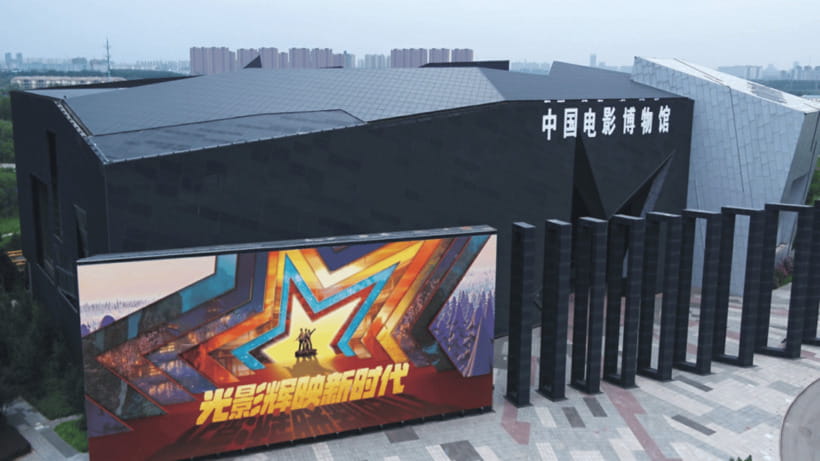
The China National Film Museum gives you a rare look at how Chinese cinema developed, from early film-making to the work of major directors and artists. I like the large chronological exhibition and the chance to see film culture presented inside a serious national institution, not just a small cinema display.
I also like the low price, about $4.82, and the six movie halls, including a huge IMAX GT hall. The main drawback is language: although an English textual and visual guide is included, some exhibition descriptions are only in Mandarin, so this visit suits curious independent explorers more than anyone seeking a fully guided museum tour.
In This Review
- Key points at a glance
- Why the China National Film Museum is worth your time
- Entering with the correct QR code
- The first floor and A New Journey of Struggle
- Floors two through four, a century of Chinese film
- Film-makers, artistic achievement, and the work behind the screen
- Six movie halls, including the IMAX GT hall
- How the English guide changes the visit
- Is two hours enough?
- Who will enjoy this museum most?
- Practical value at $4.82
- Should you book the China National Film Museum?
- FAQ
- How much does entry to the China National Film Museum cost?
- How long does the museum visit last?
- What does the reservation include?
- Is a live guide included?
- Are movie screenings included?
- Which exhibitions can I see?
- How do I enter the museum?
- What should I bring?
- Is the museum wheelchair accessible?
Key points at a glance
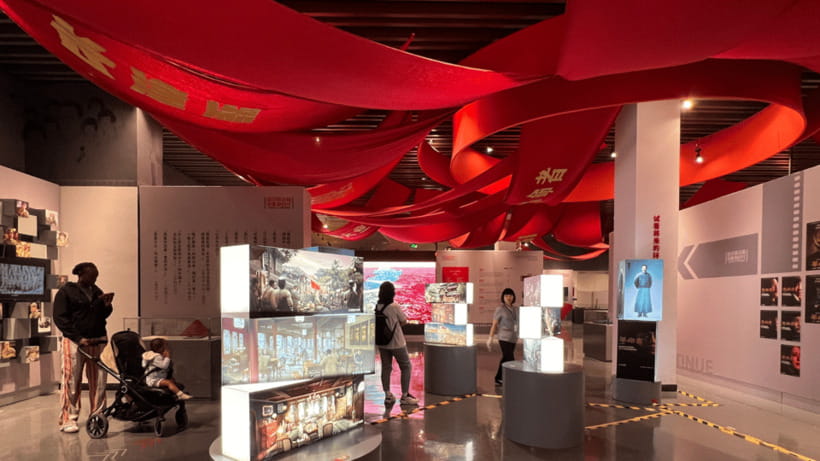
- 21 exhibition halls: Explore roughly 13,000 square meters of displays covering Chinese film history and film-making.
- A century of cinema: Floors two through four trace Chinese films across different periods and stages.
- A separate first-floor exhibition: The Theme Exhibition of A New Journey of Struggle adds a more current cultural and national focus.
- Six movie halls: The museum includes an IMAX GT hall and screening spaces that can hold more than 1,000 people in total.
- Direct QR-code admission: Use the separate QR code sent by email or WhatsApp, not the code shown in the booking app.
- Good value for independent visitors: The reservation includes entry and an English visual and textual guide, but not a live guide or movie screening.
Why the China National Film Museum is worth your time
Beijing has plenty of major museums, but the China National Film Museum offers a different kind of cultural visit. Instead of focusing on paintings, imperial objects, or archaeological finds, it follows the growth of an art form that has shaped modern Chinese life.
The museum was founded on December 29, 2005, and opened to the public on February 10, 2007. It is a large public cultural institution approved by China’s State Council. The building covers about 8.7 acres, with nearly 38,000 square meters of architectural space.
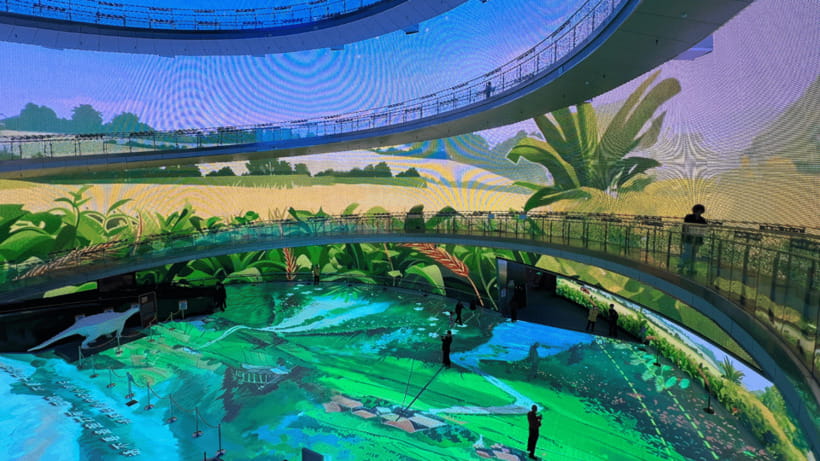
That scale matters. You are not walking into a single room with a few film posters. You are entering a large museum with 21 exhibition halls, six movie halls, and about 13,000 square meters devoted to exhibitions.
I like this experience best when I treat it as a cultural museum visit rather than a simple tourist attraction. You can spend around two hours seeing the major sections, but the size of the building gives you room to stay longer if a particular period, film-maker, or display catches your attention.
The admission price is another strong point. At about $4.82 per person, the reservation is inexpensive for a major Beijing institution. You are paying for museum entry, not a full guided program, but the cost remains attractive if you want an indoor activity that gives you a substantial look at Chinese culture.
More museums and exhibitions in Beijing:
- Beijing: Tianmen Square, Forbidden City & Royal Museum Tours
★ 4.6 · 1,288 reviews - Beijing:Jingshan Park (Palace Museum Garden) Ticket
★ 4.5 · 185 reviews - Beijing Half Day: National Museum of China In-depth Tour with Subway Transfer
★ 5.0 · 70 reviews
Entering with the correct QR code
The admission process is simple, but one detail is important enough to remember twice. After you place your order, the provider sends an e-ticket by email or WhatsApp. You must use the QR code from that separate message to enter the museum directly.
The QR code displayed in the GetYourGuide app is not the admission ticket. If you arrive with only the app code, you may have to stop and find the correct message before you can enter.
Bring your passport. It is listed as a required item, so do not rely only on a phone image or another form of identification. Keep the ticket message easy to open, especially if your email or mobile connection is unreliable.
The reservation is designed to let you skip the ticket line. That makes it useful for a short Beijing visit, particularly if you have planned the museum around a fixed morning or afternoon. The activity lasts about two hours, though the exact start time depends on availability when you book.
The museum is wheelchair accessible. Smoking is not allowed inside.
The first floor and A New Journey of Struggle
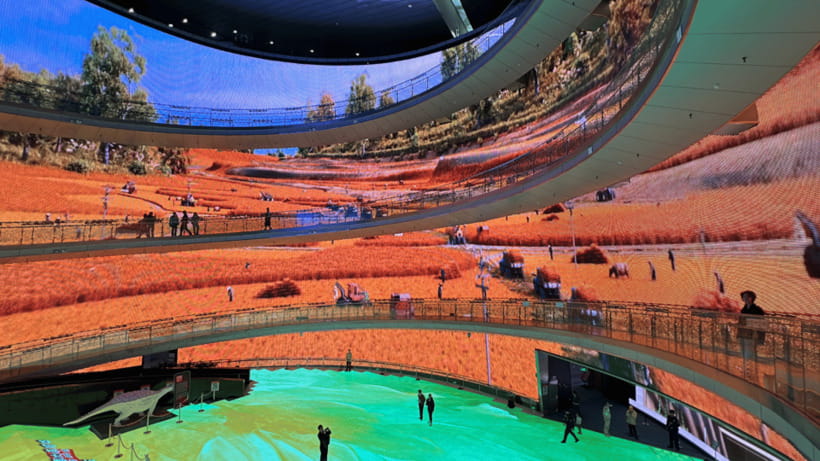
The first-floor exhibition is called The Theme Exhibition of A New Journey of Struggle. The information provided does not give a room-by-room account of this section, so you should think of it as a separate thematic display rather than part of the main century-long sequence.
That distinction helps you plan your visit. If your main interest is the development of Chinese cinema, you will likely want to move through the second, third, and fourth floors carefully. If you want a wider look at how film connects with Chinese society and national themes, allow time for the first floor too.
The title signals a present-day focus, while the upper floors take a much longer view. I would not rush past the first floor simply because the main film timeline is upstairs. It helps set the tone for the museum as a public institution with both artistic and cultural goals.
Because the museum is large, you may find that two hours is enough for a broad visit but not enough for every display. Use the first floor to get your bearings, then decide how much time you want to spend on the main historical exhibition.
Floors two through four, a century of Chinese film
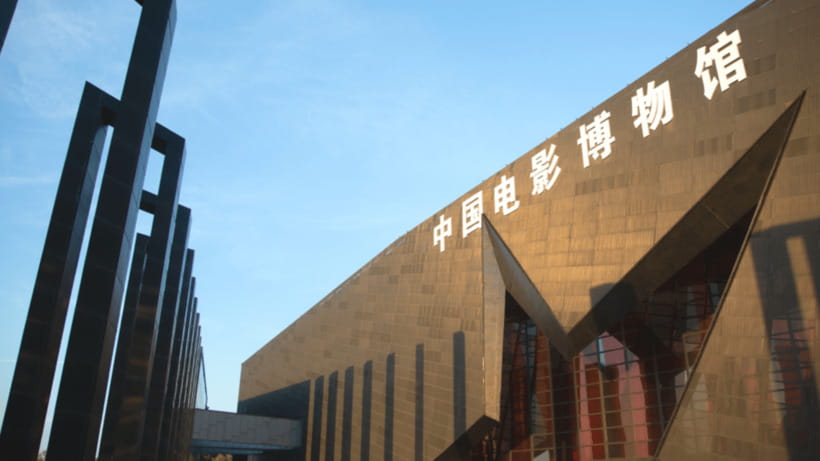
The central exhibition, A Century of History, A Century of Glory, occupies the second, third, and fourth floors. This is the heart of the visit.
The exhibition follows Chinese film across different periods and stages. Rather than showing cinema as a collection of isolated famous titles, it presents the development of film as a long process. You can see how film-making changed over time and how artistic work by numerous film-makers contributed to that development.
The museum also reveals aspects of how films are made. That is valuable even if you are not a serious film student. You may find displays that explain the craft behind the finished screen image, helping you think about direction, performance, production, and visual design as connected parts of one project.
I like the chronological structure because it gives you a way to understand the displays. A poster, camera-related object, film image, or reference to a director means more when you know where it fits in the wider story.
The main caution is language. Some exhibition descriptions are only in Mandarin. This can limit the visit if you expect every display to have full English interpretation. The included English textual and visual guide helps, but it does not turn the museum into a fully English-language experience.
You can still gain a lot from the visual material, layout, film images, and the broad progression between periods. If you read Chinese, the museum will likely offer much more detail. If you do not, plan to use the English guide and accept that some sections will require patience and interpretation.
Swap the crowds for a different corner of Beijing:
- From Beijing: Mutianyu Great Wall Tours with Options
★ 4.9 · 9,216 reviews - Beijing: Forbidden City Tour(Group/Private)-Tickets Included
★ 4.8 · 7,974 reviews - Beijing: T-Square & Forbidden City Group or Private Tour
★ 4.8 · 4,446 reviews - Beijing: Mutianyu Great Wall Daily Tour with Ticket & Lunch
★ 5.0 · 3,056 reviews
Film-makers, artistic achievement, and the work behind the screen
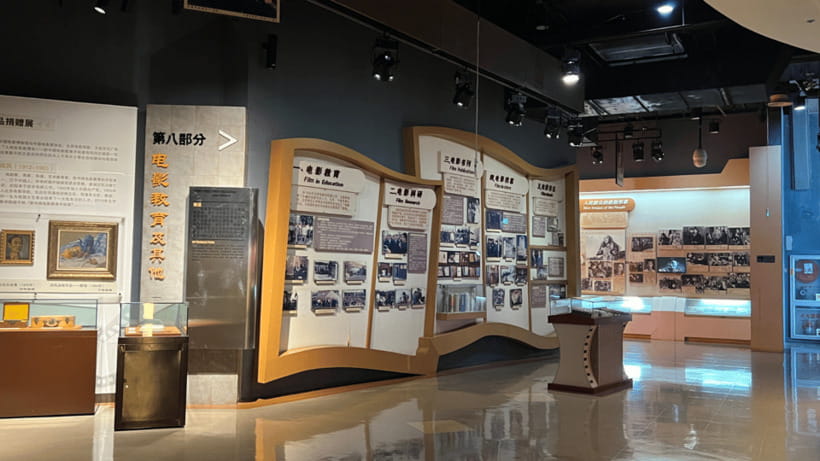
A useful feature of the main exhibition is its attention to the artistic achievements of many film-makers. The museum is not only about famous movies. It also presents the people and creative work that shaped Chinese cinema.
That makes the visit more rewarding than a simple collection of film memorabilia. You are encouraged to look at how cinema developed through the contribution of directors, performers, designers, and other creative figures.
The displays also address the secrets of film-making. The supplied information does not specify each object or demonstration, so I would avoid arriving with a fixed list of equipment or effects to find. Instead, expect a museum presentation that explains parts of the film-making process alongside the historical timeline.
For you, the value is context. A cinema fan may enjoy recognizing important names and artistic achievements. Someone with only a general interest in Chinese culture can use the displays to understand how films became a way to record, interpret, and present different periods of Chinese life.
The experience is less about watching a single story and more about seeing the structure behind many stories.
Six movie halls, including the IMAX GT hall
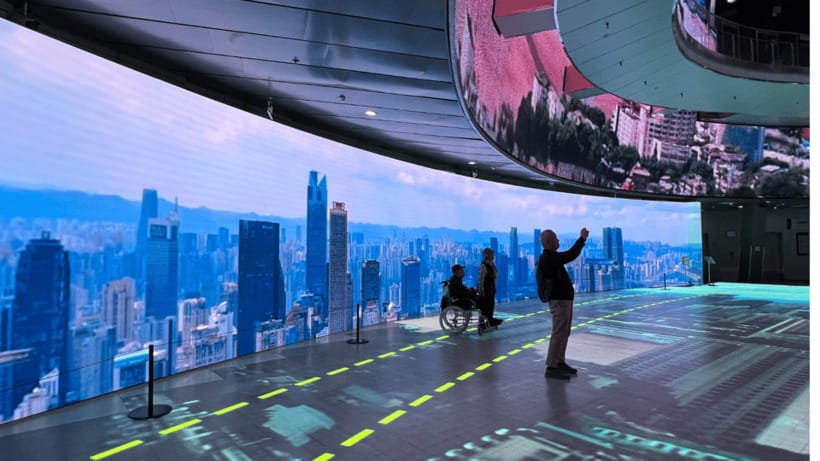
The museum has six movie halls, including an IMAX GT hall. Together, the halls can accommodate audiences of more than 1,000 people.
This gives the building a working cinema function, not just a museum function. It also adds an important option for film enthusiasts who want to connect the exhibitions with actual screen presentations.
Movie screenings are not included in this reservation. You must pay separately if you want to see a film, and the available screening schedule is not provided here. Check the current program before planning your visit around a screening.
Do not assume the admission reservation includes a film simply because the museum contains movie halls. It covers entry to the museum. The six halls, especially the IMAX GT space, are an added feature of the institution rather than part of the basic ticket.
If you are mainly interested in exhibitions, two hours should give you a useful visit. If you also want a movie, leave extra time and confirm the screening cost and schedule separately.
How the English guide changes the visit
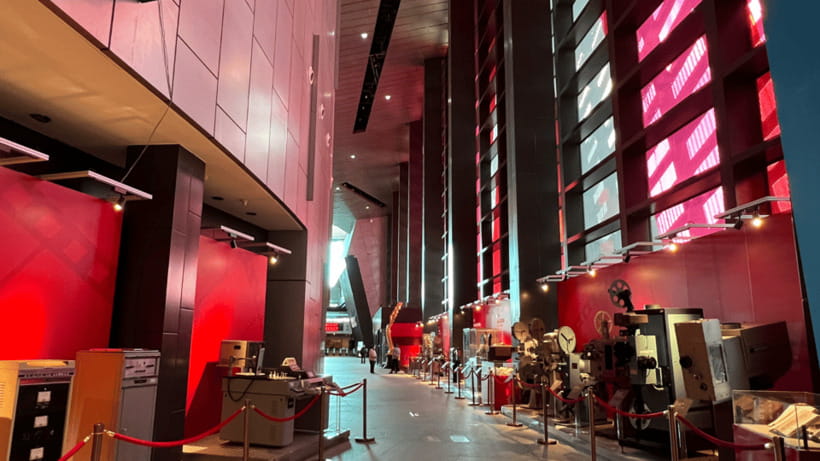
The included English version of the textual and visual guide is one of the most useful parts of this reservation for international visitors. It gives you help with the museum’s themes and visual material, even though the exhibition labels are not consistently available in English.
There is no live guide. That means you set your own pace, choose which displays deserve more attention, and avoid being tied to a group schedule. I like that freedom in a museum this large.
The tradeoff is that you need to be comfortable exploring independently. You will not have someone on hand to translate every Mandarin label, explain the importance of each film-maker, or answer questions as you move from floor to floor.
If you want a fully interpreted museum experience, this may feel incomplete. If you are happy to use an English guide, study the visual displays, and focus on the broad story, it offers a practical way to visit without paying for a private guide.
The mixed-language setup is the single biggest factor in deciding if this experience fits you. It does not make the museum worthless for English speakers, but it does change what you can expect from the visit.
Is two hours enough?
Two hours is a sensible starting point. It gives you time to enter, see the first-floor thematic exhibition, and visit the main historical displays on the upper floors without turning the museum into an all-day commitment.
Still, the building is large. With 21 exhibition halls, you should not expect to read every panel or study every film-maker in detail during a short visit.
I would use a simple plan:
- Begin with the first-floor exhibition to understand the museum’s current thematic focus.
- Move to the second floor and follow A Century of History, A Century of Glory upward.
- Spend extra time on the periods, film-makers, and film-making displays that interest you most.
- Check the movie halls only if you have confirmed a separate screening.
This approach keeps the visit manageable. If you are a film enthusiast, you may want longer than two hours. If you are fitting the museum between other Beijing activities, two hours should provide a worthwhile introduction.
Who will enjoy this museum most?
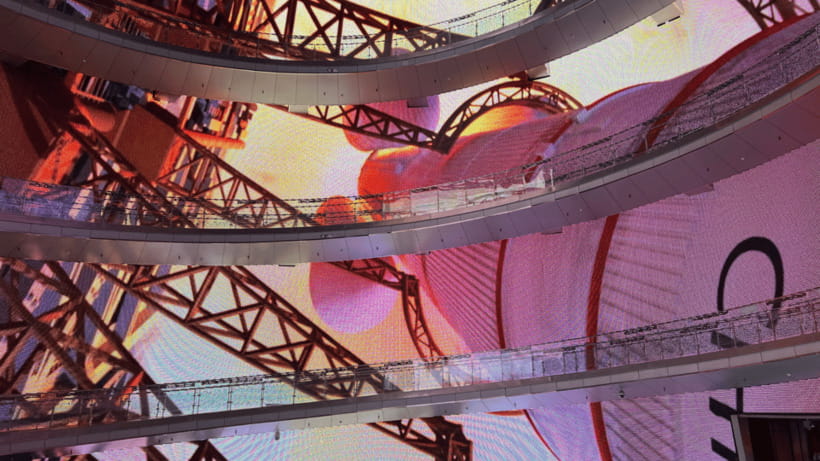
I recommend the museum most strongly to people with an interest in Chinese cinema, modern Chinese culture, museums, or the way art develops over time.
It also suits families and mixed-interest groups because the museum offers several ways to engage. One person can focus on film-makers and artistic work, another can study the building and exhibition design, and another can look for visual material connected with film production.
The experience may be less satisfying if you want a short, highly interactive attraction with complete English explanations. The museum is large and serious. It rewards attention, and the Mandarin-only descriptions can slow you down.
You will also get more from it if you already know a little about Chinese cinema. That is not required, but a basic interest in directors, films, or cultural history gives the displays more meaning.
The museum’s rating is 4.5 from 11 reviews, which points to a generally positive experience but not a perfect language fit for everyone. The most consistent strengths are the interesting cinema exhibitions, the friendly and helpful staff, and the scale of the building. The clearest weakness is the limited English signage.
Practical value at $4.82
At $4.82, this is an easy experience to justify if you are already planning time in northern Beijing and want an indoor cultural stop.
The price includes entry and an English textual and visual guide. It does not include movie screenings, personal spending, or a live guide. That is a fair arrangement for independent visitors, but you should compare it honestly with what you want.
You are getting access to a large national museum, not a private tour. The low price works because you are responsible for your own pace and interpretation.
I especially like the value for visitors who want more than a quick photo stop. The museum’s size, 21 exhibition halls, and historical scope give you plenty to see. The reservation also removes the need to arrange ordinary admission at the entrance, provided you use the correct QR code.
Free cancellation up to 24 hours before the visit and the option to reserve now and pay later make the booking less risky. These policies are useful if your Beijing schedule is still changing.
Should you book the China National Film Museum?
Book it if you want an affordable, substantial look at Chinese cinema and you are comfortable exploring without a live guide. The main historical exhibition, the large number of halls, and the six movie theaters give the museum real depth for the price.
Think twice if you need detailed English interpretation at every display. The included English guide helps, but some descriptions are only in Mandarin, and that limitation can affect how much you understand.
For film fans, culture-minded visitors, and anyone seeking a quiet museum experience away from Beijing’s most familiar sights, I think this reservation is a good choice. Bring your passport, save the separate QR code from email or WhatsApp, and allow yourself more than two hours if you want to read carefully or add a paid screening.
FAQ
How much does entry to the China National Film Museum cost?
The listed price is $4.82 per person.
How long does the museum visit last?
The stated duration is two hours. You may need more time if you want to study all 21 exhibition halls or attend a separate movie screening.
What does the reservation include?
It includes entry reservation for the China National Film Museum and an English version of the textual and visual guide.
Is a live guide included?
No. A live guide is not included, so you explore the museum independently.
Are movie screenings included?
No. Paid movie screenings are not included in the museum admission reservation.
Which exhibitions can I see?
The first floor has The Theme Exhibition of A New Journey of Struggle. Floors two through four contain A Century of History, A Century of Glory, which covers the development of Chinese films across different periods and stages.
How do I enter the museum?
Use the separate QR code sent by email or WhatsApp after booking. The QR code shown in the GetYourGuide app is not the entry ticket.
What should I bring?
Bring your passport.
Is the museum wheelchair accessible?
Yes. The activity information states that the museum is wheelchair accessible. Smoking is not allowed.
Latest additions around Beijing
- Private Hike from Beijing: Go Beyond The Jiankou and Mutianyu Great Wall★ 5.0 · 3 reviews
- Bullet Train Private Tour: Beijing Tiananmen Square, Forbidden City & Great Wall★ 5.0 · 3 reviews
- Private Great Wall Hiking Tour from Simatai West to Jinshanling★ 4.5 · 3 reviews
- Private Transfer for Beijing Airport PEK or PKX★ 5.0 · 3 reviews
- Private All-inclusive Jinshanling Great Wall 1-day tour★ 4.5 · 3 reviews
- Liyuan Theater Beijing Opera Show Tickets★ 5.0 · 3 reviews
- Private Jinshanling relax photo tour by sunset★ 5.0 · 3 reviews
- Beijing Night Tour with Acrobatics Show & PekingDuck Dinner★ 5.0 · 3 reviews
Museums, compared.
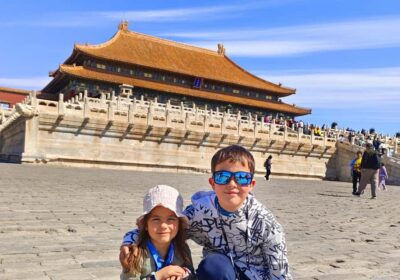
Tianmen Square, Forbidden City & Royal Museum Tours
Read our review →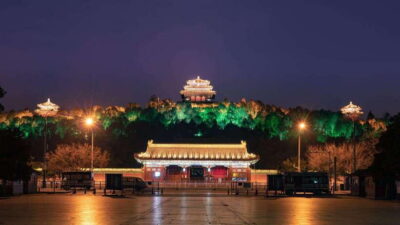
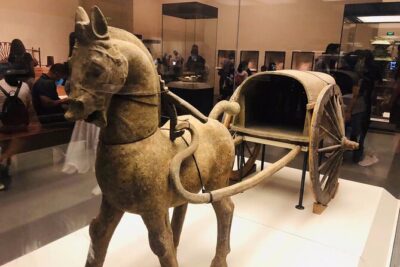
Beijing Half Day: National Museum of China In-depth Tour with Subway Transfer
Read our review →
Beijing’s Forbidden City with Special Viewing of Treasure Gallery and the Great Wall Ruins at Badaling
Read our review →
Lama Temple, Confucius Temple and Guozijian Museum
Read our review →
China National Museum Ticket Pre-booking and Tiananmen Square
Read our review →
4-Hour Private Tour: Lama Temple, Confucius Temple, Guozijian Museum with Dim Sum
Read our review →
JingShan park (palace museum garden) entry ticket
Read our review →Browse the lists this tour appears in