
Reviewed · HUTONG TOURS
Beijing: Hutong Breakfast Food Tour
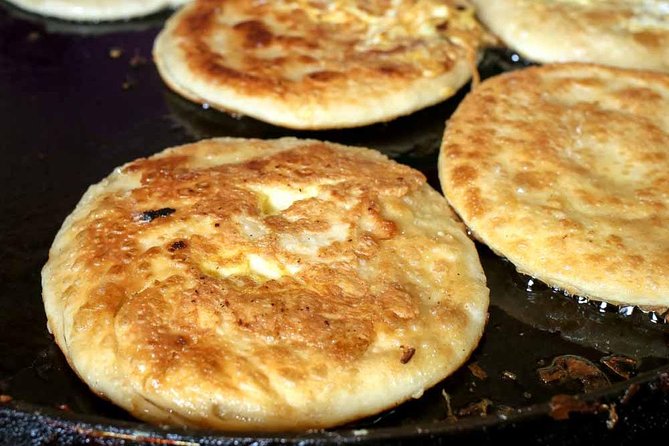
Beijing’s best breakfast may be found behind a plain stone doorway, not on a hotel buffet. This three-hour walk takes you through old hutongs, local markets, and small food stalls for 12-plus dishes, including handmade pork zongzi, beef flatbread, tofu pudding, douzhi, and jianbing with a cheesy twist. You get food, neighborhood life, and the stories behind both.
I like two things in particular. First, the tour puts you in front of people who still make the food, such as Aunt Jie with her generations-old zongzi recipe and Mr. Yu with his everyday Beijing comfort food. Second, guides such as Kelly, Lynn, and Yoyo add useful background and help you handle unfamiliar flavors. The main drawback is that douzhi is sour and fermented, and not everyone will enjoy it. The walk also requires comfortable movement through hutongs, so it is not suitable for people with mobility impairments.
In This Review
- Key points at a glance
- Starting at Zhongguo Meishuguan Station
- A market breakfast with Aunt Jie’s zongzi
- Douzhi, Beijing’s boldest breakfast test
- Mr. Yu’s beef flatbread and tofu pudding
- Jianbing with a cheesy twist
- Sweet pancakes and imperial-era treats
- Reading the hutongs between bites
- What the $45 price includes
- Dietary needs, pace, and weather
- Who will enjoy this Beijing breakfast walk?
- Should you book the Hutong Breakfast Food Tour?
- FAQ
- Where does the Hutong Breakfast Food Tour meet?
- How long does the tour last?
- How many dishes are included?
- Is food and drink included in the price?
- Is the tour suitable for vegetarians?
- Can I bring luggage?
- What happens if the tour does not reach the minimum number of people?
Key points at a glance
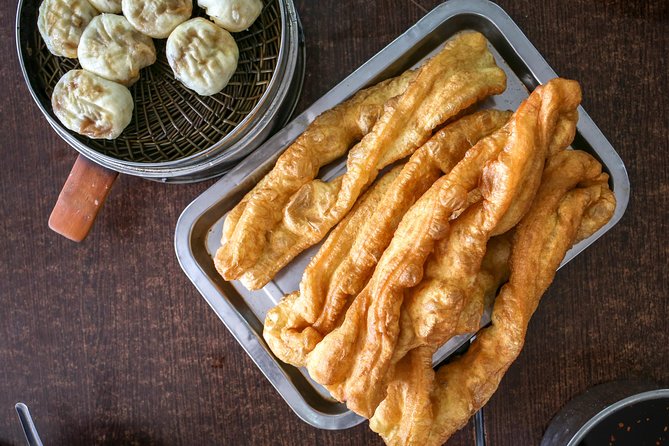
- A local-market breakfast: Meet Aunt Jie and try her handmade pork zongzi, a traditional rice dumpling wrapped in leaves.
- A brave taste of Beijing: Douzhi is a bold, tangy fermented drink and one of the city’s most distinctive old breakfast traditions.
- Five or more food stops: You will sample at least 12 dishes across small eateries and street stalls.
- Hutong details beyond food: Look for stone doorways, old signs, courtyard clues, and the small details that explain how these lanes work.
- Comfort food with local character: Mr. Yu’s beef flatbread and tofu pudding show the everyday side of Beijing cooking.
- A practical morning walk: The tour costs $45 per person, lasts three hours, and includes unlimited food, drinks, water, and soft drinks.
Starting at Zhongguo Meishuguan Station
Your meeting point is outside Exit B of Zhongguo Meishuguan, also called the National Art Museum subway station. It is on subway Line 8, and taking the subway is strongly recommended.
Your guide will wait at street level with a bright yellow Lost Plate tote bag. This is a useful landmark in a busy city, but give yourself extra time. Traffic can be heavy around the station during rush hour, and the meeting instructions can feel confusing if you rely on a map that points toward the museum rather than directly to the subway exit.
If you use a taxi or Didi, show the driver this Chinese address: 地铁8号线中国美术馆地铁站 B出口. A message to the tour operator can clear up any confusion quickly, but I would still arrive early. You do not want to begin a food walk by sprinting through Beijing traffic.
The tour lasts three hours, with starting times depending on availability. You should wear comfortable shoes and leave large luggage at your hotel. The route is built around walking, standing, and entering small food businesses, not around easy access for wheelchairs or people who have trouble with uneven movement.
More hutong wanders:
- Beijing Hutong Walking Food and Beer Tour at Hidden Restaurants
★ 5.0 · 1,132 reviews - Temple Heaven, Summer Palace, Lama Temple, Hutong Bus Tour
★ 4.7 · 319 reviews - Temple of Heaven, Summer Palace, Lama Temple, Hutong Tours
★ 5.0 · 311 reviews
A market breakfast with Aunt Jie’s zongzi
The morning begins in the kind of local market most first-time visitors would not find alone. This matters because a market gives you more than a snack. You see what people buy for an ordinary morning, how food is displayed, and how breakfast fits into local routines.
One of the early tastes is Aunt Jie’s handmade pork zongzi. These sticky rice dumplings are wrapped by hand, and her recipe has been passed down through generations. The story is part of the appeal, but the food itself is the reason to pay attention. You can see how a familiar dish changes when it comes from a person with a long family method rather than a factory package.
Zongzi are often linked with festivals, yet the tour places them in a working neighborhood food setting. That helps you understand them as real food with a place in daily life, not just as a cultural symbol. The pork filling also gives the breakfast a savory start before the sweeter dishes arrive.
The market stop is a good fit if you want to see Beijing through food rather than monuments alone. It is less useful if you only want a polished tasting menu. You are entering regular eateries and stalls, so the setting is practical and local rather than formal.
Douzhi, Beijing’s boldest breakfast test
At some point, you will face douzhi. This fermented mung bean drink is sour, earthy, and distinctly Beijing. It has been recognized by Michelin as a local tradition, but that does not make it an easy first sip.
I like that the tour includes douzhi instead of adjusting every taste to suit visitors. Food traditions often make more sense when you try the real thing, including the flavors that require a second attempt. Your guide can explain why the drink matters, which makes the experience more useful than simply being handed an unfamiliar cup.
Be prepared for a strong reaction. Some people may enjoy its sharp character, while others may decide that one taste is enough. That is fine. This is not a contest, and you do not need to pretend every dish is your favorite.
The inclusion of douzhi gives the tour a bit of honesty. Beijing breakfast is not only crispy, sweet, or comforting. It also includes old flavors that have survived because local people still value them. If you prefer mild food and familiar drinks, this is the stop most likely to challenge you.
Mr. Yu’s beef flatbread and tofu pudding
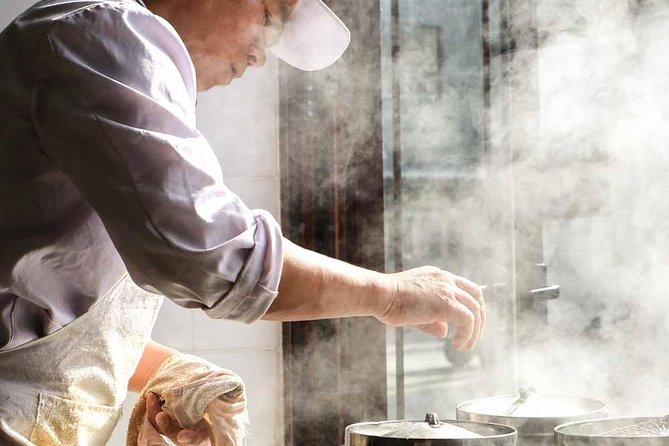
The visit to Mr. Yu brings the focus back to comfort food. His beef flatbread and tofu pudding represent the kind of breakfast people choose because it feels familiar and satisfying, not because it is designed for a special occasion.
The beef flatbread offers a savory, filling bite. It is the sort of dish that makes sense early in the day, especially before several more tastings. Tofu pudding provides a softer contrast and helps show how broad Beijing breakfast can be. One stop can move from crisp and meaty to delicate and spoonable.
Meeting the person behind the food adds a human scale to the meal. You are not only hearing a guide list ingredients. You are connecting a dish with the person who serves it and with the childhood memories attached to it.
Guides are important here. Kelly has been praised for making the morning easy to follow and for sharing plenty of stories. Lynn is associated with finding special local places, including the market. Yoyo is noted for explaining the story connected with each food before you eat it. Guide quality can vary from one date to another, but the format gives the guide plenty to do beyond pointing at a plate.
More food experiences in Beijing:
- Beijing: Hidden Gems Guided Food Tour with Beer and Tastings
★ 4.9 · 306 reviews - Beijing Private Hutong Food Walking Tour
★ 5.0 · 299 reviews - Beijing Hutong Breakfast Food Tour
★ 5.0 · 155 reviews - Beijing Hutong Breakfast Food Tour
★ 5.0 · 120 reviews
Jianbing with a cheesy twist
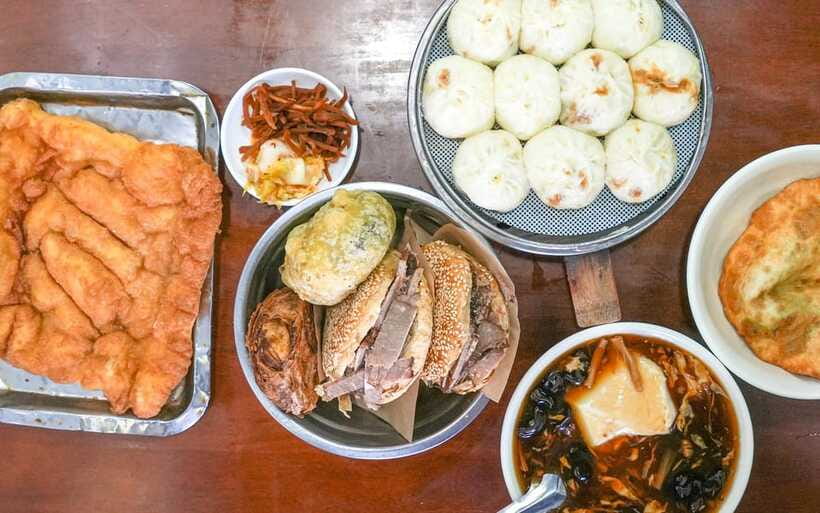
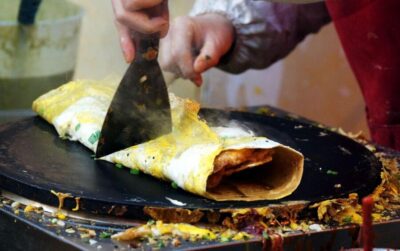
Jianbing is one of Beijing’s most familiar breakfast foods, and this tour gives it a less expected treatment at a small hole-in-the-wall favorite. The version includes cheese, creating a richer twist on a classic street breakfast.
A good jianbing stop shows why street food is such a useful way to learn a city. You watch a quick breakfast take shape and then eat it while it is fresh. The cheesy variation may appeal to cautious eaters because it connects a local staple with a flavor you already know.
The tour also includes an egg and bacon pancake, according to the food selection described by the guide experience. That gives you another savory pancake to compare with the sweet pancake served later. If you enjoy tasting several versions of a food style, these stops should be among the strongest parts of the morning.
Keep in mind that the tour includes many dishes in a short period. You may want to pace yourself rather than finish every bite immediately. The food is served as a series of tastes, and the variety matters more than treating each stop as a full meal.
Sweet pancakes and imperial-era treats
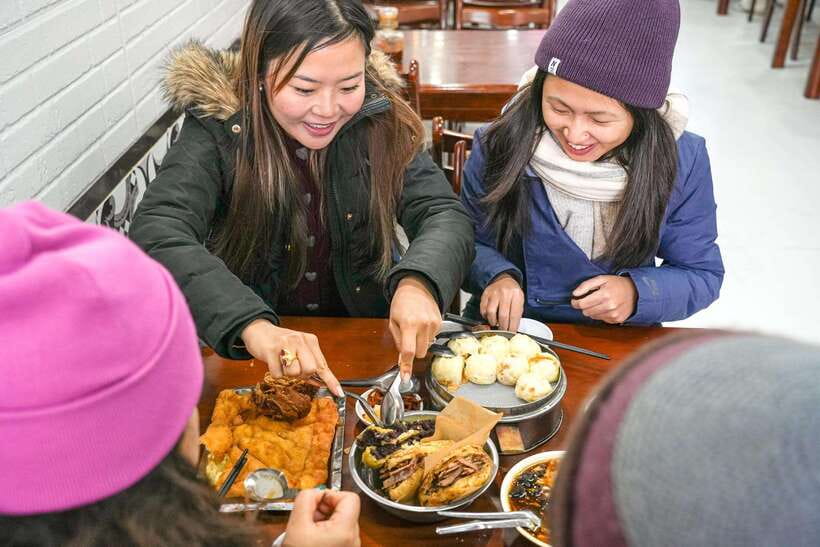
The breakfast is not all meat, dough, and fermented flavors. You will also try sweet pancakes and sweets connected with imperial-era food traditions. These dishes give the tour a different sense of Beijing, showing how foods once linked with the court can become part of the city’s wider culinary memory.
The sweet portion is worth approaching with some restraint. Red bean paste appears in several desserts, and the combination can feel repetitive if you have a low tolerance for sweet fillings. I would treat each one as a comparison rather than eating quickly from stop to stop.
This is also where the balance of the menu matters. Savory foods such as beef flatbread, pork zongzi, and jianbing anchor the experience, while tofu pudding and sweets change the texture and pace. A drink alongside the sweeter foods would make the sequence easier for some people, although unlimited water and soft drinks are included overall.
The imperial connection adds context, but the value is not that every sweet feels luxurious. Instead, you get a glimpse of how food can move between social settings and generations. The tour links old culinary customs with the ordinary hutong businesses serving food today.
Reading the hutongs between bites
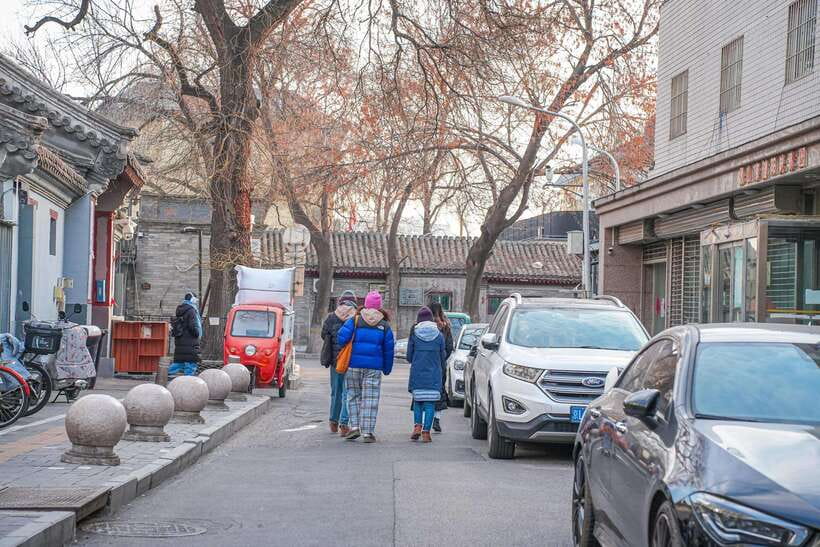
The walking route is not simply a way to move from one snack to the next. Your guide points out stone doorways, signs, courtyards, and other hutong details that are easy to miss when you walk alone.
These clues help you read the neighborhood. A doorway can suggest how a courtyard is arranged. A sign can hint at a shop’s role. A narrow lane can tell you more about older Beijing than a quick view from a tour bus. The guide’s stories make these small features easier to notice.
I especially like this part of the format because food gives you a reason to enter the neighborhood, while the hutongs give the food a setting. You are not stopping at disconnected restaurants. You are seeing how breakfast shops, markets, homes, and lanes fit together.
The experience is still a walking tour, not a major architecture visit. Do not expect long historical lectures or a full survey of Beijing’s urban past. The information is tied to what you can see along the route, which keeps the morning moving and prevents the food from becoming an afterthought.
What the $45 price includes
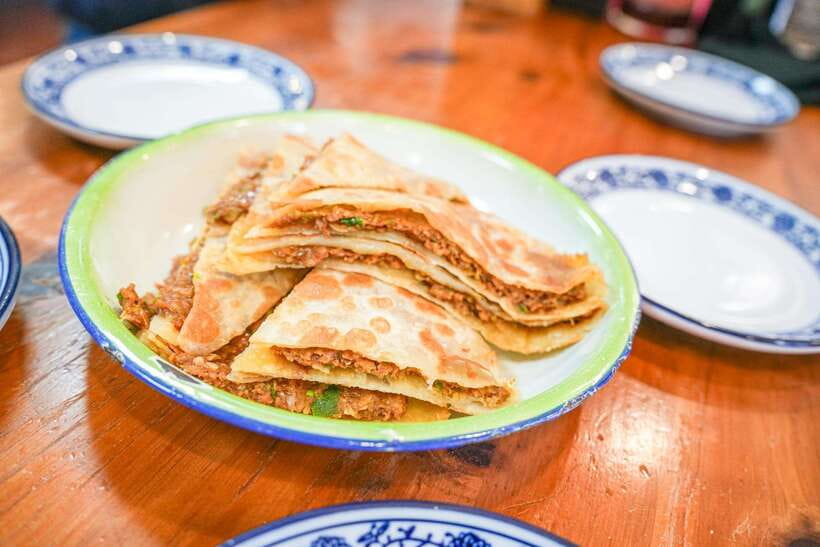
At $45 per person, the tour is priced above a simple self-guided breakfast, but the comparison is not quite fair. You are paying for at least five food locations, 12 or more dishes, an English-speaking guide, neighborhood access, explanations, and the ability to try foods you might not identify or order on your own.
Food and drinks are included at more than six eateries and street stalls, with unlimited water and soft drinks. That makes the price easier to assess. You do not need to keep calculating the cost of each bite, and the guide can manage the ordering while you focus on tasting.
The strongest value comes from the variety and the local connections. If you already speak Chinese, know Beijing’s hutongs well, and are happy to search out breakfast stalls alone, you may spend less independently. If you want a well-organized introduction with context and translation, $45 is reasonable for a three-hour morning.
The tour is also a practical choice early in a Beijing trip. It gives you a working knowledge of foods you may see elsewhere, such as jianbing, zongzi, tofu pudding, and douzhi. You can then order with more confidence during the rest of your stay.
Dietary needs, pace, and weather
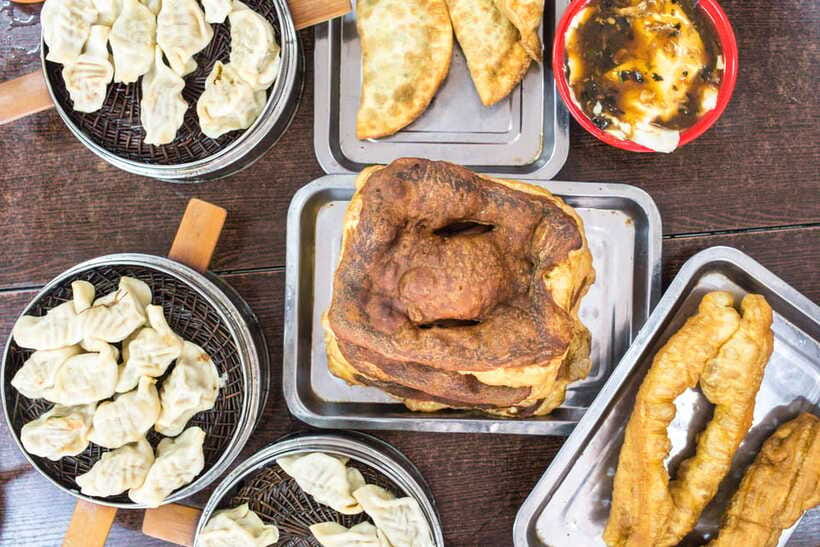
The tour is vegetarian-friendly, but substitutions are not available for every dish. That distinction matters. You can join with a vegetarian diet, yet you should expect the food selection to be somewhat limited at certain stops rather than receiving a replacement for every pork or beef item.
The route operates in rain or shine. Wear clothing suited to the forecast and shoes that can handle three hours of walking and standing. Large bags and luggage are not allowed, so plan to arrive with only what you need for the morning.
There is a minimum of two people required for the tour to operate. If that minimum is not met after confirmation, the provider may cancel and offer another date or a full refund. You can cancel up to 24 hours ahead for a full refund, and reserve now while paying later, which helps if your Beijing schedule is still shifting.
The activity is not suitable for people with mobility impairments. Hutong routes and small food shops can be difficult to navigate, and the format does not promise accessible facilities. If you need a low-walking food experience, choose something designed around a single venue instead.
Who will enjoy this Beijing breakfast walk?
I would recommend this tour to you if you want local food without spending half a day decoding menus and map pins. It is especially useful for first-time visitors, curious eaters, and anyone who enjoys meeting the people who make or serve the food.
It also suits repeat visitors who have already seen the major sights and want a more ordinary side of Beijing. The combination of a market, family-style food stories, and hutong details makes the morning feel different from a standard restaurant meal.
You should think twice if you dislike fermented flavors, prefer a slow sit-down breakfast, or need exact control over every dish. The tour moves through several stops, and the menu includes bold tastes, meat dishes, sweet red bean desserts, and foods that cannot always be replaced.
The guide makes a real difference. Kelly, Lynn, and Yoyo have each been singled out for clear explanations, stories, and warm organization. You cannot request a particular guide from the information provided, but the English-language format is built around guide-led interpretation, not just food delivery.
Should you book the Hutong Breakfast Food Tour?
Book it if you want to understand Beijing through breakfast and you are willing to try a few dishes outside your comfort zone. The best parts are the market visit, Aunt Jie’s handmade zongzi, Mr. Yu’s comfort food, the hutong clues, and the chance to test your courage with douzhi.
Skip it if you need step-free access, dislike walking in poor weather, or want a menu made entirely of familiar flavors. For everyone else, $45 buys a useful three-hour introduction to Old Beijing food, with enough variety to make the morning feel like more than a meal.
FAQ
Where does the Hutong Breakfast Food Tour meet?
Meet at street level outside Exit B of Zhongguo Meishuguan, also called the National Art Museum subway station. The station is on Line 8, and your English-speaking guide will carry a bright yellow Lost Plate tote bag.
How long does the tour last?
The tour lasts three hours. Starting times vary, so check availability when choosing your date.
How many dishes are included?
You will try 12 or more dishes at five or more hidden food locations. The route includes more than six eateries and street stalls, with food and drinks included.
Is food and drink included in the price?
Yes. The tour includes unlimited food and drinks at the stops, plus unlimited water and soft drinks.
Is the tour suitable for vegetarians?
The tour is vegetarian-friendly, but substitutions are not available for every dish. You should expect that some items cannot be replaced with a vegetarian alternative.
Can I bring luggage?
No. Luggage and large bags are not allowed. Bring comfortable shoes and only the small personal items you need for the walk.
What happens if the tour does not reach the minimum number of people?
At least two people are required for the tour to operate. If that minimum is not met after confirmation, you may be offered another date or a full refund.
Latest additions around Beijing
- Private Hike from Beijing: Go Beyond The Jiankou and Mutianyu Great Wall★ 5.0 · 3 reviews
- Bullet Train Private Tour: Beijing Tiananmen Square, Forbidden City & Great Wall★ 5.0 · 3 reviews
- Private Great Wall Hiking Tour from Simatai West to Jinshanling★ 4.5 · 3 reviews
- Private Transfer for Beijing Airport PEK or PKX★ 5.0 · 3 reviews
- Liyuan Theater Beijing Opera Show Tickets★ 5.0 · 3 reviews
- Private Jinshanling relax photo tour by sunset★ 5.0 · 3 reviews
- Private All-inclusive Jinshanling Great Wall 1-day tour★ 4.5 · 3 reviews
- Beijing Night Tour with Acrobatics Show & PekingDuck Dinner★ 5.0 · 3 reviews
Hutong Tours, compared.
Beijing Hutong Walking Food and Beer Tour at Hidden Restaurants
Read our review →
Temple Heaven, Summer Palace, Lama Temple, Hutong Bus Tour
Read our review →
Temple of Heaven, Summer Palace, Lama Temple, Hutong Tours
Read our review →

Beijing City Walk: Explore Hutongs Life and Old Beijing
Read our review →Browse the lists this tour appears in