
Reviewed · HUTONG TOURS
Beijing Old Hutongs Tour by Rickshaw
Beijing’s hutongs are best understood at street level, where bicycles, neighborhood shops, courtyard homes, and daily routines replace the city’s grand avenues. This tour gives you that view from a traditional rickshaw, with time to walk through the alleys and visit a local home.
I like the easy hotel pickup and the chance to climb the Drum Tower for a view over old Beijing. I also like the tea tasting, especially if you enjoy learning how different Chinese teas are prepared. The main drawback is that the rickshaw ride can be brief, and some departures include sales stops or provide less explanation than promised.
In This Review
- Key points to know before booking
- Why Beijing’s hutongs are worth your morning
- Starting at the Bell and Drum Towers
- Riding through the old hutongs
- Visiting a courtyard home
- Tea tasting, with a warning about shopping
- The possible silk factory stop
- What the three-hour schedule really delivers
- Guide quality can shape the whole outing
- Group size, transport, and practical value
- Who should book this hutong tour
- Should you book the Beijing Old Hutongs Tour by Rickshaw?
- FAQ
- How long does the Beijing Old Hutongs Tour by Rickshaw last?
- What is included in the tour price?
- Is hotel pickup included?
- Will I visit the Bell and Drum Towers?
- Is the rickshaw ride long?
- Does the tour include a visit to a Chinese family home?
- Is food included?
- Can I cancel for a full refund?
Key points to know before booking

- The hutong ride is the heart of the tour: Expect a short rickshaw journey mixed with walking through old lanes.
- The Drum Tower provides the best view: The stairs are steep, but the lookout helps you understand how the hutong districts fit together.
- The family visit varies: Some departures offer a warm, useful glimpse into courtyard living, while others feel more like a quick greeting.
- Tea tasting can become a sales presentation: You may try several teas, but the shop may also encourage you to buy expensive products.
- Pickup is practical within Beijing’s Fourth Ring Road: Hotels outside that area require you to meet at Prime Hotel.
- Guide quality matters: Guides named Gale, William, and Cynthia received especially warm praise, while other departures were criticized for poor communication or short touring time.
Why Beijing’s hutongs are worth your morning
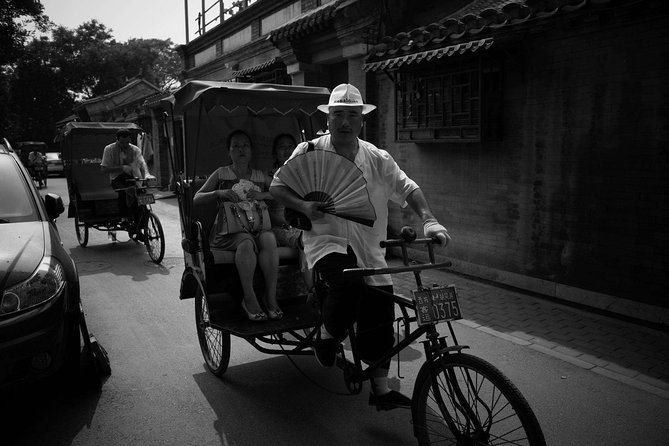
Beijing’s old hutongs are narrow lanes laid out around traditional courtyard homes. The name refers to the alleyways themselves, but the word also brings to mind a whole way of city life: neighbors sharing public spaces, children playing near the lane, small businesses operating from street fronts, and homes arranged behind plain gates.
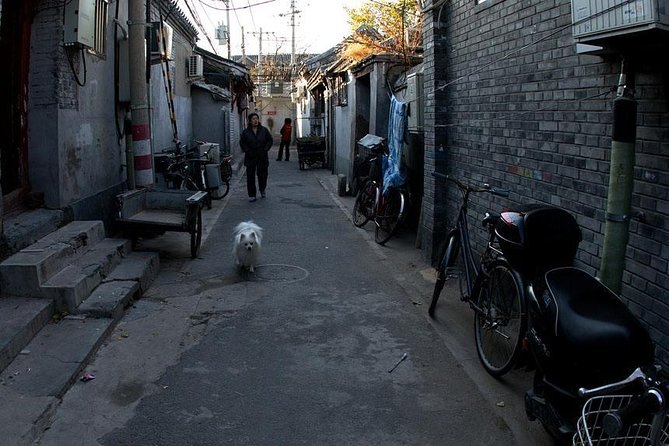
Modern Beijing can feel enormous. Wide roads, tall buildings, and heavy traffic make it hard to picture the older city. In the hutongs, the scale changes. You see brick walls, old doorways, parked bicycles, local eateries, and residents handling ordinary errands. That is the real value of this tour. It gives you a look at Beijing as a lived-in neighborhood, not just a collection of imperial sights.
The rickshaw adds a pleasant old-fashioned touch, though you should set your expectations correctly. This is not a long ride through an endless maze. The rickshaw portion is one part of a three-hour outing, and some people found it surprisingly short. You will also walk, climb towers, visit a home, and stop for tea.
I see this as a good first or second-day activity if you want help getting your bearings. It is less essential if you are already staying in a hutong and have spent time exploring the lanes on foot.
More hutong wanders:
- Beijing Hutong Walking Food and Beer Tour at Hidden Restaurants
★ 5.0 · 1,132 reviews - Temple Heaven, Summer Palace, Lama Temple, Hutong Bus Tour
★ 4.7 · 319 reviews - Temple of Heaven, Summer Palace, Lama Temple, Hutong Tours
★ 5.0 · 311 reviews
Starting at the Bell and Drum Towers
Pickup normally begins at your hotel in an air-conditioned vehicle. The service covers hotels within the Fourth Ring Road. If you are staying outside that boundary, you must make your own way to Prime Hotel on Wangfujing Avenue for an 8:30 a.m. or 1 p.m. meeting time.
The tour begins near Beijing’s Bell and Drum Towers. These landmark buildings once helped mark the hours of the day in the imperial capital. The Drum Tower is usually the more rewarding stop because it offers a high view over the surrounding old district.
You should be ready for steep stairs. One departure involved a rushed climb because the group arrived late, and one guide reportedly stayed below because of bad knees. That experience is not guaranteed to repeat, but it shows why timing and guide participation matter. If climbing is difficult for you, ask about the tower visit before booking. The tour information says most people can take part, but it does not promise an elevator or an alternative route.
The tower visit can be especially useful before the hutong ride. From above, you get a sense of how the old neighborhoods sit beside Beijing’s larger roads. You can then recognize the contrast when you return to ground level.
If you happen to visit when the drum performance is scheduled, the stop may feel more memorable. One departure missed the performance because of timing. The schedule appears to matter, so do not assume the tour includes a live drum demonstration.
Riding through the old hutongs
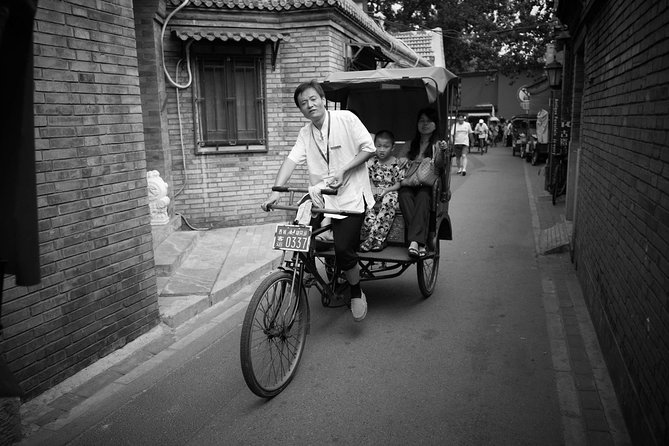
After the tower area, you climb into a pedicab, also called a rickshaw. The driver pedals you through narrow streets while your guide explains the neighborhood and points out features along the way.
The ride is enjoyable partly because it slows you down. Beijing’s traffic and long distances can make sightseeing tiring. A rickshaw moves at a gentler pace and lets you watch street life without having to study a map or negotiate every turn yourself.
Still, this is where the tour can feel uneven. Some departures have taken a pleasant route through a historic hutong area, while others have moved quickly through quieter lanes. One person who already lived in a hutong felt the route was too inactive and too short. If you have limited time in Beijing, that is worth considering.
The ride also has a human side. You are transported by a local driver pedaling through tight lanes, and tipping may be requested. One account described a request for 20 yuan per person. Tips are not listed as included, so carry some small Chinese currency if you want to thank the driver, but do not confuse a suggested tip with an extra tour charge.
The best part of the ride is not a famous monument. It is the small view between destinations: a doorway, a courtyard entrance, a resident carrying groceries, or a lane narrowing between gray walls. I would pay attention to those details rather than expecting a major attraction at every turn.
Visiting a courtyard home
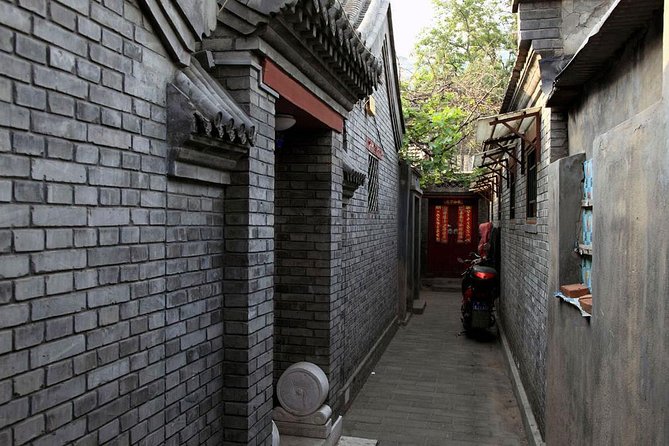
The home visit is intended to show you how hutong families have lived and how courtyard housing works. You may be greeted by a local resident, hear about daily life, and see traditional objects inside the home.
This can be one of the most personal parts of the morning. A short visit has given some people a useful look at older homes and customs. Another departure included a demonstration of miniature glass bottle painting, and a child enjoyed seeing silkworm cocoons later in the day. These details can make the outing more engaging for families.
The experience is not always a full conversation with a resident family. On some departures, the host gave only a brief greeting, while the guide explained objects in the home. Another person felt the house had been arranged more for tourism than ordinary family life.
That distinction matters. You should think of this as a brief cultural stop, not an extended home exchange. It can offer a glimpse into courtyard living, but it may not provide the personal access suggested by the wording of the tour.
If the home visit is important to you, ask your guide questions directly. How old is the house? Is the courtyard still used as a family residence? Which customs are connected with the objects on display? A good guide can turn a short stop into a worthwhile one.
Swap the crowds for a different corner of Beijing:
- From Beijing: Mutianyu Great Wall Tours with Options
★ 4.9 · 9,216 reviews - Beijing: Forbidden City Tour(Group/Private)-Tickets Included
★ 4.8 · 7,974 reviews - Beijing: T-Square & Forbidden City Group or Private Tour
★ 4.8 · 4,446 reviews - Beijing: Mutianyu Great Wall Daily Tour with Ticket & Lunch
★ 5.0 · 3,056 reviews
Tea tasting, with a warning about shopping
The tea stop takes place at a local tea house or tea shop. You may taste several varieties, with one departure trying around five teas. The setting is traditionally decorated, and the guide or tea host explains the drinks and preparation.
I like this part when it is treated as a cultural lesson. Chinese tea is not one single drink. Different leaves, processing methods, water temperatures, and brewing styles produce very different flavors. A tasting gives you a chance to compare them rather than buying an unfamiliar package from a supermarket.
The concern is the sales pitch. Several departures felt that the tea demonstration was mainly designed to sell expensive tea and accessories. You may be shown products after the tasting, and you should feel free to say no. The tea tasting is included, but purchases are not.
This is a good place to decide your budget in advance. If you want a souvenir, compare prices and buy only what you actually like. If you do not want tea, state that clearly and enjoy the tasting without feeling obligated.
The possible silk factory stop
The stated program ends with the return to your hotel, but some departures have added a silk factory or similar shopping stop. The visit may include a look at silkworm cocoons, silk production, bedding, clothing, or household goods.
For families, especially children, seeing the cocoons and learning how silk is made can be interesting. A child on one departure enjoyed the demonstration, and some people bought silk pillows that they liked afterward.
The issue is that this stop is not always presented as an optional shopping visit. Some people felt they were taken a long way to a tourist shop and spent too much time there. If you prefer sightseeing to retail stops, ask your guide early in the tour if a silk visit is planned.
The same advice applies to any optional pearl or silk stop. Go if the process interests you. Skip the purchase unless the item and price make sense to you.
What the three-hour schedule really delivers
The advertised duration is about three hours. The listed timing gives roughly two hours to the hutong portion and about 30 minutes for the Bell and Drum Towers, with the remaining time used for transfers, the home visit, and tea.
That can be enough for a pleasant introduction. It is not enough for a slow, detailed study of several hutong neighborhoods. You will see one area, not all of old Beijing.
The schedule also appears to change between departures. Pickup times have shifted from the advertised noon start to 1 p.m., and one person reported a tour lasting less than 1.5 hours after a long taxi ride. Another departure apparently failed to operate because of a city parade and transport restrictions.
These problems are not minor if you have only a few days in Beijing. Confirm the pickup time the day before and ask exactly what is included. Save the provider’s contact details, and if your voucher names Prince Gong’s Mansion, confirm whether it is actually part of your departure. Some people were expecting that sight and were not taken there.
Guide quality can shape the whole outing
The strongest experiences have come from guides who explain what you are seeing and make room for questions. Gale, also spelled Gail in some accounts, received especially warm praise for her clear explanations, punctual hotel pickup, and kindness toward children. William was described as professional and helpful, while Cynthia was praised for combining history, personal conversation, and enthusiasm. Mr. Goo also made a strong impression on one solo visitor.
A good guide can explain why hutongs developed, how courtyard homes were arranged, and what daily life looks like today. That background helps the streets become more than a ride through old alleys.
The weaker departures involved guides who offered little explanation, left people alone at sights, or gave unclear directions afterward. One person was dropped near a security checkpoint and had difficulty finding the next destination. Another guide change caused confusion before the tour began.
Because the experience provider is Hantang International Travel Service and departures may vary, you cannot choose a specific guide in advance from the information provided. If you receive the name of your guide, keep it handy and confirm the pickup details.
Group size, transport, and practical value
The tour lists a maximum of 999 participants, but the actual experience can be much smaller. Several departures became private tours for one person or one couple, especially in the off-season. That can be a major advantage because you can ask more questions and set a comfortable pace.
A private-feeling departure also makes the $77 price easier to justify. You are paying for hotel transport, an English-speaking guide, admissions, the rickshaw, and tea tasting. Compared with arranging separate taxis, tower tickets, and a rickshaw on your own, the package offers convenience.
The value drops if the rickshaw ride is very short, the guide gives little context, or a shopping stop replaces sightseeing. If you are confident navigating Beijing and mainly want the towers, you may spend less by visiting the area independently. If you want transport and a guide to connect the pieces, the price is more reasonable.
The tour is booked an average of 76 days ahead, which suggests that advance planning is common. I would not leave it until the last minute if your Beijing schedule is tight. The cancellation policy allows a full refund when you cancel at least 24 hours before the start time. Changes or cancellations inside that window are not accepted for a refund.
Who should book this hutong tour
I would recommend it most to first-time visitors, families, and anyone who wants an easy introduction to traditional Beijing neighborhoods. Children may enjoy the rickshaw, towers, silk production, and tea tasting more than a long museum visit.
It also suits you if hotel pickup matters or if you prefer having an English-speaking guide explain the customs behind what you see. Solo visitors may be lucky enough to receive a private departure, although that is not guaranteed.
I would be more cautious if you already know Beijing well, are staying in a hutong, or dislike shopping stops. Independent visitors can reach the Bell and Drum Towers and wander nearby lanes without paying for a packaged tour.
Should you book the Beijing Old Hutongs Tour by Rickshaw?
Book it if you want a convenient three-hour introduction to old Beijing, especially with children or on your first day. The rickshaw ride, Drum Tower view, home visit, and tea tasting create a pleasant mix of activities, and a strong guide such as Gale, William, or Cynthia can make the history come alive.
Do not book it expecting a long rickshaw journey, a guaranteed private family conversation, or a completely shopping-free cultural tour. Confirm the pickup time, ask about the current route, check whether Prince Gong’s Mansion is included if it appears in your booking details, and clarify any silk factory stop.
The experience earns a middling overall rating of 3.6 from 73 ratings because the best departures are genuinely enjoyable while the weakest have had serious communication and itinerary problems. With clear confirmation before the day, it can be good value. Without that confirmation, an independent visit to the Drum and Bell Towers may be the safer choice.
FAQ
How long does the Beijing Old Hutongs Tour by Rickshaw last?
The tour lasts approximately three hours. The hutong portion is listed as about two hours, while the Bell and Drum Towers stop is about 30 minutes. Transfer time, the home visit, and tea tasting fit into the remaining schedule.
What is included in the tour price?
The price includes rickshaw transportation through the hutong, hotel pickup and drop-off within the Fourth Ring Road, an English-speaking guide, tea tasting, and admission tickets.
Is hotel pickup included?
Yes, pickup and drop-off are included for hotels located within Beijing’s Fourth Ring Road. If your hotel is outside that area, you must go to Prime Hotel at 8:30 a.m. or 1 p.m. to join the tour.
Will I visit the Bell and Drum Towers?
Yes, the tour includes the Bell and Drum Towers area, with a visit to a local Drum Tower for a view over old Beijing. The stairs can be steep, and a live drum performance is not guaranteed.
Is the rickshaw ride long?
The tour includes a rickshaw ride through old hutong streets, but the exact length is not specified. The ride is one part of a wider three-hour tour and may be shorter than you expect.
Does the tour include a visit to a Chinese family home?
A local home visit is included in the program. The level of interaction can vary, from a brief greeting and viewing traditional objects to a more informative conversation about local life.
Is food included?
No. Food and beverages are not included. Tea tasting is included, but any tea, accessories, silk goods, or other products you purchase cost extra.
Can I cancel for a full refund?
Yes. You can cancel at least 24 hours before the experience start time for a full refund. Cancellations or changes made less than 24 hours before the start time are not accepted for a refund.
Latest additions around Beijing
- Private Hike from Beijing: Go Beyond The Jiankou and Mutianyu Great Wall★ 5.0 · 3 reviews
- Bullet Train Private Tour: Beijing Tiananmen Square, Forbidden City & Great Wall★ 5.0 · 3 reviews
- Private Great Wall Hiking Tour from Simatai West to Jinshanling★ 4.5 · 3 reviews
- Private Transfer for Beijing Airport PEK or PKX★ 5.0 · 3 reviews
- Liyuan Theater Beijing Opera Show Tickets★ 5.0 · 3 reviews
- Private Jinshanling relax photo tour by sunset★ 5.0 · 3 reviews
- Private All-inclusive Jinshanling Great Wall 1-day tour★ 4.5 · 3 reviews
- Beijing Night Tour with Acrobatics Show & PekingDuck Dinner★ 5.0 · 3 reviews
Hutong Tours, compared.

Beijing Hutong Walking Food and Beer Tour at Hidden Restaurants
Read our review →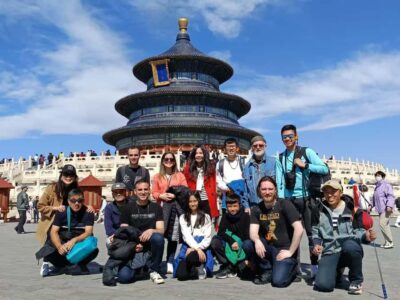
Temple Heaven, Summer Palace, Lama Temple, Hutong Bus Tour
Read our review →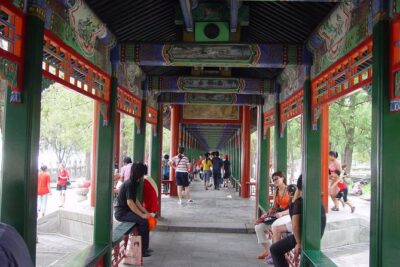
Temple of Heaven, Summer Palace, Lama Temple, Hutong Tours
Read our review →

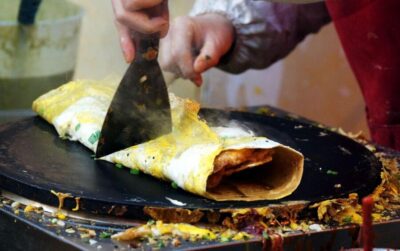

Beijing City Walk: Explore Hutongs Life and Old Beijing
Read our review →Browse the lists this tour appears in