
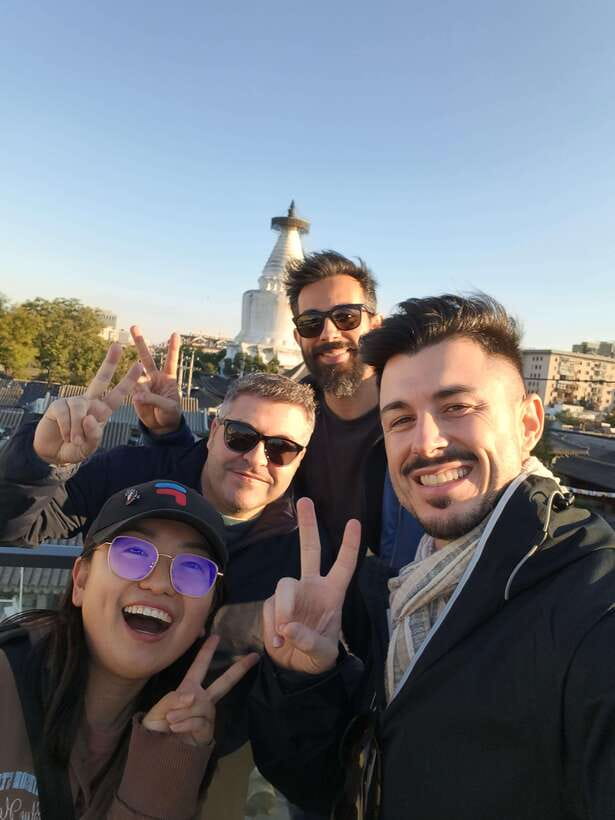
Reviewed · HUTONG TOURS
Hutong Walking Tour: Discover Real Beijing without Crowds
Beijing’s old hutongs are not a museum display. They are working neighborhoods, with residents going about daily life behind gray walls and carved gates. This 2.5-hour walk starts at Xisi Station and links those lanes with temples, a church, a bookshop, and a traditional medicine center, giving you a wider look at the city than a hutong-only stroll.
I like the small groups of up to eight and the way guides such as Dee, Tracy, and Heidi explain architecture in plain language. I also like the final drink, often served in a rooftop setting, which gives you a quiet pause above old Beijing. The main consideration is that only about half of the route is through hutongs, and the full walk covers roughly 3 kilometers.
In This Review
- Key points before you book
- What this Beijing walk is really about
- Meeting at Xisi and entering the older city
- Guangji Temple and the city’s religious character
- Church of the Saviour, a different side of Beijing
- Zhengyang Bookstore and the pleasure of a small stop
- Zhuanta Hutong and the everyday city
- The Emperors Temple of Past Dynasties
- A café stop and a traditional Beijing drink
- Miaoying Temple and the final stretch
- What $49 gets you
- Who will enjoy this route most
- Should you book the Hutong Walking Tour?
- FAQ
- Where does the tour begin?
- Where does the tour finish?
- How long is the walking tour?
- How much of the tour takes place in the hutongs?
- Which languages are available?
- Is the entrance fee included?
- Is a drink included?
Key points before you book
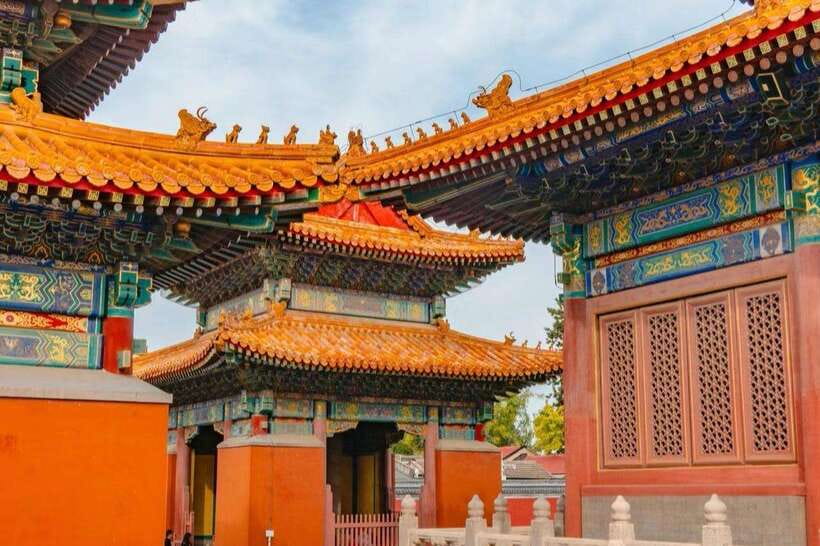
- A broader view of old Beijing: Hutongs are paired with Guangji Temple, a cathedral, temples, ceremonial sites, and historic buildings.
- Strong local guidance: Dee, Tracy, and Heidi have been praised for clear explanations, friendly pacing, and useful food and sightseeing advice.
- Small-group format: The group is limited to eight people, though a quiet date may turn into a private walk.
- A local drink included: Expect a traditional Beijing beverage, with plum-based drinks and herbal flavors mentioned as possible examples.
- Good first-day orientation: The route helps you notice Chinese architecture, religious symbols, and neighborhood life before larger sights such as the Forbidden City.
- Plan for real walking: You need comfortable shoes, water, sun protection, and enough mobility for about 3 kilometers.
What this Beijing walk is really about
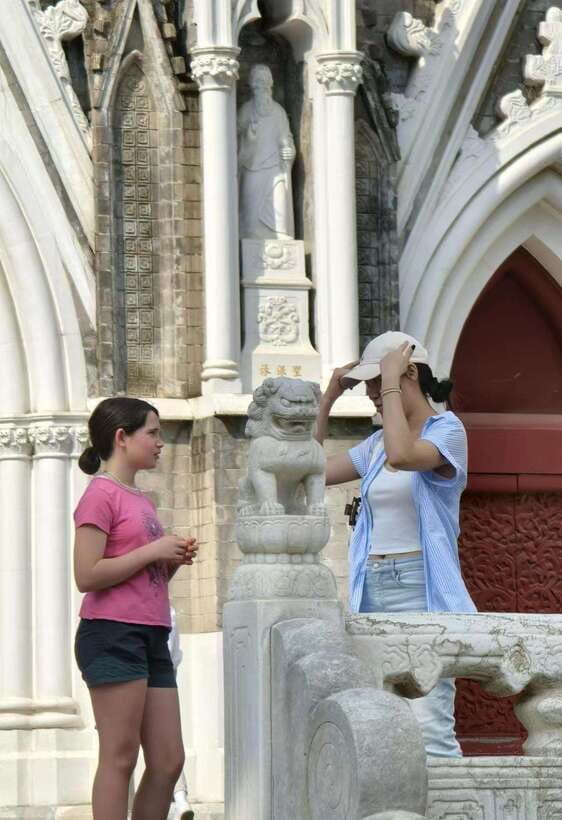
This is a useful introduction to Beijing because it does not treat the hutongs as isolated curiosities. You move through old lanes, then see how religious buildings, civic spaces, shops, and modern city planning fit around them.
That mix matters. A standard sightseeing day can show you grand imperial buildings, but it may not explain how Beijing’s older neighborhoods function or how their layout relates to the city’s past. Here, your guide connects courtyard homes, street design, temples, and changing urban plans as you walk.
The tour is conducted in English or Chinese. The guides most often praised in the supplied material are Dee and Tracy, with Heidi also leading some departures. Dee is described as especially patient, warm, and flexible, while Tracy is noted for her explanations of architecture, design principles, history, and daily life. The guide you receive may vary, so book this for the route and format rather than for one guaranteed individual.
The pace is designed for conversation and explanation, not for racing between sights. You may stop to discuss a roof detail, an entrance gate, a religious symbol, or a small feature of ordinary neighborhood life. That makes the walk useful if you want context, not just photographs.
More hutong wanders:
- Beijing Hutong Walking Food and Beer Tour at Hidden Restaurants
★ 5.0 · 1,132 reviews - Temple Heaven, Summer Palace, Lama Temple, Hutong Bus Tour
★ 4.7 · 319 reviews - Temple of Heaven, Summer Palace, Lama Temple, Hutong Tours
★ 5.0 · 311 reviews
Meeting at Xisi and entering the older city
The walk begins at Xisi Subway Station, Exit D, written in Chinese as 西四站D西南口. This is practical because you can reach the starting point by Metro Line 4 without arranging a taxi across central Beijing.
Bring the meeting details with you in both English and Chinese. The Chinese station name and exit information will help if you need to ask for directions. Since the route finishes at 410 Funei Street, you should also allow time afterward to work out your next Metro or taxi connection.
From the start, the contrast is part of the lesson. Modern Beijing is close by, but the older lanes preserve a lower-scale pattern of walls, courtyards, narrow streets, and traditional buildings. Your guide uses that contrast to explain how urban design has changed.
Do not expect a long, uninterrupted walk through residential alleys. The operator says about half of the time is spent in hutongs, with the rest devoted to local attractions and unusual buildings. That is a benefit if you want variety, but a drawback if your only goal is photographing hutong lanes.
Guangji Temple and the city’s religious character
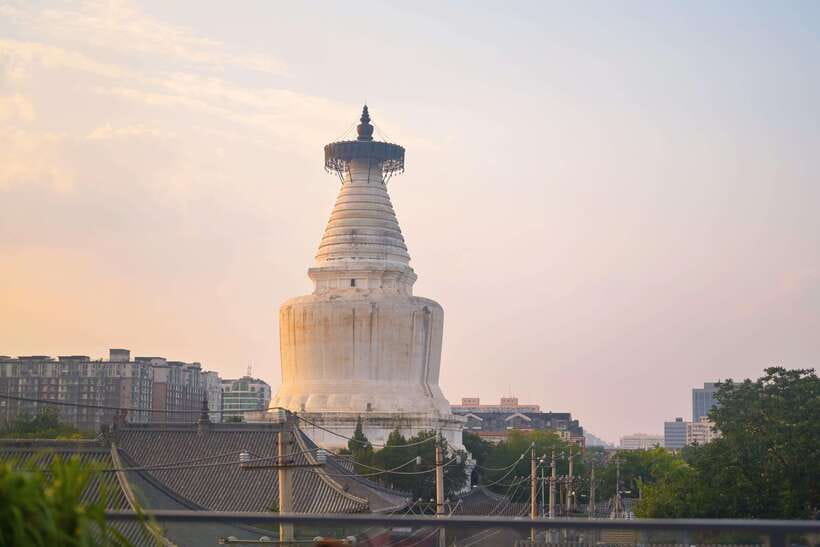
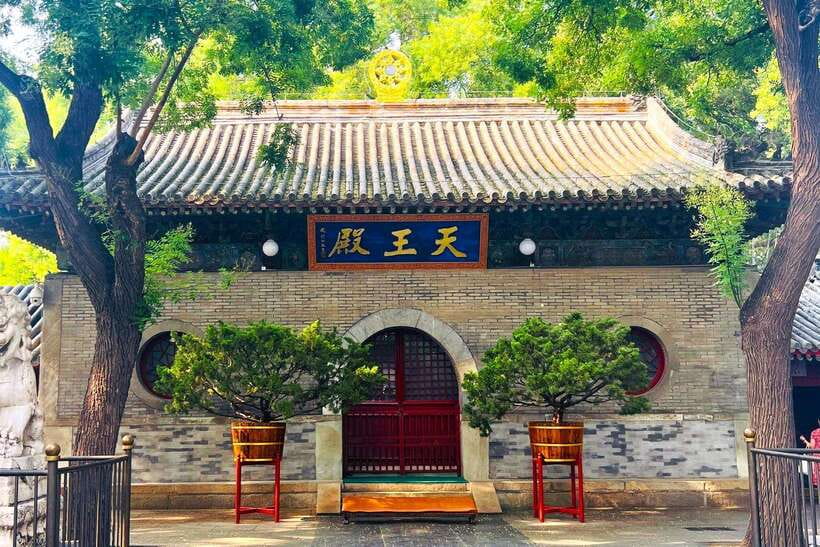
One early stop is Guangji Temple, where you receive a guided visit. This gives the tour a calm start and introduces Buddhist or temple traditions before the route becomes more varied.
The value here comes from having someone explain what you are seeing. A temple can look like a sequence of gates, courtyards, roofs, statues, and incense areas if you walk through alone. A good guide helps you notice how the spaces are arranged and what the symbols mean.
Respect is important. Keep your voice low, follow local rules, and avoid photographing people without permission. The tour specifically asks you to respect residents’ privacy in the hutongs, and the same courtesy works well in religious buildings.
Church of the Saviour, a different side of Beijing
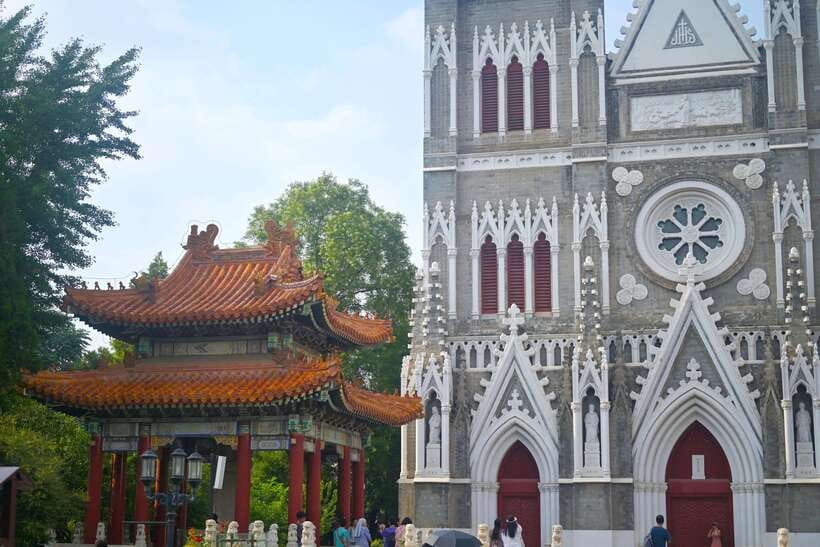
The Church of the Saviour in Beijing adds a striking change of mood and architecture. This stop reminds you that Beijing’s cultural past is not limited to imperial and Buddhist traditions.
The church is useful in the context of the whole route because it broadens your picture of the city. Instead of presenting Beijing as one uniform tradition, the guide can show how different religious and cultural influences exist within the same central districts.
You should expect a guided visit rather than a long service or formal religious program. The supplied details do not promise entry to every interior area at all times, so treat the church as a stop whose exact access may depend on conditions that day.
More walking tours in Beijing:
- Private Beijing Walking Tour of the Forbidden City with 7 Options
★ 5.0 · 675 reviews - Forbidden City Private Walking Tour with Optional Sights
★ 5.0 · 400 reviews - Beijing Private Hutong Food Walking Tour
★ 5.0 · 299 reviews - Beijing: Hutong Culinary Walking Tour with 15+ Tastings
★ 5.0 · 162 reviews
Zhengyang Bookstore and the pleasure of a small stop
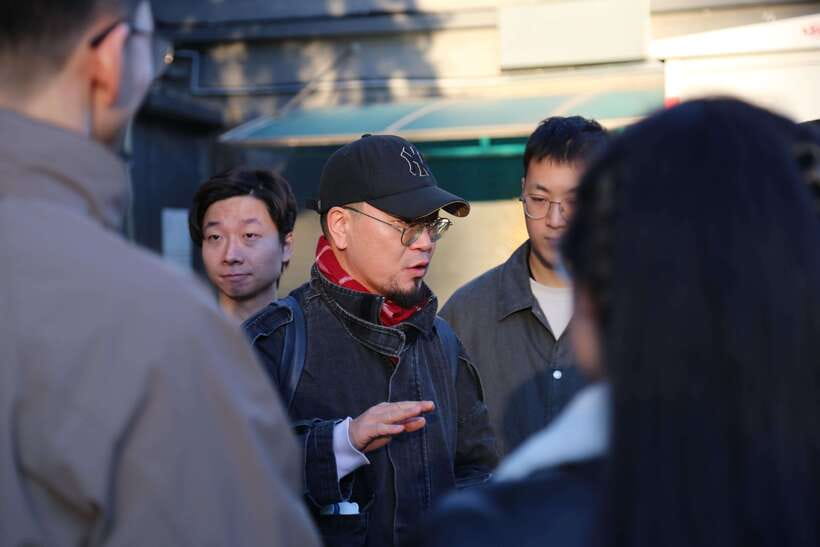
The route then reaches Zhengyang Bookstore, listed as 正阳书局. This is a shopping and guided-visit stop, but it also gives you a sense of how local culture is preserved and shared through books.
For many people, this may be more useful than another grand monument. A bookshop connected with Beijing gives you a chance to browse material about the city and perhaps find a small reminder of the walk. It is also a break from looking only at buildings.
Shopping is not mandatory, but you may want to carry a little spending money. Personal purchases are not included in the $49 price.
Zhuanta Hutong and the everyday city
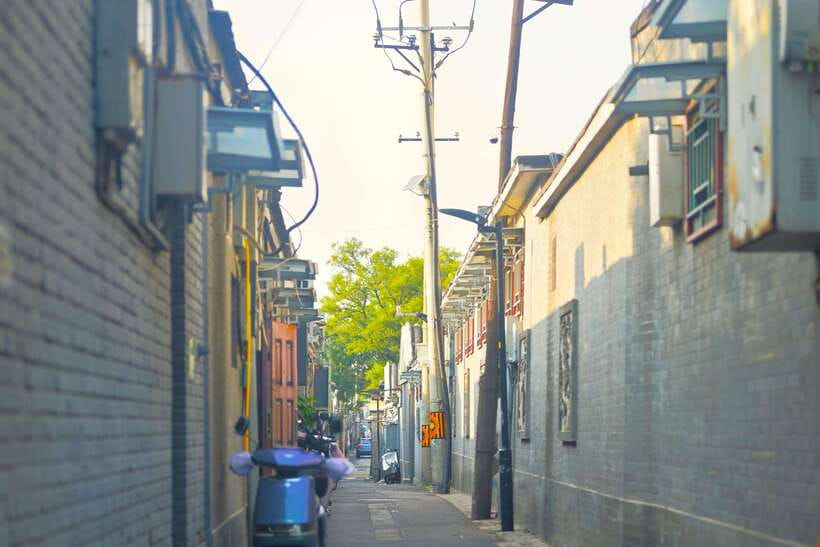
Zhuanta Hutong is one of the central parts of the experience. Here you walk through one of Beijing’s older hutongs and see the city at a human pace.
This is where the tour feels most personal. You may notice bicycles, doorways, small businesses, people coming and going, and the tight relationship between private homes and public lanes. The point is not to treat the neighborhood like a stage set. It is a lived-in place, so your behavior matters.
Stay with the guide and keep voices down. Ask before taking close photographs of homes or residents. A respectful walk gives you a better chance to observe ordinary life without turning it into a spectacle.
The hutong section also helps explain why Beijing’s old neighborhoods are under pressure. Traditional courtyard layouts can be difficult to maintain in a fast-growing capital, while residents still need modern services and practical homes. The guide discusses changes in urban design, so you get more than a pleasant stroll through old lanes.
The Emperors Temple of Past Dynasties
The itinerary includes the Emperors Temple of Past Dynasties, also called the Palace of Ancient Monarchs in the included entrance information. You receive a guided visit, with photography listed as part of the stop.
This is the one attraction for which an entrance fee is included. It gives the walk a more formal historical setting after the informal hutong lanes. The temple’s ceremonial character helps you understand how past rulers and official memory were represented.
The site is closed on Mondays. Check your selected date carefully, since the listing specifically notes this closure. If the attraction cannot be visited on your day, the exact replacement plan is not provided, so do not assume the route will remain identical.
This stop is also useful before visiting major imperial sights. Some people book this walk early in a Beijing stay because the guide can point out architectural patterns and symbols that later make larger palace complexes easier to understand.
A café stop and a traditional Beijing drink
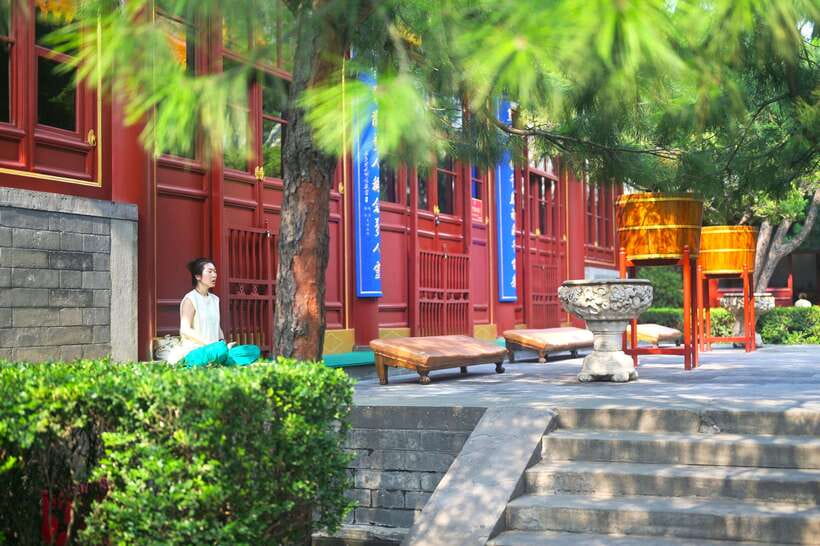
A break at a local café comes later in the walk. The included traditional Beijing drink is one of the nicest practical touches, especially after several kilometers on foot.
The exact beverage can vary. The supplied experience descriptions mention iced tea, plum juice with Chinese herbs, and a sour plum drink associated with spring. One person enjoyed a rooftop drink above old Beijing, while another found coffee available at the final stop. The safe expectation is a traditional local beverage, not a fixed menu or guaranteed rooftop view.
That small pause has real value. It gives you time to ask follow-up questions, compare notes, and get suggestions for restaurants, shopping, and independent sightseeing. Several guides are praised for giving useful food recommendations and practical advice for the rest of a Beijing stay.
Miaoying Temple and the final stretch
The route finishes its sightseeing at Miaoying Temple, also listed as a photo stop and guided visit. The temple adds another architectural and religious layer to a route that has already included Buddhist, Christian, imperial, and neighborhood spaces.
The tour does not present these places as disconnected stops. The guide’s role is to show how they relate to Beijing’s long development and to the daily city around them. If you ask questions, this is a good place to return to details you noticed earlier, such as roof shapes, courtyards, gates, or ceremonial layouts.
The official finish is 410 Funei Street. Because the walk does not end where it begins, plan your next move before the tour starts. Transportation after the walk is not included, and meals or other personal expenses are extra.
What $49 gets you
At $49 per person, the price is fair if you value a small group, an English-speaking local guide, site context, and a drink. You are paying for more than a route through alleys. The fee includes 2.5 hours of guiding, the entrance fee for the Palace of Ancient Monarchs, and the traditional beverage.
The value is strongest for a first or second day in Beijing. Several guides give recommendations for food, shopping, and getting around, so the experience can help shape the rest of your trip. It is also useful before a visit to the Forbidden City because the architectural explanations give you a better visual vocabulary.
The price is less compelling if you want a long, photo-focused hutong walk with no stops outside the lanes. Since roughly half the tour includes temples, a church, a bookshop, and other buildings, you should choose it for the full cultural route.
The group limit of eight keeps the walk more personal than a large coach excursion. On quieter dates, the tour may operate almost like a private walk. That can mean more time for your questions and a pace adjusted to you, but you should not book expecting a private guide every time.
Who will enjoy this route most
I would choose this for you if you want to understand how Beijing works beyond its headline sights. It suits first-time visitors, people interested in architecture and religion, and anyone who prefers local neighborhoods to crowded photo stops.
It is also a good choice if you like asking questions. Guides have been praised for explaining Chinese history, culture, architecture, design, health customs, and daily life, rather than simply naming buildings.
Families can manage it if everyone is comfortable walking. One guide made sure children stayed interested, but the route still covers about 3 kilometers and includes uneven or demanding walking conditions. It is not suitable for wheelchair users or people with mobility impairments.
Wear comfortable shoes. A hat, sunscreen, and water are sensible, especially on sunny days. Smoking is not allowed during the activity, and you should be ready for changing weather.
Should you book the Hutong Walking Tour?
Book it if you want a well-rounded introduction to old Beijing, not just a quick look at narrow lanes. The combination of hutongs, religious buildings, historic architecture, local advice, and a traditional drink makes the $49 fee reasonable.
I would place it near the beginning of a Beijing visit, when the guide’s explanations can improve your understanding of later sights. Choose another experience if you want a dedicated hutong photography walk, need step-free access, or dislike covering several different types of attraction in one outing.
For most independent visitors, this is a friendly and practical way to get oriented. Just remember the key tradeoff: only about half the time is spent in the hutongs, while the rest reveals the wider story of Beijing.
FAQ
Where does the tour begin?
It begins at Metro Line 4, Xisi Station, Exit D. The Chinese meeting point is written as 西四站D西南口.
Where does the tour finish?
The tour finishes at 410 Funei Street, written in the supplied details as 阜内大街410号.
How long is the walking tour?
The activity lasts 2.5 hours and covers around 3 kilometers on foot.
How much of the tour takes place in the hutongs?
About half of the tour takes place in hutongs. The rest includes local attractions and distinctive buildings.
Which languages are available?
The tour is offered in English and Chinese.
Is the entrance fee included?
Yes. The entrance fee for the Palace of Ancient Monarchs, also called the Emperors Temple of Past Dynasties, is included. The site is closed on Mondays.
Is a drink included?
Yes. A traditional Beijing drink is included. Personal meals, transportation, shopping, and other expenses are not included.
Latest additions around Beijing
- Private Hike from Beijing: Go Beyond The Jiankou and Mutianyu Great Wall★ 5.0 · 3 reviews
- Bullet Train Private Tour: Beijing Tiananmen Square, Forbidden City & Great Wall★ 5.0 · 3 reviews
- Private Great Wall Hiking Tour from Simatai West to Jinshanling★ 4.5 · 3 reviews
- Private Transfer for Beijing Airport PEK or PKX★ 5.0 · 3 reviews
- Liyuan Theater Beijing Opera Show Tickets★ 5.0 · 3 reviews
- Private Jinshanling relax photo tour by sunset★ 5.0 · 3 reviews
- Private All-inclusive Jinshanling Great Wall 1-day tour★ 4.5 · 3 reviews
- Beijing Night Tour with Acrobatics Show & PekingDuck Dinner★ 5.0 · 3 reviews
Hutong Tours, compared.

Beijing Hutong Walking Food and Beer Tour at Hidden Restaurants
Read our review →
Temple Heaven, Summer Palace, Lama Temple, Hutong Bus Tour
Read our review →
Temple of Heaven, Summer Palace, Lama Temple, Hutong Tours
Read our review →



Beijing City Walk: Explore Hutongs Life and Old Beijing
Read our review →Browse the lists this tour appears in