
Reviewed · KUNG FU & ACROBATICS SHOWS
Chinese Kung Fu Experience Class in Beijing
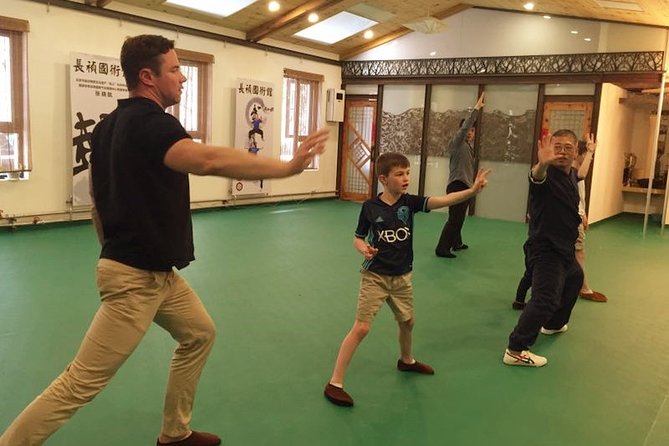
The best part of this Beijing Kung Fu class is its setting: you meet near the Temple of Heaven and may train beneath the trees in the surrounding park. Instead of watching martial arts from the sidelines, you learn the basic movements yourself, from fighting stances and punches to a short five stance fist form.
I like the private format, since your group gets the instructor’s attention rather than being folded into a large demonstration. I also like the broad lesson plan: it covers fitness, form, joint-locking, and self-defense, giving you a better sense of Kung Fu as a discipline rather than a string of movie stunts.
The main consideration is physical effort. You need moderate fitness, and the class includes kicks, low stances, and partner-style techniques. The meeting point is convenient for the Temple of Heaven area, but hotel pickup is not provided, and the ticket wording should be confirmed when you book.
In This Review
- Key points at a glance
- What this Beijing Kung Fu class is really about
- Meeting near the Temple of Heaven
- The first 30 minutes: stance, balance, and basic strikes
- The five stance fist form
- Joint locks and self-defense techniques
- Why the private format matters
- The instructor can make or break the class
- Is the Temple of Heaven setting worth the price?
- Who will enjoy this class most?
- Timing, booking, and cancellation
- My verdict: book it for a hands-on cultural lesson
- FAQ
- How long does the Chinese Kung Fu class last?
- Where does the activity meet?
- Is hotel pickup and drop-off provided?
- Is this a private class?
- What will I learn during the class?
- Can children participate?
Key points at a glance
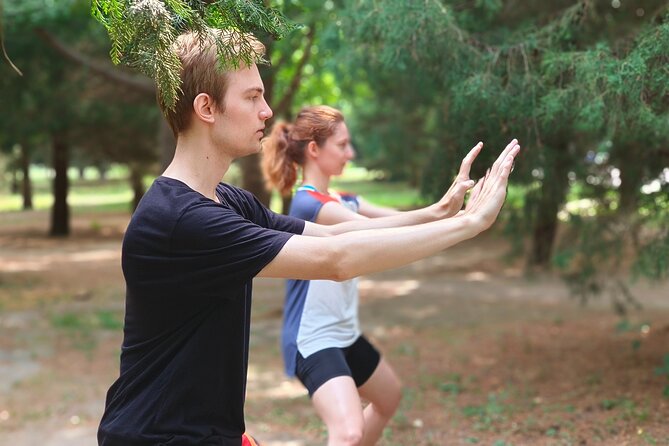
- Training under the Temple of Heaven trees: The class takes place near one of Beijing’s most important historic sights, with outdoor shade featured in the experience.
- Master Liu may lead your lesson: He is praised for friendly instruction and strong English communication.
- A real 90-minute workout: Expect stances, punches, kicks, a five stance fist form, joint locks, and self-defense.
- Private, not a large group class: Only your own party participates, making it easier to ask questions and adjust the pace.
- Good for mixed-age groups: The teaching style has worked for adults and children, though children must have an adult with them.
- Book ahead: The experience is booked about 27 days in advance on average, so it is sensible to reserve before your Beijing trip.
What this Beijing Kung Fu class is really about
Kung Fu, or 功夫, is often introduced to international visitors through Bruce Lee, Jet Li, Jackie Chan, or films such as Kung Fu Panda. Those references can make the art look like nonstop acrobatics. This class offers a more grounded introduction.
You begin with the body itself: how to stand, how to place your feet, how to shift weight, and how to coordinate your arms with your legs. These details may look simple, but they are the base for everything that follows. If you expect a movie fight, the opening exercises may feel slow. If you want to understand how martial arts training is built, they are useful.
The lesson also presents Kung Fu as more than a fighting system. The movements demand balance, focus, control, and repeated practice. You get a small look at its role in physical conditioning and personal discipline, while the instructor explains how basic gestures connect to defense.
That makes the experience a good fit for someone who wants an activity with cultural context, not just another sightseeing stop. You still get to move, sweat, and practice techniques, but the aim is learning the fundamentals rather than staging a theatrical fight.
More kung fu and acrobatics nights:
- Red Theatre Beijing Acrobatic Show Tickets
★ 4.9 · 461 reviews - Red Theatre Beijing Acrobatic Show Tickets Official Booking
★ 5.0 · 218 reviews - Red Theatre Beijing Acrobatics Show Ticket
★ 5.0 · 141 reviews
Meeting near the Temple of Heaven
Your starting point is listed at 旻园1 Tian Tan Dong Lu in Dongcheng District, Beijing. The class is associated with the Beijing San Feng Tai Chi Club, and the meeting area is near public transportation. The experience ends back at the same meeting point.
The location matters. The Temple of Heaven area gives the class a memorable setting without adding a second major attraction to your schedule. You can pair the lesson with time at the temple complex, though the Kung Fu activity itself is a separate experience and does not replace a full visit to the site.
The outdoor setting is one of the strongest details here. The class has been held in the shade of trees in the Temple of Heaven area, sometimes with a little music. That is a far better backdrop than a plain indoor studio if you want a sense of place. It also makes the activity feel tied to Beijing rather than copied from a generic gym class.
Outdoor training brings one small uncertainty: comfort depends on conditions. Shade helps, but the supplied information does not promise a particular outdoor spot for every session. Wear clothes that allow free movement and be ready for a practical workout rather than a polished stage show.
The first 30 minutes: stance, balance, and basic strikes
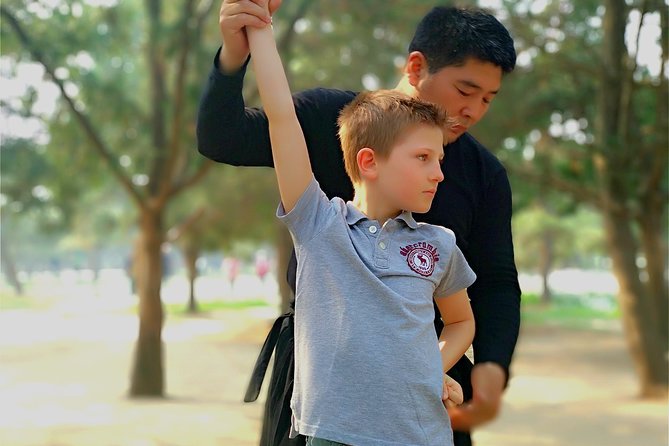
The opening section focuses on basic Kung Fu training. You practice stances, kicks, and punches, with the instructor showing the body position and then correcting your movements.
Stances are more important than they sound. A stable stance teaches you how to keep your balance while moving or defending yourself. You may be asked to bend your knees, set your feet at a certain angle, and keep your upper body controlled. This can challenge your legs quickly, especially if you are not used to martial arts.
The punches and kicks are taught as coordinated actions, not as wild swings. You learn where the movement begins, how the body turns, and how to return to a safe position. The value is not that you leave ready for a real confrontation. The value is that you begin to understand the mechanics and discipline behind the technique.
I would approach this section with patience. A short class cannot make you proficient in Kung Fu, but it can give you a clear first lesson in posture and movement. Listen closely to the instructor and do not worry about matching an expert on your first try.
The five stance fist form
The class then introduces the Kung Fu five stance fist form. A form is a planned sequence of movements. Instead of practicing one punch or kick in isolation, you connect several actions into a pattern.
This is where the lesson becomes more than exercise. You must remember the order, shift your weight correctly, and keep the gestures controlled. It gives you a taste of the form-based side of Kung Fu, where precision and concentration matter as much as speed.
For families, this section can be especially useful because it gives children something concrete to follow. A young participant may lose interest during repeated stance practice, but a sequence with clear steps can hold attention better. Still, the class is not advertised as a childcare activity, and children must be accompanied by an adult.
The form also helps explain why Kung Fu has an aesthetic side. The movements are functional, but they are arranged with rhythm and shape. You can see how martial practice becomes a controlled physical language.
A few more Beijing options to compare side by side
- Beijing Calligraphy Class
★ 4.9 · 112 reviews - Chinese Calligraphy Class for Small Group
★ 5.0 · 104 reviews - Beijing: Dumpling Making Workshop with Meal and Tea
★ 4.7 · 69 reviews - Online Cooking Class Beijing Dumplings and Cuisine by Sunflowerli Renowned Chef
★ 5.0 · 65 reviews
Joint locks and self-defense techniques
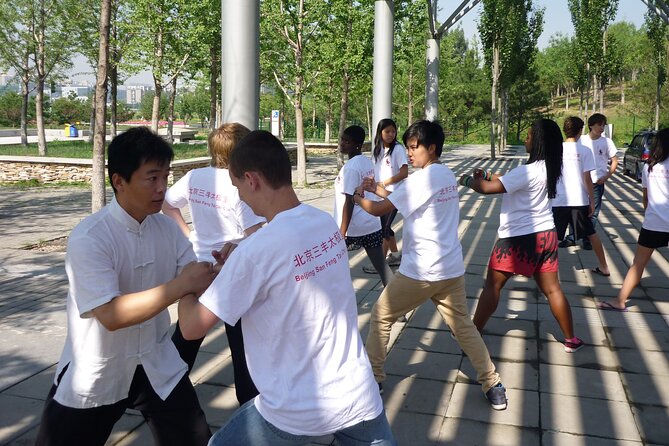
The final part covers joint-locking techniques and basic self-defense. These skills introduce a different idea of strength. You are not simply trying to hit harder. You learn how positioning, leverage, and control can affect an opponent’s movement.
This section calls for careful attention. Joint locks should be practiced slowly and under the instructor’s direction. The goal is to understand the principle, not to force a partner into an uncomfortable position. Your instructor’s supervision is important here, particularly in a mixed-age group or with anyone new to martial arts.
The self-defense work adds practical interest, but keep your expectations sensible. A 90-minute introduction cannot prepare you for every real-world situation. It can show you how a martial arts teacher thinks about distance, body position, and responding to an attack.
The combination of form and self-defense is a strong feature. Many short cultural classes stop after a few symbolic movements. This one gives you both the traditional sequence and the combat application behind it.
Why the private format matters
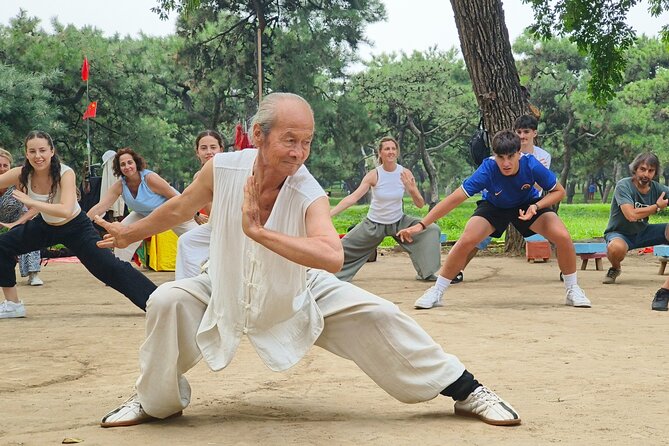
This is a private activity, so only your group participates. That changes the feel of the lesson in useful ways.
You can ask for a movement to be shown again without worrying about slowing down a bus-sized group. If one person in your party is more athletic than another, the instructor can give different corrections. A private class also makes it easier for families to stay together rather than splitting into adult and child sessions.
The experience has been used successfully with adults and children as young as six within the same group, according to the supplied details from past participants. That does not mean every six-year-old will enjoy every exercise, but it does suggest that the lesson can be adapted across ages when the group communicates its needs.
The tradeoff is price. At $65 per person, this is not the cheapest physical activity in Beijing. You are paying for a qualified Kung Fu master, a private session, and a focused 90 minutes. For one person on a tight budget, that may feel high. For a family or small group that values personal instruction, the price makes more sense, especially since group discounts are available.
The instructor can make or break the class
The teacher is central to this experience. The provider lists a highly qualified Kung Fu master, and Master Liu is specifically praised for his friendly manner, enthusiasm, and strong English.
That language ability matters. Martial arts instruction depends on small corrections: turn your foot, lower your stance, relax your shoulder, keep your balance. Clear English can save you from guessing and helps the cultural explanation land properly.
A good instructor also keeps the class moving. The information provided describes a teacher who could hold the attention of both adults and children, which is no small task when the group includes different ages and fitness levels. The class works best when you take part actively and let the instructor adjust the pace.
You should still tell the master about any physical limits before training begins. The published details call for moderate fitness, but they do not give a detailed list of medical restrictions. Use common sense with kicks, low stances, and joint techniques.
Is the Temple of Heaven setting worth the price?
For me, the setting adds real value. You are not just standing in a studio learning a few movements for a photograph. Training in the shade near the Temple of Heaven connects the activity to Beijing’s traditional public-park culture, where people gather for exercise and martial arts practice.
The class also gives you a different way to experience one of the city’s best-known areas. Sightseeing usually asks you to look and listen. Here, you learn through movement. That can make the visit more memorable, particularly for children who may not want another long walk through historic buildings.
Still, the activity does not include hotel transportation. You need to reach the meeting point on your own, although it is near public transportation. Plan extra time to find 旻园1 Tian Tan Dong Lu, especially if you are unfamiliar with Beijing’s street layout or signs.
There is also conflicting wording about admission. The inclusion details list an entrance ticket, while the itinerary says admission is not included. I would confirm this point before paying, particularly if the class takes place inside a ticketed area. It is a small but important detail in the price calculation.
Who will enjoy this class most?
I would recommend it most strongly to:
- Families seeking an active Beijing experience
- Couples who want something beyond temples and museums
- Martial arts fans who want a beginner-level introduction
- Visitors interested in Chinese culture through physical practice
- Small groups that prefer private teaching
- People with enough fitness for repeated stances, kicks, and punches
It may be less suitable if you want a relaxed demonstration with little participation. It may also disappoint anyone expecting advanced combat training or cinematic stunts. This is a beginner class, not a belt test or a professional workshop.
You do not need to arrive as a martial artist. You do need to be willing to listen, repeat movements, and accept that the first few attempts may look awkward. That is part of the fun.
Timing, booking, and cancellation
The class lasts about one hour and 30 minutes. That is long enough to cover several types of movement without taking an entire day from your Beijing plans. I would place it near your Temple of Heaven visit, leaving room before and after for transportation and finding the meeting point.
The experience is commonly booked about 27 days ahead. That pattern suggests you should not wait until the last day if your schedule is fixed, especially if you need a particular date for a family group.
Confirmation is received at booking, and mobile tickets are supported. Children must be accompanied by an adult. Free cancellation is available if you cancel at least 24 hours before the local start time. Changes or cancellations inside that window are not refunded, so check your Beijing schedule carefully.
My verdict: book it for a hands-on cultural lesson
I would book this Chinese Kung Fu Experience Class if you want to do something active and personal near the Temple of Heaven. The private format, outdoor setting, English-speaking instruction from Master Liu, and mix of forms and self-defense give it more substance than a quick martial arts photo opportunity.
The $65 price is fair for a private 90-minute lesson, though group discounts may improve the value. Confirm the entrance-ticket detail before booking, and remember that you must arrange your own transport.
Choose it for a family, a small group, or anyone curious about how Kung Fu works beyond the movies. Skip it if you want advanced training, a passive performance, or a completely effortless afternoon. For the right visitor, it is a memorable way to put Chinese culture into motion.
FAQ
How long does the Chinese Kung Fu class last?
The class lasts approximately 1 hour and 30 minutes.
Where does the activity meet?
The meeting point is 旻园1 Tian Tan Dong Lu, Dongcheng District, Beijing, near the Temple of Heaven area. The activity ends back at the meeting point.
Is hotel pickup and drop-off provided?
No. Hotel pickup and drop-off are not included, though the meeting point is near public transportation.
Is this a private class?
Yes. Only your group participates in the activity.
What will I learn during the class?
The lesson covers basic stances, kicks, punches, a Kung Fu five stance fist form, joint-locking techniques, and self-defense techniques.
Can children participate?
Children can participate, but they must be accompanied by an adult. Participants should have a moderate level of physical fitness.
Latest additions around Beijing
- Private Hike from Beijing: Go Beyond The Jiankou and Mutianyu Great Wall★ 5.0 · 3 reviews
- Bullet Train Private Tour: Beijing Tiananmen Square, Forbidden City & Great Wall★ 5.0 · 3 reviews
- Private Great Wall Hiking Tour from Simatai West to Jinshanling★ 4.5 · 3 reviews
- Private Transfer for Beijing Airport PEK or PKX★ 5.0 · 3 reviews
- Liyuan Theater Beijing Opera Show Tickets★ 5.0 · 3 reviews
- Private Jinshanling relax photo tour by sunset★ 5.0 · 3 reviews
- Private All-inclusive Jinshanling Great Wall 1-day tour★ 4.5 · 3 reviews
- Beijing Night Tour with Acrobatics Show & PekingDuck Dinner★ 5.0 · 3 reviews
Kung Fu & Acrobatics Shows, compared.
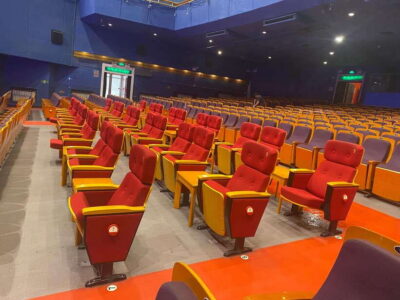
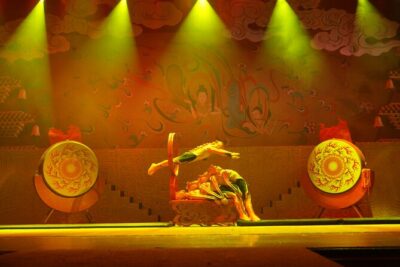
Red Theatre Beijing Acrobatic Show Tickets Official Booking
Read our review →
Beijing Golden Mask Dynasty Show with Private Transfer
Read our review →
Beijing Roast Duck Banquet and Acrobatics Show with VIP Seats Evening Tour
Read our review →
Beijing Red Theater Acrobatic Show with Private Transfer Service
Read our review →
Beijing Red Theatre Acrobatic Show Tickets Official
Read our review →Browse the lists this tour appears in