
Reviewed · HUTONG TOURS
Chinese Tea ceremony in Beijing Hutong courtyard
A tea ceremony just 150 meters from the Forbidden City offers something many Beijing sightseeing days lack: time to sit still. In a traditional Hutong courtyard, you choose your tea, watch it being prepared, taste it with small snacks, and talk with local hosts whose family has lived in the neighborhood for generations.
I like the setting and the small group limit of four. You are not tucked into a large commercial teahouse, and the central location makes this an easy addition to a Forbidden City visit. The main consideration is price: at $31 per person, it is fair for a personal cultural session, but a family of four may find the total high. There is also a stated extra charge of 100 RMB per person, so confirm the final cost before booking.
In This Review
- Key points to know before you book
- A quiet hour beside the Forbidden City
- Finding the Hutong courtyard near the imperial sights
- Choosing between green, black, oolong, and Pu’er
- Learning why boiling water is not the whole method
- Snacks, teacups, and the social side of the ceremony
- What the one-hour flow feels like
- Why the small group matters
- Who will enjoy this most
- How to fit it into a Beijing sightseeing day
- Booking, cancellation, and practical details
- Should you book the Bayi Teahouse experience?
- FAQ
- Where does the Chinese tea ceremony take place?
- How long does the tea ceremony last?
- Which teas can I choose?
- Is food included?
- Is the experience conducted in English?
- Can I cancel for a refund?
Key points to know before you book
- Tea beside the Forbidden City: The courtyard is close to the east gate, with the Imperial Ancestral Temple and Pudusi inheritance site nearby.
- Four tea styles to choose from: You can select green, black, oolong, or Pu’er tea, depending on what appeals to you.
- A hands-on lesson: You learn how tea is brewed, served, held, and matched with different seasons and bodily effects.
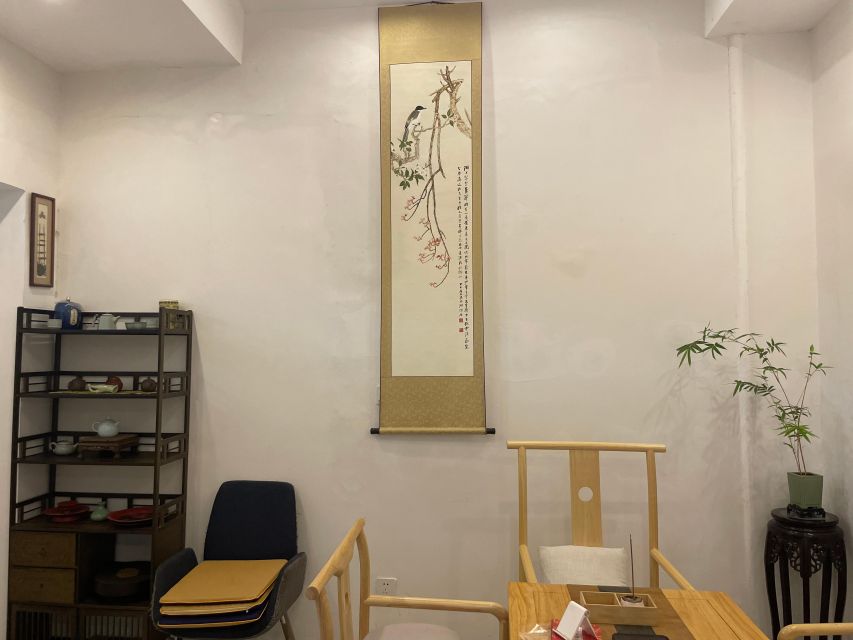
- A real Hutong setting: The experience takes place in a traditional courtyard rather than a large sightseeing venue.
- Small and English-speaking: The group is limited to four participants, with instruction in English.
- Useful local conversation: Hosts can discuss Beijing life, Hutong customs, tea culture, and even practical food suggestions.
A quiet hour beside the Forbidden City
Beijing can be a loud, crowded city. The Forbidden City alone can fill your morning with grand gates, painted halls, stone courtyards, and a steady flow of people. This tea ceremony changes the pace. Instead of racing to another sight, you spend an hour in a Hutong courtyard near the action.
That contrast is the point. You are still in the center of Beijing, but the focus shifts from imperial power to ordinary daily life. The courtyard setting gives you a look at the kind of residential space that has long shaped the city. It also creates room for conversation, which is often where a short cultural activity becomes more than a photo stop.
The session lasts one hour. That is short enough to fit before or after the Forbidden City, the Imperial Ancestral Temple, or another nearby visit. It is also long enough to taste more than one tea and learn the basic steps without turning into a full-day class.
More hutong wanders:
- Beijing Hutong Walking Food and Beer Tour at Hidden Restaurants
★ 5.0 · 1,132 reviews - Temple Heaven, Summer Palace, Lama Temple, Hutong Bus Tour
★ 4.7 · 319 reviews - Temple of Heaven, Summer Palace, Lama Temple, Hutong Tours
★ 5.0 · 311 reviews
Finding the Hutong courtyard near the imperial sights
The tea workshop is described as being about 150 meters from the east gate of the Forbidden City. Another meeting detail places it 800 meters west of the Forbidden City exit gate, so the exact approach may depend on which gate you use and how the local host organizes arrival.
I would not treat the location as a place to find casually after a long day. Use the booking directions carefully, and allow extra time around the Forbidden City, where entrances, exits, and security procedures can make a short walk take longer than expected. If pickup is arranged, wait in your hotel lobby 10 minutes before the scheduled time.
The setting is surrounded by important historic places, including the Imperial Ancestral Temple and the Pudusi inheritance site. This makes the tea session easy to pair with a walking route through central Beijing. You can visit a major imperial monument, then step into a residential courtyard and consider how the city works at a much smaller scale.
That nearby mix is one of the strongest reasons to book this activity. You do not need to spend an hour crossing Beijing to reach it. For a first visit, I would place it on a day focused on the Forbidden City and central Beijing.
Choosing between green, black, oolong, and Pu’er
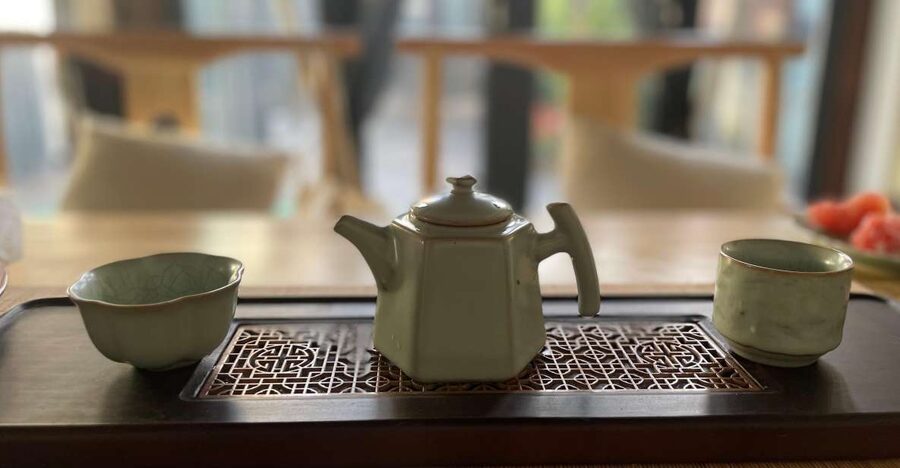
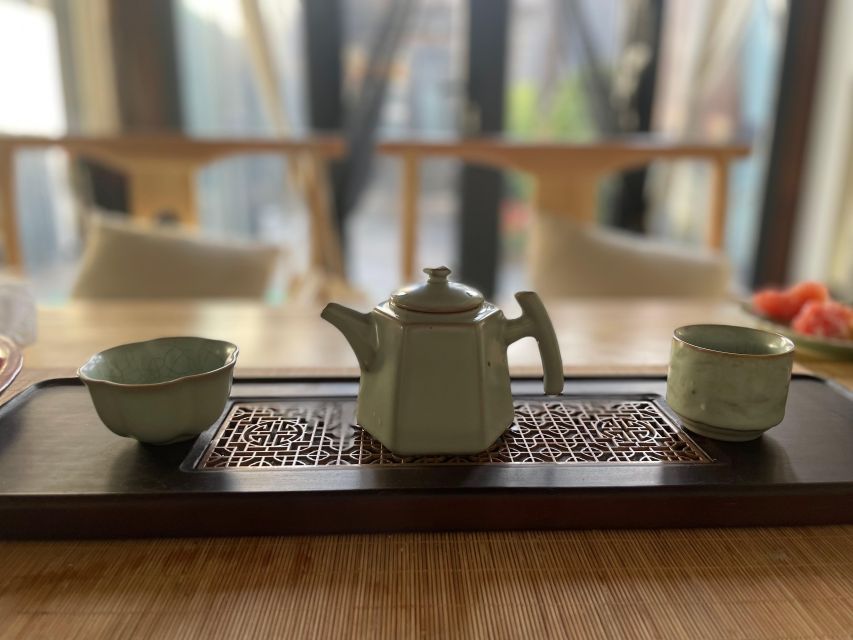
The experience includes one pot of Chinese tea, with several types available to choose from. The options include green tea, black tea, oolong tea, and Pu’er tea.
The choice matters because these teas do not all taste alike. Green tea tends to be lighter and fresher. Black tea is usually fuller and more familiar to many Western drinkers. Oolong sits between green and black in style, while Pu’er brings a deeper, earthier character that may be new to you.
You may taste two different teas during the session, depending on the way the host structures the ceremony. Several visitors specifically enjoyed comparing distinctive teas and learning which types are associated with different seasons. The lesson is not just about naming leaves. It explains how Chinese tea culture connects tea choice, brewing method, weather, the body, and social custom.
That makes this a good activity for people who are curious but not already serious tea enthusiasts. One participant arrived without being much of a tea drinker and still found the teas enjoyable. You do not need a trained palate. The hosts guide you through the process and give you a way to notice differences.
Learning why boiling water is not the whole method
One useful lesson here is that good tea is not made by pouring boiling water over leaves and waiting three minutes. The brewing process can involve the amount of tea, water temperature, timing, and repeated short infusions.
You learn how to prepare and drink tea in a way that fits Chinese custom. You may also be shown how to hold a teacup with grace and how the ceremony carries meaning beyond the drink itself. These are small skills, but they are practical ones. You can use them later when ordering tea, visiting a teahouse, or preparing Chinese tea at home.
The hosts also explain traditional ideas about tea and health benefits. Keep this in perspective. The session presents Chinese cultural beliefs about how tea may suit the body and different seasons, not a medical consultation. I like that the topic adds context, but you should not treat every traditional health claim as medical advice.
The instruction is in English. Limeng is named as one of the hosts, and her warm, clear explanations have been a key part of the experience for many people. Other sessions include two hosts, which can make the conversation feel more like a friendly exchange than a formal lecture.
More tea ceremony sittings:
- Traditional Chinese Tea Ceremony Experience
★ 4.7 · 74 reviews - Beijing Culture: Tea Ceremony, Heritage Instrument & Calligraphy
★ 5.0 · 57 reviews - Private Beijing Markets Tour with Tea Tasting at Hongqiao Pearl Market
★ 5.0 · 18 reviews - Beijing: Mutianyu Great Wall and Tea House Private Tour
★ 5.0 · 11 reviews
Snacks, teacups, and the social side of the ceremony
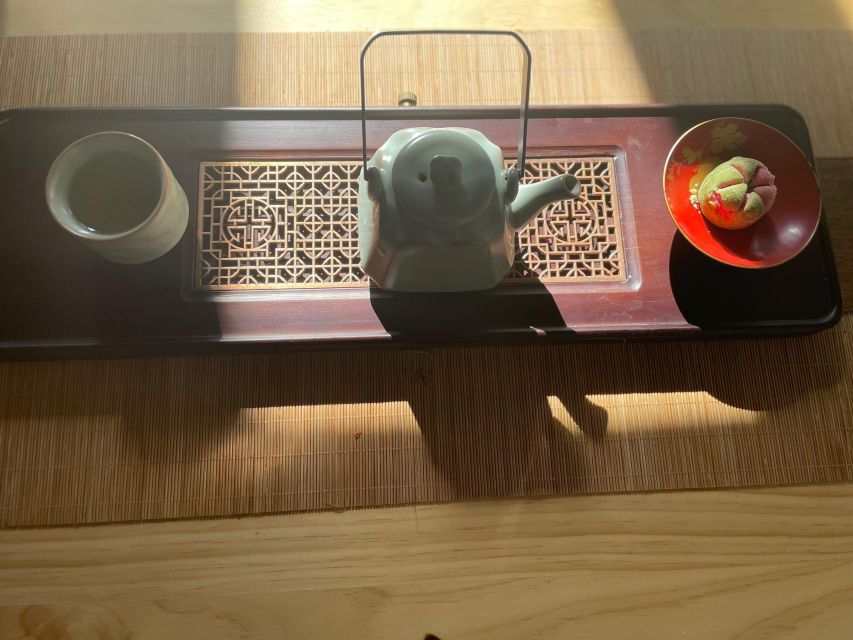
Complimentary snacks are served with the tea. They are intended to complement the drink, not replace a meal. Some are presented as crafted tea snacks, adding a small visual and tasting element to the ceremony.
The social part may be the best reason to choose this over a simple tea tasting. You are invited to talk with the local hosts about Beijing, Hutong life, tea rituals, and the history of the neighborhood. The hosts’ family connection to the courtyard gives the conversation a personal angle, although the exact stories will depend on who leads your session.
This is not a show built around costumes or grand claims. The value comes from ordinary details: how tea is poured, how cups are held, how people make time for conversation, and how a residential courtyard fits into central Beijing.
If you enjoy asking questions, you will get more from the hour. Ask about the Hutong, local routines, tea etiquette, and where to eat afterward. One host helped with advice on finding less touristy Beijing duck, which is a useful bonus when you are planning the rest of your day.
What the one-hour flow feels like
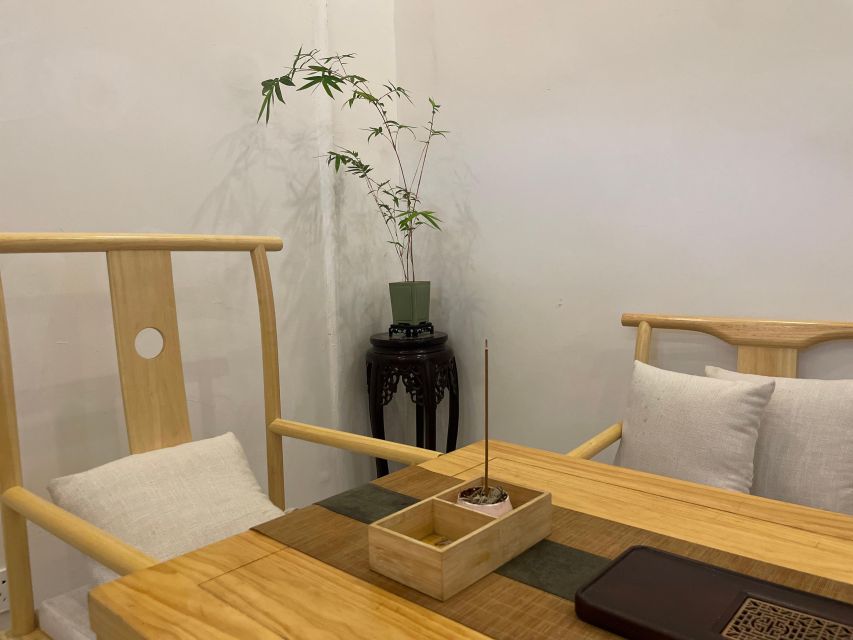
The exact order may vary, but you can reasonably expect the hour to include these elements:
- Arrival at the Hutong courtyard near the Forbidden City
- An introduction to the local setting and Chinese tea culture
- A choice between green, black, oolong, and Pu’er tea
- Preparation of one pot of tea
- Tasting with complimentary snacks
- Guidance on brewing, serving, cup etiquette, and tea customs
- Conversation about Beijing life and the surrounding historic sites
- A chance to try the process yourself
The activity is short, focused, and personal. It does not attempt to cover all of Chinese tea culture. Instead, it gives you a working introduction and a direct connection with local hosts.
Some sessions may finish with a short walk through a nearby Hutong. That adds useful context, especially if you have just visited the Forbidden City and want to see a less monumental side of Beijing. Confirm the current plan if the walk is important to you, since the listed duration is one hour and the walking portion may vary.
Why the small group matters
The limit of four participants is a real advantage. Tea preparation involves small movements and quiet explanation, and it is easier to see what is happening when you are not seated behind a crowd.
A small group also leaves room for questions. You can ask about a tea you dislike, request another explanation of the brewing steps, or talk more directly with the host about Beijing life. The mood is likely to feel intimate rather than polished for mass tourism.
The trade-off is cost. At $31 per person, the session is not the cheapest way to drink tea in Beijing. You are paying for the setting, the teaching, the small group, the snacks, and the personal contact. For one or two people, that can be a reasonable cultural purchase. For a family of four, the cost adds up quickly, and one family found it steep even while feeling the experience delivered.
Also note the separate information that an additional 100 RMB per person may be charged. Because the wording does not explain exactly what this fee covers, ask for clarification before payment. That is the one financial detail I would not leave vague.
Who will enjoy this most
I would recommend this experience to you if you want a calmer activity between major Beijing sights. It suits couples, solo visitors, small families, and friends who prefer conversation and local customs to a packed sightseeing schedule.
It is especially useful for:
- First-time visitors who want an introduction to Chinese tea
- People interested in traditional etiquette and food culture
- Visitors staying near central Beijing
- Tea drinkers who want to compare several Chinese styles
- Anyone curious about Hutong life
- Visitors who enjoy asking hosts about daily life and local restaurants
You do not need to be a tea expert. The activity also works for people who normally drink very little tea, since the hosts explain the flavors and preparation from the beginning.
It may be less suitable if you want a long formal ceremony, a large selection of teas, or a full tour of Beijing’s historic center. You receive one hour and one pot of tea, with the possibility of tasting two types. This is a compact cultural meeting, not a complete tea course or city tour.
The activity is wheelchair accessible, which is useful for visitors who need an accessible option near central sights. Still, you should confirm the exact route and courtyard access when booking, since the provided details do not describe every surface or doorway.
How to fit it into a Beijing sightseeing day
The easiest plan is to connect the tea ceremony with the Forbidden City. You could schedule the tea before entering the palace complex, though you should leave enough time to reach your entry point. Or you can visit the Forbidden City first, then use the tea session as a quiet break after several hours of walking.
The east gate and the exit gate are not necessarily the same place for your purposes, so pay attention to the meeting instructions. The location is close on a map, but the large palace complex and busy streets can make navigation slower than expected.
The nearby Imperial Ancestral Temple gives you another strong pairing. Its presence helps explain the area’s imperial importance, while the Hutong courtyard brings you closer to residential Beijing. You could also use the session as a cultural counterpoint to a later visit to the Summer Palace, though that requires separate transportation and planning.
Because the session is only one hour, it works well in a flexible itinerary. You do not need to sacrifice an entire afternoon. If your day is already packed with timed admissions and long transfers, however, the pickup and meeting arrangements may add stress. Keep the schedule simple.
Booking, cancellation, and practical details
The price is listed at $31 per person, with the possible 100 RMB per-person charge noted separately. Confirm the complete price and what is included before you finalize the booking.
Free cancellation is available up to 24 hours before the scheduled start for a full refund. You can also reserve now and pay later, which helps if your Beijing plans are still shifting.
The instructor language is English, and the group type is small, limited to four participants. Pickup is included, with instructions to wait in your hotel lobby 10 minutes before the scheduled pickup time. The one-hour duration and available start times depend on the date you select.
The experience currently carries a 4.7 rating from 26 reviews, with strong praise for the friendly hosts, clear English, tasty tea, and personal conversation. The repeated positive theme is not simply the drink. It is the combination of tea instruction and human contact in a central Beijing courtyard.
Should you book the Bayi Teahouse experience?
Book it if you want a personal, low-key introduction to Chinese tea and you value local conversation as much as sightseeing. The location near the Forbidden City is unusually convenient, and the Hutong setting gives the hour a sense of place that a standard hotel tea service would lack.
Think twice if you are watching every yuan, traveling with a larger family, or hoping for a long tea tasting with many pots. The extra 100 RMB charge should also be clarified before booking.
For most visitors, I would place this among the better short activities to add around the Forbidden City. You leave with more than a cup of tea: you learn how to brew it properly, understand a few customs, and see how an old residential neighborhood fits beside Beijing’s grandest imperial sights.
FAQ
Where does the Chinese tea ceremony take place?
It takes place in a traditional Hutong courtyard in central Beijing, near the Forbidden City. The workshop is described as about 150 meters from the east gate, with another meeting detail placing it 800 meters west of the Forbidden City exit gate.
How long does the tea ceremony last?
The activity lasts one hour.
Which teas can I choose?
The available choices include green tea, black tea, oolong tea, and Pu’er tea.
Is food included?
Complimentary snacks are served with the tea.
Is the experience conducted in English?
Yes. English instruction is provided.
Can I cancel for a refund?
You can cancel up to 24 hours before the scheduled activity for a full refund. The booking option also allows you to reserve now and pay later.
Latest additions around Beijing
- Private Hike from Beijing: Go Beyond The Jiankou and Mutianyu Great Wall★ 5.0 · 3 reviews
- Bullet Train Private Tour: Beijing Tiananmen Square, Forbidden City & Great Wall★ 5.0 · 3 reviews
- Private Great Wall Hiking Tour from Simatai West to Jinshanling★ 4.5 · 3 reviews
- Private Transfer for Beijing Airport PEK or PKX★ 5.0 · 3 reviews
- Liyuan Theater Beijing Opera Show Tickets★ 5.0 · 3 reviews
- Private Jinshanling relax photo tour by sunset★ 5.0 · 3 reviews
- Private All-inclusive Jinshanling Great Wall 1-day tour★ 4.5 · 3 reviews
- Beijing: Private Tour to Great Wall & POPLand Labubu Home★ 4.6 · 3 reviews
Hutong Tours, compared.
Beijing Hutong Walking Food and Beer Tour at Hidden Restaurants
Read our review →
Temple Heaven, Summer Palace, Lama Temple, Hutong Bus Tour
Read our review →
Temple of Heaven, Summer Palace, Lama Temple, Hutong Tours
Read our review →


Beijing City Walk: Explore Hutongs Life and Old Beijing
Read our review →Browse the lists this tour appears in