
Reviewed · HUTONG TOURS
Immerse Yourself:Chinese Calligraphy Experience in Beijing Hutong
The most appealing part of this Beijing experience is its hands-on approach. Instead of only looking at old writing in museums or temples, you sit down with a brush and learn how Chinese characters are built. Master Guo Baoqing leads the lesson in a supportive, practical way, and even beginners can leave knowing at least 10 Hanzi.
I like the small group limit of 10 and the fact that all calligraphy supplies are provided. I also like the clear one-hour format, which fits neatly into a day of sightseeing. The main drawback is that transportation is not included, so you must arrange your own taxi or subway trip to 71-3 Ci Qi Kou Da Jie.
In This Review
- Key Points
- A One-Hour Window into Chinese Calligraphy
- Meeting Master Guo Baoqing in the Hutong Area
- The Tools Behind the Writing
- Practicing Brush Strokes Before Hanzi
- Learning Ten Chinese Characters
- Creating Your Own Calligraphic Piece
- What the $55 Price Really Includes
- Fitting the Class into Your Beijing Day
- Who Will Get the Most from This Activity
- Booking Timing and Cancellation Rules
- My Recommendation for the Beijing Calligraphy Class
- FAQ
- How long does the Chinese calligraphy experience last?
- Where does the experience begin?
- Where does the activity end?
- Is transportation included in the price?
- Are calligraphy supplies provided?
- How many people can join the class?
- Do I need to know Chinese to participate?
- Can I cancel for a full refund?
Key Points
- Learn at least 10 Hanzi: The class gives beginners a useful introduction to Chinese characters, not just brush handling.
- Work with Master Guo Baoqing: His hands-on teaching style is the main strength of the experience.
- Practice traditional tools and strokes: You learn how the brush, ink, and paper work together.
- Create a piece to take home: Your finished calligraphy gives the lesson a lasting result.
- Small groups of up to 10: This keeps the class more personal than a large workshop.
- Plan your own transport: Taxi and subway costs are not included in the $55 price.
A One-Hour Window into Chinese Calligraphy
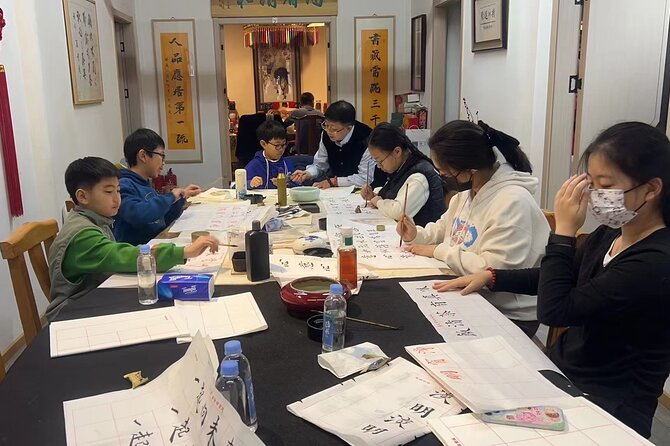
Chinese calligraphy is more than writing neatly. Each character depends on order, pressure, balance, and rhythm. A brush stroke can begin firmly, soften in the middle, and finish with a controlled lift. The result is both language and visual art.
This class gives you a chance to see that process from the inside. You do not simply watch an instructor produce beautiful characters. You learn the basic ideas behind the work, practice strokes, and begin forming characters yourself.
That makes the session a useful break from Beijing’s major sights. The Forbidden City, Temple of Heaven, and hutong streets tell you about China through buildings and public spaces. This activity lets you work with a traditional art form using your own hands.
The lesson lasts about one hour. That is long enough to gain a real introduction, but short enough to fit before or after another activity. You should not expect to become an accomplished calligrapher in one sitting. You can expect to understand the basic tools, practice several techniques, and leave with a much clearer sense of how Hanzi are formed.
More hutong wanders:
- Beijing Hutong Walking Food and Beer Tour at Hidden Restaurants
★ 5.0 · 1,132 reviews - Temple Heaven, Summer Palace, Lama Temple, Hutong Bus Tour
★ 4.7 · 319 reviews - Temple of Heaven, Summer Palace, Lama Temple, Hutong Tours
★ 5.0 · 311 reviews
Meeting Master Guo Baoqing in the Hutong Area
The experience begins at 71-3 Ci Qi Kou Da Jie in Dong Cheng District, Beijing. It ends at the same meeting point, so you do not need to arrange a separate return transfer.
The meeting point is near public transportation, but the price does not cover your taxi or subway fare. Check the route before leaving your hotel, especially if you are planning the class around timed admission to another Beijing attraction.
The setting matters. A hutong address places the class in one of Beijing’s traditional residential areas rather than in a generic conference room. The information provided does not specify the exact room or building interior, so you should treat the address as your arrival point and follow the booking instructions you receive.
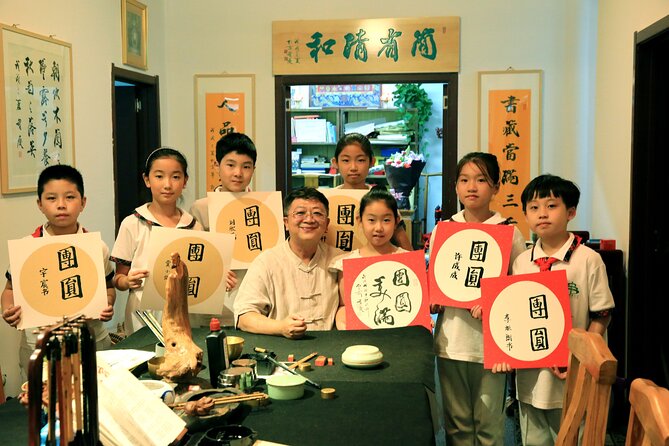
Master Guo Baoqing is the named instructor associated with the class. The strongest praise for this experience focuses on his supportive, hands-on teaching style. That is important for calligraphy because a beginner needs more than a demonstration. You need someone to show you how to hold the brush, where to begin a stroke, and how much pressure to use.
A patient instructor can also make the class less intimidating. Chinese characters may look complex at first, but they are made from a limited set of strokes arranged in a particular order. Once you see that structure, the writing feels more approachable.
The Tools Behind the Writing
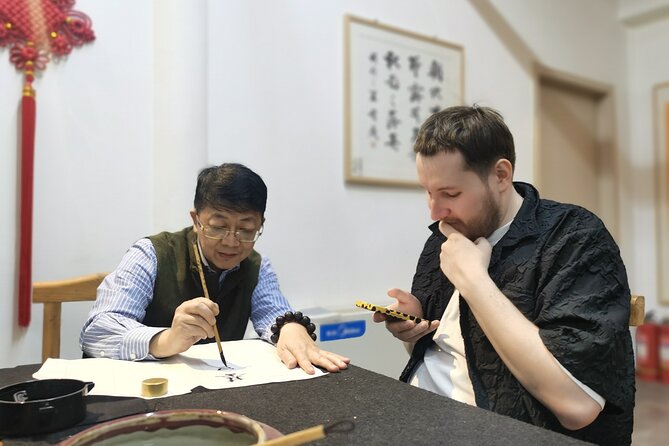
The class provides the calligraphy supplies you use during the activity. The supplied information does not give a full equipment list, so you should not assume that every item is yours to keep. It does indicate that you will have the necessary materials for the lesson and that you will create your own calligraphic pieces.
The tools are part of the lesson, not just props. Traditional Chinese calligraphy depends on the relationship between brush, ink, and paper. A brush produces a different line from a pen because the width changes with pressure and angle. Ink can appear bold or delicate depending on how it is applied.
You will be introduced to these tools before working on characters. This helps you understand why calligraphy takes practice. The aim is not to copy a printed shape mechanically. It is to control the brush so the finished character has balance and energy.
For a first class, this approach is more useful than receiving a souvenir character with no explanation. You get a sense of the work involved and a basic grasp of the choices a calligrapher makes.
Practicing Brush Strokes Before Hanzi
The lesson introduces basic brush strokes before moving to complete characters. This order makes sense. If you try to copy a full character immediately, you may focus only on its outline and miss the movement that creates it.
Guided instruction helps you break the task into smaller steps. You practice how a stroke begins, how it changes direction, and how it ends. You also learn that stroke order matters. The sequence gives the character its shape and helps keep the writing balanced.
The activity is described as meditative and rewarding, and that is a fair way to understand its pace. The class is not built around rushing from one character to another. You spend time repeating movements and paying attention to the brush.
That slower rhythm may appeal to you if your Beijing schedule is packed with traffic, queues, and crowded sights. It also makes this a good family activity. Children can see quick results from simple characters, while adults may enjoy the quiet concentration.
Still, the one-hour limit means the introduction remains brief. If you already practice Chinese calligraphy, you may find the class too basic. It is designed mainly for beginners and for people who want a first contact with the art.
More calligraphy and ink art classes:
- Beijing Calligraphy Class
★ 4.9 · 112 reviews - Chinese Calligraphy Class for Small Group
★ 5.0 · 104 reviews - Beijing Historic City Guided Walking Tour + Calligraphy Creation
★ 5.0 · 59 reviews - Beijing Wangfujing Calligraphy Class by Forbidden City
★ 5.0 · 58 reviews
Learning Ten Chinese Characters
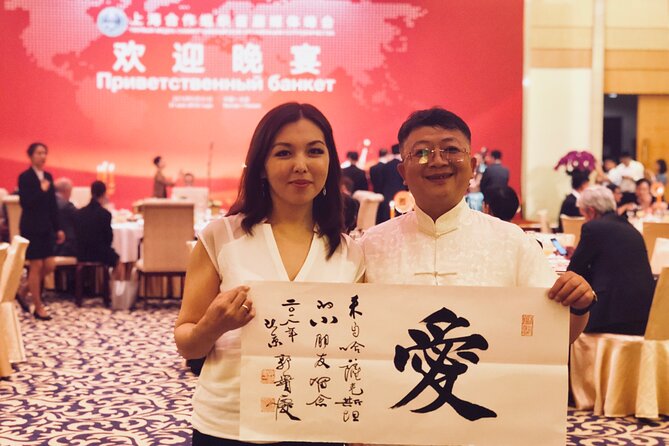
One of the clearest goals is learning at least 10 Chinese characters, or Hanzi. For a beginner, that is more useful than learning only a few decorative brush movements.
The characters give you a first look at how Mandarin writing works. You may begin to recognize repeated shapes, understand how individual strokes combine, and see why a character has a particular structure. The class will not make you fluent in Mandarin, but it can make the written language feel less distant.
This is especially valuable if you are visiting China with children. Young learners often respond well to an activity with a visible result. Writing a character by hand can make language study feel like a creative task rather than a school exercise.
You should keep your expectations sensible. Learning 10 characters in one hour does not mean you will know how to hold a conversation or read a newspaper. It does mean you can leave with a small set of building blocks and a better understanding of how written Chinese is organized.
The lesson may also change how you look at signs during the rest of your stay. Even if you cannot read most of what you see, familiar shapes can catch your eye. That small recognition can add interest to ordinary walks through Beijing.
Creating Your Own Calligraphic Piece
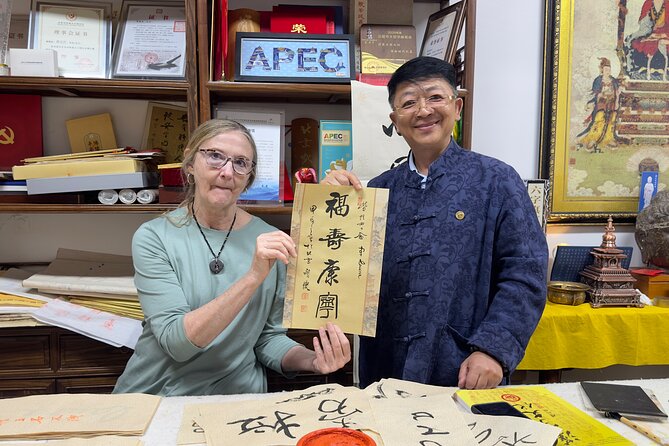
The class gives you time to create your own calligraphic work. This is the part that turns a short lesson into a personal travel memory.
A finished piece also helps you judge your progress. Your first strokes may be uneven, and your characters may not look like the instructor’s. That is normal. The point is to understand the process, not to produce gallery-quality work after a single class.
I like the fact that the activity has a tangible result. Many cultural activities leave you with photographs and general impressions. Here, you also have a piece of writing connected to the time you spent in Beijing.
The exact format of the finished work is not specified, so you should not assume it will be mounted, framed, or professionally prepared for luggage. Bring a way to protect it if you plan to carry it home, but do not count on special packaging unless the provider confirms it.
The work may be particularly meaningful if you learn characters connected to an idea, name, or wish that matters to you. The supplied details do not promise a personalized inscription, so ask before booking if that is important to you.
What the $55 Price Really Includes
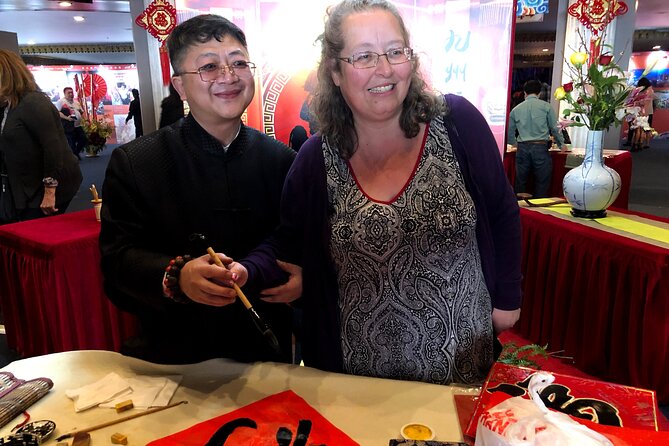
At $55 per person, the experience costs more than a casual museum visit, but the comparison is not quite fair. You are paying for a private cultural activity with instruction, supplies, and a small group setting.
The price includes one hour of calligraphy instruction, the supplies used during the activity, and admission to the hutong calligraphy experience. It does not include transport or gratuities.
The value depends on what you want from your Beijing schedule. If you only want a quick souvenir, the price may feel high for a one-hour session. If you want direct instruction and a chance to work with a traditional art form, the cost is easier to justify.
The small group limit helps. A class capped at 10 should give you a better chance to follow the instructor than a large workshop, although the exact number booked on your date can vary. The named instructor, provided materials, and character lessons also make the fee more than a simple drop-in craft activity.
I would be more cautious if your main goal is a long technical lesson. The class is short, and the available details describe an introduction rather than an advanced course. You are paying for access, guidance, and a cultural experience, not a full training program.
Fitting the Class into Your Beijing Day
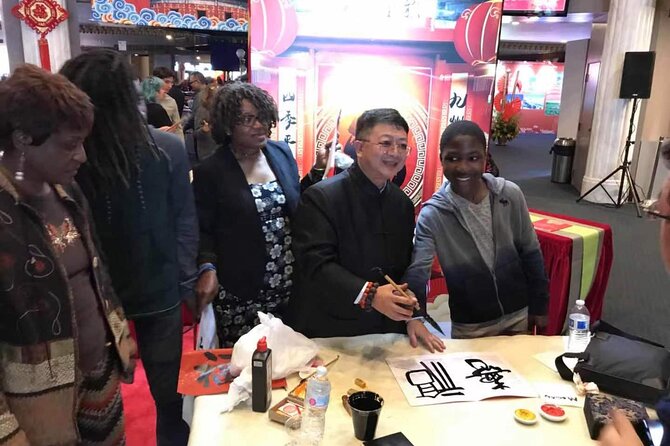
The one-hour duration makes this easy to combine with other plans. You might schedule it between sightseeing stops, use it as a quieter afternoon activity, or place it near the start of your trip so the characters you learn can add meaning to later visits.
Allow extra time for reaching the meeting point. The lesson itself lasts about an hour, but your total commitment will be longer once you include subway or taxi travel and finding the correct address.
The activity begins and ends at the same place. That is convenient because you can continue exploring the area afterward or return to your hotel using the route you already planned.
The provider says the experience is near public transportation. No specific subway station or travel time is provided, so you should check the address, 71-3 Ci Qi Kou Da Jie, before you set out. A mobile ticket is provided, which means you can keep confirmation on your phone rather than arranging a printed ticket.
The activity is also listed as suitable for most people. No special skill level is required, and the instruction is aimed at beginners. If you have specific mobility needs, contact the provider before booking because the available information does not give detailed accessibility notes.
Who Will Get the Most from This Activity
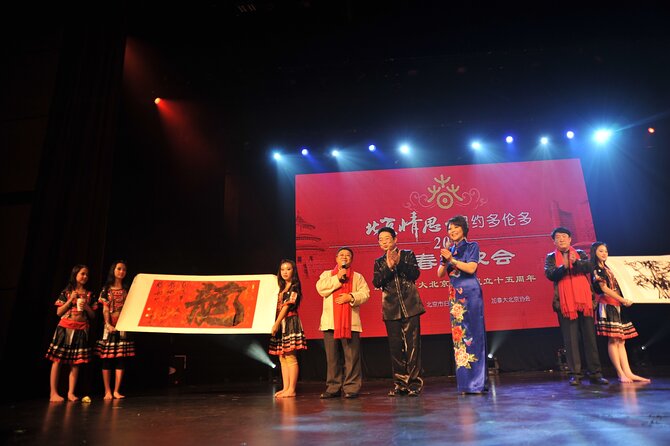
This class is a strong choice for first-time visitors who want more than sightseeing photographs. It gives you a direct connection to a Chinese tradition and does so without taking half a day from your schedule.
Families may find it appealing because the lesson has a clear task and a visible result. Children can learn that Chinese writing is made from patterns and strokes, not mysterious symbols that must be memorized all at once.
It also suits adults who enjoy quiet, focused activities. The brushwork can provide a calm change from Beijing’s busy streets, especially if you have already spent several hours touring large monuments.
The class may be less suitable for advanced calligraphers. If you already know the basic tools and can write several Hanzi with confidence, you may want a longer or more specialized lesson instead.
It is also not ideal for anyone who wants transport included. You must pay for and arrange your own taxi or subway trip. That is a small issue for an independent visitor, but it matters if you prefer an all-in-one tour with a guide collecting you from your hotel.
Booking Timing and Cancellation Rules
This experience is commonly booked about nine days ahead. That does not guarantee that every date will sell out, but it is a useful planning signal. If the class fits your schedule, booking ahead gives you a better chance of securing your preferred time.
You can cancel for a full refund up to 24 hours before the local start time. Cancellations or changes made inside that 24-hour window are not accepted for a refund.
The activity requires good weather, and it also requires a minimum number of participants. If poor weather or insufficient bookings cause a cancellation, you can choose another date or experience, or receive a full refund.
Those rules are fairly clear, but keep them in mind when building a tightly timed Beijing itinerary. Leave some flexibility around the class if possible.
My Recommendation for the Beijing Calligraphy Class
I would book this experience if you want a short, hands-on cultural lesson with a named instructor, provided supplies, and a finished piece to remember Beijing by. The chance to learn at least 10 Hanzi gives the hour a useful purpose, and Master Guo Baoqing’s supportive teaching style is a strong reason to choose this class over a less personal demonstration.
I would skip it if you want an advanced calligraphy course, hotel transportation, or a long workshop. The $55 price is reasonable for direct instruction and a small group, but the one-hour format is firmly introductory.
For most first-time visitors, this is a good way to add substance to a Beijing sightseeing plan. Check the route to Ci Qi Kou Da Jie, allow time for transportation, and book at least several days ahead if your schedule is fixed.
FAQ
How long does the Chinese calligraphy experience last?
The activity lasts approximately one hour.
Where does the experience begin?
It begins at 71-3 Ci Qi Kou Da Jie, Dong Cheng Qu, Beijing, China, 100051.
Where does the activity end?
The experience ends back at the meeting point.
Is transportation included in the price?
No. Taxi or subway transportation is not included.
Are calligraphy supplies provided?
Yes. Calligraphy supplies are provided for use during the activity.
How many people can join the class?
The activity has a maximum group size of 10 participants.
Do I need to know Chinese to participate?
No specific language ability is required in the provided details. The activity is designed so beginners can learn at least 10 Chinese characters.
Can I cancel for a full refund?
Yes. You can cancel at least 24 hours before the local start time for a full refund. Cancellations or changes made less than 24 hours before the start time are not refunded or accepted.
Latest additions around Beijing
- Private Hike from Beijing: Go Beyond The Jiankou and Mutianyu Great Wall★ 5.0 · 3 reviews
- Bullet Train Private Tour: Beijing Tiananmen Square, Forbidden City & Great Wall★ 5.0 · 3 reviews
- Private Great Wall Hiking Tour from Simatai West to Jinshanling★ 4.5 · 3 reviews
- Private Transfer for Beijing Airport PEK or PKX★ 5.0 · 3 reviews
- Liyuan Theater Beijing Opera Show Tickets★ 5.0 · 3 reviews
- Private Jinshanling relax photo tour by sunset★ 5.0 · 3 reviews
- Private All-inclusive Jinshanling Great Wall 1-day tour★ 4.5 · 3 reviews
- Beijing Night Tour with Acrobatics Show & PekingDuck Dinner★ 5.0 · 3 reviews
Hutong Tours, compared.

Beijing Hutong Walking Food and Beer Tour at Hidden Restaurants
Read our review →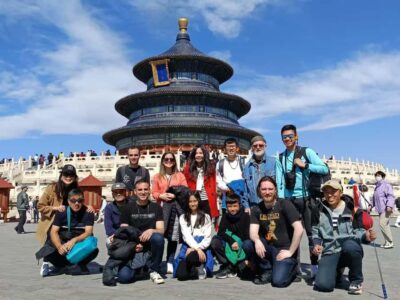
Temple Heaven, Summer Palace, Lama Temple, Hutong Bus Tour
Read our review →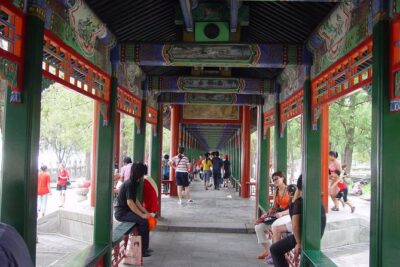
Temple of Heaven, Summer Palace, Lama Temple, Hutong Tours
Read our review →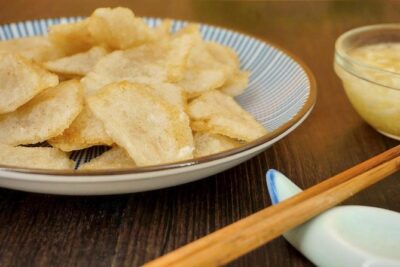



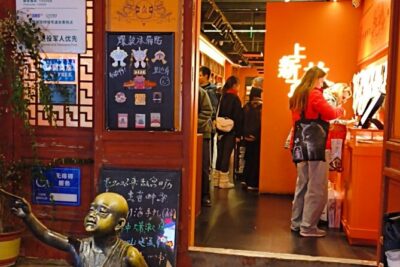
Beijing City Walk: Explore Hutongs Life and Old Beijing
Read our review →Browse the lists this tour appears in